 flip
flipCabbage Pirozhki for the Road
Cabbage Pirozhki for the Road
Why this dish? As a field reporter, Anna spent her life on trains, planes, and cars between Moscow and the Caucasus. Pirozhki — small stuffed buns eaten cold, by hand, without utensils — are the quintessential Russian travel food, slipped into a bag for long distances.
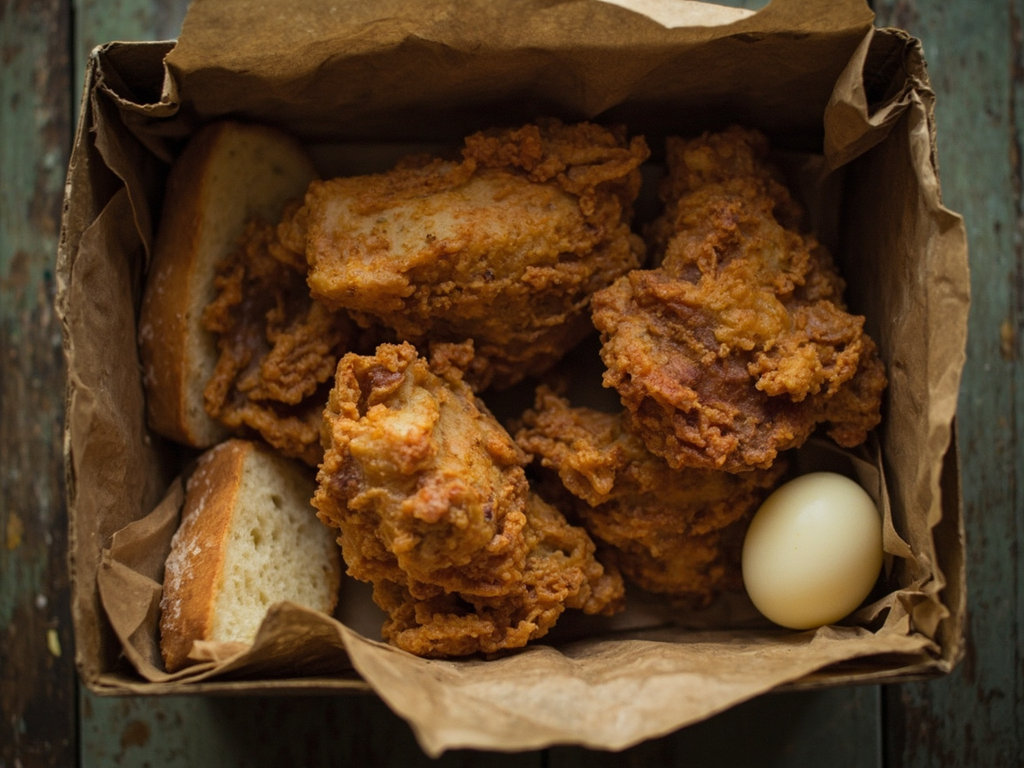
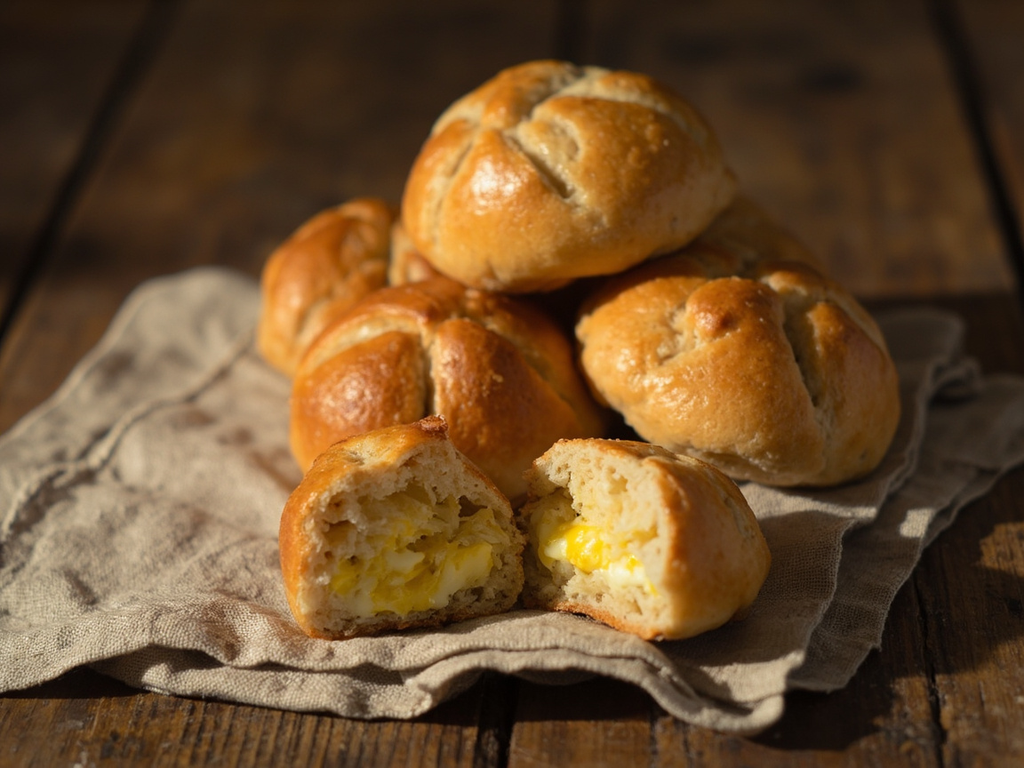
Small golden brioche buns filled with melted cabbage and hard-boiled egg, baked in the oven. Soft, savory, perfect cold the next day. The pocket of bread you hold in your hand when you have neither table nor time.
When you take the night train south, you never leave empty-handed: a bag of pirozhki wrapped in a cloth, and you're set for a thousand kilometers. Cabbage, because it doesn't spoil and it sticks to your ribs for hours. You eat them cold, standing in the shaky corridor of the carriage, watching the birches fly by. Believe me, a pirozhok shared with a stranger in a compartment — that's often where real conversations begin.
- •Yeast dough (flour, yeast, milk, egg) — enough for twelve pieces (brioche wrapper)
- •White cabbage — half a head (filling)
- •Hard-boiled eggs — two or three (filling, binder)
- •Onion — one (flavor)
- •Butter — for melting the cabbage (richness)
Cabbage Pirozhki for the Road
Small golden brioche buns filled with melted cabbage and hard-boiled egg, baked in the oven. Soft, savory, perfect cold the next day. The pocket of bread you hold in your hand when you have neither table nor time.
Why this dish? As a field reporter, Anna spent her life on trains, planes, and cars between Moscow and the Caucasus. Pirozhki — small stuffed buns eaten cold, by hand, without utensils — are the quintessential Russian travel food, slipped into a bag for long distances.
When you take the night train south, you never leave empty-handed: a bag of pirozhki wrapped in a cloth, and you're set for a thousand kilometers. Cabbage, because it doesn't spoil and it sticks to your ribs for hours. You eat them cold, standing in the shaky corridor of the carriage, watching the birches fly by. Believe me, a pirozhok shared with a stranger in a compartment — that's often where real conversations begin.
Ingredients (period version)
- Yeast dough (flour, yeast, milk, egg) — enough for twelve pieces (brioche wrapper)
- White cabbage — half a head (filling)
- Hard-boiled eggs — two or three (filling, binder)
- Onion — one (flavor)
- Butter — for melting the cabbage (richness)
Ingredients
- All-purpose flour — 400 g (dough)
- Active dry yeast — 1 packet (7 g) (leavening)
- Warm milk — 200 ml (dough)
- Egg — 1 (+ 1 yolk for glaze) (dough and glaze)
- White cabbage — 400 g, finely shredded (filling)
- Hard-boiled eggs — 2 (filling)
- Onion — 1, chopped (flavor)
- Butter — 40 g (for melting cabbage)
Method
- Knead dough (flour, yeast, warm milk, egg, pinch of salt, sugar). Let rise until doubled, about 1 h.
- Meanwhile, melt shredded cabbage and onion in butter, covered, 20 min, until tender. Season with salt and pepper; let cool, then mix with chopped hard-boiled eggs.
- Punch down dough, divide into 12 balls, flatten each into a disk.
- Place a spoonful of filling in the center, seal edges tightly, place seam-side down.
- Let rise 20 min, brush with egg yolk.
- Bake at 190°C for 20-25 min until golden brown. Delicious warm, perfect cold the next day.
How it was made : Pirozhki (diminutive of pirog, the large pie) accompanied all Russian travels, from peasants to Trans-Siberian passengers. The filling varied by season and budget: cabbage, potato, egg, liver, or mushrooms on Orthodox lean days.
The contemporary twist : Fold them into half-moons and crimp the edges with a fork: a "pocket" version to slip into a train bag, wrapping in parchment paper.
Sources : William Pokhliobkin, National History of Russian Cuisine · Darra Goldstein, A Taste of Russia
Anna Politkovskaya · Charactorium