 flip
flipMaza, Anticlea's Barley Cake
Maza, Anticlea's Barley Cake
Why this dish? Anticlea, queen of Ithaca and tireless spinner, governs a house where the hearth never goes out. The barley maza is the daily bread she has prepared for Laertes and the household, the patient staple of a woman who waits, year after year, for Odysseus' return.
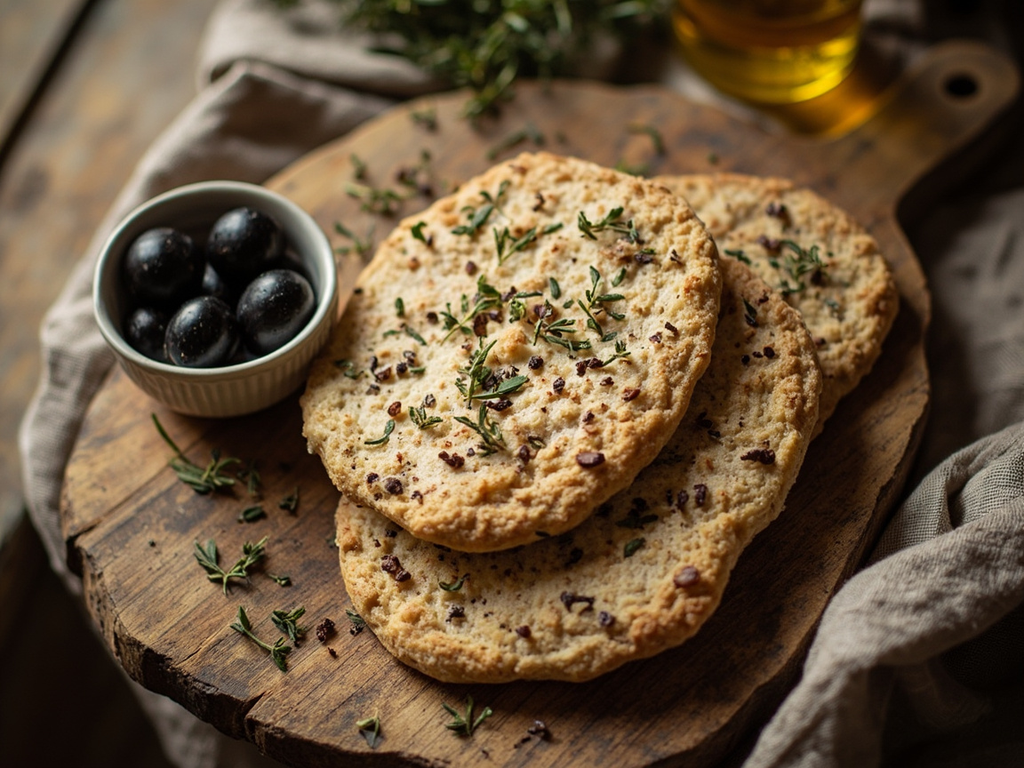
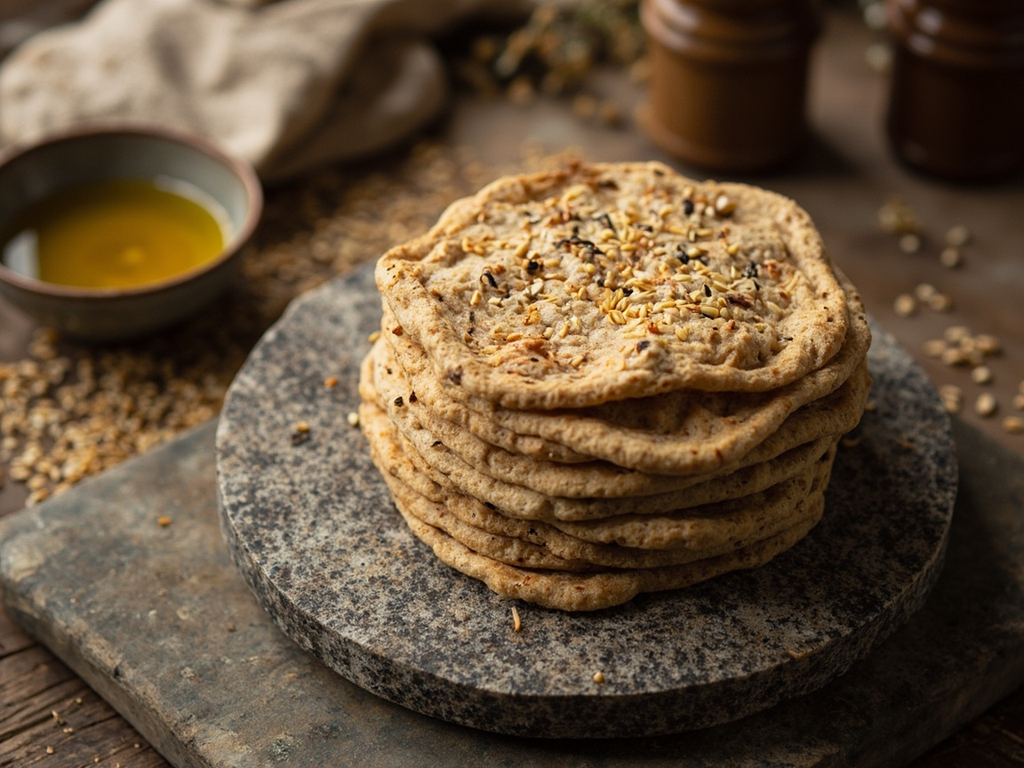
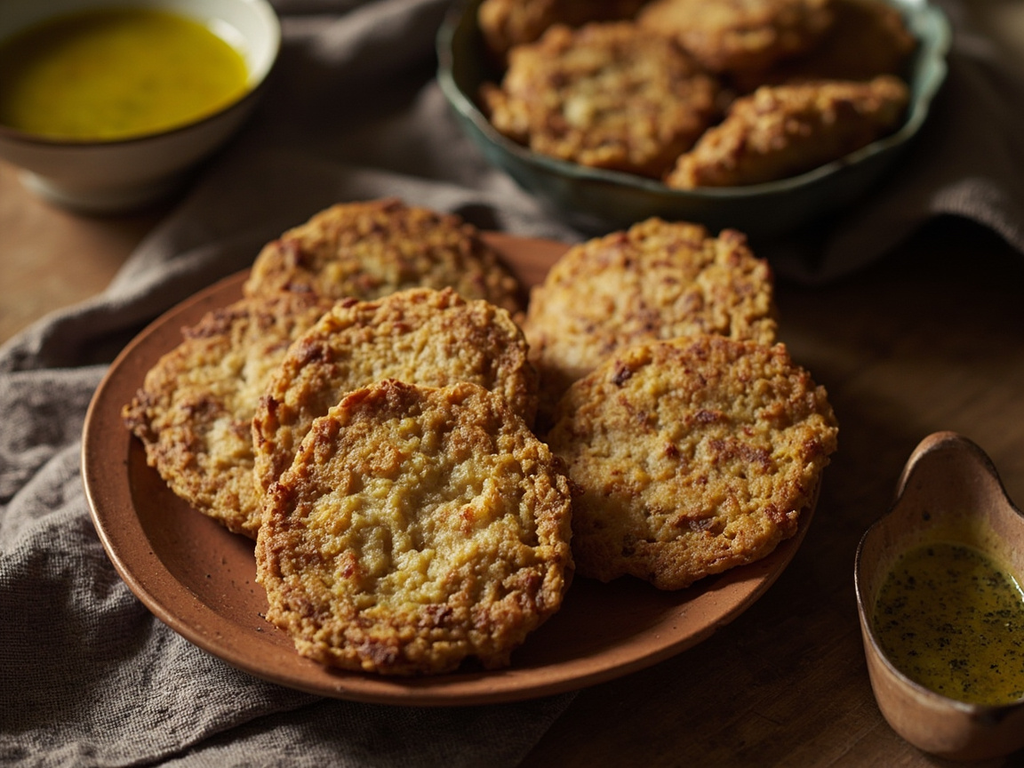
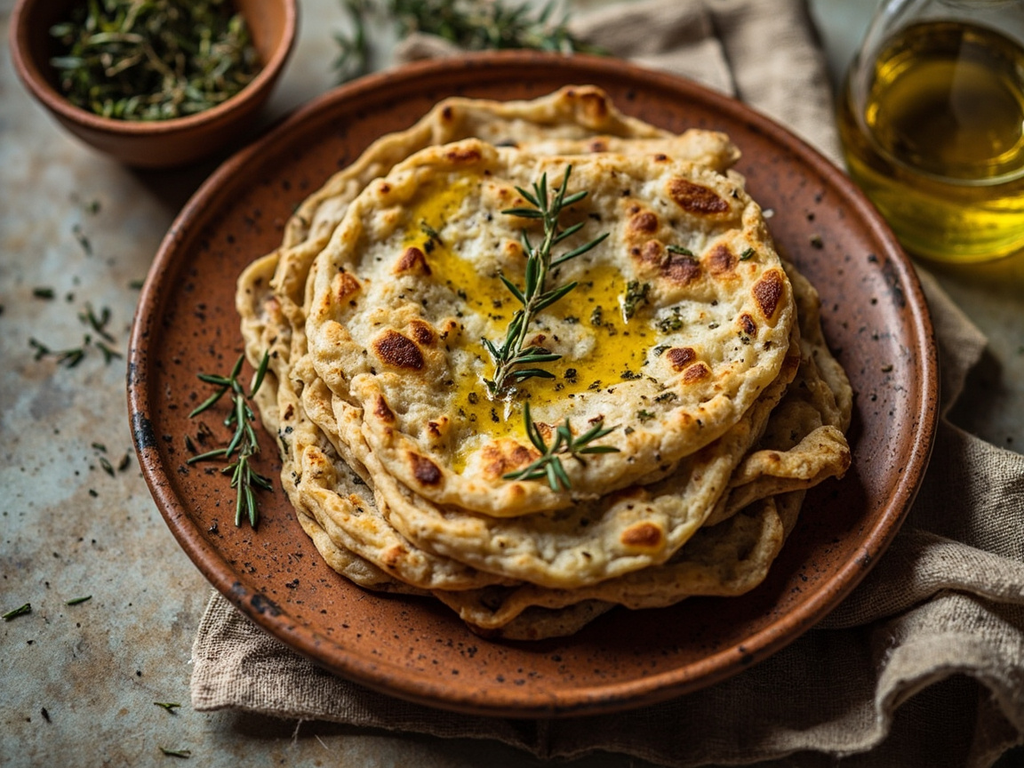
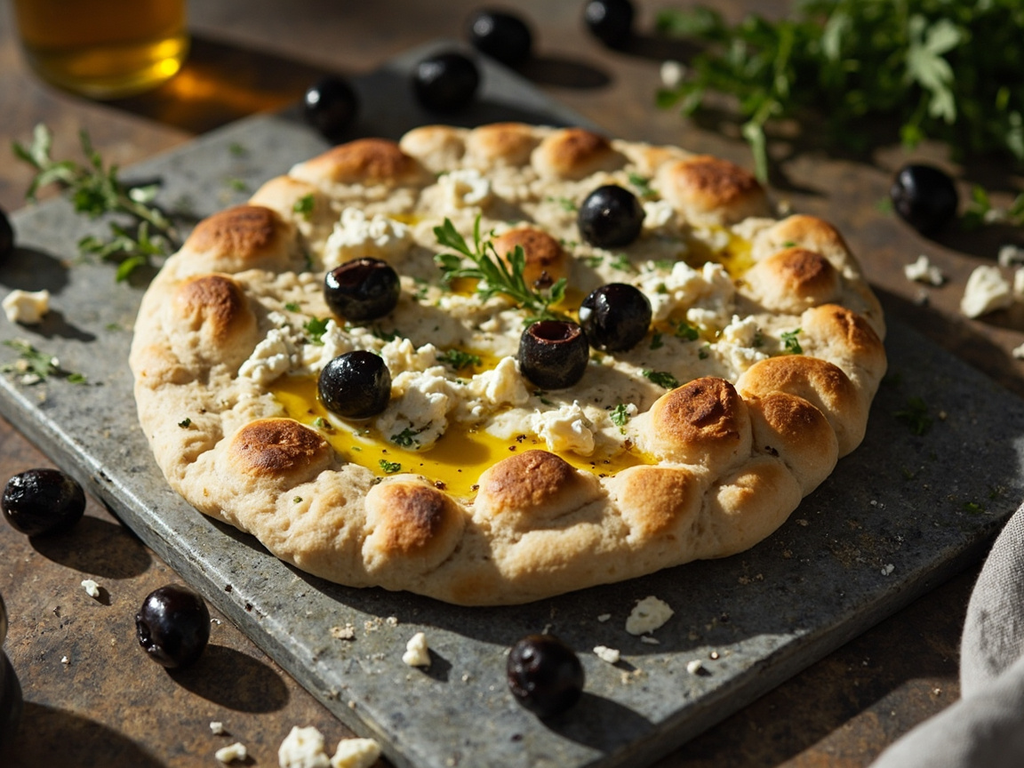
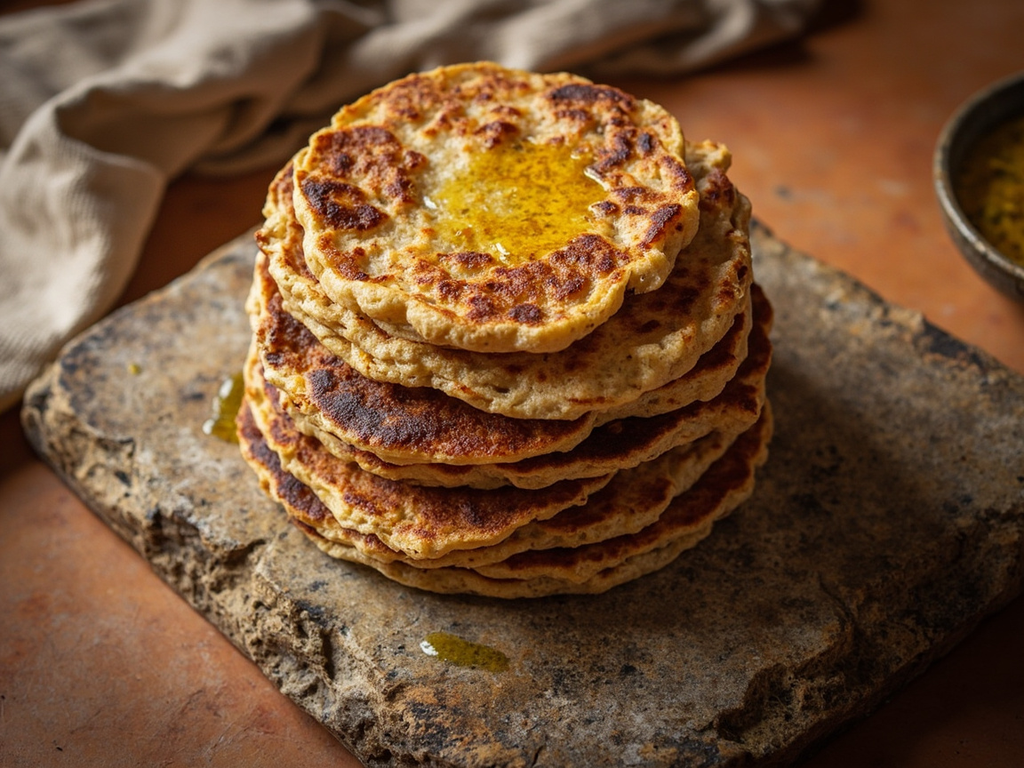
A dense cake of toasted and ground barley, simply bound with water and olive oil, cooked on a hot stone. The humble bread of the kings of Ithaca, austere as waiting.
Come, stranger, and do not disdain this cake. It is the barley from our rocky lands that I had roasted on the fire, then ground in the mortar by my maids, as has always been done under this roof. I knead it with a little oil and spring water, and place it on the hearthstone that I have never let die since my son left. Eat, and may the gods be kind to you: in Ithaca, barley bread feeds both the master and the swineherd.
- •Barley — two handfuls per guest (staple grain, toasted then ground)
- •Olive oil — a drizzle (binder and flavor)
- •Spring water — as needed (binder)
- •Sea salt — a pinch (seasoning)
Maza, Anticlea's Barley Cake
A dense cake of toasted and ground barley, simply bound with water and olive oil, cooked on a hot stone. The humble bread of the kings of Ithaca, austere as waiting.
Why this dish? Anticlea, queen of Ithaca and tireless spinner, governs a house where the hearth never goes out. The barley maza is the daily bread she has prepared for Laertes and the household, the patient staple of a woman who waits, year after year, for Odysseus' return.
Come, stranger, and do not disdain this cake. It is the barley from our rocky lands that I had roasted on the fire, then ground in the mortar by my maids, as has always been done under this roof. I knead it with a little oil and spring water, and place it on the hearthstone that I have never let die since my son left. Eat, and may the gods be kind to you: in Ithaca, barley bread feeds both the master and the swineherd.
Ingredients (period version)
- Barley — two handfuls per guest (staple grain, toasted then ground)
- Olive oil — a drizzle (binder and flavor)
- Spring water — as needed (binder)
- Sea salt — a pinch (seasoning)
Ingredients
- Barley flour — 250 g (staple grain)
- Hulled barley grains (to toast) — 100 g (for authentic roasted flavor)
- Extra virgin olive oil — 3 tbsp (binder and flavor)
- Warm water — about 150 ml (binder)
- Salt — 1 tsp (seasoning)
Method
- Toast the barley grains in a dry pan until golden and fragrant, then coarsely grind them (mortar or mill).
- Mix the barley flour, ground toasted barley, and salt.
- Gradually incorporate the oil, then the warm water, until a firm, non-sticky dough forms.
- Shape into flat cakes about a finger thick.
- Cook on a hot stone or dry cast-iron pan, 4-5 minutes per side, until speckled brown.
- Serve warm, drizzled with olive oil.
How it was made : Barley (krithê) was the dominant cereal of Homeric Greece, more rustic than wheat. It was toasted before grinding — a typical Bronze Age practice that facilitated grinding and gave a roasted flavor. The maza, an unleavened cake, was distinct from artos (leavened wheat bread), which was rarer and more prestigious.
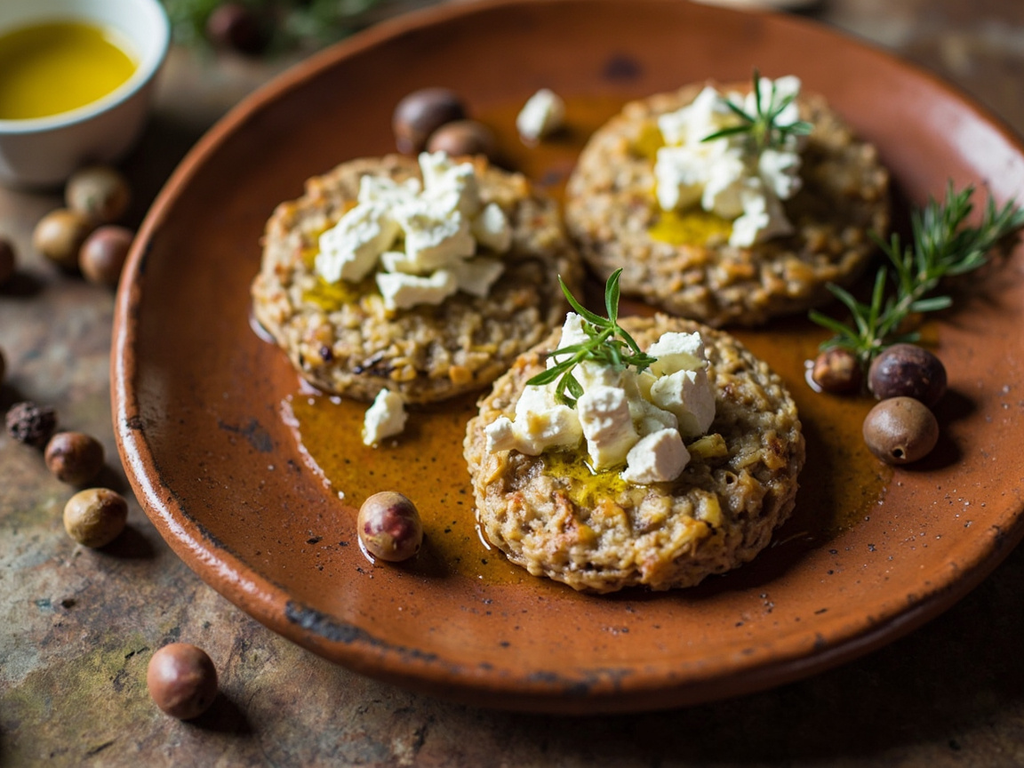
The contemporary twist : Serve the maza warm with fresh goat cheese and a drizzle of honey: a 'barley tartare' that would please as much at an Ithacan banquet as at a modern table.
Anticleia · Charactorium