 flip
flipSplanchna, grilled offal from the sacrifice
Splanchna, grilled offal from the sacrifice
Why this dish? In Antigone's world, meat is eaten almost only on days of sacrifice to the gods. At Thebes, during great religious festivals, an animal is immolated, the bones are burned for the Olympians, and the entrails (splanchna) are immediately grilled and shared among the faithful. Antigone, a princess pious to the death, knew these sacred banquets where the city communes with its gods.
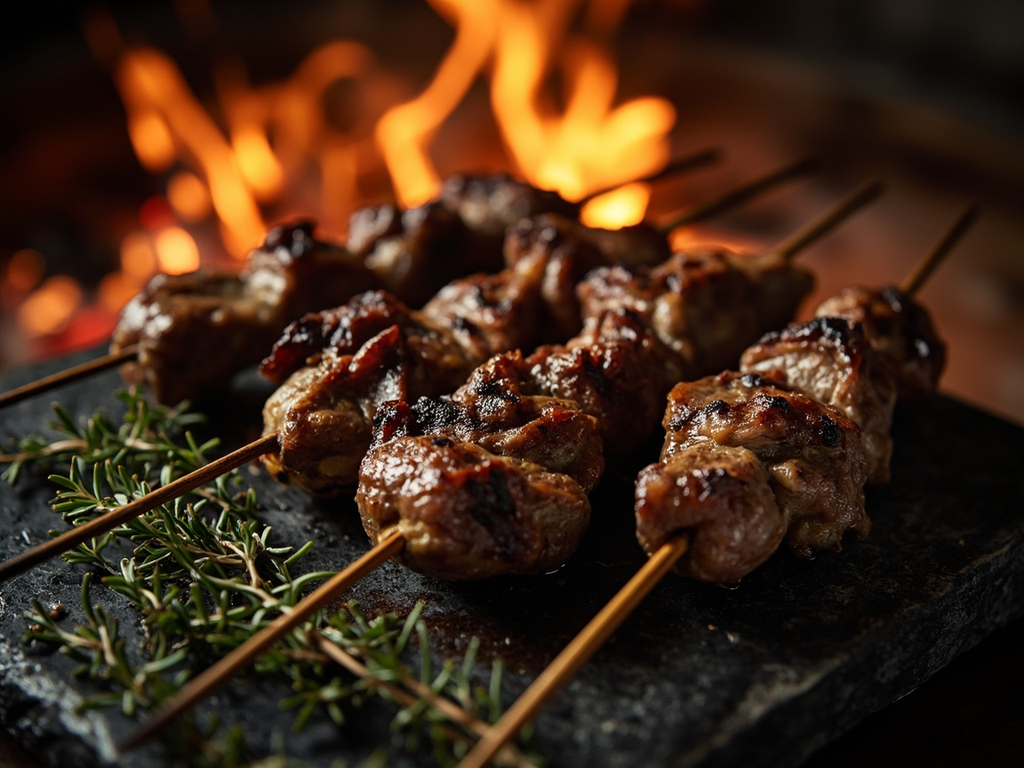
Liver, heart, and kidneys threaded on skewers, grilled over embers, brushed with olive oil and seasoned with thyme and salt. Bold, smoky, and deeply umami: the part of the meat most immediately devoured after the sacrifice, still blazing hot.
See these skewers on the embers: this is the portion of men, when the smoke of the bones rises to the gods. I grew up among these rites, I, of the cursed blood of the Labdacids; I know that before eating, one must give. We thread the liver and heart, pass them over the fierce fire, rub them with oil and salt — and taste the sacred flesh while it still smokes. Honor the gods above, stranger, but never forget those below: it is for wanting to feed a dead man with this respect that I descended alive into the tomb.
- •Lamb or goat offal (liver, heart, kidneys) — from the sacrificed animal (meat)
- •Olive oil — for brushing (fat, browning)
- •Wild thyme and oregano — a few sprigs (flavor)
- •Sea salt — to taste (seasoning)
Splanchna, grilled offal from the sacrifice
Liver, heart, and kidneys threaded on skewers, grilled over embers, brushed with olive oil and seasoned with thyme and salt. Bold, smoky, and deeply umami: the part of the meat most immediately devoured after the sacrifice, still blazing hot.
Why this dish? In Antigone's world, meat is eaten almost only on days of sacrifice to the gods. At Thebes, during great religious festivals, an animal is immolated, the bones are burned for the Olympians, and the entrails (splanchna) are immediately grilled and shared among the faithful. Antigone, a princess pious to the death, knew these sacred banquets where the city communes with its gods.
See these skewers on the embers: this is the portion of men, when the smoke of the bones rises to the gods. I grew up among these rites, I, of the cursed blood of the Labdacids; I know that before eating, one must give. We thread the liver and heart, pass them over the fierce fire, rub them with oil and salt — and taste the sacred flesh while it still smokes. Honor the gods above, stranger, but never forget those below: it is for wanting to feed a dead man with this respect that I descended alive into the tomb.
Ingredients (period version)
- Lamb or goat offal (liver, heart, kidneys) — from the sacrificed animal (meat)
- Olive oil — for brushing (fat, browning)
- Wild thyme and oregano — a few sprigs (flavor)
- Sea salt — to taste (seasoning)
Ingredients
- Lamb liver — 250 g (meat)
- Lamb heart or kidneys — 250 g (meat)
- Olive oil — 3 tbsp (fat, marinade)
- Dried thyme and oregano — 1 tsp each (flavor)
- Salt and a little crushed garlic — to taste (seasoning)
Method
- Clean and cut the offal into even bite-sized pieces.
- Mix olive oil, thyme, oregano, salt, and garlic; coat the pieces and marinate 20 minutes.
- Thread onto skewers (soaked if wooden).
- Grill over hot embers or a very hot griddle, 2 to 3 minutes per side: the outside should be seared, the inside still rosy for the liver.
- Brush with flavored oil at the end of cooking.
- Serve immediately, very hot, with maza to mop up juices.
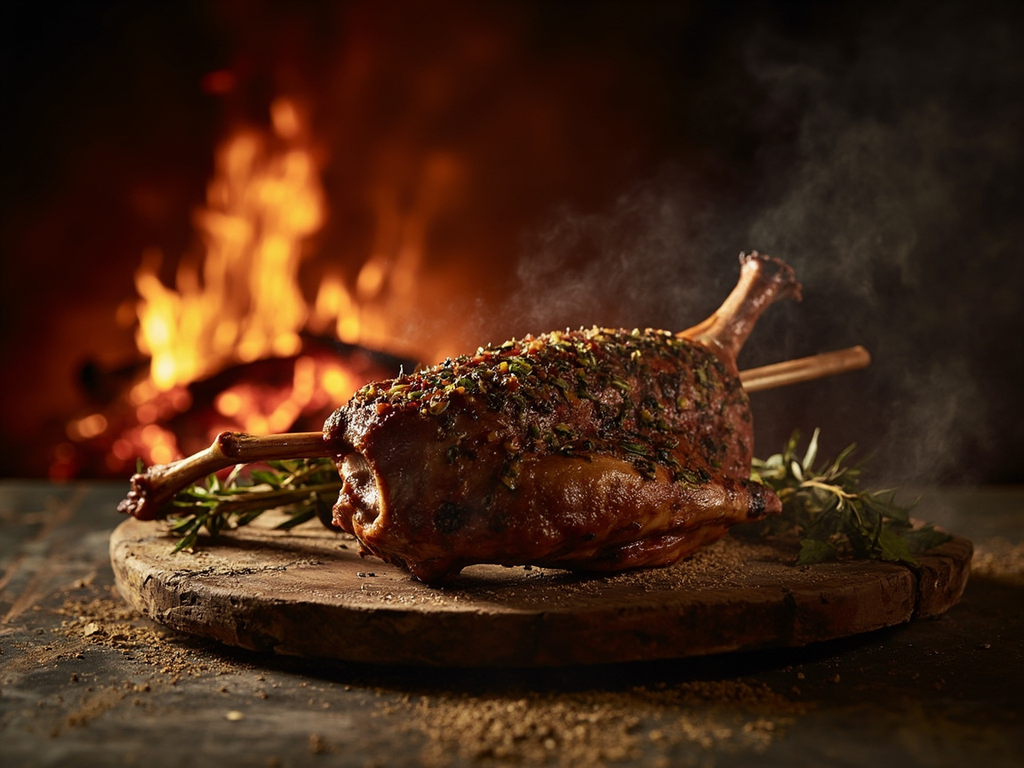
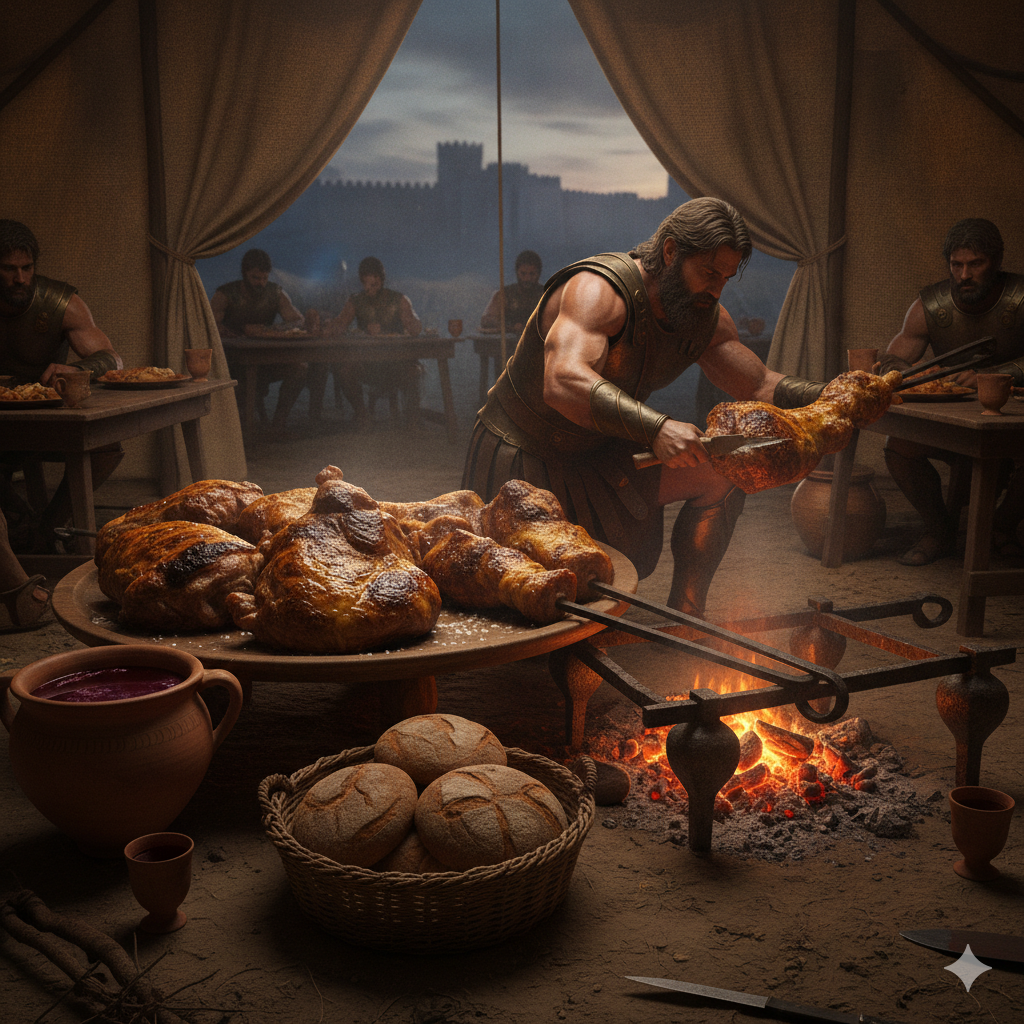
How it was made : The Greek sacrifice (thysia) followed a precise distribution: the bones and fat were burned for the gods, while the splanchna (viscera) were grilled on skewers and consumed first by participants near the altar, before the distribution of meat. Meat was thus almost always linked to sacrifice: to eat it was to participate in a religious and civic act.
The contemporary twist : Barbecue skewers "offering to the gods" version: present on a bed of smoking thyme branches to evoke the smoke rising to Olympus.
Antigone · Charactorium