 flip
flipSpit-Roasted Game Haunch, Smoked with Thyme
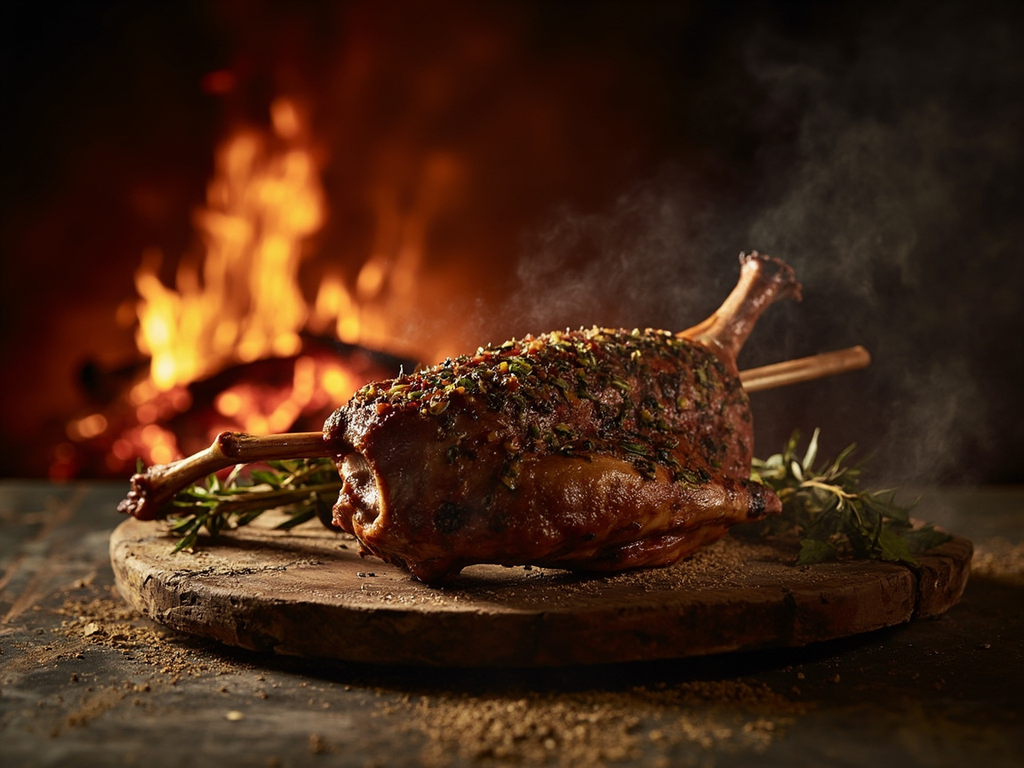
Spit-Roasted Game Haunch, Smoked with Thyme
Why this dish? Meat was rarely eaten by the Greeks except on days of sacrifice and banquet: the bones wrapped in fat were offered to the gods, and the rest was roasted for men. Heracles, famous for his appetite and sacrificial pyres, is the hero of the meat feast par excellence.
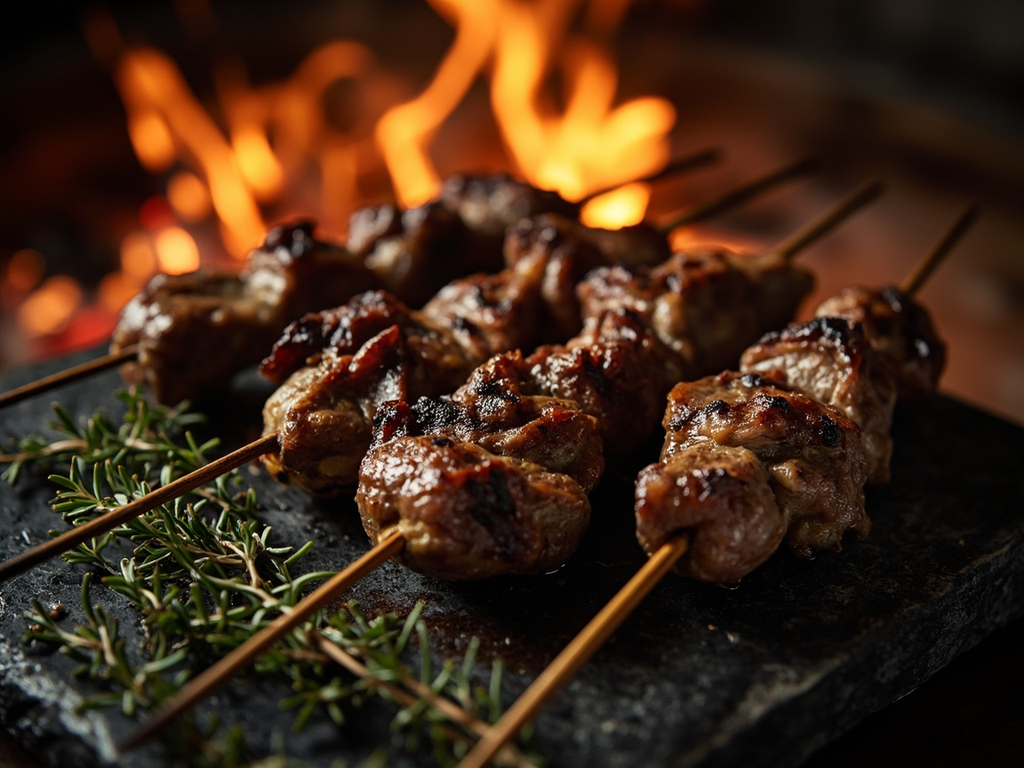
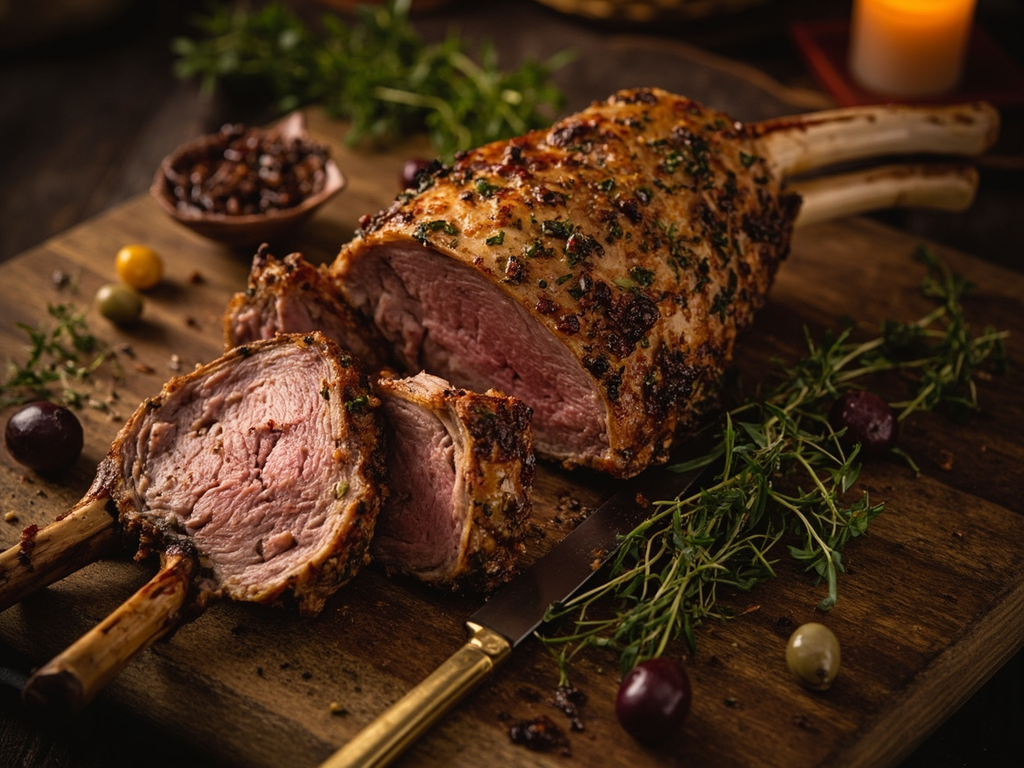
A haunch of game (boar, deer) or kid rubbed with salt and herbs, skewered and turned over embers until the skin crackles. Meat for special days, generous and smoky.
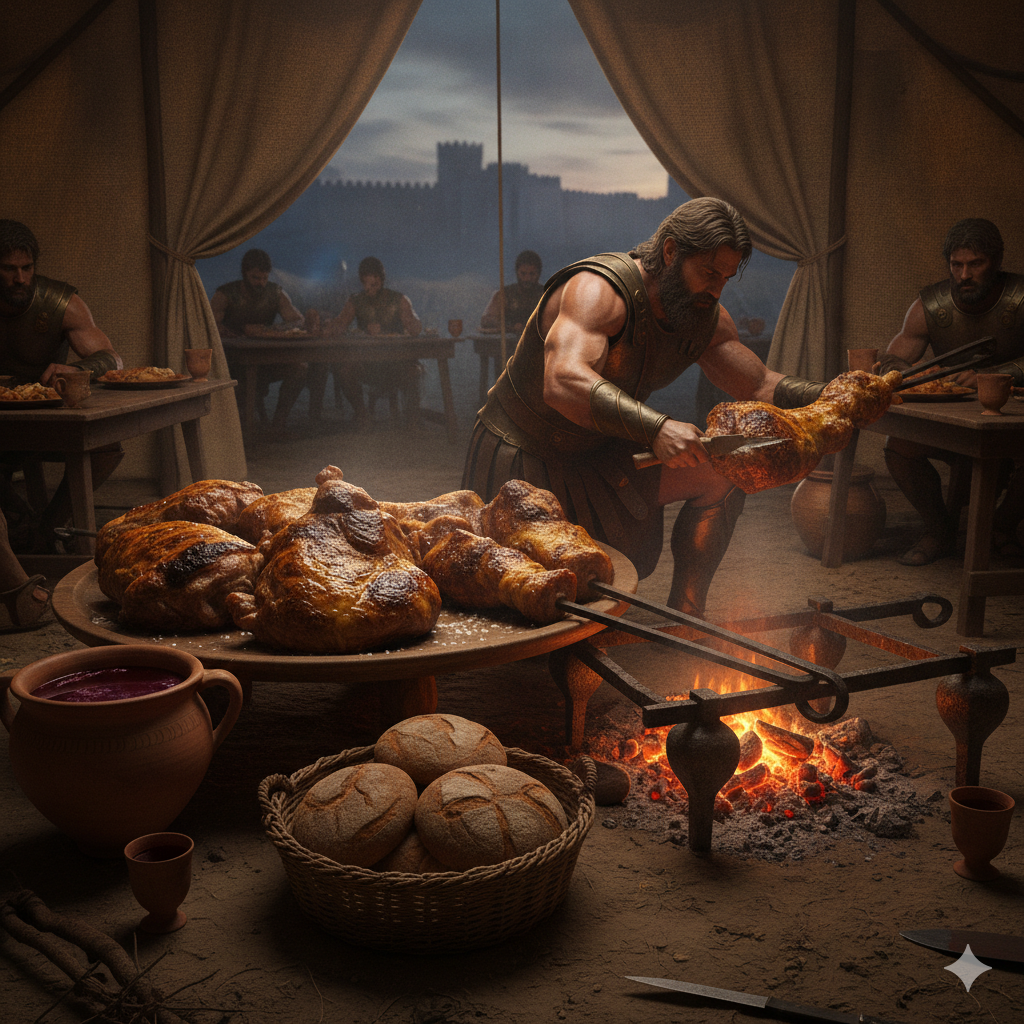
Come, friend, the fire is ready. I hunted this boar like the one of Erymanthus long ago, and tonight we shall eat it like men! We skewer the haunch, rub it with salt and thyme from the hillside, and turn it slowly over the coals until the fat sizzles. The portion of bones and fat I give back to the gods in the flame; the rest we share down to the last sinew, for a feast without meat is but an old man's meal!
- •Haunch of boar, deer or kid — one whole piece (base)
- •Sea salt — generously (seasoning)
- •Thyme, wild oregano — a handful (flavor)
- •Olive oil — for basting (browning)
Spit-Roasted Game Haunch, Smoked with Thyme
A haunch of game (boar, deer) or kid rubbed with salt and herbs, skewered and turned over embers until the skin crackles. Meat for special days, generous and smoky.
Why this dish? Meat was rarely eaten by the Greeks except on days of sacrifice and banquet: the bones wrapped in fat were offered to the gods, and the rest was roasted for men. Heracles, famous for his appetite and sacrificial pyres, is the hero of the meat feast par excellence.
Come, friend, the fire is ready. I hunted this boar like the one of Erymanthus long ago, and tonight we shall eat it like men! We skewer the haunch, rub it with salt and thyme from the hillside, and turn it slowly over the coals until the fat sizzles. The portion of bones and fat I give back to the gods in the flame; the rest we share down to the last sinew, for a feast without meat is but an old man's meal!
Ingredients (period version)
- Haunch of boar, deer or kid — one whole piece (base)
- Sea salt — generously (seasoning)
- Thyme, wild oregano — a handful (flavor)
- Olive oil — for basting (browning)
Ingredients
- Leg of kid or shoulder of boar (or lamb as substitute) — 1.5 to 2 kg (base)
- Coarse salt — 2 tbsp (seasoning)
- Dried thyme and oregano — 2 tbsp (flavor)
- Olive oil — 4 tbsp (browning)
- Honey — 1 tbsp (optional, for glaze) (caramelization)
Method
- Rub the meat with salt, oil and herbs several hours in advance.
- Light a good bed of embers (barbecue) or preheat the oven to 180°C.
- Skewer and roast slowly over the embers, turning regularly, for 1.5 to 2 hours; or bake in the oven for 2 hours, basting often with the juices.
- Brush with oil (and a little honey) at the end of cooking for a golden, crackling skin.
- Let rest 10 minutes, then carve and share in large portions.
How it was made : The Greek sacrifice (thysia) followed a precise ritual described as early as Homer: the thigh bones wrapped in fat were burned for the gods, the innards (splanchna) were tasted grilled on skewers, then the meat was roasted for the human banquet. Eating meat was thus almost always a religious and communal act.
The contemporary twist : Served on a large olivewood board with a bowl of honey-thyme and grilled maza alongside, in a "heroic banquet to share at the center of the table" style.
Sources : Homer, Iliad (Books I and IX, sacrifice and roasting scenes) · Marcel Detienne & Jean-Pierre Vernant, The Cuisine of Sacrifice among the Greeks, University of Chicago Press, 1989
Hercules · Charactorium