 flip
flipMaza, the Barley Cake of Simple Days
Maza, the Barley Cake of Simple Days
Why this dish? During her long captivity in Thebes, under the harsh hand of Dirce, Antiope knew not the queen's table but the bread of the humble: the barley *maza*, coarse and bitter, was the food of those deprived. It was also what the shepherds of Cithaeron who raised her sons ate.
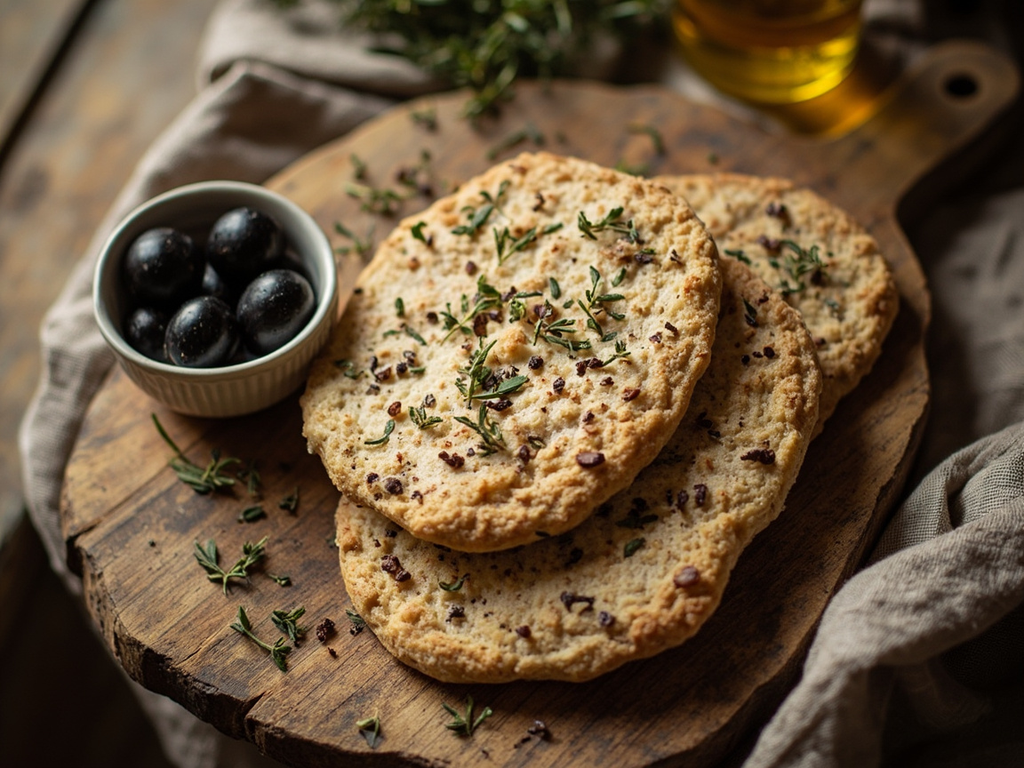
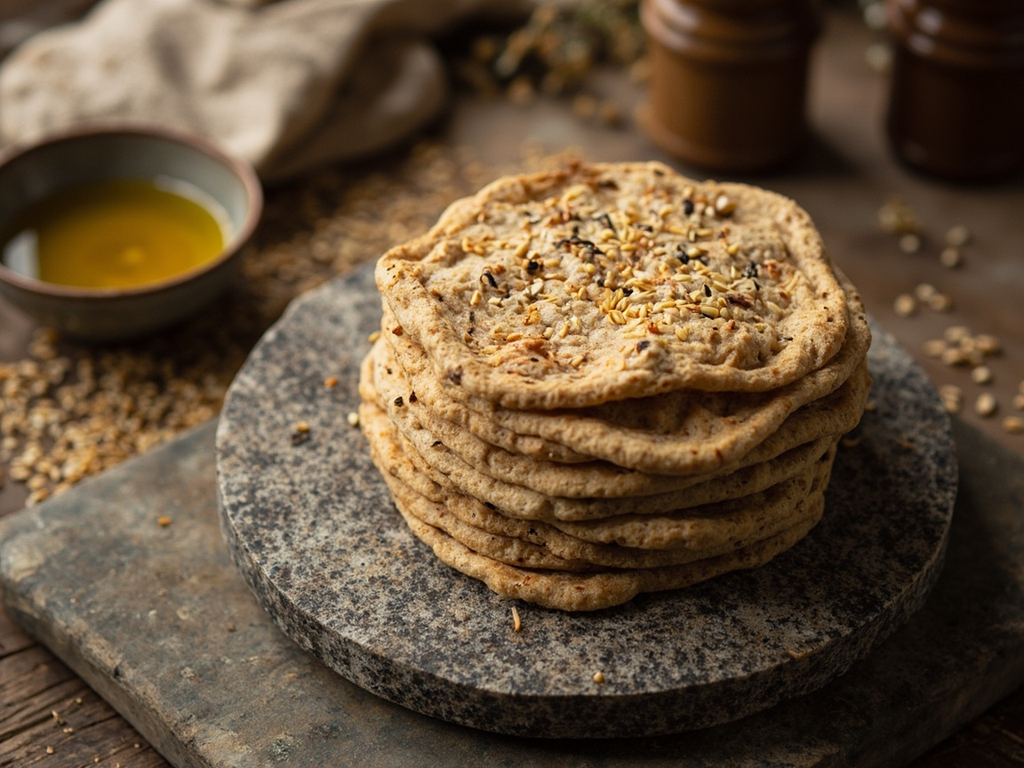
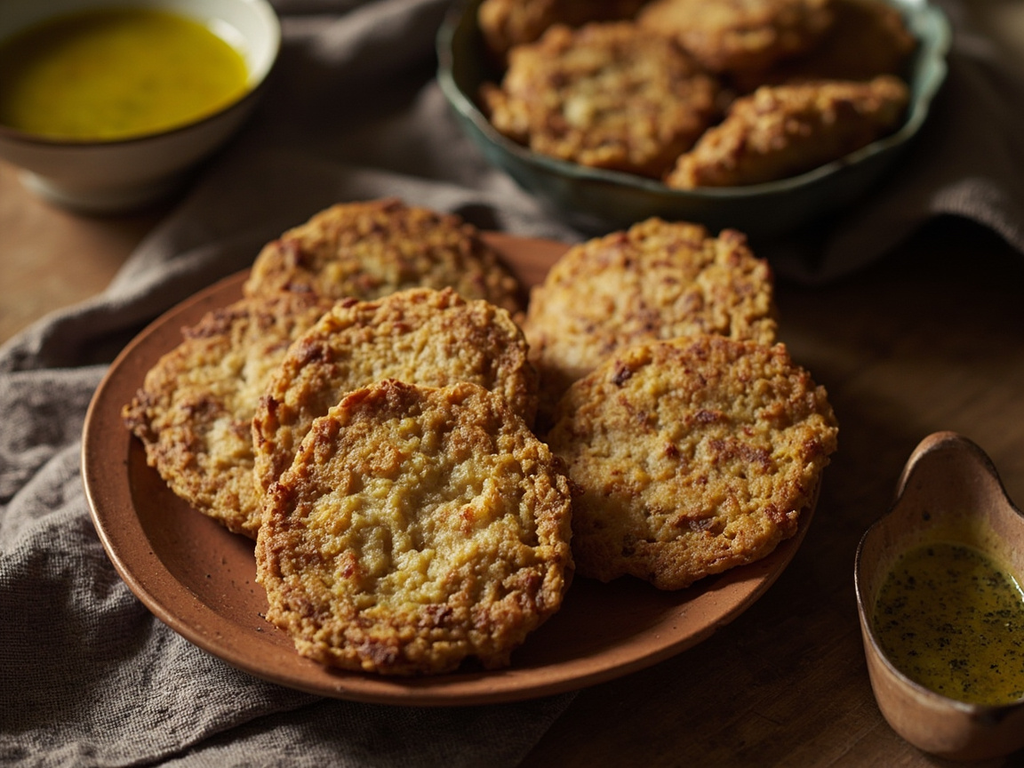
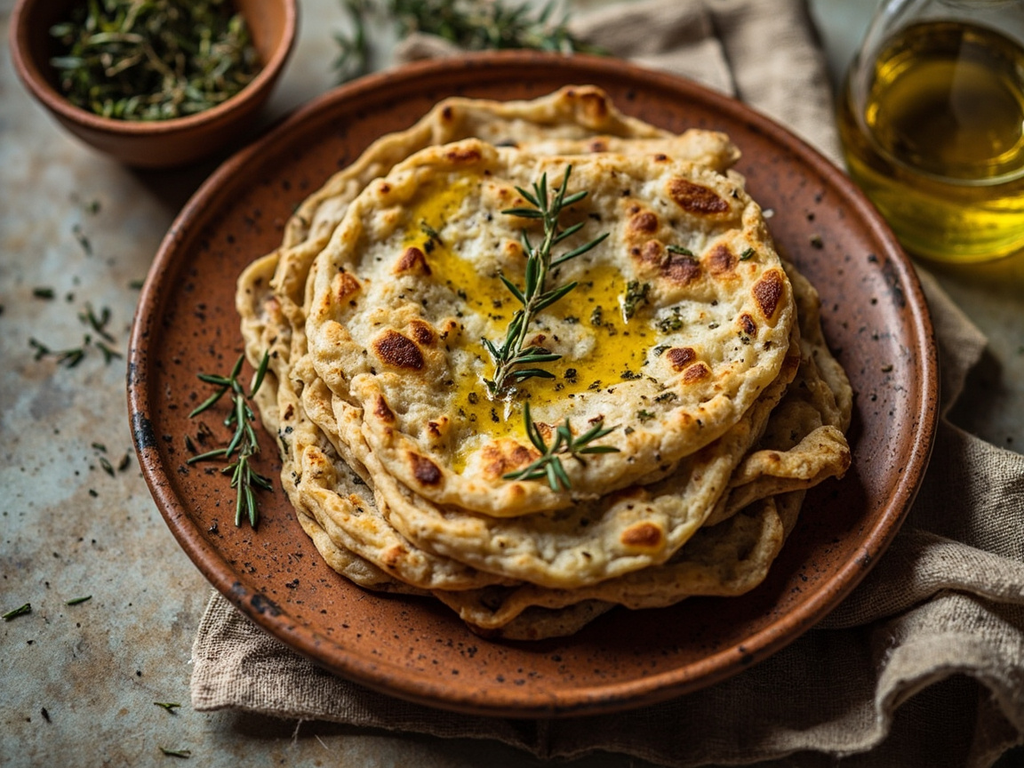
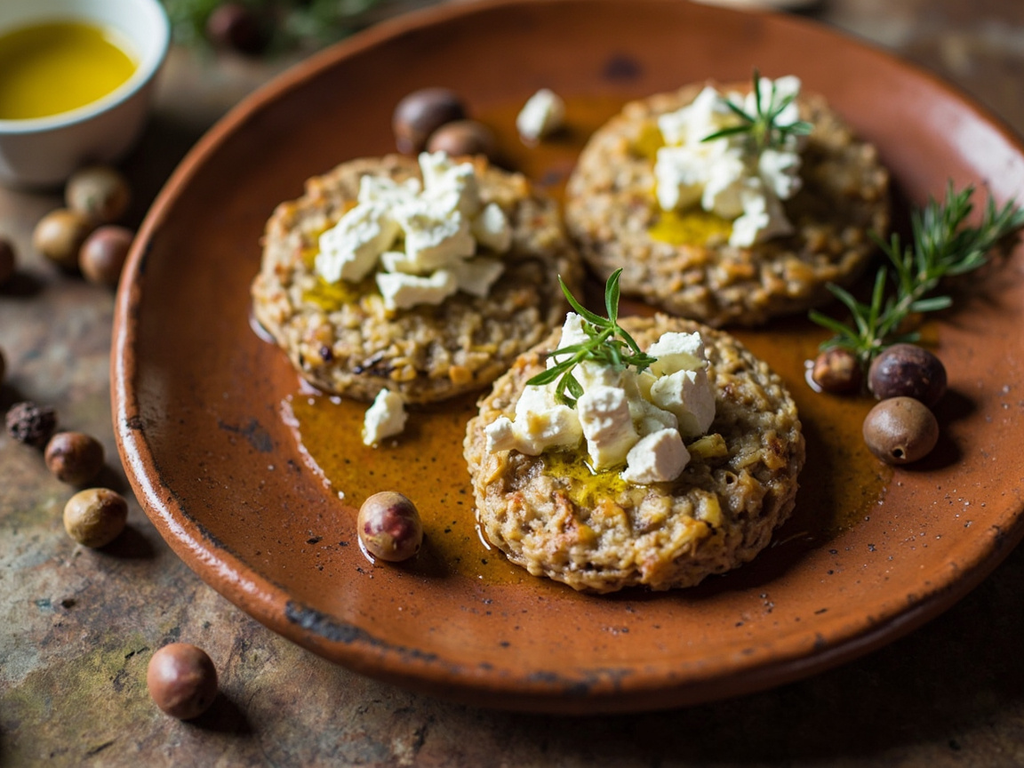
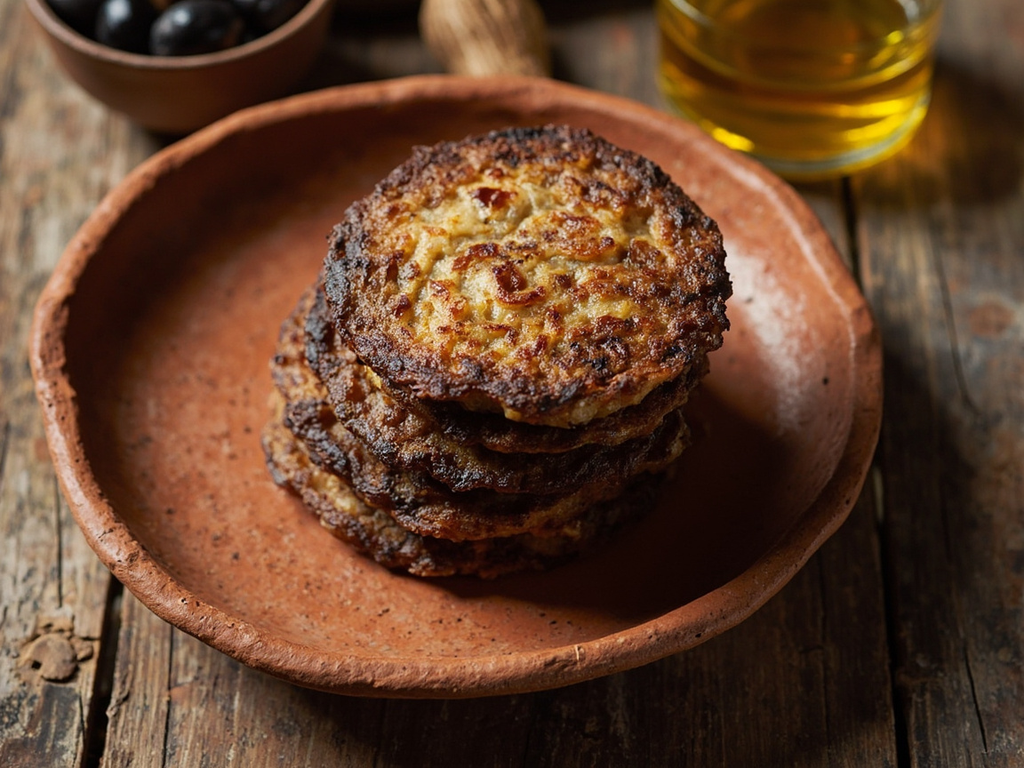
A thick cake of toasted barley flour, barely kneaded with water and oil, cooked on a hot stone. The everyday bread of the Greeks, older and more widespread than wheat bread.
Come close, and do not scorn this dark bread. Captive within the walls of Thebes, I knew only this for a long time: barley that is toasted, ground, bound with a trickle of water and oil, and left to harden on the hearthstone. You break it, you dip it in watered wine, and it fills the belly of shepherds as well as slaves. Remember: what is bitter in the mouth may be what keeps you alive.
- •Toasted then ground barley grains (álphita) — two handfuls per guest (base)
- •Spring water — enough to bind (binder)
- •Olive oil — a drizzle (softness)
- •Sea salt — a pinch (seasoning)
Maza, the Barley Cake of Simple Days
A thick cake of toasted barley flour, barely kneaded with water and oil, cooked on a hot stone. The everyday bread of the Greeks, older and more widespread than wheat bread.
Why this dish? During her long captivity in Thebes, under the harsh hand of Dirce, Antiope knew not the queen's table but the bread of the humble: the barley *maza*, coarse and bitter, was the food of those deprived. It was also what the shepherds of Cithaeron who raised her sons ate.
Come close, and do not scorn this dark bread. Captive within the walls of Thebes, I knew only this for a long time: barley that is toasted, ground, bound with a trickle of water and oil, and left to harden on the hearthstone. You break it, you dip it in watered wine, and it fills the belly of shepherds as well as slaves. Remember: what is bitter in the mouth may be what keeps you alive.
Ingredients (period version)
- Toasted then ground barley grains (álphita) — two handfuls per guest (base)
- Spring water — enough to bind (binder)
- Olive oil — a drizzle (softness)
- Sea salt — a pinch (seasoning)
Ingredients
- Barley flour — 200 g (base)
- Warm water — about 120 ml (binder)
- Olive oil — 2 tbsp (softness)
- Salt — 1 pinch (seasoning)
Method
- In a dry pan, lightly toast the barley flour for 2–3 minutes until it smells nutty, then let it cool slightly.
- Mix the flour, salt, oil, and water little by little to obtain a thick, non-sticky dough.
- Shape into flat cakes about 1 cm thick.
- Cook on a hot stone or pan, 4–5 minutes per side, until browned and firm.
- Serve warm, to dip in watered wine or oil.
How it was made : Barley was ill-suited for leavened bread: the Greeks mostly ate it as *maza*, an unleavened paste of *álphita* (toasted and ground barley). Wheat, rarer and more expensive, provided the bread (*ártos*) of the rich and for feasts. *Maza* was literally the daily bread of the Greek people.
The contemporary twist : A few fresh thyme leaves crumbled into the dough evoke the hills of Boeotia; serve with a drizzle of new olive oil and a crushed olive.
Antiope · Charactorium