 flip
flipPuls, the Spelt Porridge of the Romans
Puls, the Spelt Porridge of the Romans
Why this dish? Before bread, Rome was a people of porridge eaters: Romans were called pultiphagi, 'porridge-eaters'. This spelt porridge was the foundation of the meal for everyone, from the soldier on the Antonine Wall to the emperor himself, who was said to prefer a simple table to ostentatious feasts.
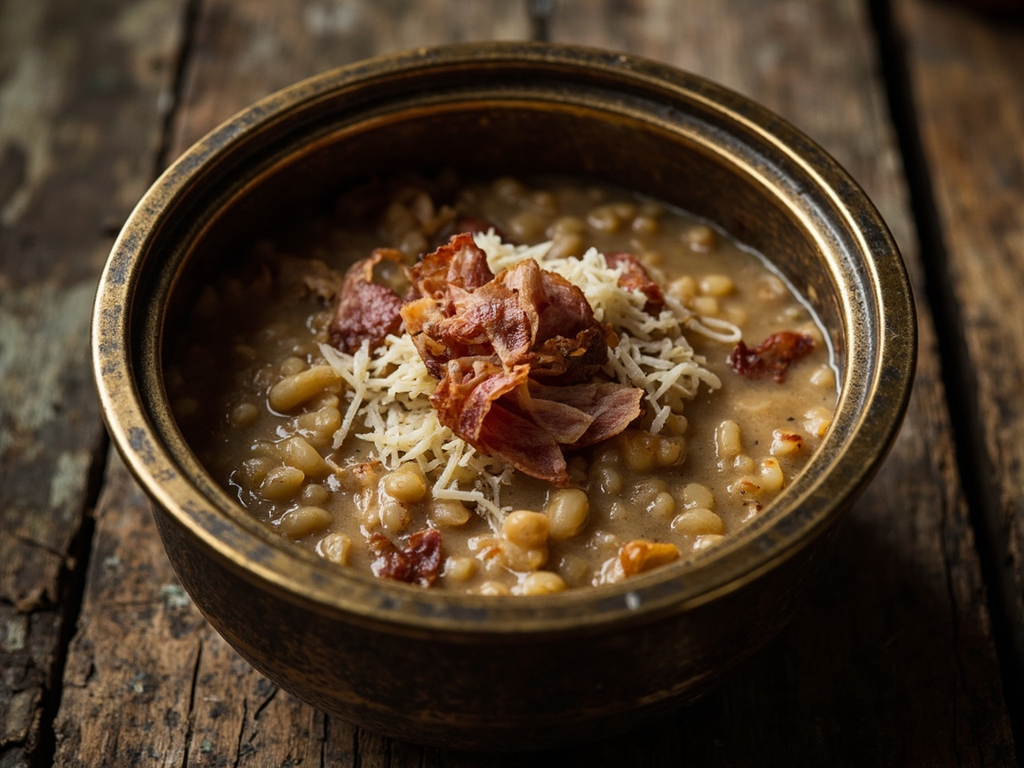
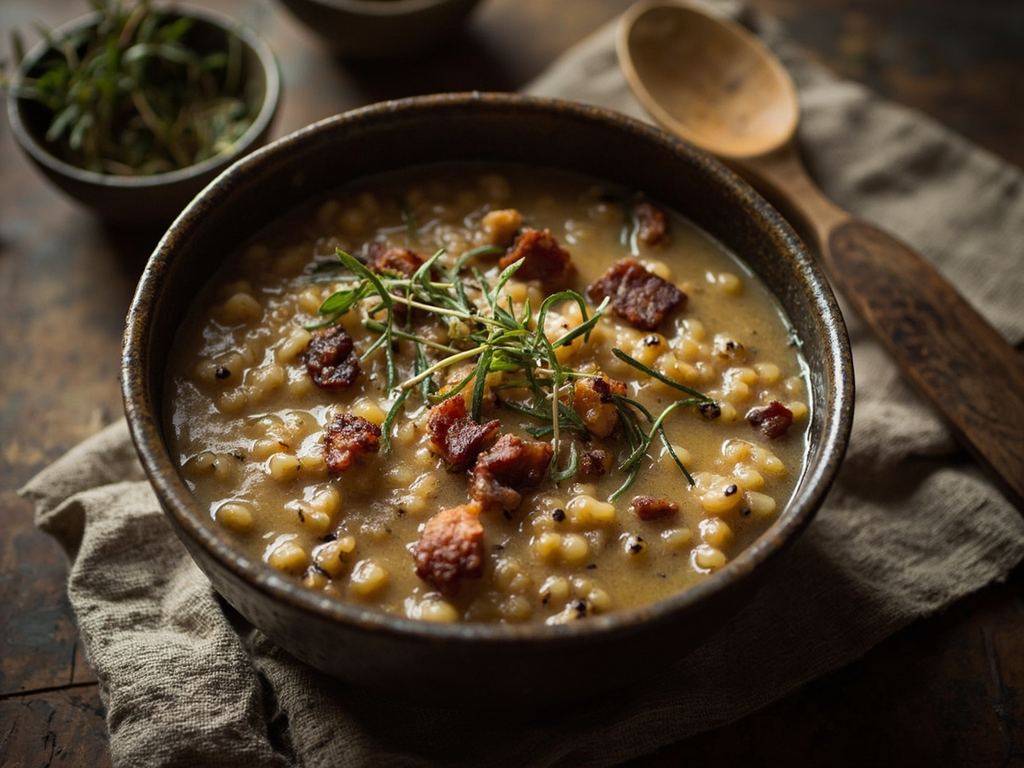
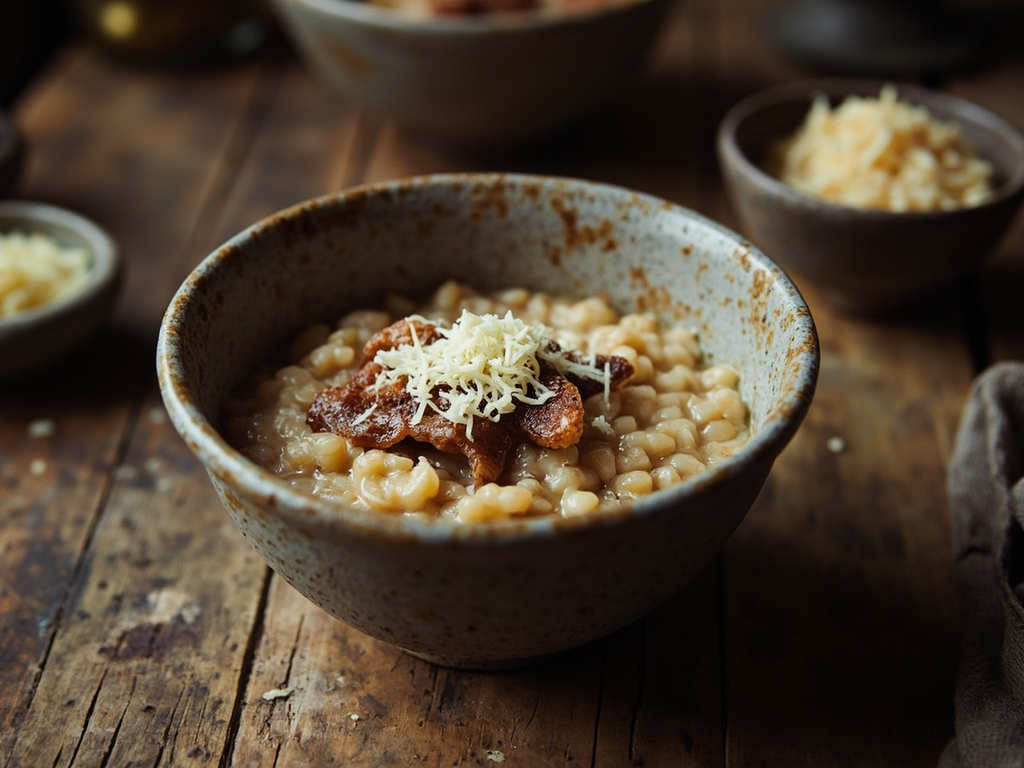
A creamy porridge of spelt flour or grains cooked slowly, seasoned with a drop of garum and drizzled with olive oil. Nourishing and economical, it is the daily dish, enhanced according to what is at hand: cheese, herbs, sometimes a bit of bacon.
Let no one be surprised to see me love this humble dish: I have wanted my table to be moderate, as befits one who rules without ostentation. Here is how it is prepared at Lorium, in my villa: one lets the spelt flour swell in water over a low fire, stirring constantly so that no lumps form. Then one pours in a trickle of garum and the oil from our Latium olive trees. A man satisfied with puls does not envy the roasted peacocks of gluttons — remember this.
- •Spelt flour or semolina (far) — a good handful per guest (base of the porridge)
- •Spring water — three times the volume of flour (cooking liquid)
- •Garum — a few drops (umami seasoning)
- •Olive oil — a drizzle (binding and flavor)
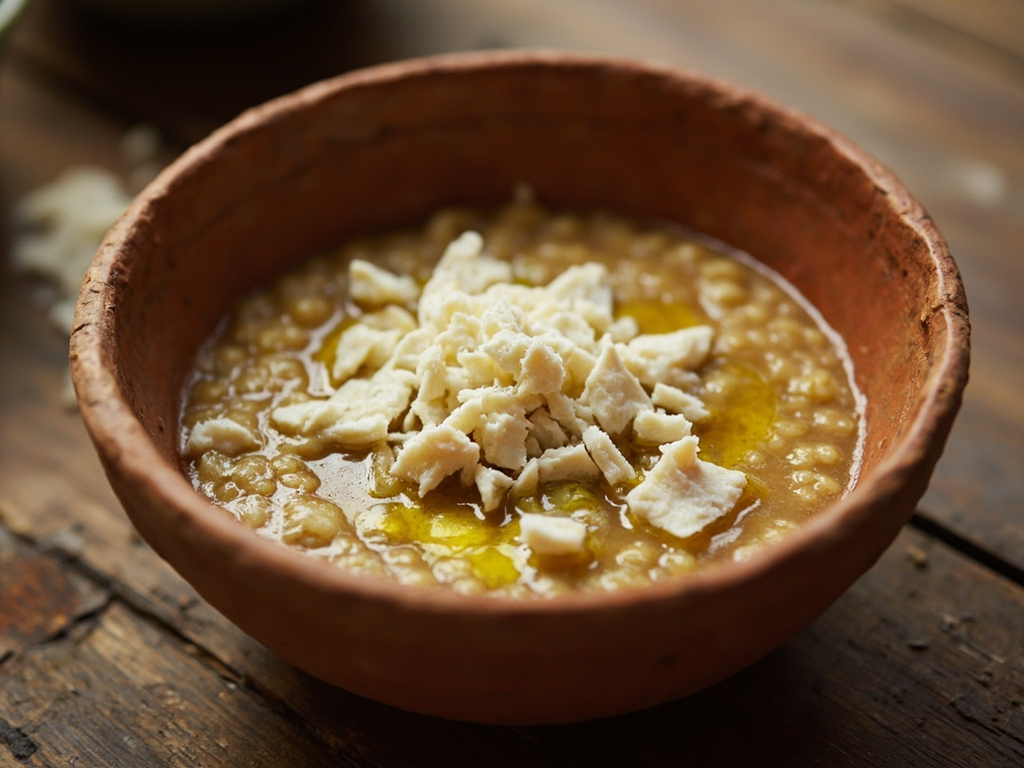
- •Crumbled fresh cheese — to taste (optional garnish)
Puls, the Spelt Porridge of the Romans
A creamy porridge of spelt flour or grains cooked slowly, seasoned with a drop of garum and drizzled with olive oil. Nourishing and economical, it is the daily dish, enhanced according to what is at hand: cheese, herbs, sometimes a bit of bacon.
Why this dish? Before bread, Rome was a people of porridge eaters: Romans were called pultiphagi, 'porridge-eaters'. This spelt porridge was the foundation of the meal for everyone, from the soldier on the Antonine Wall to the emperor himself, who was said to prefer a simple table to ostentatious feasts.
Let no one be surprised to see me love this humble dish: I have wanted my table to be moderate, as befits one who rules without ostentation. Here is how it is prepared at Lorium, in my villa: one lets the spelt flour swell in water over a low fire, stirring constantly so that no lumps form. Then one pours in a trickle of garum and the oil from our Latium olive trees. A man satisfied with puls does not envy the roasted peacocks of gluttons — remember this.
Ingredients (period version)
- Spelt flour or semolina (far) — a good handful per guest (base of the porridge)
- Spring water — three times the volume of flour (cooking liquid)
- Garum — a few drops (umami seasoning)
- Olive oil — a drizzle (binding and flavor)
- Crumbled fresh cheese — to taste (optional garnish)
Ingredients
- Semolina or cracked spelt — 150 g (base of the porridge)
- Water — 600 ml (cooking liquid)
- Fish sauce (nuoc-mam or colatura di alici) — 1 tsp (replaces garum)
- Extra virgin olive oil — 2 tbsp (binding and flavor)
- Fresh cheese like sheep's cheese — 60 g (garnish)
- Salt — to adjust (seasoning)
Method
- Bring the water to a simmer in a heavy-bottomed saucepan.
- Pour in the spelt in a rain, whisking immediately to avoid lumps.
- Cook over low heat for 20 to 30 minutes, stirring often, until thick and creamy.
- Remove from heat, stir in the fish sauce and olive oil; taste and add salt if needed.
- Serve hot, sprinkled with crumbled fresh cheese.
How it was made : Puls was the staple food of Rome long before leavened bread became common. Cato the Elder and the agronomists describe spelt (far) as the quintessential Roman grain. It was cooked in an earthenware or bronze pot; the poor ate it plain, the wealthier added eggs, cheese, honey, or garum.
The contemporary twist : Serve it like a spelt risotto, mounded on a plate with a drizzle of new olive oil and a few shavings of pecorino — the 'polenta of the Caesars'.
Sources : Cato the Elder, De agricultura · Pliny the Elder, Natural History, book XVIII · Apicius, De re coquinaria
Antoninus Pius · Charactorium