 flip
flipMichaelmas Goose with Sage and Honey
Michaelmas Goose with Sage and Honey
Why this dish? At Michaelmas, the day when rents were paid, tenants offered their lord a fat goose — fattened all autumn on the stubble of harvested fields. Eating the Michaelmas goose was believed to bring good luck and prosperity for the year. It is THE dish of the archangel's feast in medieval and early modern Northern Europe.
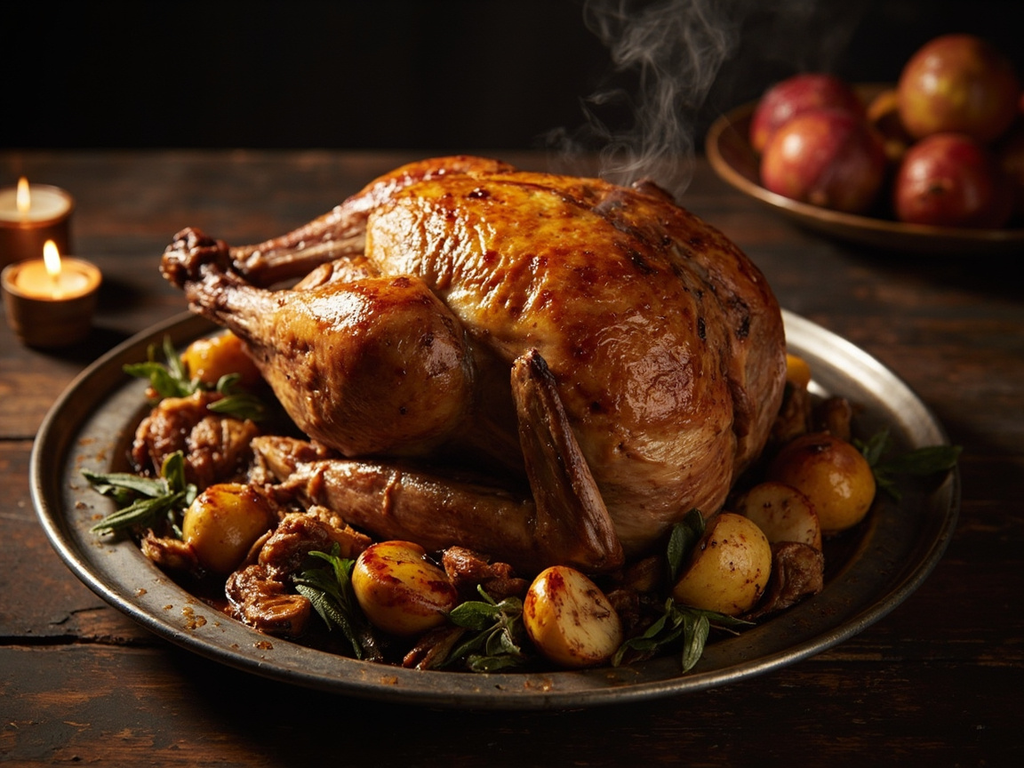
A whole roast goose, stuffed with onions and sage, glazed with amber honey. The skin crackles, the tender flesh tastes of autumn herbs. A dish for sharing, heavy with meaning: celebrating the end of the harvest and warding off winter.
Know, mortal, that I do not break bread: my substance is the light of Him who made me, and no meat passes my lips. But on this day when the year tilts toward darkness, men fatten the goose on the stubble and lay it steaming on the table in my name, that prosperity may be counted to them. I see the sage gathered at dawn, the onion melting in the fat, the honey gilding the skin at the fire. Eat, and let this abundance remind you: what is harvested with gratitude is blessed.
- •Fat goose fed on stubble — one, drawn and singed (centerpiece)
- •Fresh sage — a large handful (stuffing herb, autumn fragrance)
- •Onions — a few (stuffing)
- •Cooking apples — two or three (stuffing, tartness to cut the fat)
- •Honey — as needed (glaze)
- •Salt and pepper — to taste (seasoning)
Michaelmas Goose with Sage and Honey
A whole roast goose, stuffed with onions and sage, glazed with amber honey. The skin crackles, the tender flesh tastes of autumn herbs. A dish for sharing, heavy with meaning: celebrating the end of the harvest and warding off winter.
Why this dish? At Michaelmas, the day when rents were paid, tenants offered their lord a fat goose — fattened all autumn on the stubble of harvested fields. Eating the Michaelmas goose was believed to bring good luck and prosperity for the year. It is THE dish of the archangel's feast in medieval and early modern Northern Europe.
Know, mortal, that I do not break bread: my substance is the light of Him who made me, and no meat passes my lips. But on this day when the year tilts toward darkness, men fatten the goose on the stubble and lay it steaming on the table in my name, that prosperity may be counted to them. I see the sage gathered at dawn, the onion melting in the fat, the honey gilding the skin at the fire. Eat, and let this abundance remind you: what is harvested with gratitude is blessed.
Ingredients (period version)
- Fat goose fed on stubble — one, drawn and singed (centerpiece)
- Fresh sage — a large handful (stuffing herb, autumn fragrance)
- Onions — a few (stuffing)
- Cooking apples — two or three (stuffing, tartness to cut the fat)
- Honey — as needed (glaze)
- Salt and pepper — to taste (seasoning)
Ingredients
- Goose — 1 (about 4 kg) (centerpiece)
- Fresh sage — 1 bunch (stuffing)
- Onions — 3 large, sliced (stuffing)
- Apples (Reinette type) — 2, quartered (tart stuffing)
- Honey — 3 tbsp (glaze)
- Salt — 1 tbsp (seasoning)
- Black pepper — 1 tsp (seasoning)
Method
- Preheat the oven to 200°C. Dry the goose, prick it with a fork on the thighs and breast to let the fat render.
- Sauté the chopped onions and sage in a little goose fat, add the apple quarters, season with salt and pepper. Stuff the goose with this mixture.
- Season the skin. Place on a rack over a roasting pan, reduce to 170°C and cook for about 35 min per kg. Drain the melted fat regularly (save it carefully).
- In the last 15 minutes, brush with honey and increase to 200°C to lacquer the skin until a beautiful amber color.
- Let rest 20 min before carving. Serve with the stuffing and a little degreased jus.
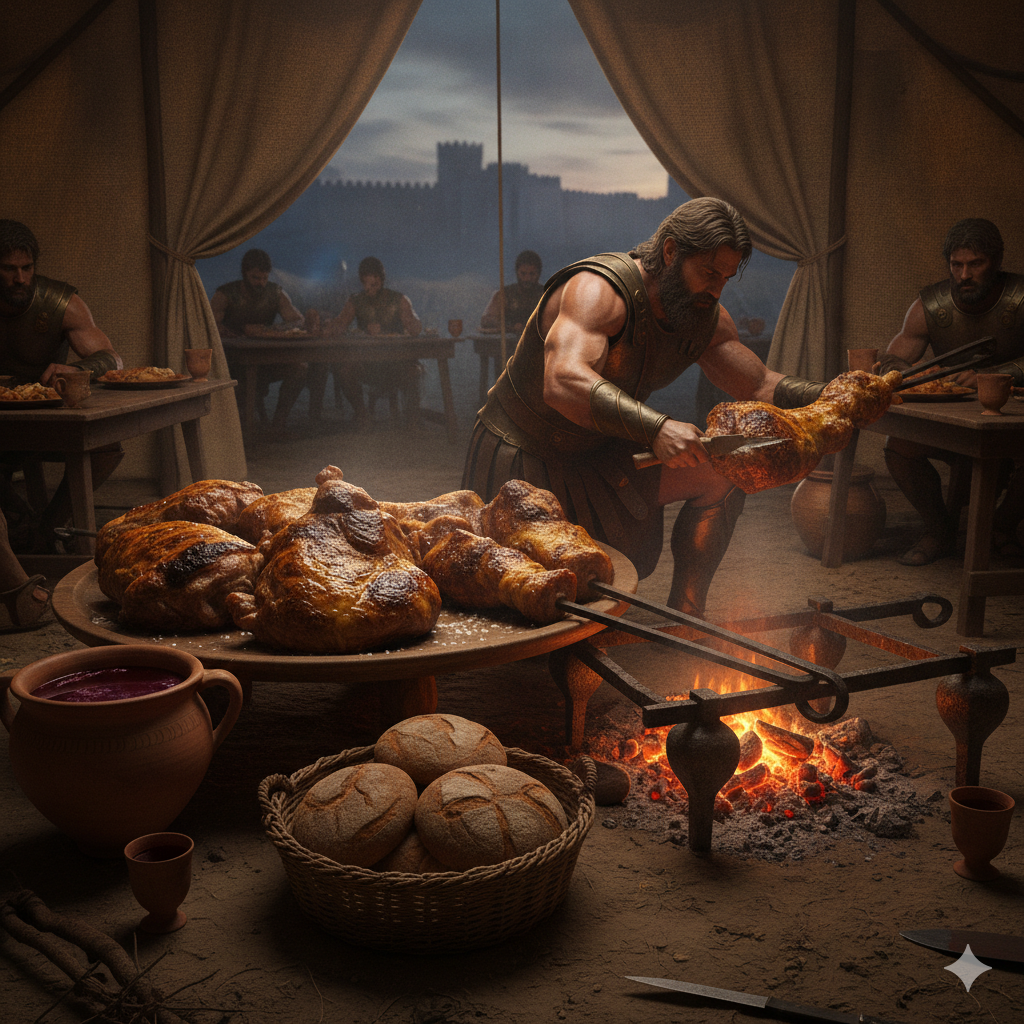
How it was made : The goose was threaded onto a spit turned by hand before the hearth, and a child basted it constantly with its own fat. The classic sage-and-onion stuffing for fatty poultry helped digest the grease; the tart apple played the same role. The collected fat was used for cooking all year round.
The contemporary twist : Serve the goose on a bed of cabbage roasted in the fat, and name the dish 'the rent table' — a nod to the day when one paid one's rent in poultry.
Sources : John Brand, Observations on Popular Antiquities (Michaelmas customs)
Archangel Michael · Charactorium