 flip
flipMaza, the everyday barley flatbread
Maza, the everyday barley flatbread
Why this dish? Archilochus is a soldier-poet, not an aristocrat: his daily fare is barley, the bread of the humble and the soldier's ration. On Paros and in the camp on Thasos, maza nourishes without an oven or long cooking — exactly the bread a mercenary carries and kneads himself.
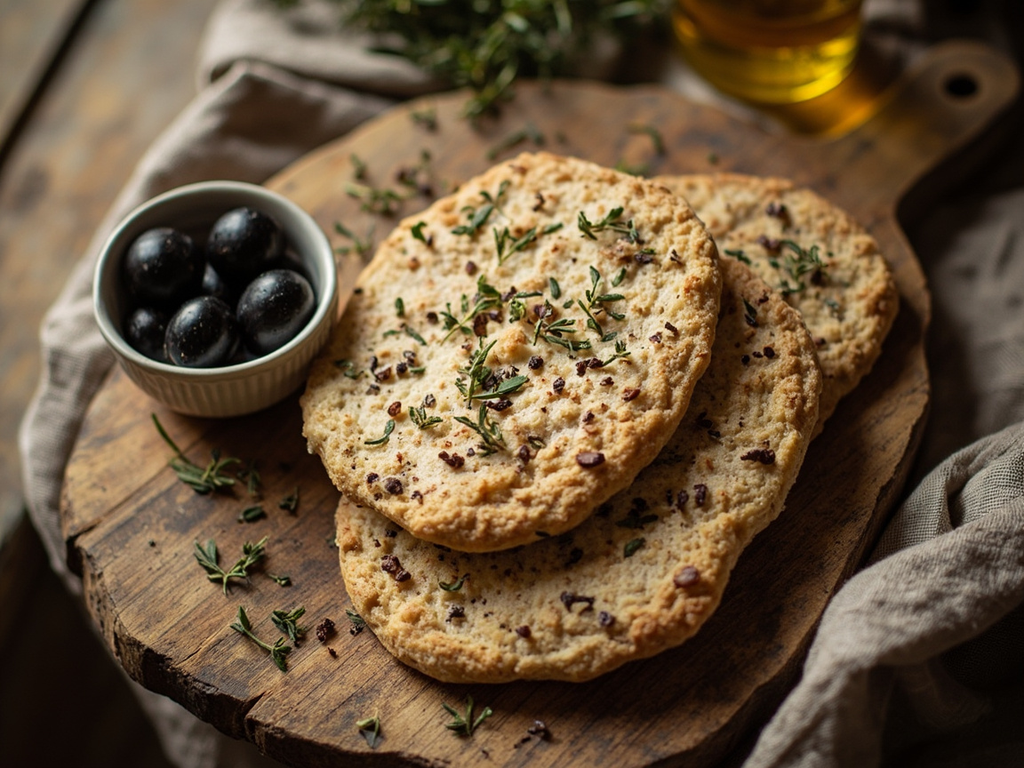
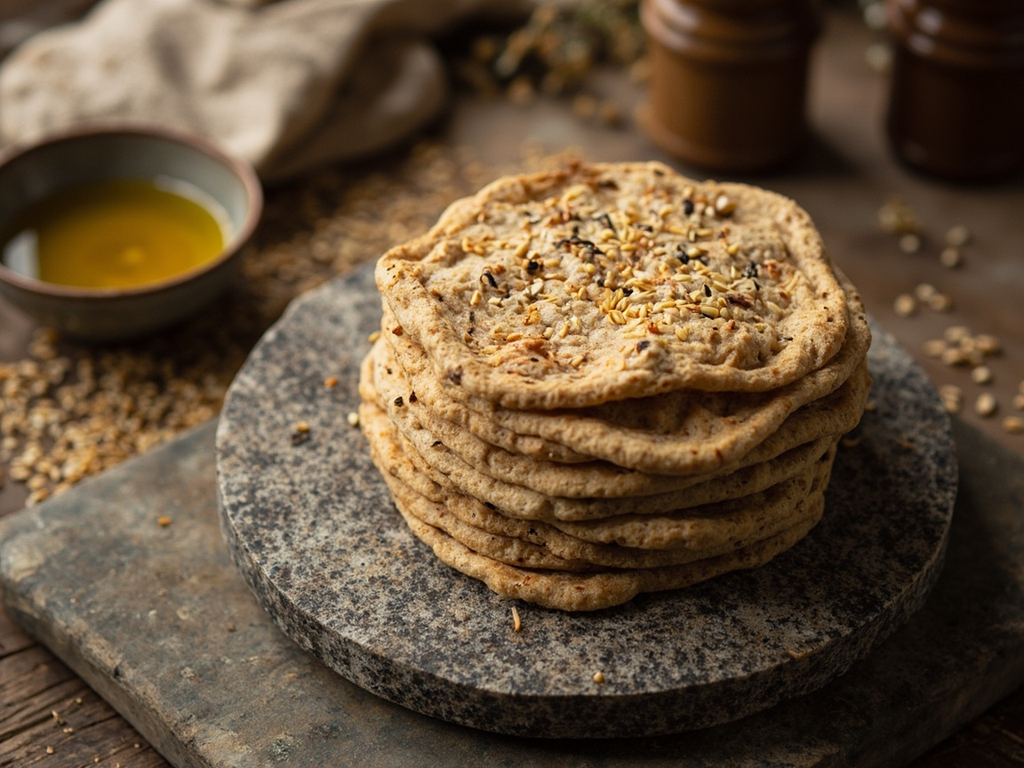
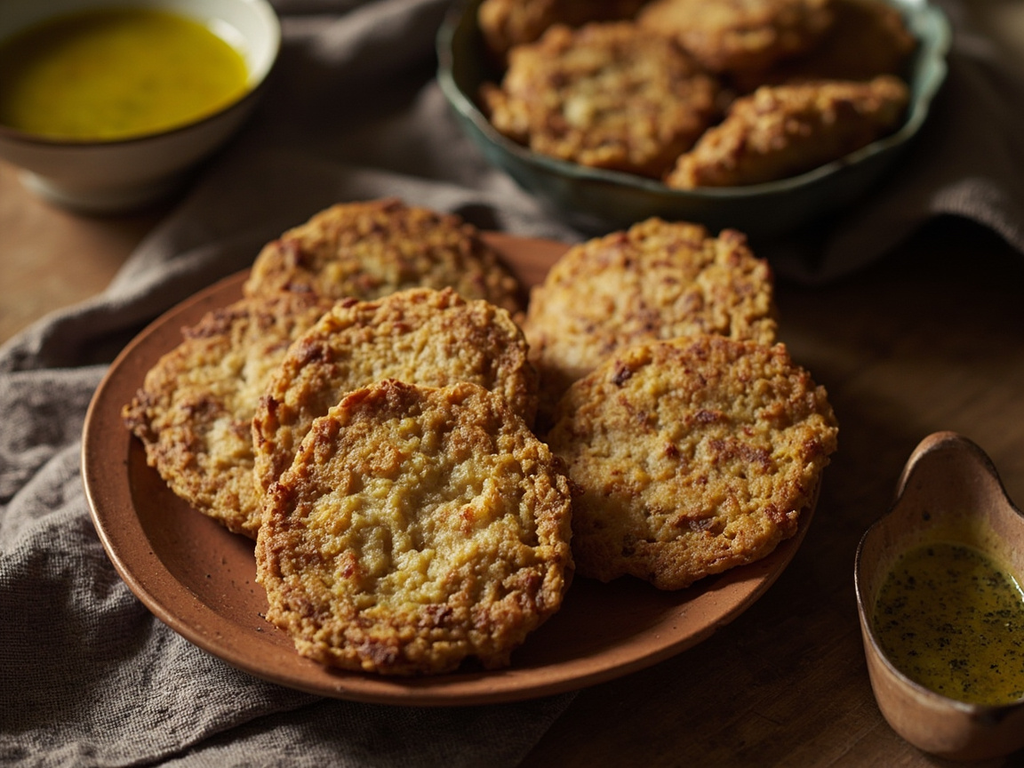
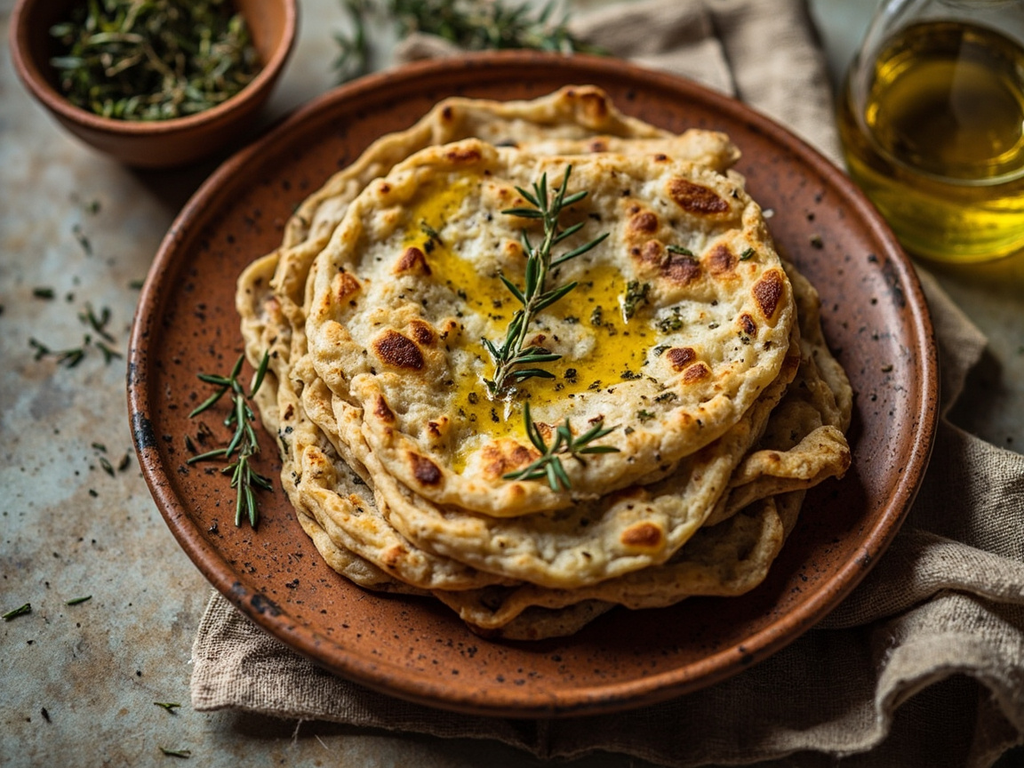
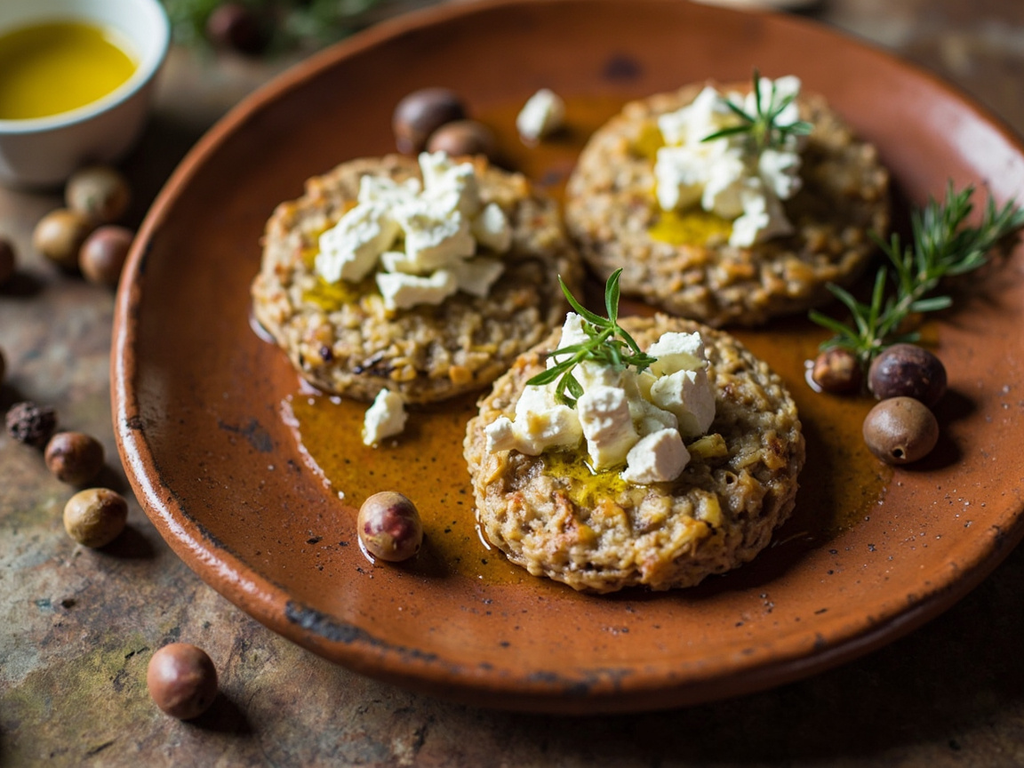
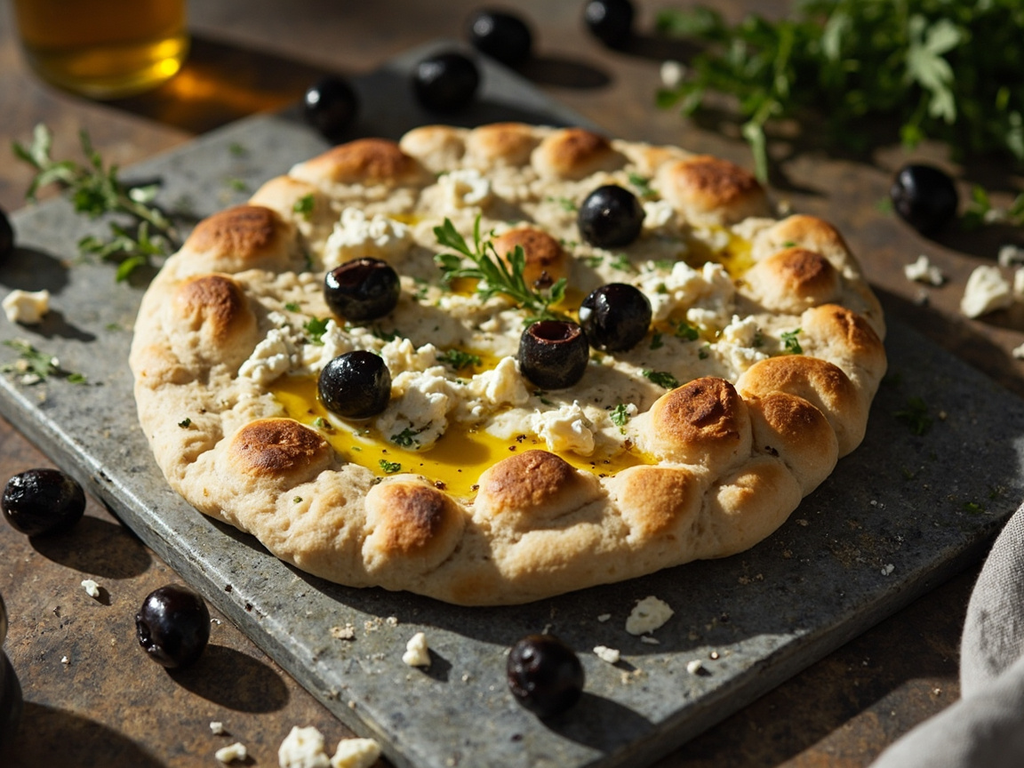
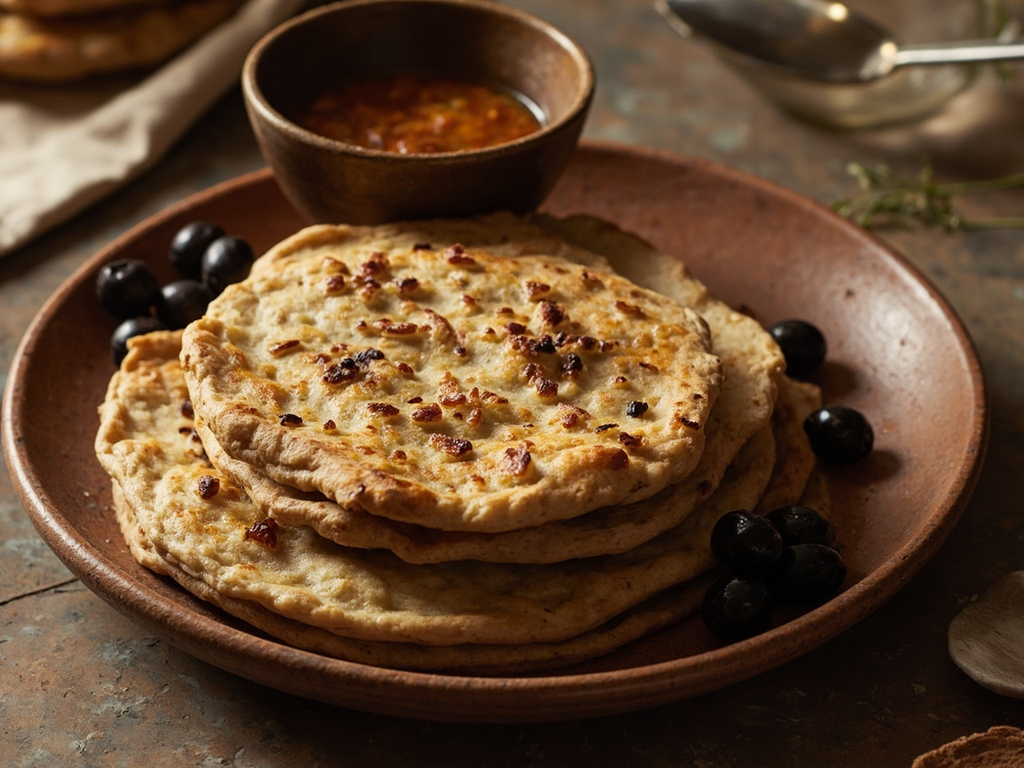
A dense flatbread of toasted barley, barely cooked, rustic and filling. Eaten warm, rubbed with oil, with a few olives. It is the foundation of the Greek meal: simple, earthy, made to stick to the stomach.
I am not one of those who dine reclining on purple cushions. My barley, I roast it over the fire, I grind it between two stones, I knead it with water and a drizzle of oil, and here is my bread. Help yourself: dip it in the brine, bite into it standing up. A man filled with barley fights better than an empty belly dreaming of feasts.
- •Toasted barley grains — two handfuls (base grain)
- •Spring water — as needed (binder)
- •Olive oil — a drizzle (binder and flavor)
- •Sea salt — a pinch (seasoning)
Maza, the everyday barley flatbread
A dense flatbread of toasted barley, barely cooked, rustic and filling. Eaten warm, rubbed with oil, with a few olives. It is the foundation of the Greek meal: simple, earthy, made to stick to the stomach.
Why this dish? Archilochus is a soldier-poet, not an aristocrat: his daily fare is barley, the bread of the humble and the soldier's ration. On Paros and in the camp on Thasos, maza nourishes without an oven or long cooking — exactly the bread a mercenary carries and kneads himself.
I am not one of those who dine reclining on purple cushions. My barley, I roast it over the fire, I grind it between two stones, I knead it with water and a drizzle of oil, and here is my bread. Help yourself: dip it in the brine, bite into it standing up. A man filled with barley fights better than an empty belly dreaming of feasts.
Ingredients (period version)
- Toasted barley grains — two handfuls (base grain)
- Spring water — as needed (binder)
- Olive oil — a drizzle (binder and flavor)
- Sea salt — a pinch (seasoning)
Ingredients
- Barley flour (ideally dry-toasted) — 200 g (base grain)
- Warm water — 100 to 120 ml (binder)
- Olive oil — 2 tbsp (binder and flavor)
- Salt — 1/2 tsp (seasoning)
Method
- If the flour is not already toasted, dry-toast it in a pan for 4-5 minutes until nutty-smelling, then let cool.
- Mix flour and salt, add oil then water little by little to obtain a thick, flexible dough that is not sticky.
- Shape into 2 or 3 flat patties about 1 cm thick.
- Cook in a pan or on a hot stone for 4-5 minutes per side, until colored.
- Serve warm, drizzled with oil, with olives and a little brine.
How it was made : Maza, made from barley rather than wheat, was the ordinary bread of modest Greeks and the soldier's ration. Often barely cooked, sometimes simply kneaded raw and dried, it kept and traveled well — an advantage for a mercenary on campaign.
The contemporary twist : Served as mini appetizer flatbreads, rubbed with dried oregano and a lemon zest, "archaic tapas" style.
Archilochus · Charactorium