 flip
flipBarley maza with olives and thyme
Barley maza with olives and thyme
Why this dish? Barley was the queen cereal of Minoan Crete, far more than wheat. As a daughter of Minos, Ariadne ate this modest flatbread every day, which nourished palace servants and the royal family alike — the daily bread of a wind-swept island.
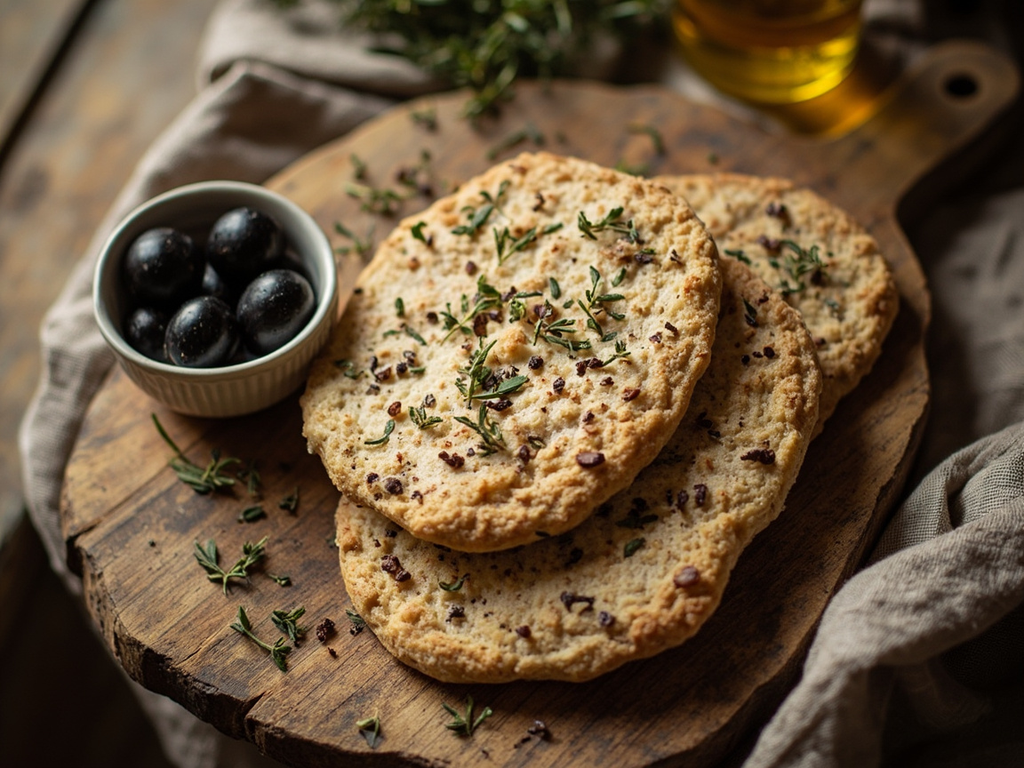
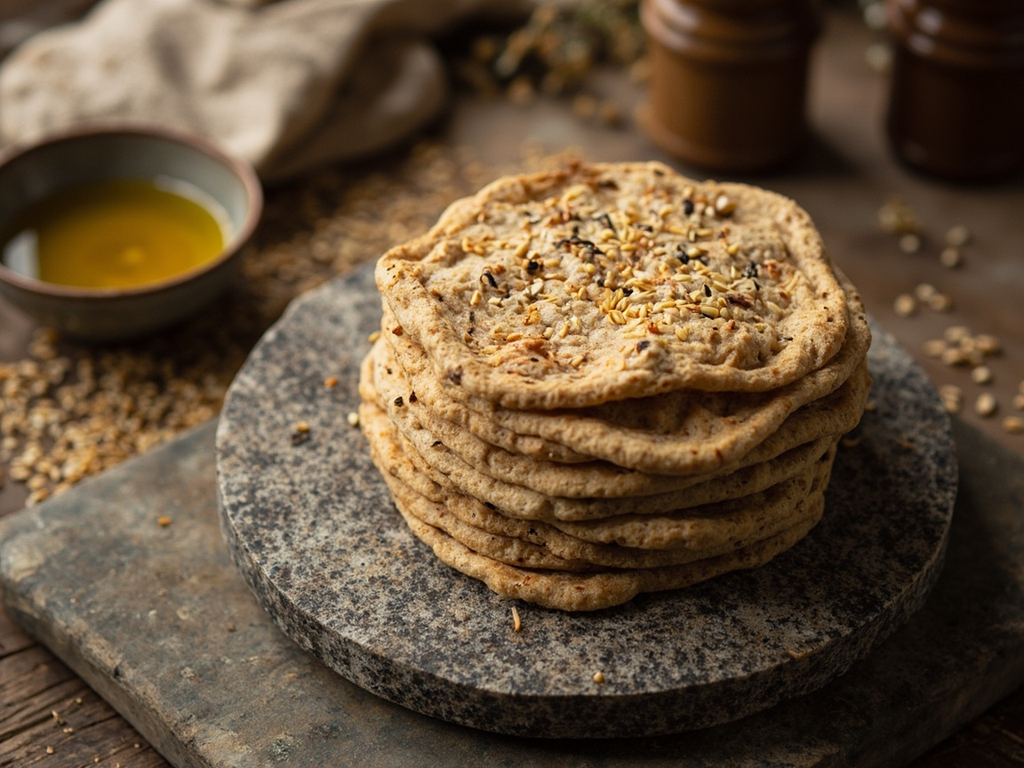
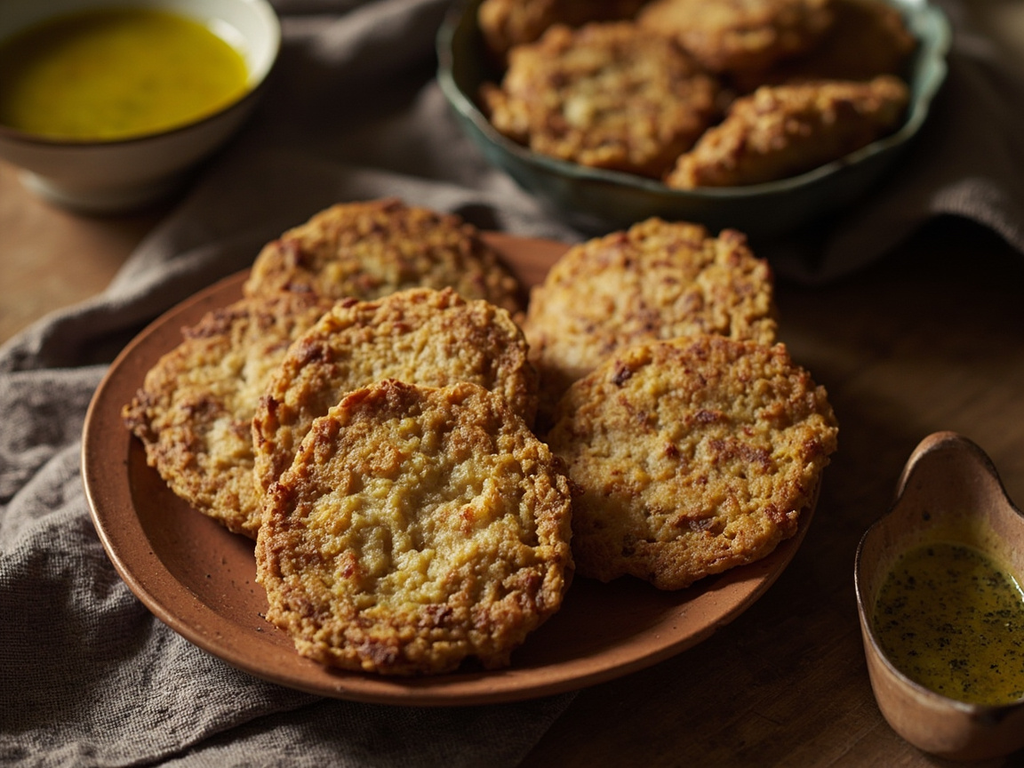
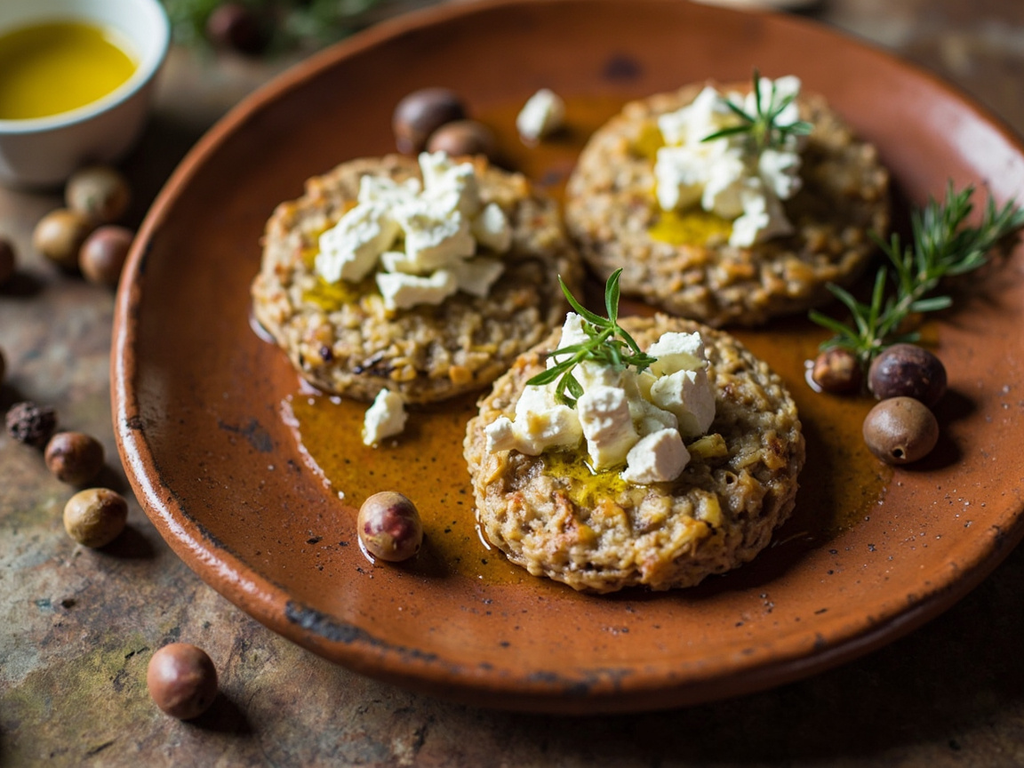
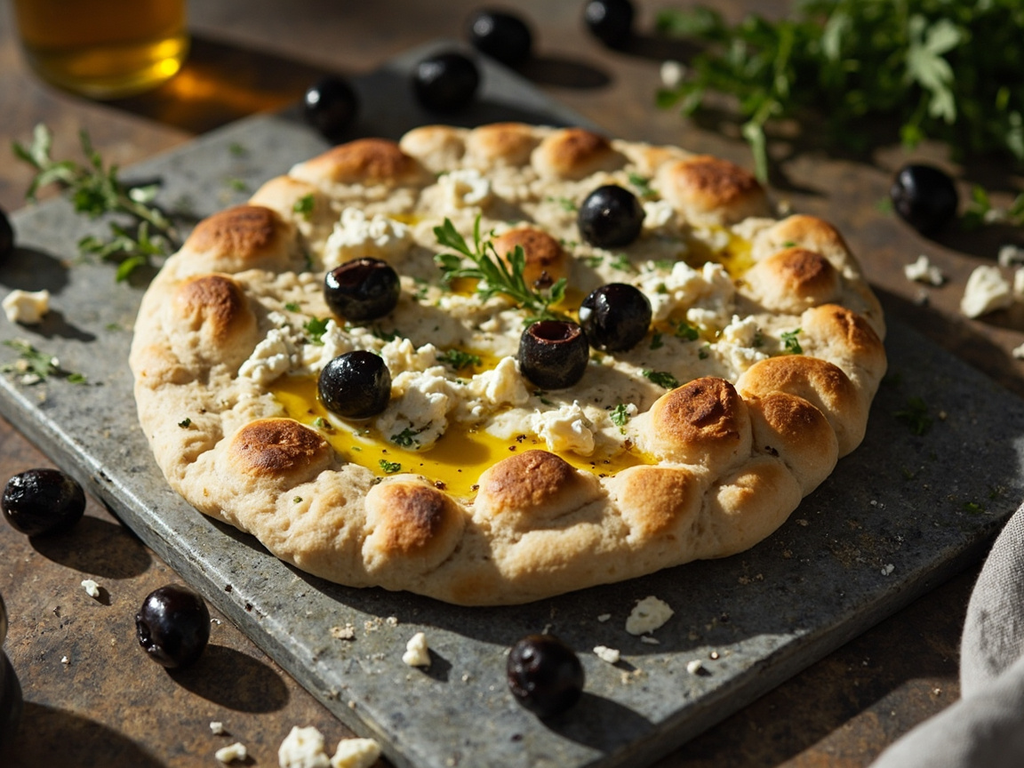
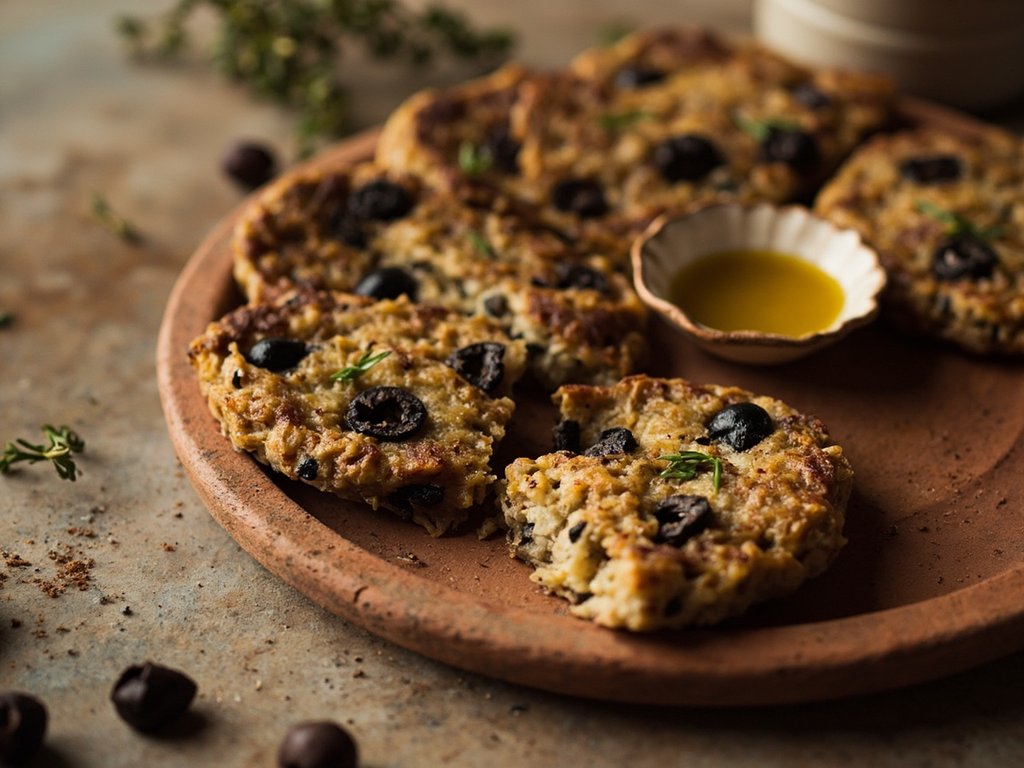
A flat, dense flatbread made from toasted barley flour, kneaded with olive oil, studded with crushed olives and wild thyme. This is the everyday bread, broken by hand and dipped in oil.
Approach, and do not disdain this humble flatbread: it is the barley of our island that made it, and barley does not lie as men sometimes lie. In the palace of my father Minos, they toasted the grain before grinding it, so that the flatbread would hold the belly from morning to night. I mixed in bitter olives and thyme that the wind of Mount Ida lays upon the stones. Eat it slowly, dipped in new oil — that is how you learn patience, the very patience that unrolls a thread to the heart of the Labyrinth.
- •Toasted barley flour — two handfuls per flatbread (cereal base)
- •Virgin olive oil — a good drizzle (binder and fat)
- •Crushed black olives — a handful (flavor, natural salt)
- •Fresh wild thyme — a few sprigs (aroma)
- •Spring water — as needed for dough (hydration)
- •Sea salt — a pinch (seasoning)
Barley maza with olives and thyme
A flat, dense flatbread made from toasted barley flour, kneaded with olive oil, studded with crushed olives and wild thyme. This is the everyday bread, broken by hand and dipped in oil.
Why this dish? Barley was the queen cereal of Minoan Crete, far more than wheat. As a daughter of Minos, Ariadne ate this modest flatbread every day, which nourished palace servants and the royal family alike — the daily bread of a wind-swept island.
Approach, and do not disdain this humble flatbread: it is the barley of our island that made it, and barley does not lie as men sometimes lie. In the palace of my father Minos, they toasted the grain before grinding it, so that the flatbread would hold the belly from morning to night. I mixed in bitter olives and thyme that the wind of Mount Ida lays upon the stones. Eat it slowly, dipped in new oil — that is how you learn patience, the very patience that unrolls a thread to the heart of the Labyrinth.
Ingredients (period version)
- Toasted barley flour — two handfuls per flatbread (cereal base)
- Virgin olive oil — a good drizzle (binder and fat)
- Crushed black olives — a handful (flavor, natural salt)
- Fresh wild thyme — a few sprigs (aroma)
- Spring water — as needed for dough (hydration)
- Sea salt — a pinch (seasoning)
Ingredients
- Barley flour — 200 g (cereal base)
- Extra virgin olive oil — 4 tbsp (binder and fat)
- Pitted black olives — 60 g (flavor)
- Fresh thyme — 1 tbsp leaves (aroma)
- Warm water — 100–120 ml (hydration)
- Salt — 1/2 tsp (seasoning)
Method
- Lightly toast the barley flour in a dry pan for 3 minutes, until it smells nutty.
- Mix the flour, salt, and thyme, then add olive oil and warm water until a soft, non-sticky dough forms.
- Roughly chop the olives and knead them into the dough.
- Shape into flat discs about half a centimeter thick.
- Cook on a hot stone or cast-iron pan for 3 to 4 minutes per side, until golden spots appear.
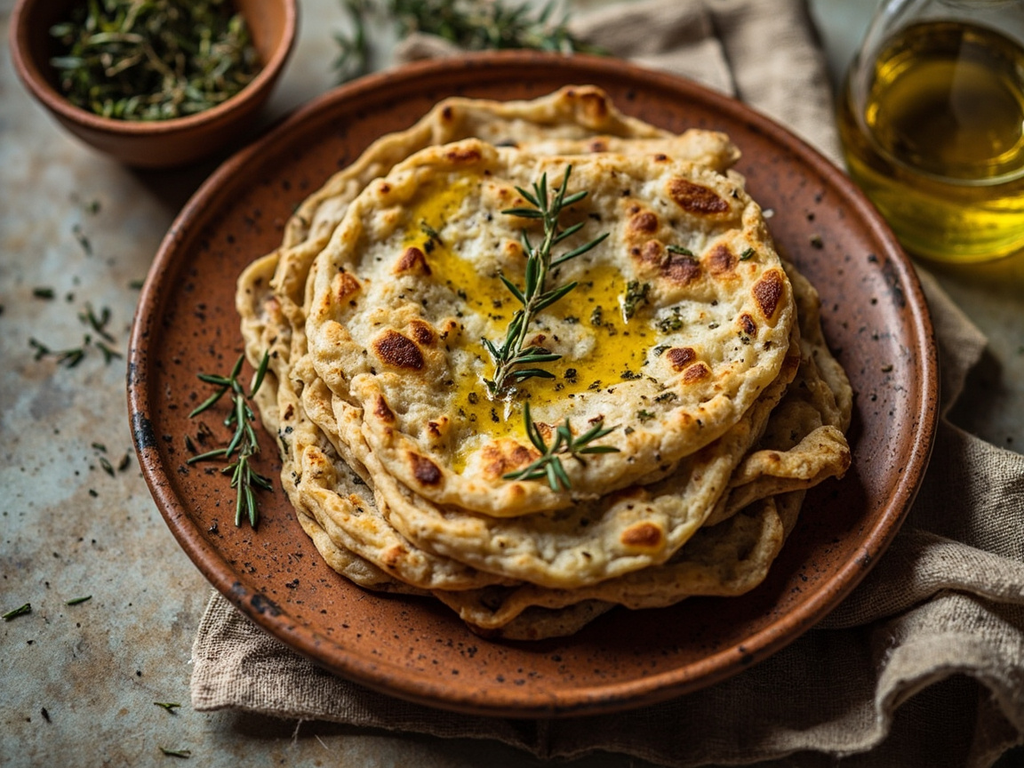
- Serve warm, drizzled with olive oil.
How it was made : In Minoan Crete and Archaic Greece, maza was the daily unleavened bread made from barley rather than wheat (which was rarer and reserved for the wealthy). The grain was often toasted before grinding, a technique archaeologically attested on Aegean sites. It was eaten by hand, dipped in oil, wine, or broth.
The contemporary twist : Serve it on a Mediterranean appetizer board, broken into pieces around a bowl of new olive oil and a sprinkle of thyme flowers — a Bronze Age 'focaccia'.
Sources : Andrew Dalby, Siren Feasts: A History of Food and Gastronomy in Greece (1996) · Yannis Hamilakis, archaeology of Minoan food (studies on Knossos)
Ariadne · Charactorium