 flip
flipMaza, the everyday barley cake
Maza, the everyday barley cake
Why this dish? Maza was the daily bread of the Athenian citizen — the one Aristotle shared with his students while walking the paths of the Lyceum. Frugal, quick, it left the mind free: one does not dine richly when one wants to philosophize in the afternoon.
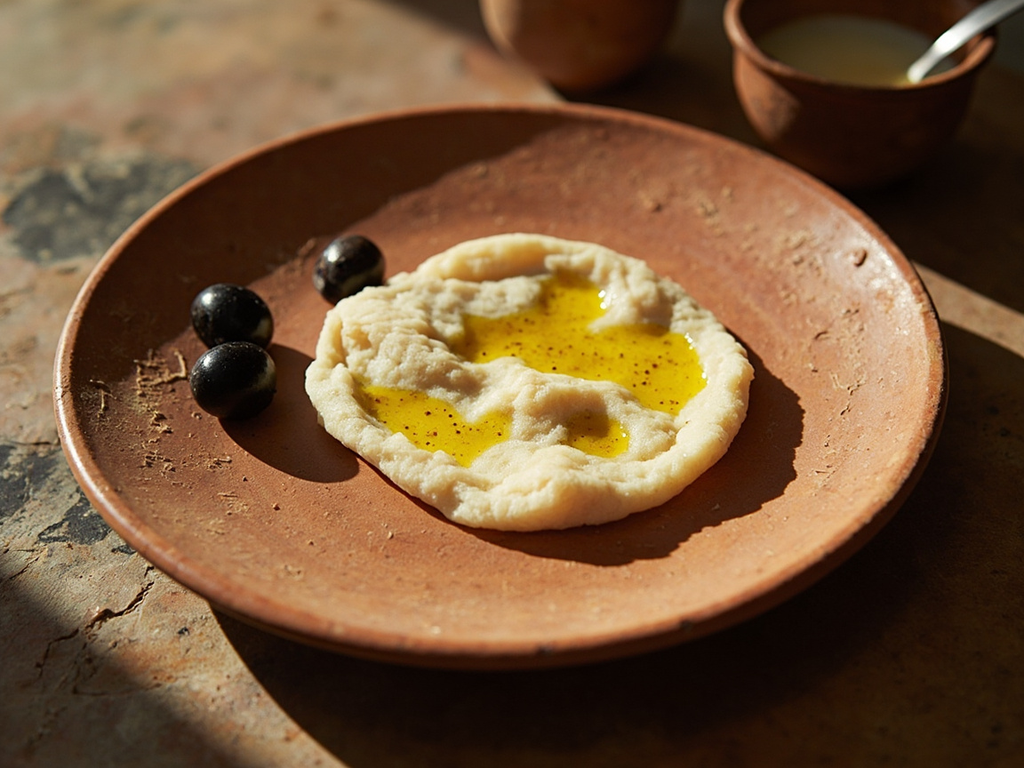
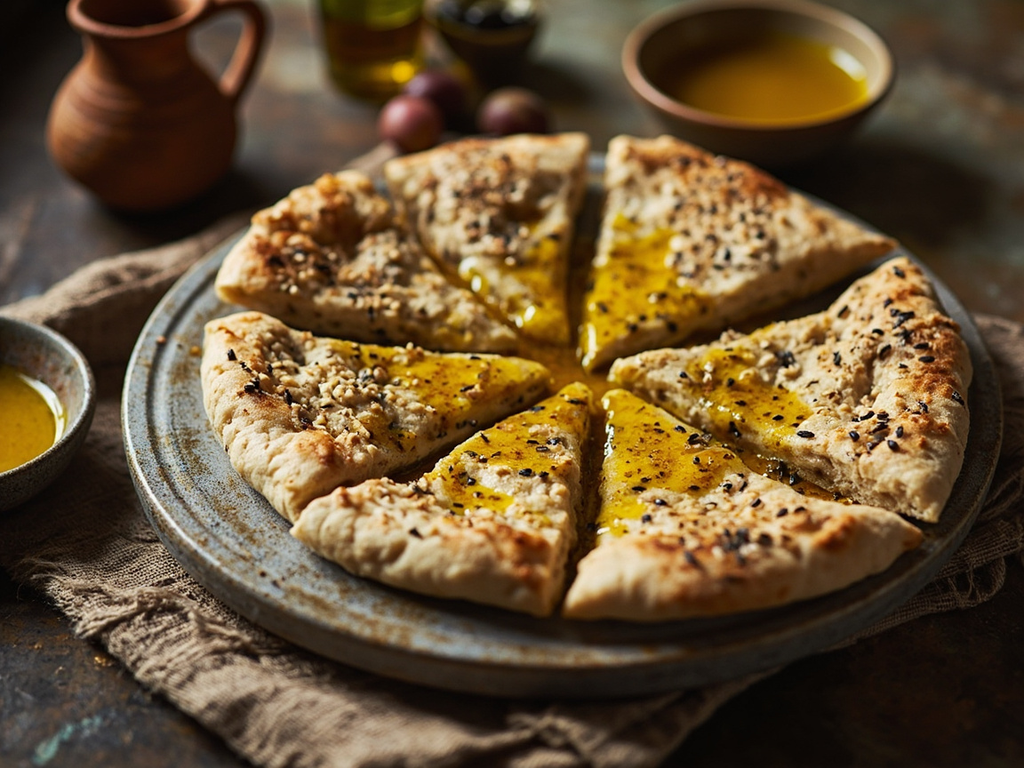
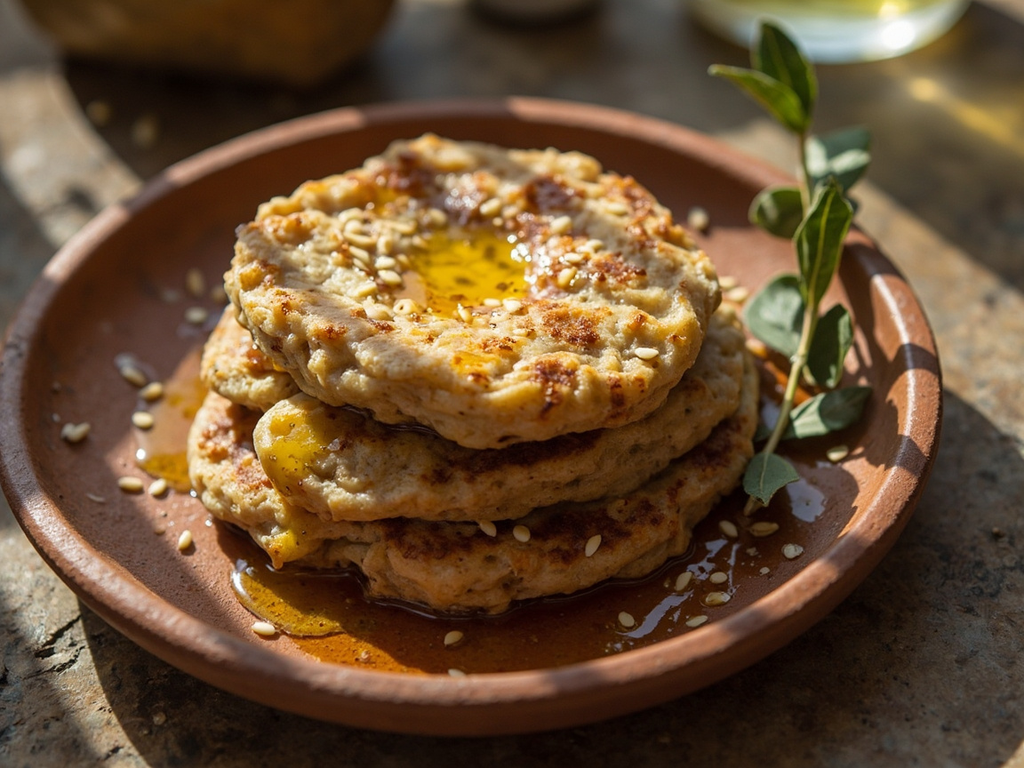
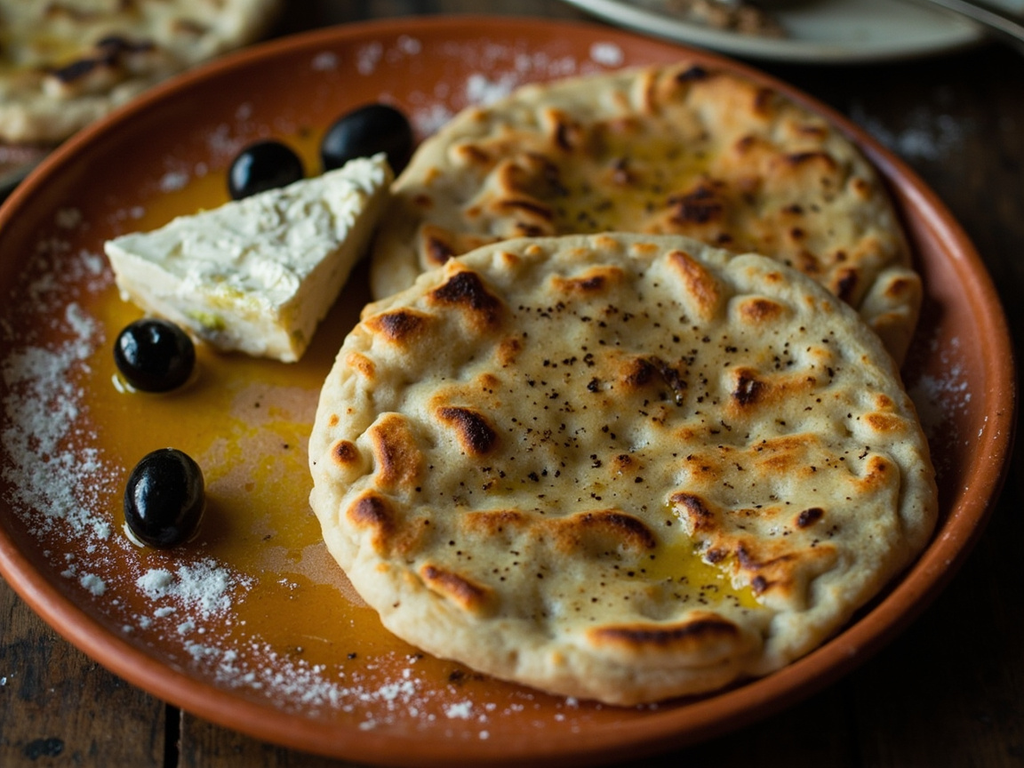
A flat cake of roasted barley, dense and rustic, served as the base of every meal. You break off a piece and place the opson on it — a few olives, a shard of goat cheese, a fig.
See then: barley nourishes the body without weighing down thought, and it is by simple things that every study must begin. At my table as at the Lyceum, I break this cake and place an olive on it, a little cheese — nothing more. Keep yourself from excess, my student: a full belly dulls the soul, and we have to observe the world before night. Chew slowly, and let your meal be, like every virtue, a golden mean.
- •Roasted barley flour (alphita) — a good measure (base)
- •Spring water — enough to bind (binder)
- •Olive oil — a drizzle (fat)
- •Sea salt — a pinch (seasoning)
Maza, the everyday barley cake
A flat cake of roasted barley, dense and rustic, served as the base of every meal. You break off a piece and place the opson on it — a few olives, a shard of goat cheese, a fig.
Why this dish? Maza was the daily bread of the Athenian citizen — the one Aristotle shared with his students while walking the paths of the Lyceum. Frugal, quick, it left the mind free: one does not dine richly when one wants to philosophize in the afternoon.
See then: barley nourishes the body without weighing down thought, and it is by simple things that every study must begin. At my table as at the Lyceum, I break this cake and place an olive on it, a little cheese — nothing more. Keep yourself from excess, my student: a full belly dulls the soul, and we have to observe the world before night. Chew slowly, and let your meal be, like every virtue, a golden mean.
Ingredients (period version)
- Roasted barley flour (alphita) — a good measure (base)
- Spring water — enough to bind (binder)
- Olive oil — a drizzle (fat)
- Sea salt — a pinch (seasoning)
Ingredients
- Barley flour — 200 g (base)
- Warm water — about 120 ml (binder)
- Olive oil — 2 tbsp (fat)
- Salt — 1/2 tsp (seasoning)
Method
- Lightly toast the barley flour dry in a pan for a few minutes, until it smells nutty (authentic Greek gesture).
- Mix the flour, salt, oil and warm water to obtain a supple dough, neither sticky nor dry.
- Shape flat cakes about half a centimeter thick.
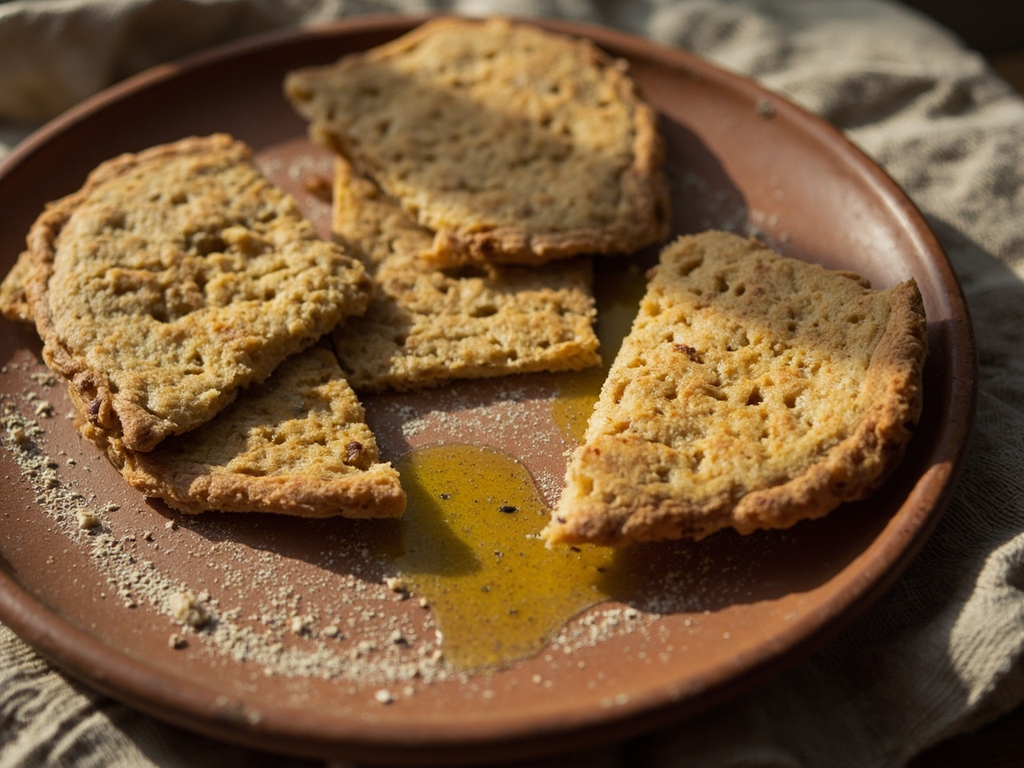
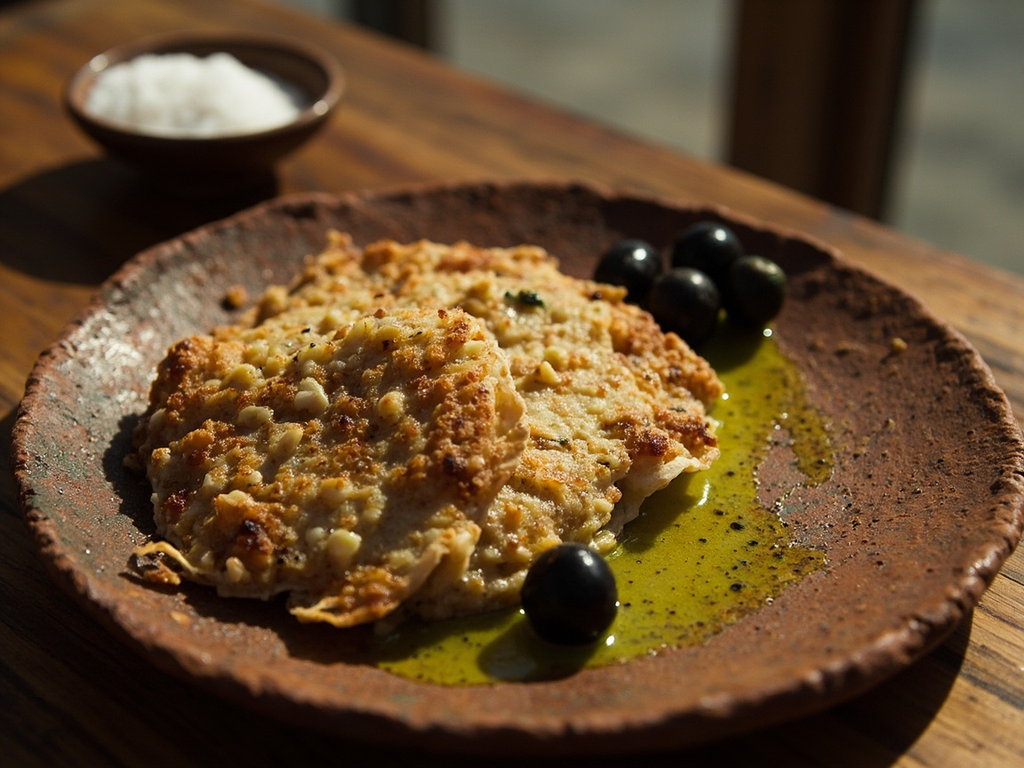
- Cook on a hot stone or dry pan, 3 to 4 minutes per side, until golden and marked.
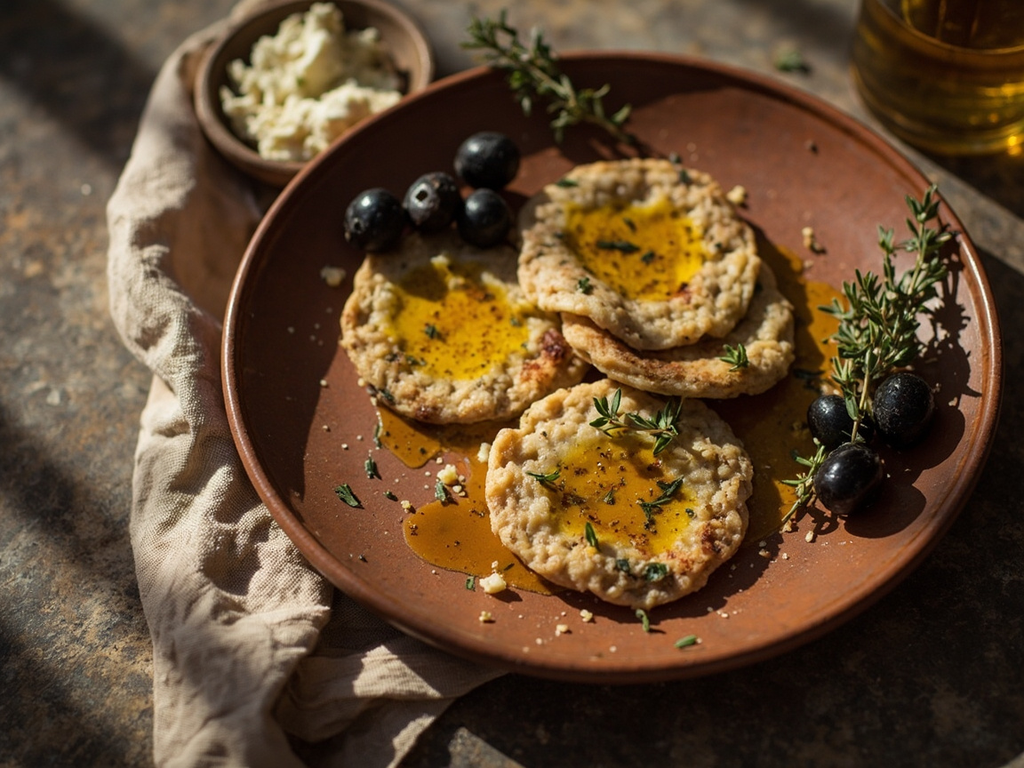
- Serve warm, to be broken by hand, topped with olives and goat cheese.
How it was made : Barley grew more easily than wheat in the poor soil of Attica: maza was thus the democratic food par excellence, from farmer to city-dweller. It was often prepared without cooking, simply by kneading alphita with water, oil or honey.
The contemporary twist : Serve it on a "Lyceum aperitif" board: warm cakes, Kalamata olives, fresh goat cheese and a drizzle of quality olive oil.
Sources : Athenaeus, The Deipnosophists · Andrew Dalby, Siren Feasts: A History of Food and Gastronomy in Greece
Aristotle · Charactorium