 flip
flipMaza, the Philosopher's Barley Flatbread
Maza, the Philosopher's Barley Flatbread
Why this dish? Socrates lived in legendary frugality: barley bread, vegetables, cheese. Maza, an unleavened barley flatbread, was THE sitos of the modest Athenian citizen. For a man who despised material pleasures and walked barefoot in the Agora, this austere flatbread was the food of a lifetime.
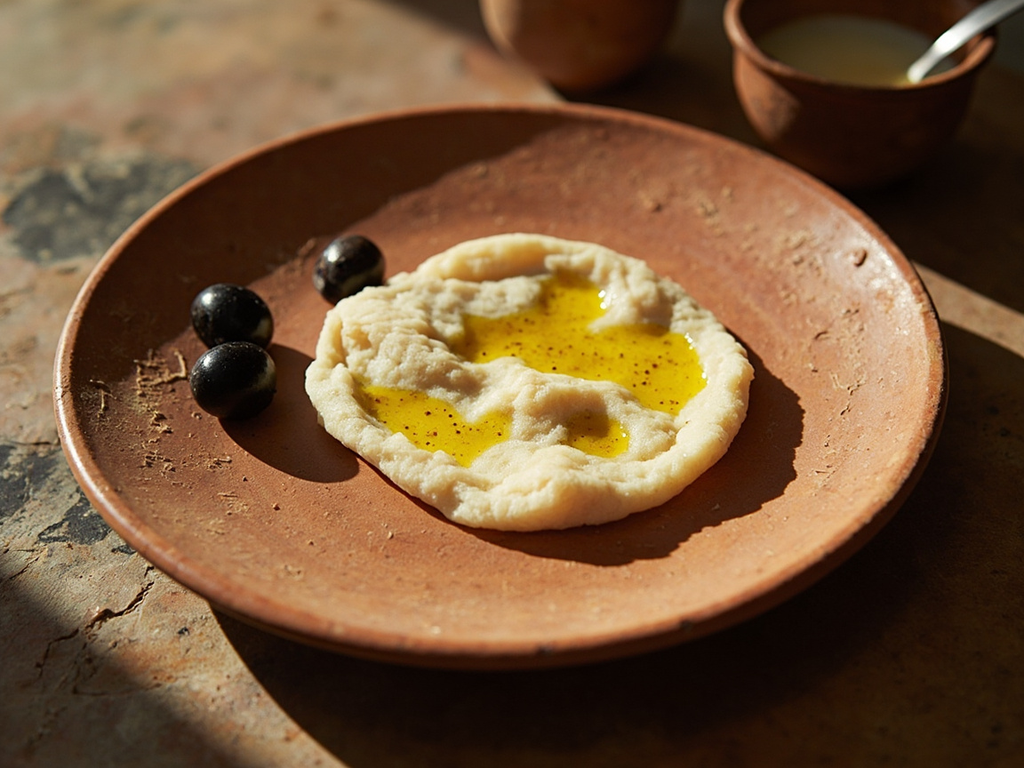
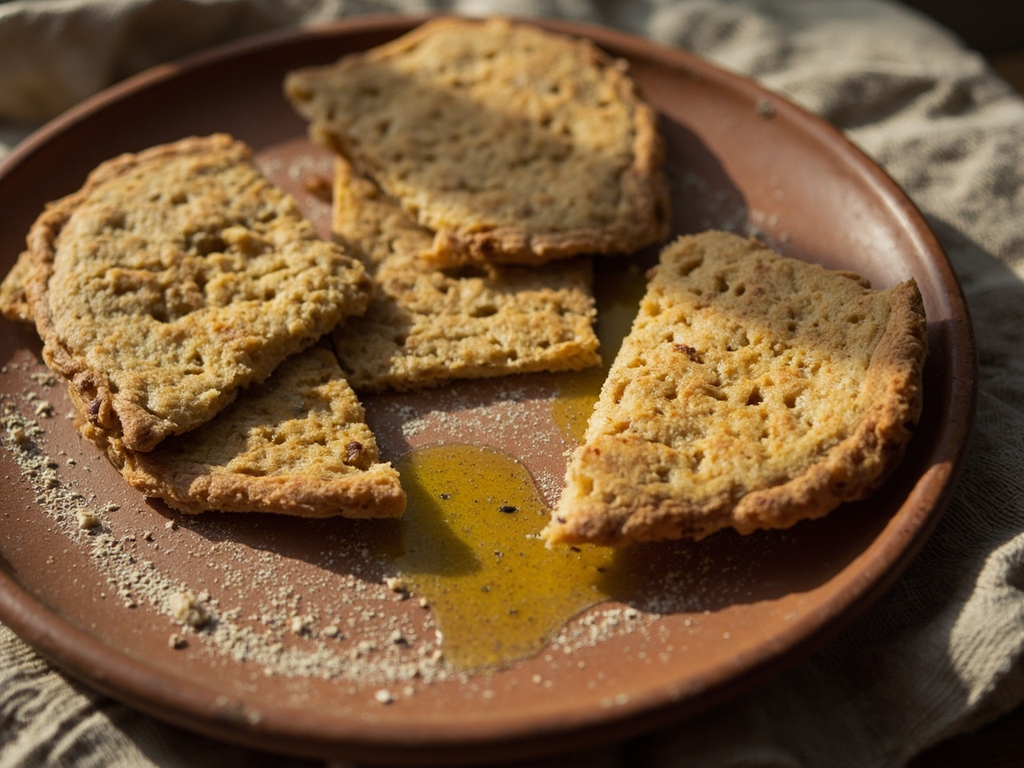
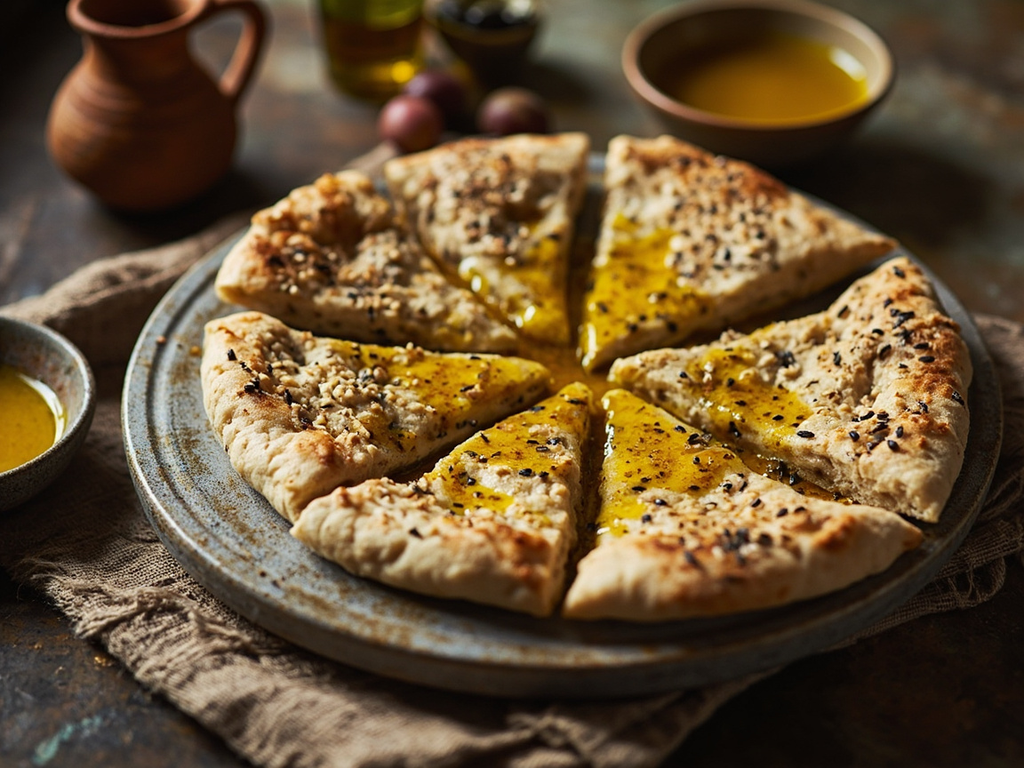
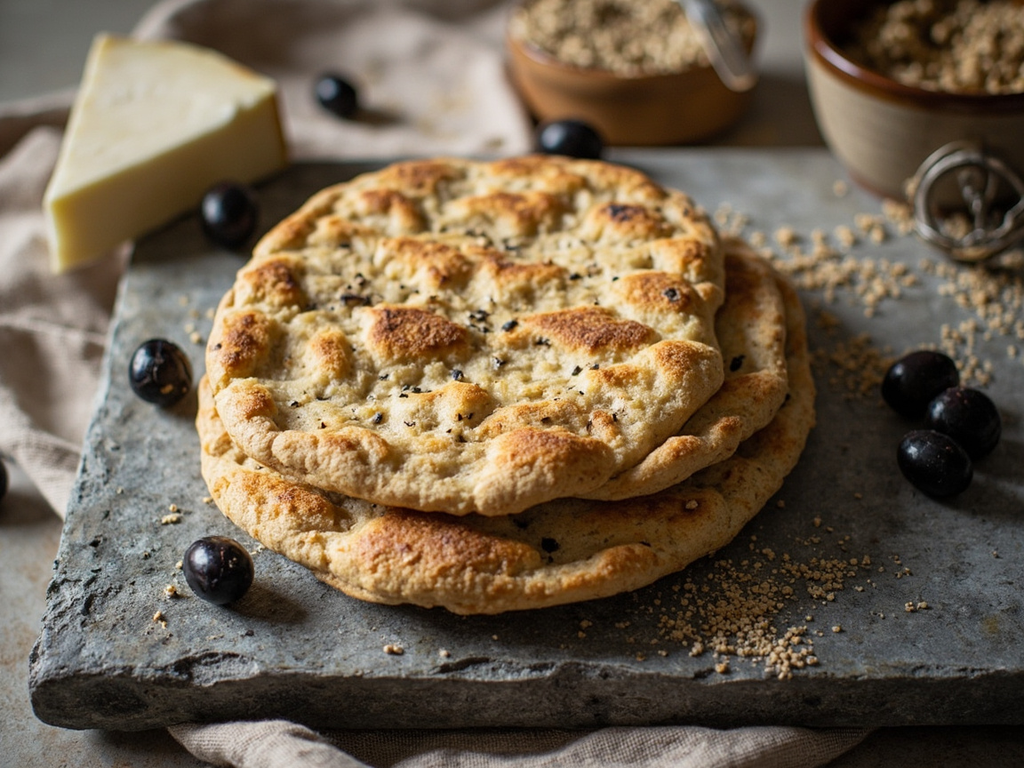
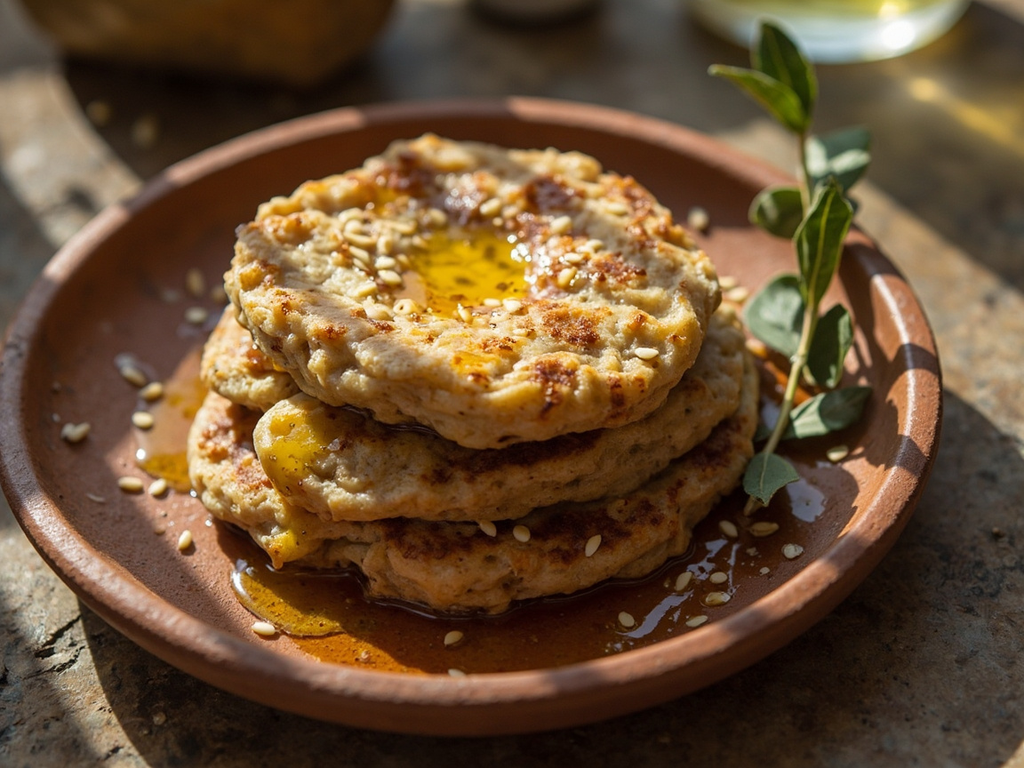
A flat barley cake grilled then kneaded, dense and rustic, seasoned with olive oil and a little salt. The daily bread of the ordinary Athenian — the one that Socrates broke without ever asking for better.
My good friend, you ask me what I eat? Look: a simple maza of barley, kneaded with my own hands, and I find myself richer than Callicles with his meats. For tell me — does not the hungry man need fewer dishes than the one whom satiety has made difficult? Dip it in a stream of oil, chew it slowly, and ask yourself: is not hunger the best of cooks? There: I do not eat to live in feasting, I eat to live, and to live is to think.
- •Toasted barley flour (alphita) — two handfuls (cereal base)
- •Spring water — for kneading (binder)
- •Attic olive oil — a drizzle (seasoning and binder)
- •Sea salt — a pinch (flavor)
Maza, the Philosopher's Barley Flatbread
A flat barley cake grilled then kneaded, dense and rustic, seasoned with olive oil and a little salt. The daily bread of the ordinary Athenian — the one that Socrates broke without ever asking for better.
Why this dish? Socrates lived in legendary frugality: barley bread, vegetables, cheese. Maza, an unleavened barley flatbread, was THE sitos of the modest Athenian citizen. For a man who despised material pleasures and walked barefoot in the Agora, this austere flatbread was the food of a lifetime.
My good friend, you ask me what I eat? Look: a simple maza of barley, kneaded with my own hands, and I find myself richer than Callicles with his meats. For tell me — does not the hungry man need fewer dishes than the one whom satiety has made difficult? Dip it in a stream of oil, chew it slowly, and ask yourself: is not hunger the best of cooks? There: I do not eat to live in feasting, I eat to live, and to live is to think.
Ingredients (period version)
- Toasted barley flour (alphita) — two handfuls (cereal base)
- Spring water — for kneading (binder)
- Attic olive oil — a drizzle (seasoning and binder)
- Sea salt — a pinch (flavor)
Ingredients
- Barley flour — 200 g (cereal base)
- Warm water — 120 ml approx. (binder)
- Extra-virgin olive oil — 3 tbsp (seasoning)
- Salt — 1/2 tsp (flavor)
- Sesame seeds (optional) — 1 tbsp (garnish)
Method
- Lightly toast the barley flour in a dry pan for 2-3 minutes until nutty, then let cool.
- Mix the flour, salt, and 2 tbsp oil, then gradually add warm water until a firm, non-sticky dough forms.
- Knead for 5 minutes, shape into flat cakes about 1 cm thick.
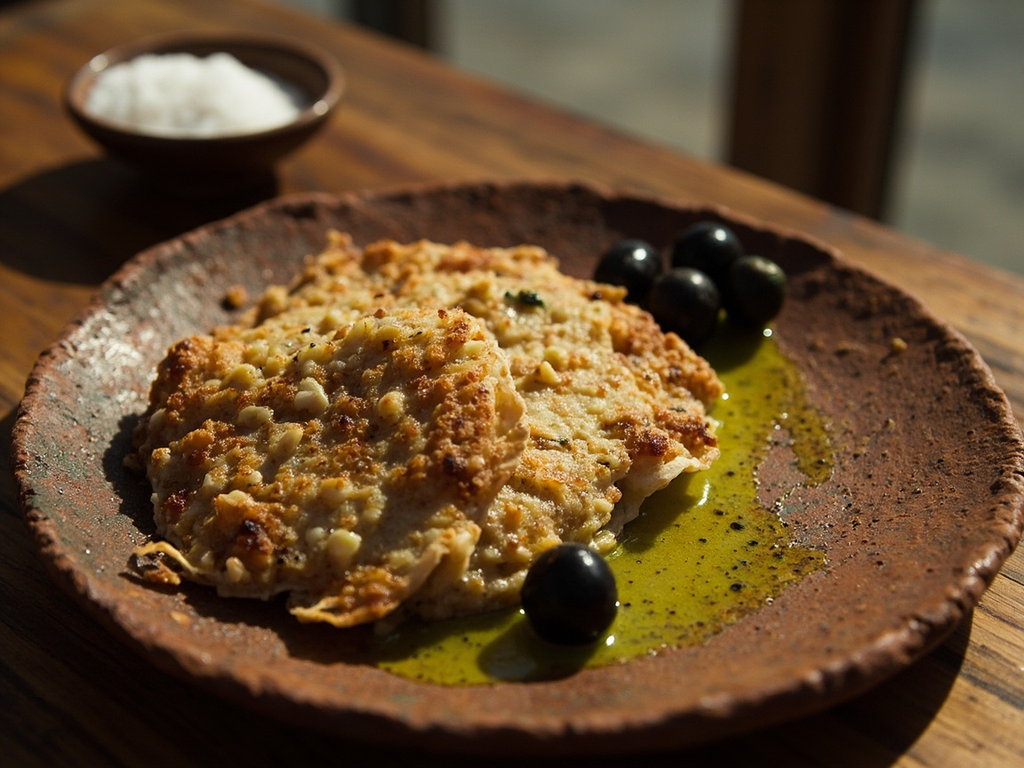
- Cook on a hot stone or cast-iron pan for 4-5 minutes per side until browned.
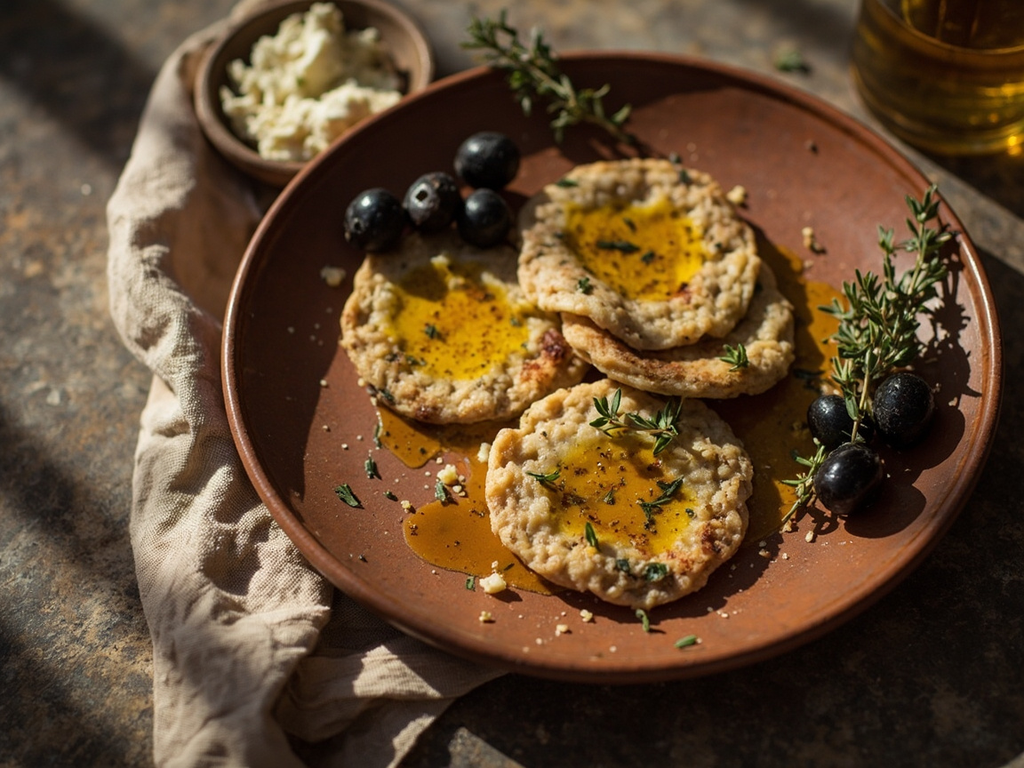
- Drizzle with remaining oil, sprinkle with sesame seeds, serve warm.
How it was made : Barley was the dominant cereal of Attica, hardier than wheat. It was often consumed as maza, a raw or lightly cooked flatbread made from alphita (toasted and ground barley), sometimes simply kneaded with water and oil without cooking. It was the staple food of the lower classes and the very symbol of Greek sobriety.
The contemporary twist : Serve as mini appetizer flatbreads, spread with Kalamata black olive paste, under the name "Agora bites."
Sources : Andrew Dalby, Siren Feasts: A History of Food and Gastronomy in Greece (1996) · Plato, Apology of Socrates
Socrates · Charactorium