 flip
flipMaza, the philosophers' barley flatbread
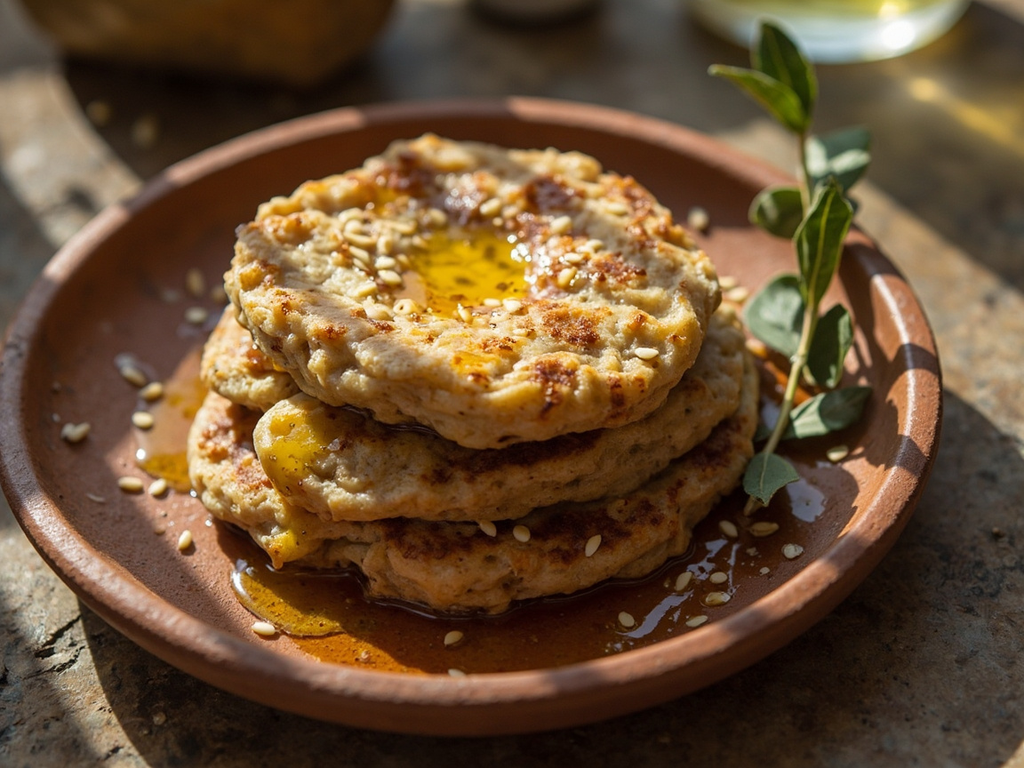
Maza, the philosophers' barley flatbread
Why this dish? Maza was the daily bread of modest Athenians and men of measure; Plato, known for his sobriety at table, made it the food of a life devoted to study. In the Republic, he describes the "healthy" city fed on barley and wheat, figs and olives — exactly this table.
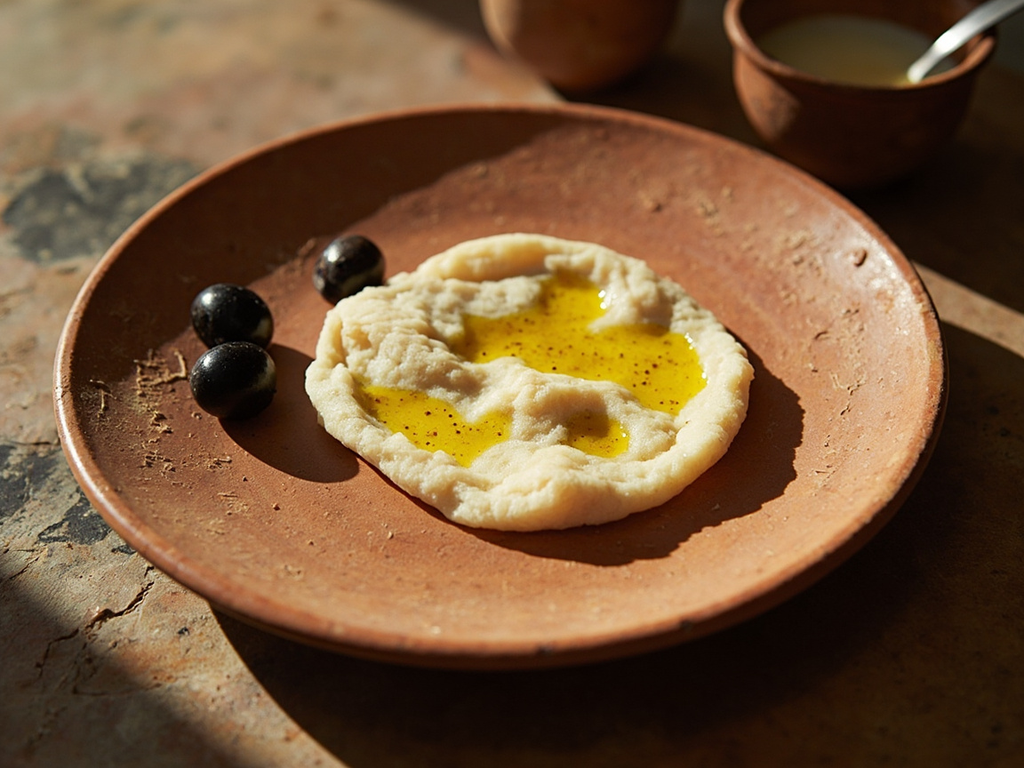
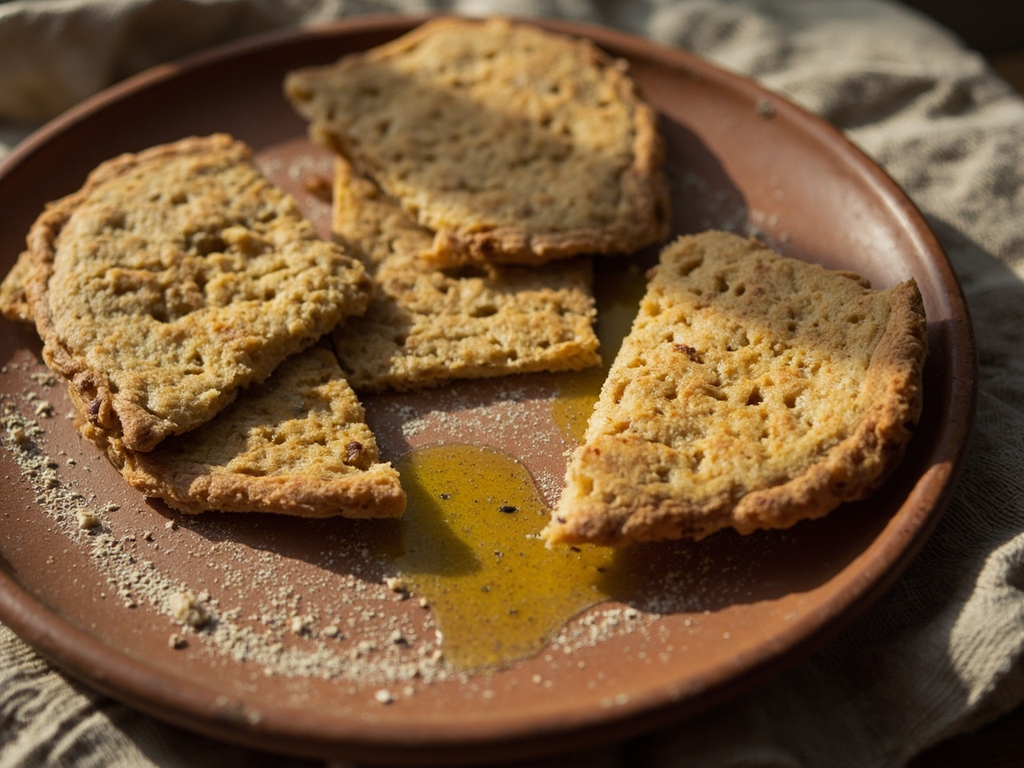
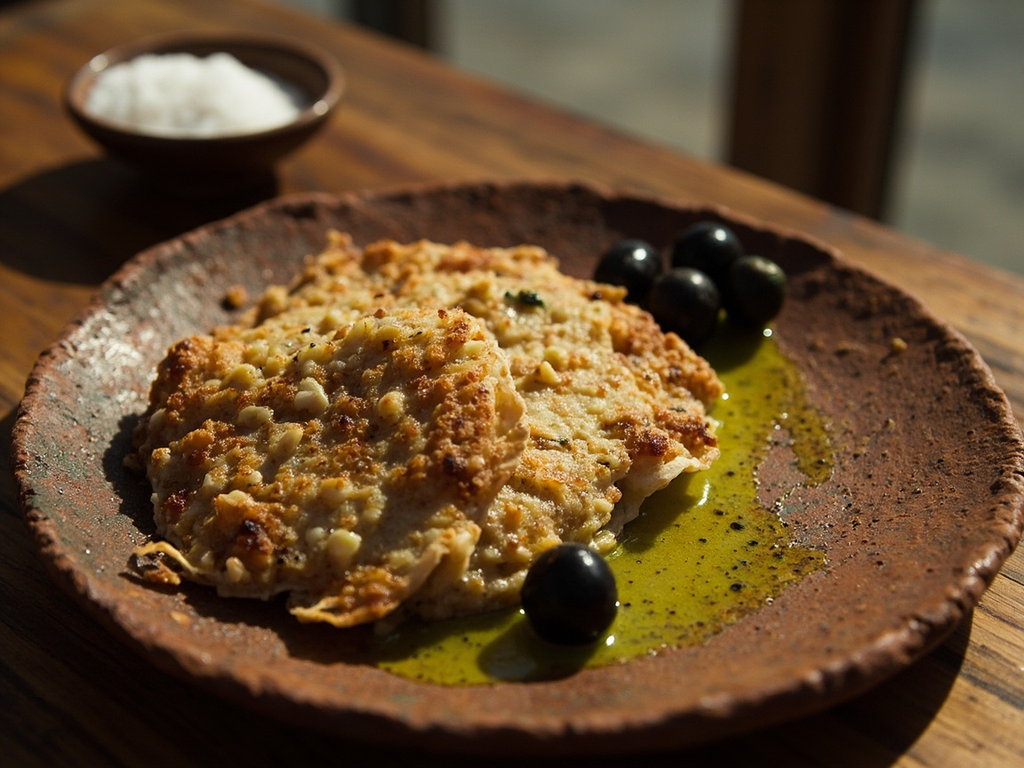
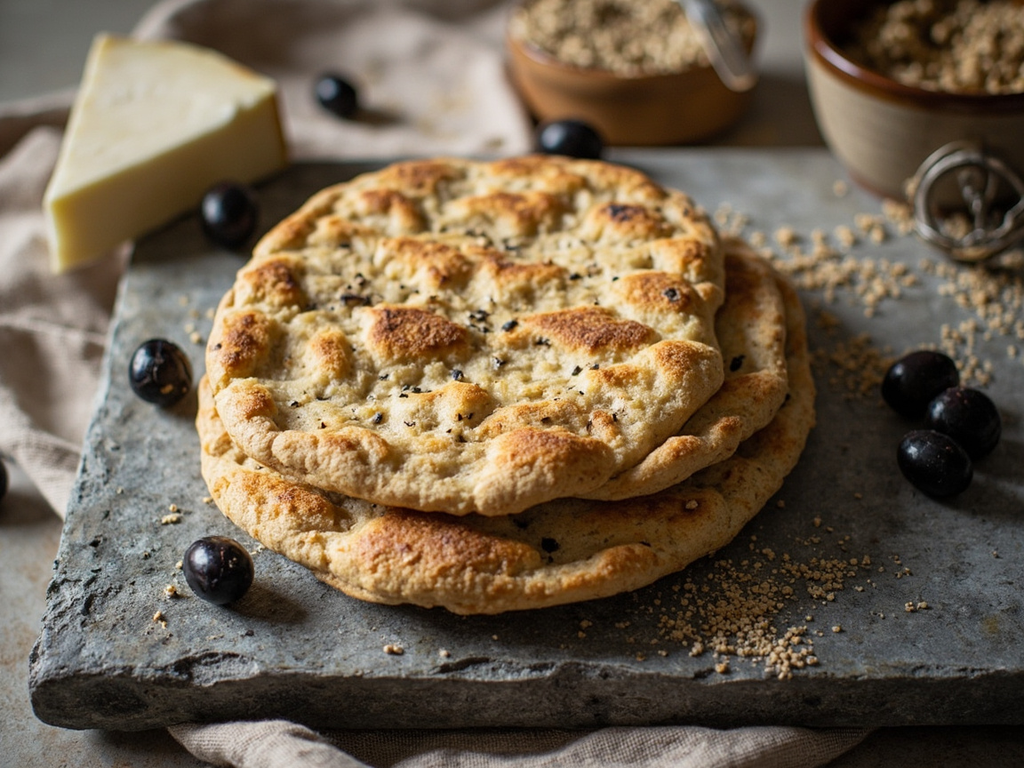
A thick, rustic flatbread made from roasted barley kneaded with olive oil, barely cooked, broken by hand to dip into vegetables or soak up diluted wine. Honest flavor, slightly bitter from the grain, softened by oil.
Come closer, you who wish to learn, and do not despise this humble flatbread. At the Academy, we did not dine to flatter the belly but to nourish the body that carries the soul: a little ground barley, water from the spring, oil from our olive trees — that is enough to think clearly until evening. Socrates said we should eat to live, not live to eat; so break this barley bread, dip it, and keep your hunger for fine ideas. He who demands Syracusan sauces has already lost half his reason.
- •Roasted barley flour (alphita) — two generous handfuls (cereal base)
- •Olive oil — a drizzle (binder and flavor)
- •Spring water — to knead (hydration)
- •Sea salt — a pinch (seasoning)
Maza, the philosophers' barley flatbread
A thick, rustic flatbread made from roasted barley kneaded with olive oil, barely cooked, broken by hand to dip into vegetables or soak up diluted wine. Honest flavor, slightly bitter from the grain, softened by oil.
Why this dish? Maza was the daily bread of modest Athenians and men of measure; Plato, known for his sobriety at table, made it the food of a life devoted to study. In the Republic, he describes the "healthy" city fed on barley and wheat, figs and olives — exactly this table.
Come closer, you who wish to learn, and do not despise this humble flatbread. At the Academy, we did not dine to flatter the belly but to nourish the body that carries the soul: a little ground barley, water from the spring, oil from our olive trees — that is enough to think clearly until evening. Socrates said we should eat to live, not live to eat; so break this barley bread, dip it, and keep your hunger for fine ideas. He who demands Syracusan sauces has already lost half his reason.
Ingredients (period version)
- Roasted barley flour (alphita) — two generous handfuls (cereal base)
- Olive oil — a drizzle (binder and flavor)
- Spring water — to knead (hydration)
- Sea salt — a pinch (seasoning)
Ingredients
- Barley flour — 200 g (cereal base)
- Extra virgin olive oil — 3 tbsp (binder and flavor)
- Warm water — 120 to 150 ml (hydration)
- Salt — 1 tsp (seasoning)
- Sesame seeds (optional) — 1 tbsp (decoration and crunch)
Method
- Lightly toast the barley flour in a dry pan for a few minutes until nutty, then let cool.
- Mix flour, salt, olive oil, then add water little by little until a soft but firm dough forms.
- Knead for 5 minutes, shape into a thick flatbread about 1.5 cm thick, sprinkle with sesame seeds.
- Bake for 15 to 20 minutes at 200°C on a stone or hot baking sheet, until golden and crusty underneath.
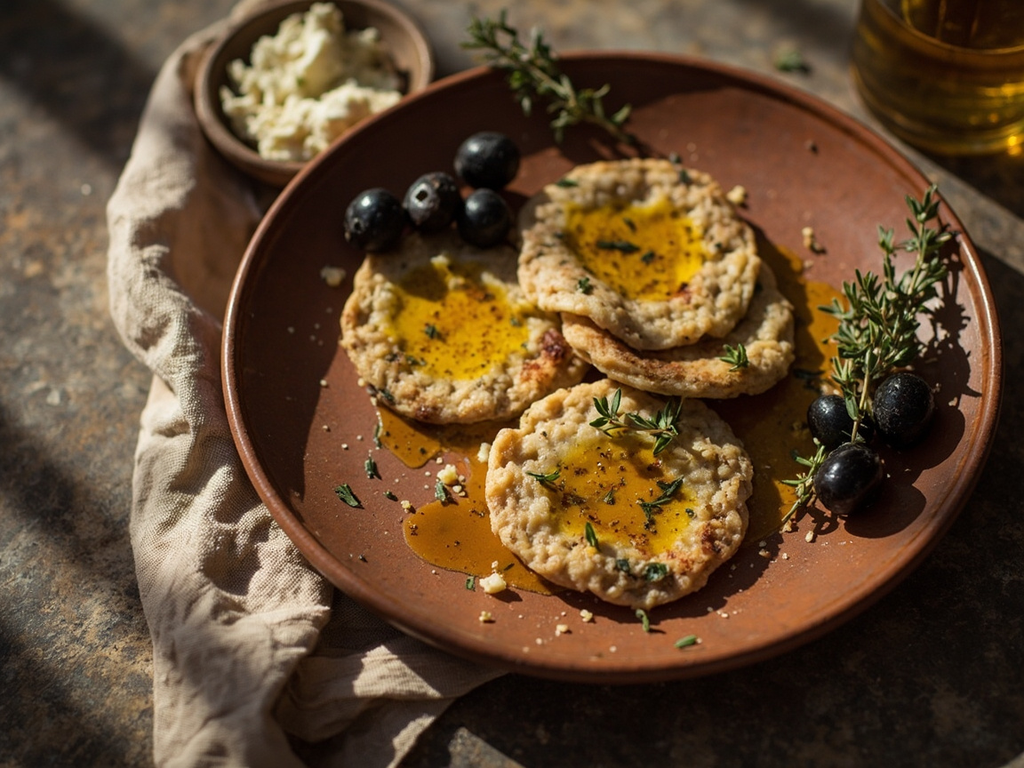
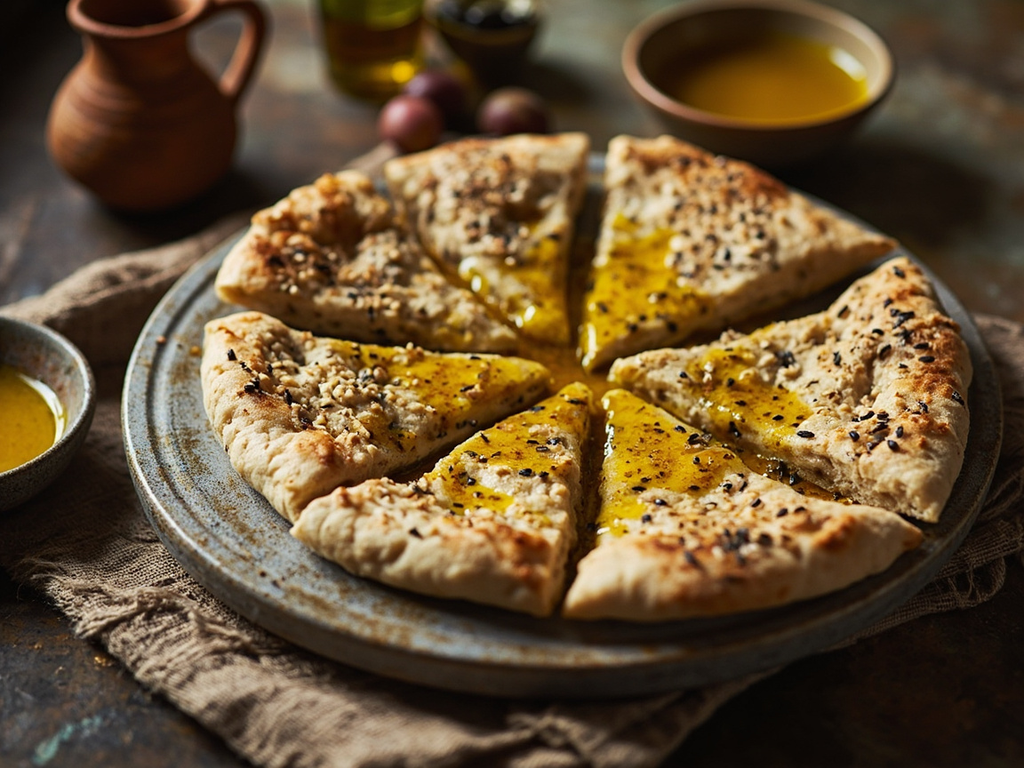
- Break by hand, drizzle with olive oil, and serve warm with olives and vegetables.
How it was made : Barley grew better than wheat in the dry soil of Attica: maza was thus the people's food, as opposed to the more prestigious wheat bread (artos). Barley was often toasted before grinding, yielding alphita; the flatbread was sometimes not even oven-baked but simply kneaded and dried.
The contemporary twist : Served as mini appetizer flatbreads with a spread of crushed fava beans with oil and mint — a nod to the "frugal banquet" of the healthy city.
Sources : Plato, Republic, Book II (the "healthy" city) · Andrew Dalby, Siren Feasts: A History of Food and Gastronomy in Greece (1996)
Plato · Charactorium