 flip
flipRisotto alla milanese (saffron risotto)
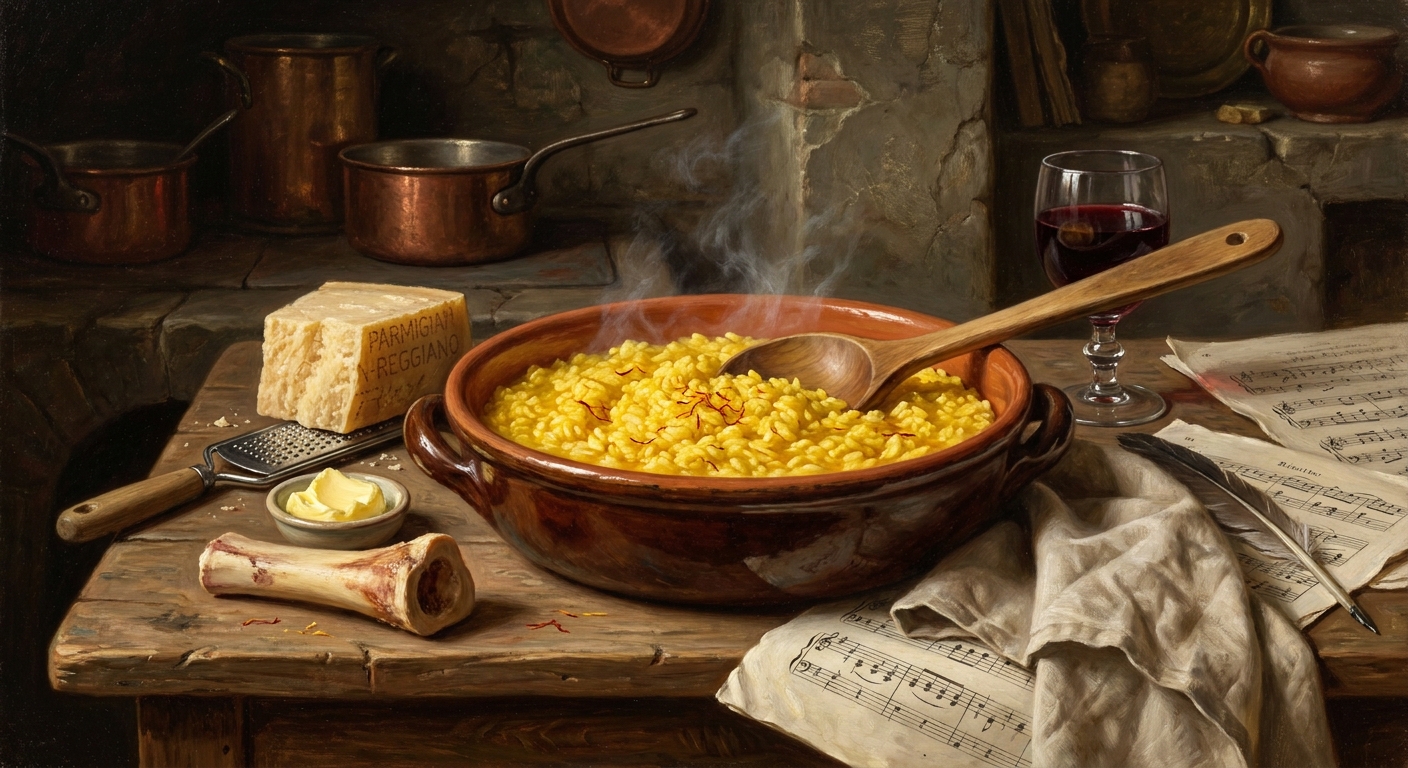
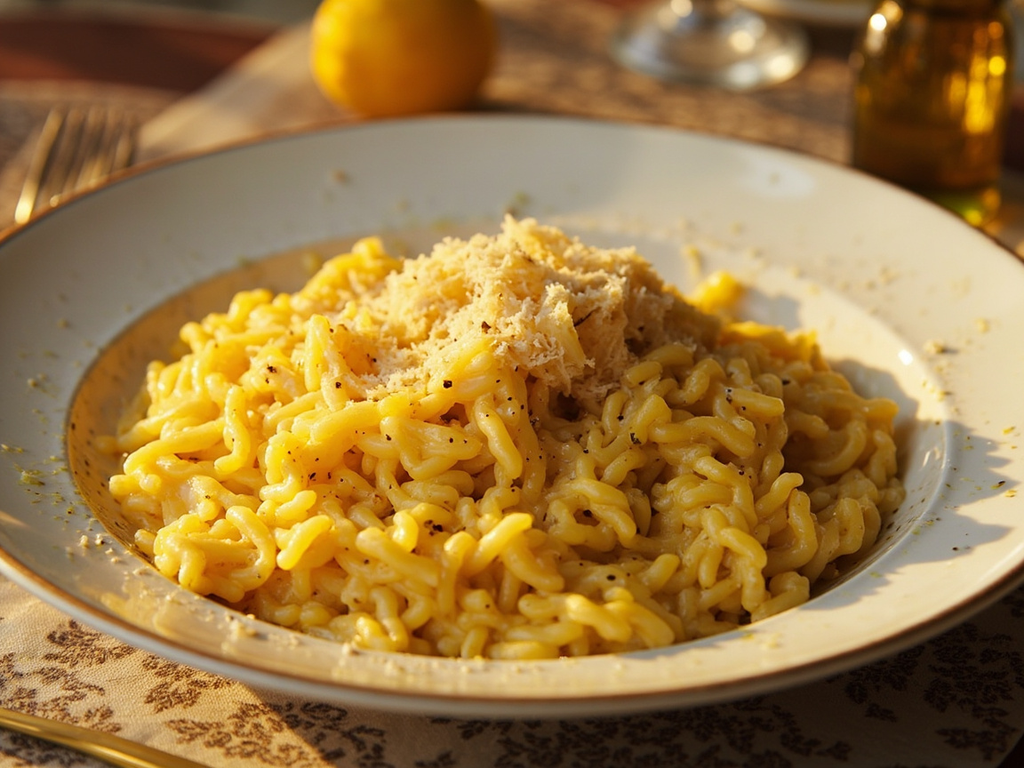
Risotto alla milanese (saffron risotto)
Why this dish? Boito lived in Milan, near La Scala; risotto giallo was the quintessential daily dish of the Lombard bourgeois table he frequented, rice reigning supreme in the Po plain far more than southern pasta.
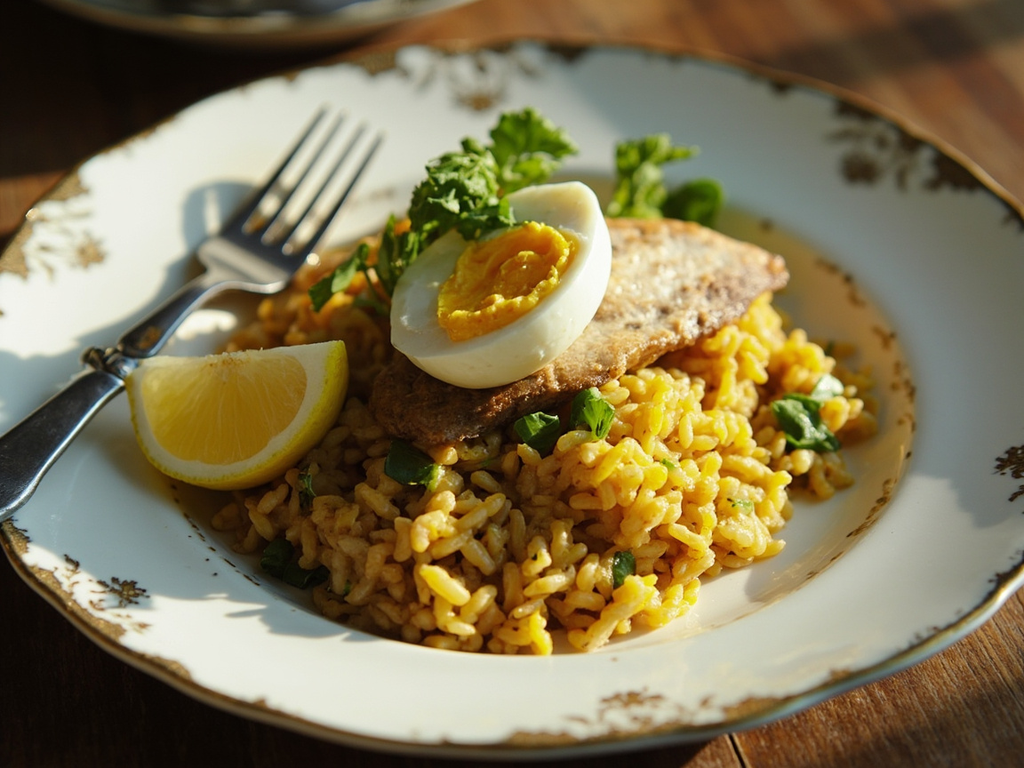
A creamy rice, bound with broth and gilded with saffron, finished with butter and Parmesan. The totem dish of Milan, simple yet refined, served as a primo before the meat.
You see, in Milan, rice is not mere food: it is a matter of patience and self-respect. You stir it, stir it again, adding broth one ladle at a time, and slip in that saffron filament that gives it its golden robe, like a La Scala backdrop. My cook swore one must blend in some beef marrow to make it sing — and believe me, after a night spent on a libretto, nothing brings a man back to life like that golden plate.
- •Rice from the Po plain (round variety) — a good measure for the table (base)
- •Beef marrow — a piece (base fat, creaminess)
- •Saffron threads — a pinch (color and aroma, signature)
- •Butter — to taste (binding)
- •Lodi cheese (grana) — grated, generously (salty umami)
- •Meat broth — as needed (cooking)
- •Onion — one small (aromatic base)
Risotto alla milanese (saffron risotto)
A creamy rice, bound with broth and gilded with saffron, finished with butter and Parmesan. The totem dish of Milan, simple yet refined, served as a primo before the meat.
Why this dish? Boito lived in Milan, near La Scala; risotto giallo was the quintessential daily dish of the Lombard bourgeois table he frequented, rice reigning supreme in the Po plain far more than southern pasta.
You see, in Milan, rice is not mere food: it is a matter of patience and self-respect. You stir it, stir it again, adding broth one ladle at a time, and slip in that saffron filament that gives it its golden robe, like a La Scala backdrop. My cook swore one must blend in some beef marrow to make it sing — and believe me, after a night spent on a libretto, nothing brings a man back to life like that golden plate.
Ingredients (period version)
- Rice from the Po plain (round variety) — a good measure for the table (base)
- Beef marrow — a piece (base fat, creaminess)
- Saffron threads — a pinch (color and aroma, signature)
- Butter — to taste (binding)
- Lodi cheese (grana) — grated, generously (salty umami)
- Meat broth — as needed (cooking)
- Onion — one small (aromatic base)
Ingredients
- Carnaroli or Arborio rice — 320 g (base)
- Beef marrow (optional) — 30 g (traditional creaminess)
- Saffron threads (or 1 sachet) — 1 pinch (~0.15 g) (signature)
- Butter — 60 g (soffritto and mantecatura)
- Grated Parmigiano Reggiano — 70 g (salty umami)
- Hot beef broth — 1 to 1.2 L (cooking)
- Onion — 1 small, finely chopped (aromatic base)
- Dry white wine — 1 glass (deglazing)
Method
- Infuse the saffron in a ladle of hot broth.
- Melt half the butter, gently sauté the onion (and marrow) over low heat until golden.
- Add the rice, toast for 2 minutes, deglaze with white wine and let evaporate.
- Add broth ladle by ladle, stirring, without ever drowning the rice (about 18 minutes).
- Halfway through cooking, incorporate the saffron broth: the rice turns golden.
- Off the heat, bind (mantecatura) with the remaining cold butter and Parmesan. Cover for 2 minutes and serve immediately, creamy and flowing.
How it was made : Milanese legend (16th century) attributes yellow risotto to a glassmaker's apprentice who added saffron to his colors; by the 19th century, it was already the city's identity dish. Beef marrow, an ingredient of wealthy families, provided creaminess before butter alone replaced it.
The contemporary twist : Plate the risotto in a flat circle, place a sheet of edible gold leaf in the center — a nod to the golden curtain of La Scala that Boito knew by heart.
Sources : Pellegrino Artusi, *La scienza in cucina e l'arte di mangiar bene* (1891), recipe for risotto alla milanese
Arrigo Boito · Charactorium