 flip
flipInji puli — sweet-sour ginger, tamarind and jaggery preserve
Inji puli — sweet-sour ginger, tamarind and jaggery preserve
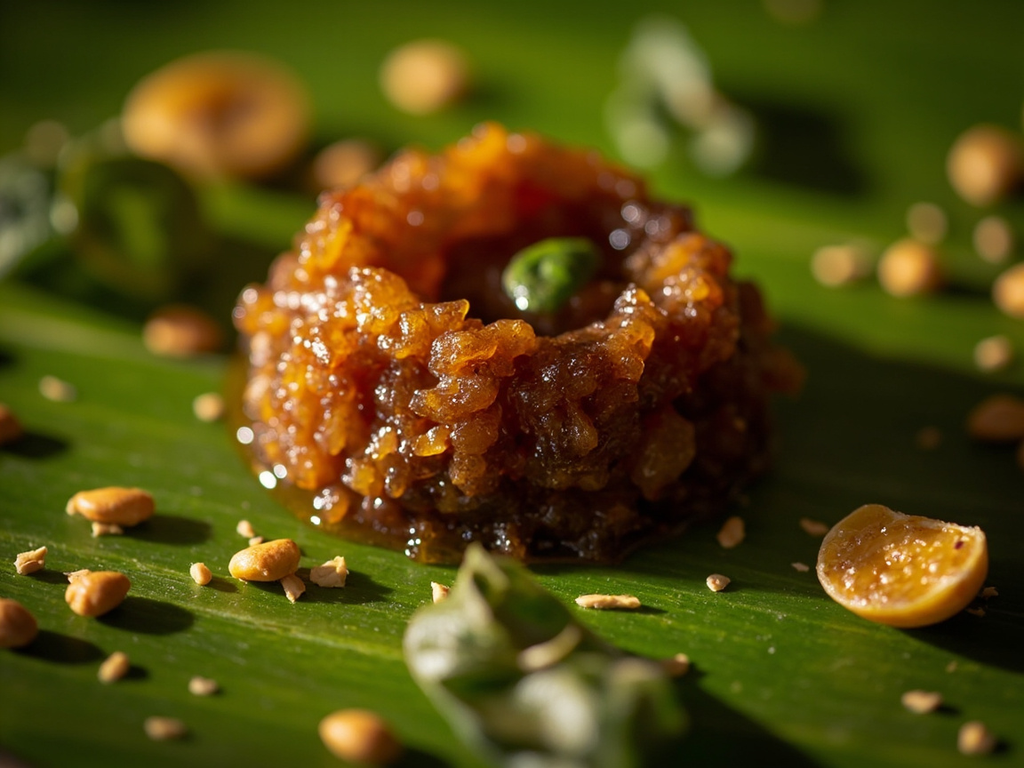
Why this dish? On the banana leaf of a festive meal, a tiny dab of inji puli concentrates everything: sour, sweet, spicy. This ginger condiment keeps for weeks, a testament to the Kerala art of extracting flavour and longevity from local produce — an economy of the "small thing" that speaks to the writer from Ayemenem.
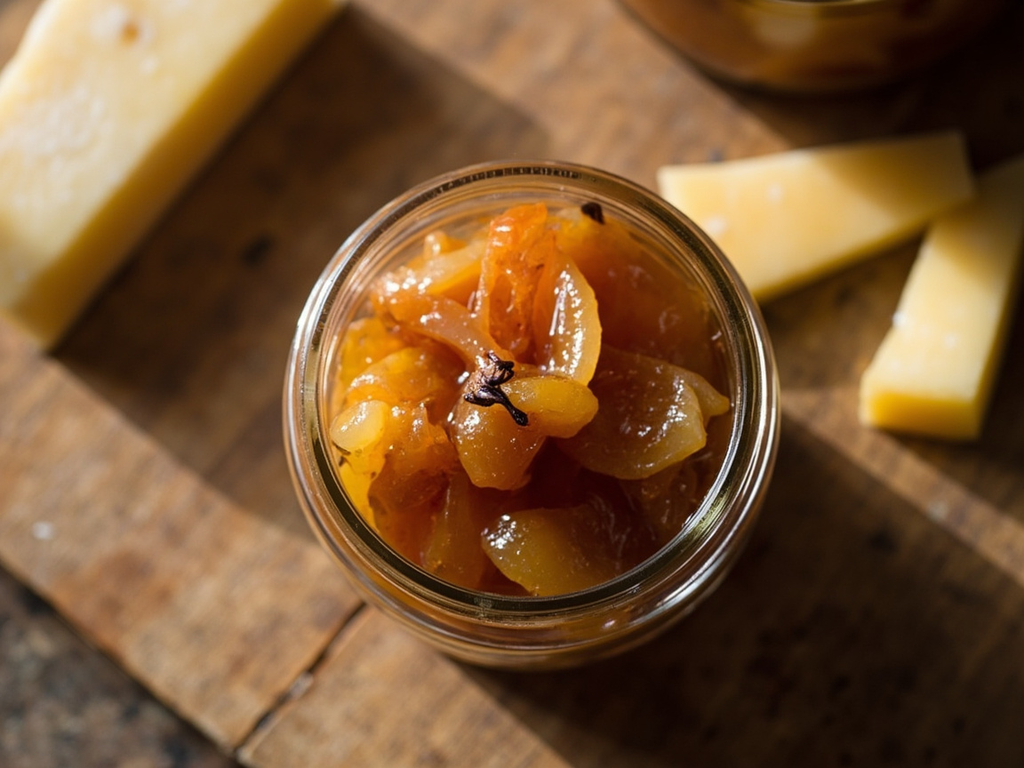
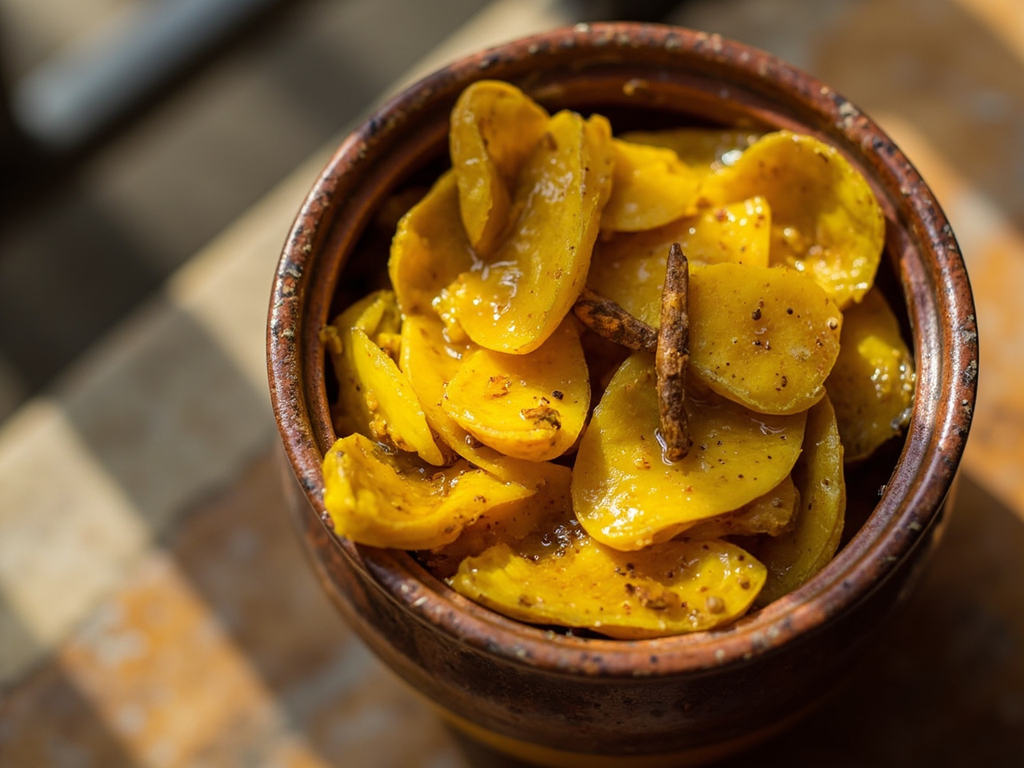
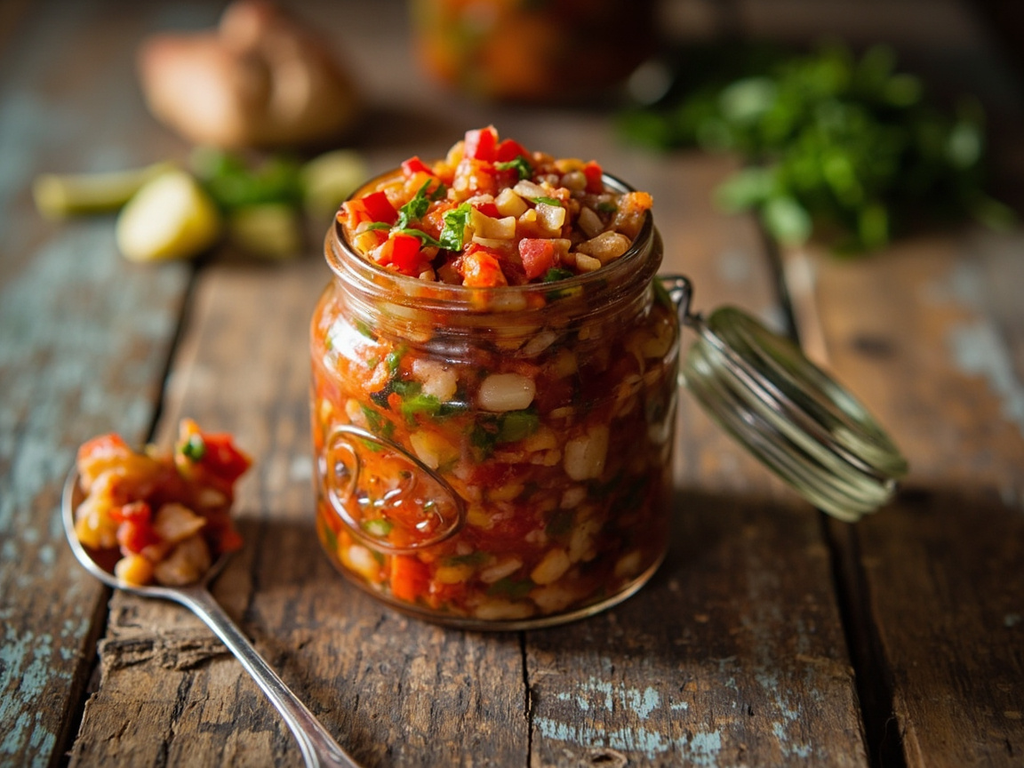
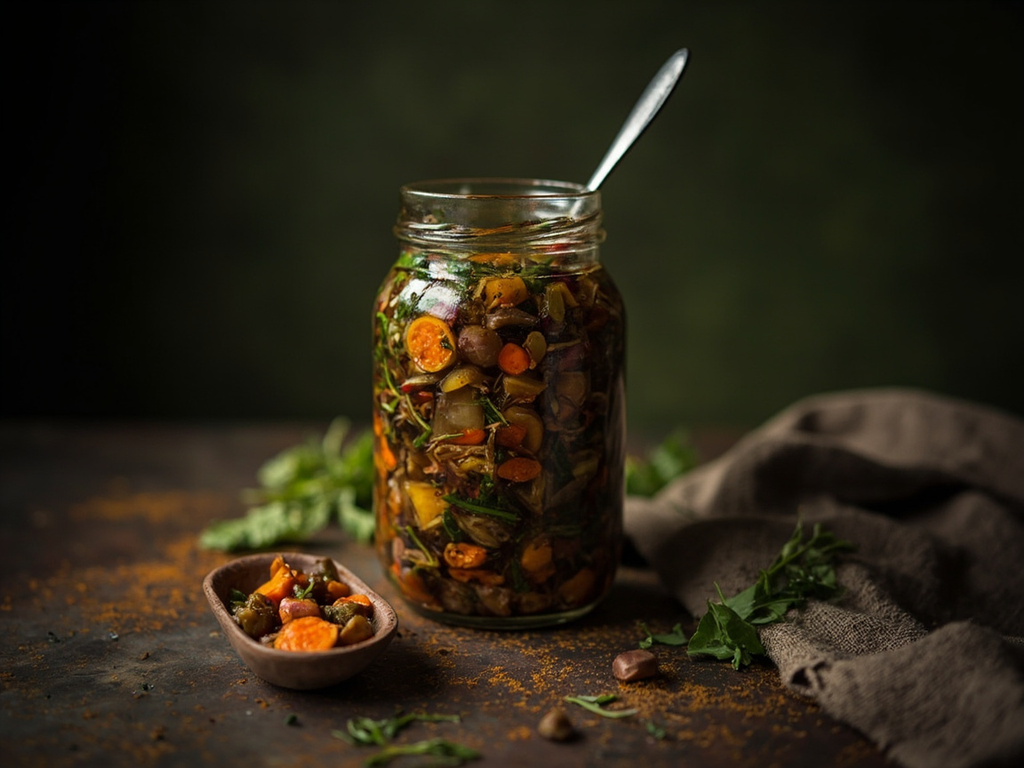
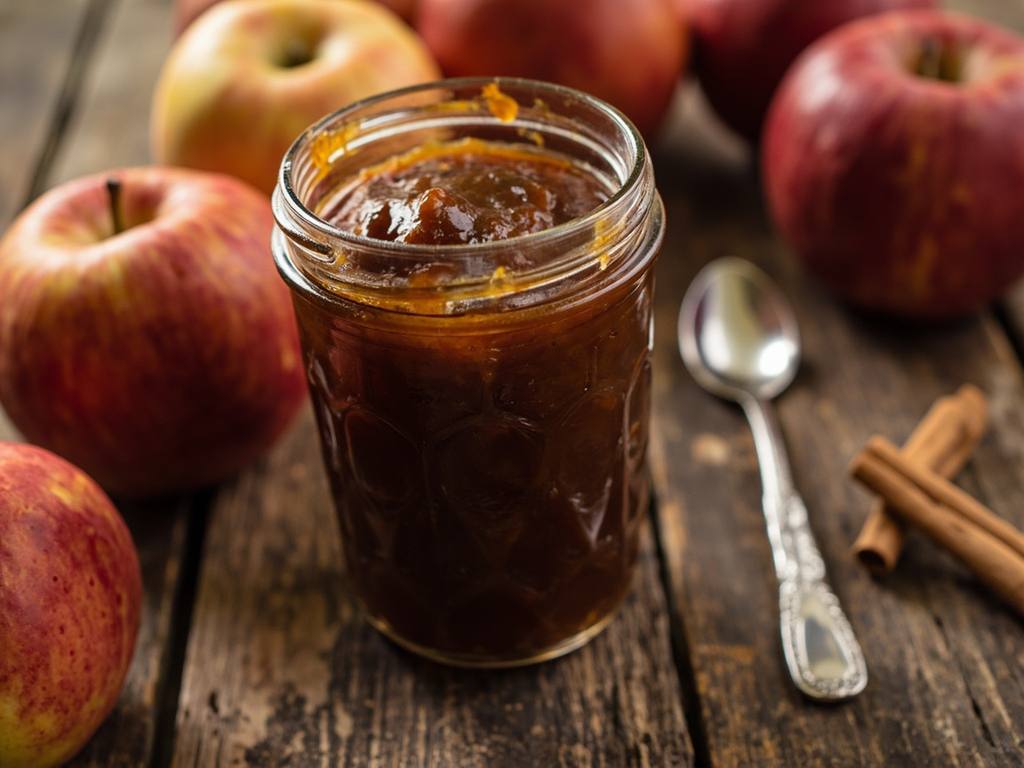
A dense, glossy preserve of ginger and chilli, balanced by sour tamarind juice and dark jaggery (palm sugar), tempered with mustard seeds. A tiny spoonful is placed at the edge of the plate; it lifts the entire meal and keeps for a long time.
Inji puli, you only take a dab — the size of a hazelnut — but without it the festive meal limps. It's ginger, tamarind and palm sugar cooked together until they darken and shine. My grandmother kept a pot all year in the dark kitchen; it got better with time, like certain angers. Taste it on the tip of your finger: you'll feel the sour, the sweet and the fire all at once, and you'll understand Kerala.
- •Fresh ginger — a good root (main ingredient)
- •Tamarind — a ball (sourness)
- •Jaggery (palm sugar) — a piece (sweetness)
- •Dried red chillies — a few (heat)
- •Mustard seeds and fenugreek — a pinch each (tempering)
- •Curry leaves — one sprig (aroma)
- •Coconut oil — a little (cooking and preservation)
- •Salt — to taste (preservative)
Inji puli — sweet-sour ginger, tamarind and jaggery preserve
A dense, glossy preserve of ginger and chilli, balanced by sour tamarind juice and dark jaggery (palm sugar), tempered with mustard seeds. A tiny spoonful is placed at the edge of the plate; it lifts the entire meal and keeps for a long time.
Why this dish? On the banana leaf of a festive meal, a tiny dab of inji puli concentrates everything: sour, sweet, spicy. This ginger condiment keeps for weeks, a testament to the Kerala art of extracting flavour and longevity from local produce — an economy of the "small thing" that speaks to the writer from Ayemenem.
Inji puli, you only take a dab — the size of a hazelnut — but without it the festive meal limps. It's ginger, tamarind and palm sugar cooked together until they darken and shine. My grandmother kept a pot all year in the dark kitchen; it got better with time, like certain angers. Taste it on the tip of your finger: you'll feel the sour, the sweet and the fire all at once, and you'll understand Kerala.
Ingredients (period version)
- Fresh ginger — a good root (main ingredient)
- Tamarind — a ball (sourness)
- Jaggery (palm sugar) — a piece (sweetness)
- Dried red chillies — a few (heat)
- Mustard seeds and fenugreek — a pinch each (tempering)
- Curry leaves — one sprig (aroma)
- Coconut oil — a little (cooking and preservation)
- Salt — to taste (preservative)
Ingredients
- Fresh ginger — 100 g, finely chopped (main ingredient)
- Tamarind paste — 2 tbsp diluted in 150 ml water (sourness)
- Jaggery (or whole cane sugar) — 40 g (sweetness)
- Red chilli powder — 1 tsp (heat)
- Black mustard seeds — 1 tsp (tempering)
- Fenugreek seeds — 1/4 tsp (toasted and ground) (fragrant bitterness)
- Curry leaves — 12 (aroma)
- Coconut oil — 3 tbsp (cooking and preservation)
- Salt — 1 tsp (preservative)
Method
- Heat the coconut oil, add the mustard seeds and let them pop, then add the curry leaves and chopped ginger; fry over medium heat until the ginger is golden and fragrant.
- Add the chilli powder and ground fenugreek, stir for 30 seconds.
- Pour in the tamarind water and salt; let it reduce for 10 minutes.
- Add the jaggery and cook over low heat until you get a thick, dark, glossy paste (15–20 minutes), stirring frequently.
- Let it cool completely, then transfer to a sterilised jar; keeps for several weeks in a cool place.
How it was made : Pickles (achaar) and preserves like inji puli allowed ginger, lemon or raw mango to be kept without refrigeration, thanks to salt, acid (tamarind) and oil that sealed out air. In the sadhya, they are not side dishes but flavour concentrates tasted in tiny amounts. Inji puli is traditionally served during Onam, the great festival of Kerala.
The contemporary twist : Serve it as a tiny quenelle on a black slate alongside pearly white rice, to make its lacquer-like sheen stand out — a sweet-sour vegetable "caviar".
Sources : Ammini Ramachandran, Grains, Greens and Grated Coconuts · Traditions of the Onam sadhya (Kerala)
Arundhati Roy · Charactorium