 flip
flipSaktu — roasted barley flour for travelers
Saktu — roasted barley flour for travelers
Why this dish? Ashoka sent his dhamma-mahāmātras (moral inspectors) to crisscross the empire, and his emissaries as far as Sri Lanka and Greece. Saktu — roasted grain flour mixed with cold water — has been THE traveler's food since Vedic times: no fire, no cooking, it can be eaten anywhere.
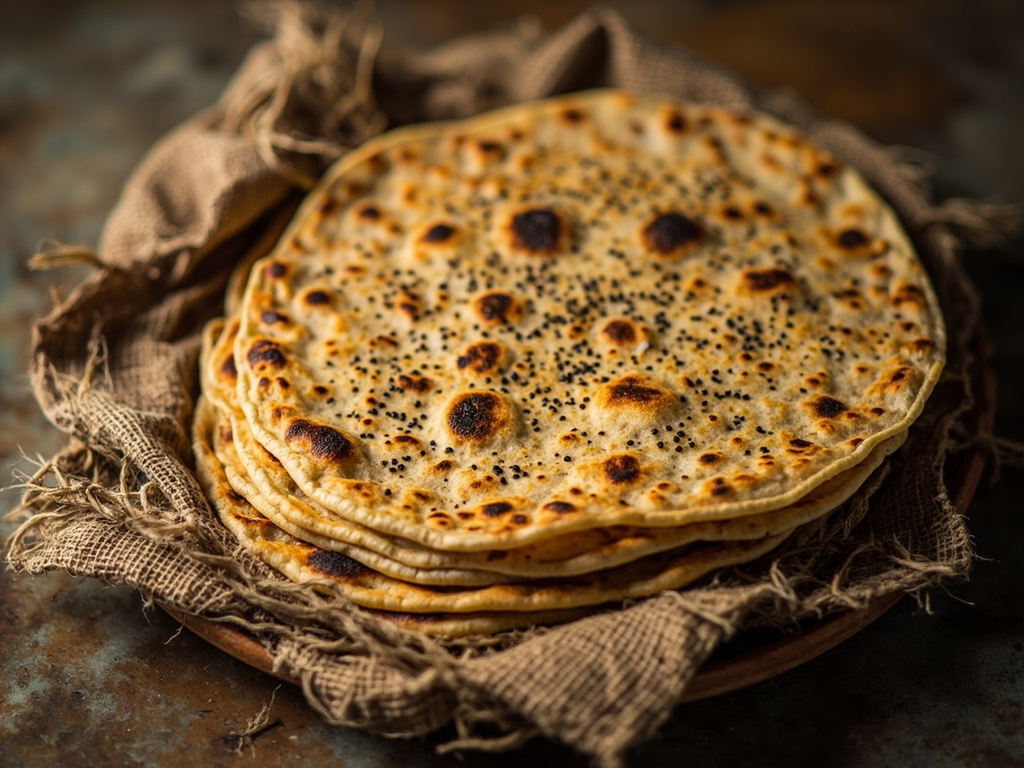
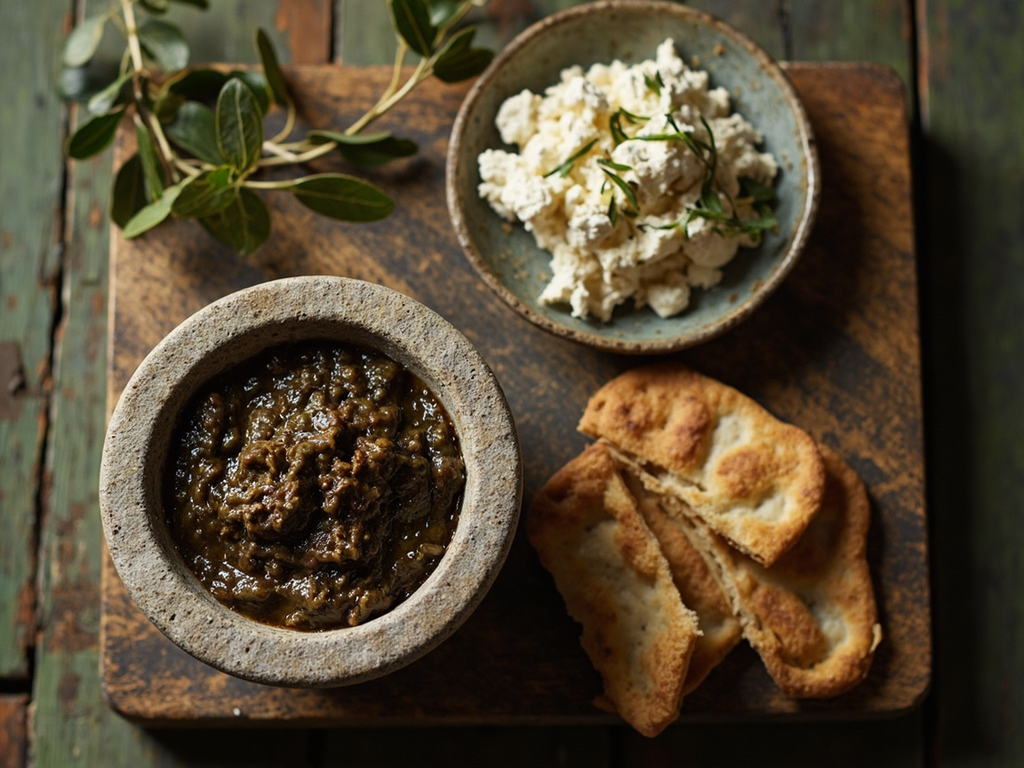
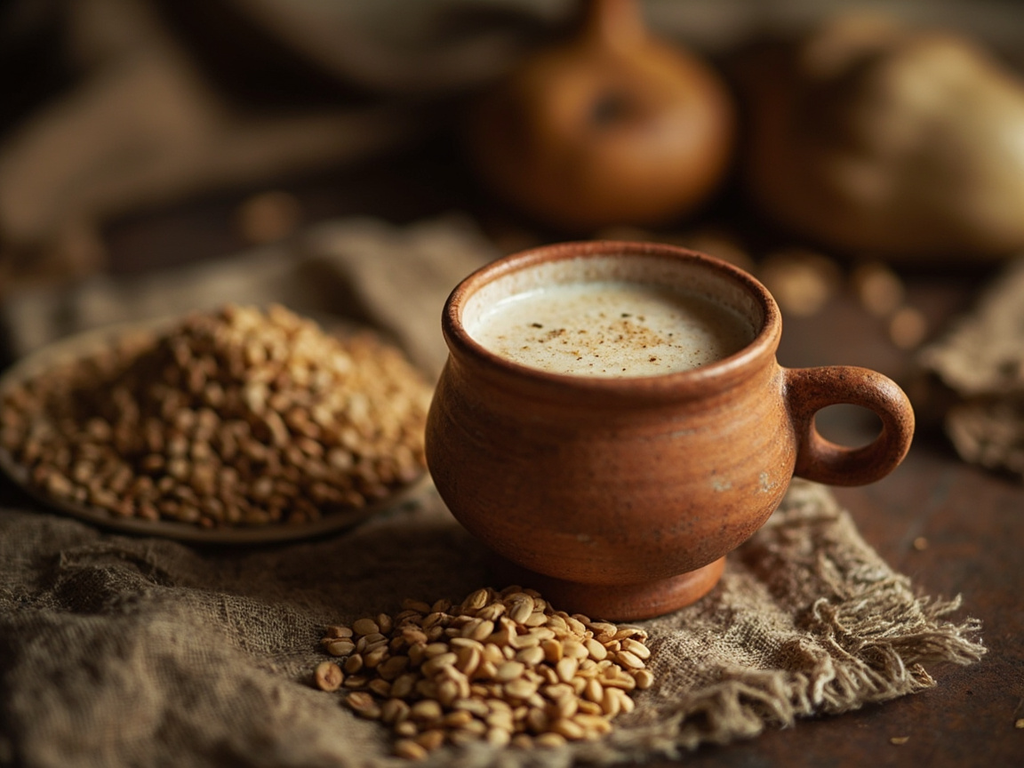
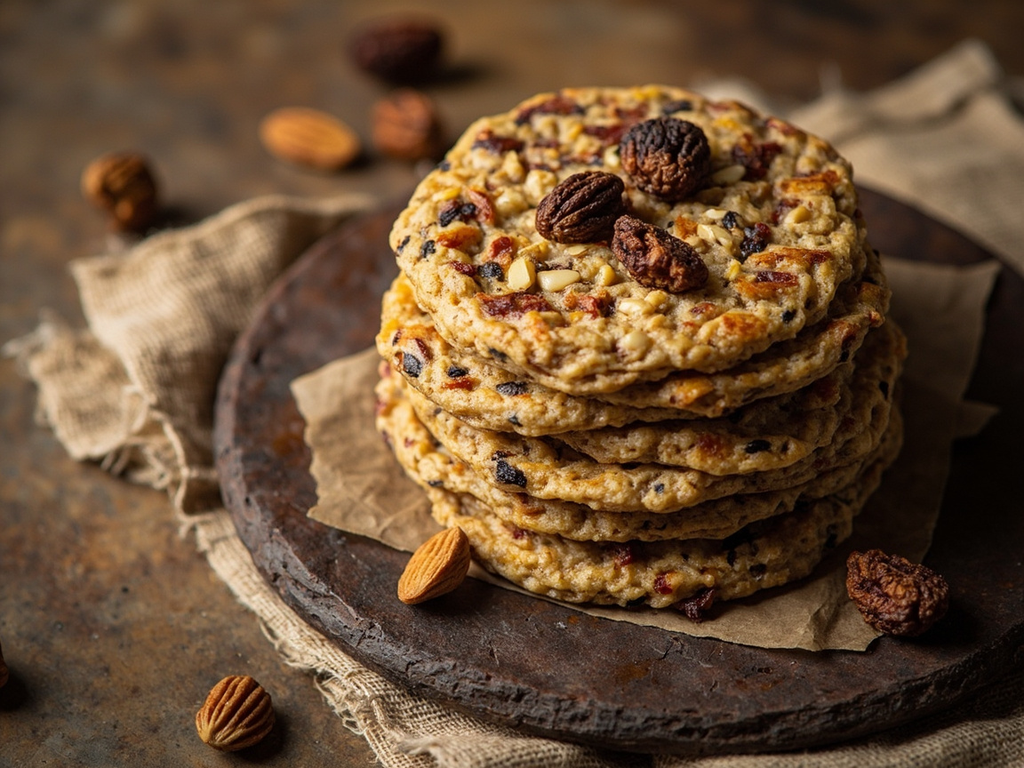
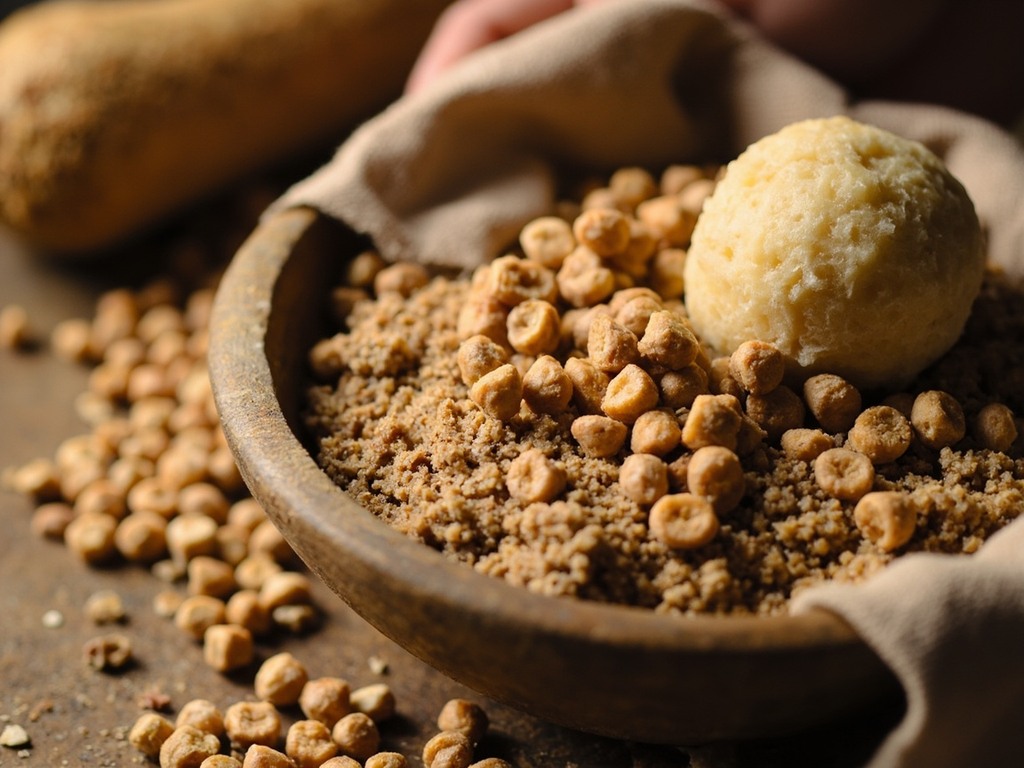
Roasted barley (and chickpea) ground into flour, simply mixed with water, salt, dried ginger, and a little ghee to make a nourishing paste in moments. The instant meal of ancient India.
My dhamma men travel the roads I have lined with trees and wells, to the very borders where Greek kings rule. On the road, there is no pot: they carry saktu in a bag. Pour a little water on the roasted flour, salt it, add dried ginger, knead with your fingertips — and you are satisfied without having lit a fire or disturbed any creature. This is the meal of those who walk to spread the good word.
- •Roasted barley flour (yava saktu) — one measure (base)
- •Roasted chickpea flour (chana) — a little (protein, binder)
- •Dried ginger (śuṇṭhī) — a pinch (spice, digestive)
- •Salt — to taste (seasoning)
- •Ghee — a touch (fat (optional))
- •Fresh water — to mix (binder)
Saktu — roasted barley flour for travelers
Roasted barley (and chickpea) ground into flour, simply mixed with water, salt, dried ginger, and a little ghee to make a nourishing paste in moments. The instant meal of ancient India.
Why this dish? Ashoka sent his dhamma-mahāmātras (moral inspectors) to crisscross the empire, and his emissaries as far as Sri Lanka and Greece. Saktu — roasted grain flour mixed with cold water — has been THE traveler's food since Vedic times: no fire, no cooking, it can be eaten anywhere.
My dhamma men travel the roads I have lined with trees and wells, to the very borders where Greek kings rule. On the road, there is no pot: they carry saktu in a bag. Pour a little water on the roasted flour, salt it, add dried ginger, knead with your fingertips — and you are satisfied without having lit a fire or disturbed any creature. This is the meal of those who walk to spread the good word.
Ingredients (period version)
- Roasted barley flour (yava saktu) — one measure (base)
- Roasted chickpea flour (chana) — a little (protein, binder)
- Dried ginger (śuṇṭhī) — a pinch (spice, digestive)
- Salt — to taste (seasoning)
- Ghee — a touch (fat (optional))
- Fresh water — to mix (binder)
Ingredients
- Sattu flour (roasted barley and/or chickpea) — 100 g (base)
- Ginger powder — 1/4 tsp (spice)
- Roasted cumin powder — 1/4 tsp (flavor)
- Salt — 1 pinch (seasoning)
- Ghee — 1 tsp (optional) (fat)
- Fresh water — 120-150 ml (binder)
Method
- If starting from grains: dry-roast barley (and chickpeas) until golden and nutty, let cool, grind finely.
- Mix the sattu flour with salt, ginger, and cumin.
- Add fresh water gradually, mixing until you get a soft dough (or a thinner drink).
- Stir in ghee if desired and consume immediately, no cooking needed.
How it was made : Saktu (roasted grain flour) is mentioned as early as Vedic texts as travel and fasting food. Roasted, it keeps long and requires no cooking — ideal for the imperial roads that Ashoka had shaded and lined with wells (Pillar Edict VII).
The contemporary twist : Summer drink version: dilute sattu with more water, a splash of lime juice, and a pinch of salt — an isotonic drink 2,300 years old.
Sources : Mentions of saktu in Vedic literature and the Arthashastra · K.T. Achaya, Indian Food: A Historical Companion, Oxford University Press, 1994
Ashoka · Charactorium