 flip
flipTigris Fish with Leeks and Sesame
Tigris Fish with Leeks and Sesame
Why this dish? It is through a fish that everything comes together in the Book of Tobit: young Tobias pulls one from the Tigris, and the smoke from its burned liver and heart drives Asmodeus all the way to Egypt. Grilled river fish was the daily meal on the banks of the Tigris, where the story unfolds — Nineveh, then the road to Ecbatana.
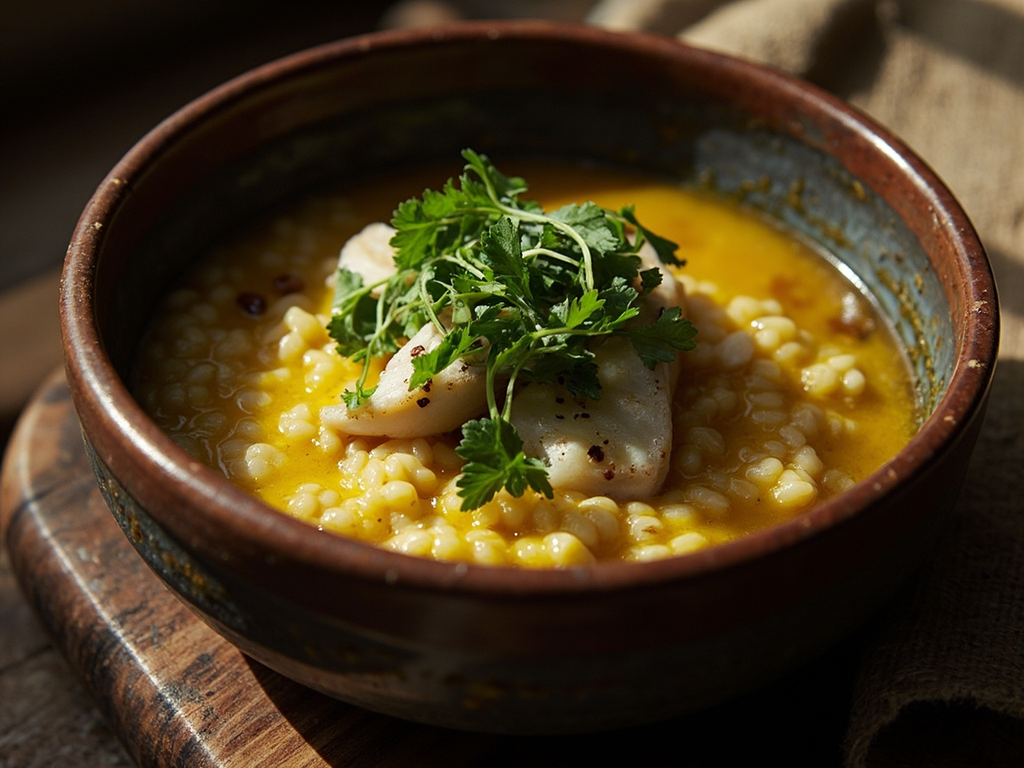
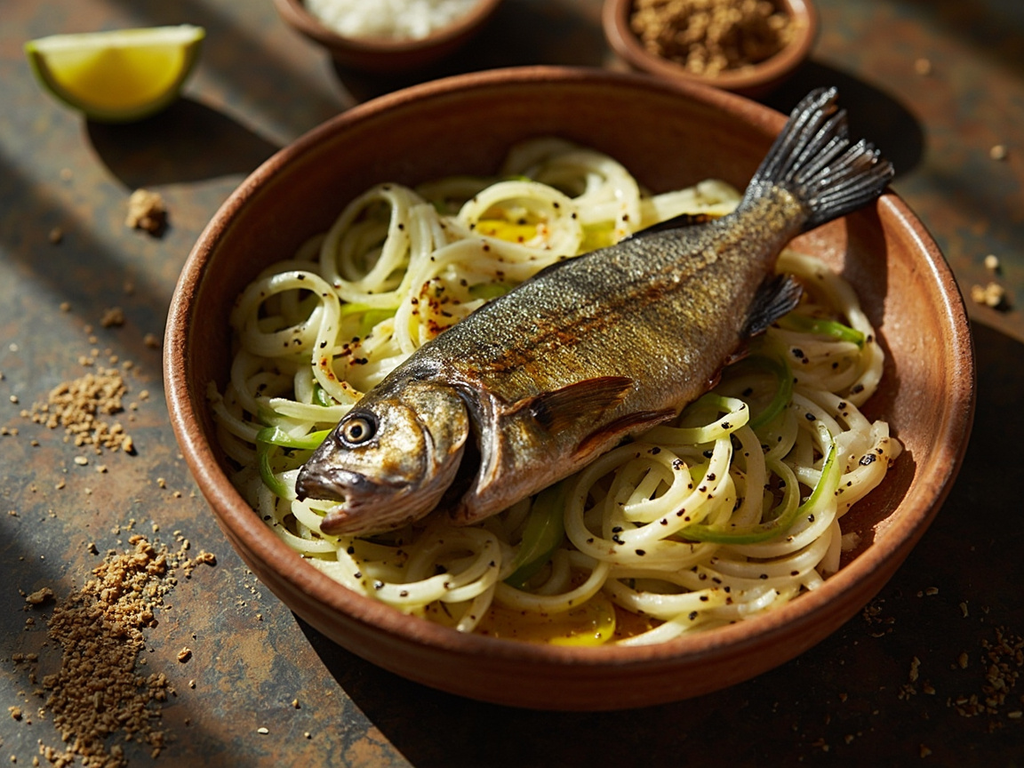
A freshwater fish opened, rubbed with aromatics, placed on a bed of melted leeks and grilled over embers, finished with a drizzle of siqqu and sesame oil. The everyday dish on the banks of the Tigris.
Ah, mortal, here you are bent over your embers like young Tobias over his. Do you truly think a fish makes me tremble? They burned its liver and heart under my nostrils, and the stinking smoke drove me to the sands of Egypt — I still bear a grudge. But the rest of the beast, eaten on the riverbank with melted leek and three drops of that brine you call siqqu, that was what delighted the men I stalked. Eat, then, and never forget under whose roof you feast.
- •Freshwater fish from the Tigris (carp, catfish) — 1 whole gutted fish (base)
- •Leeks — a bunch (cooking bed)
- •Garlic — a few cloves (aromatic)
- •Siqqu (fermented fish brine) — a drizzle (umami seasoning)
- •Sesame oil — a little (fat)
- •Coriander and cumin seeds — a pinch (spices)
- •Salt — to taste (seasoning)
Tigris Fish with Leeks and Sesame
A freshwater fish opened, rubbed with aromatics, placed on a bed of melted leeks and grilled over embers, finished with a drizzle of siqqu and sesame oil. The everyday dish on the banks of the Tigris.
Why this dish? It is through a fish that everything comes together in the Book of Tobit: young Tobias pulls one from the Tigris, and the smoke from its burned liver and heart drives Asmodeus all the way to Egypt. Grilled river fish was the daily meal on the banks of the Tigris, where the story unfolds — Nineveh, then the road to Ecbatana.
Ah, mortal, here you are bent over your embers like young Tobias over his. Do you truly think a fish makes me tremble? They burned its liver and heart under my nostrils, and the stinking smoke drove me to the sands of Egypt — I still bear a grudge. But the rest of the beast, eaten on the riverbank with melted leek and three drops of that brine you call siqqu, that was what delighted the men I stalked. Eat, then, and never forget under whose roof you feast.
Ingredients (period version)
- Freshwater fish from the Tigris (carp, catfish) — 1 whole gutted fish (base)
- Leeks — a bunch (cooking bed)
- Garlic — a few cloves (aromatic)
- Siqqu (fermented fish brine) — a drizzle (umami seasoning)
- Sesame oil — a little (fat)
- Coriander and cumin seeds — a pinch (spices)
- Salt — to taste (seasoning)
Ingredients
- Whole gutted carp or trout — 1 (approx. 600 g) (base)
- Sliced leeks — 3 (cooking bed)
- Garlic — 3 cloves, minced (aromatic)
- Fish sauce (nuoc-mam or colatura di alici, lacking siqqu) — 1 tbsp (umami seasoning)
- Sesame oil — 2 tbsp (fat)
- Coriander and cumin seeds — 1 tsp each (spices)
- Salt — to taste (seasoning)
Method
- Gently sweat the sliced leeks in sesame oil with garlic until tender.
- Crush coriander and cumin in a mortar, rub inside and outside the fish.
- Spread the melted leeks in a dish, place the fish on top, drizzle with fish sauce.
- Grill in the oven or over embers for 20-25 minutes until the flesh flakes.
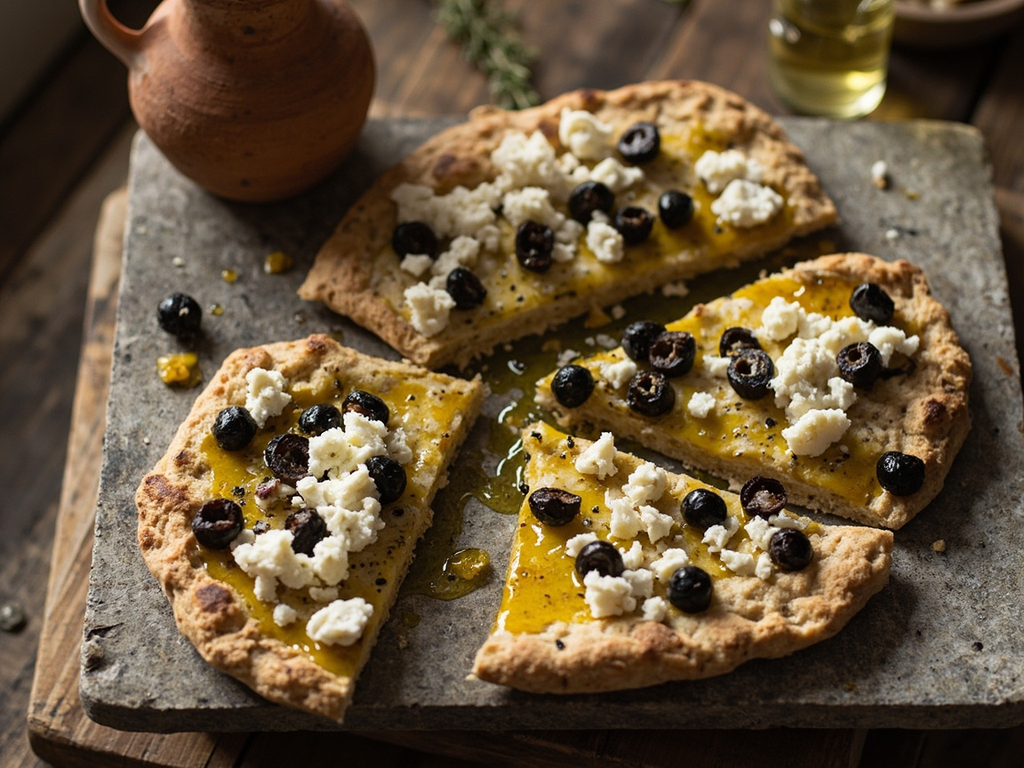
- Serve immediately, with a barley flatbread for dipping.
How it was made : The banks of the Tigris and Euphrates lived on fish, grilled or dried. Babylonian culinary tablets and market lists attest the use of leeks, garlic, and fermented fish brines (siqqu) as basic seasonings, well before Roman garum.
The contemporary twist : Plated on a dark slate with a veil of smoke from toasted sesame under a cloche — a nod to the smoke that put the demon to flight.
Sources : Jean Bottéro, La plus vieille cuisine du monde, Audibert, 2002 · Book of Tobit, ch. 6-8 (deuterocanonical text)
Asmodeus · Charactorium