 flip
flipBarley mâza with olives and goat cheese
Barley mâza with olives and goat cheese
Why this dish? The mâza, an unleavened barley flatbread, was the daily bread of every Athenian, even more so than wheat bread reserved for festive days. Aspasia, despite her fame, shared at her table this frugal staple that fed the entire city.
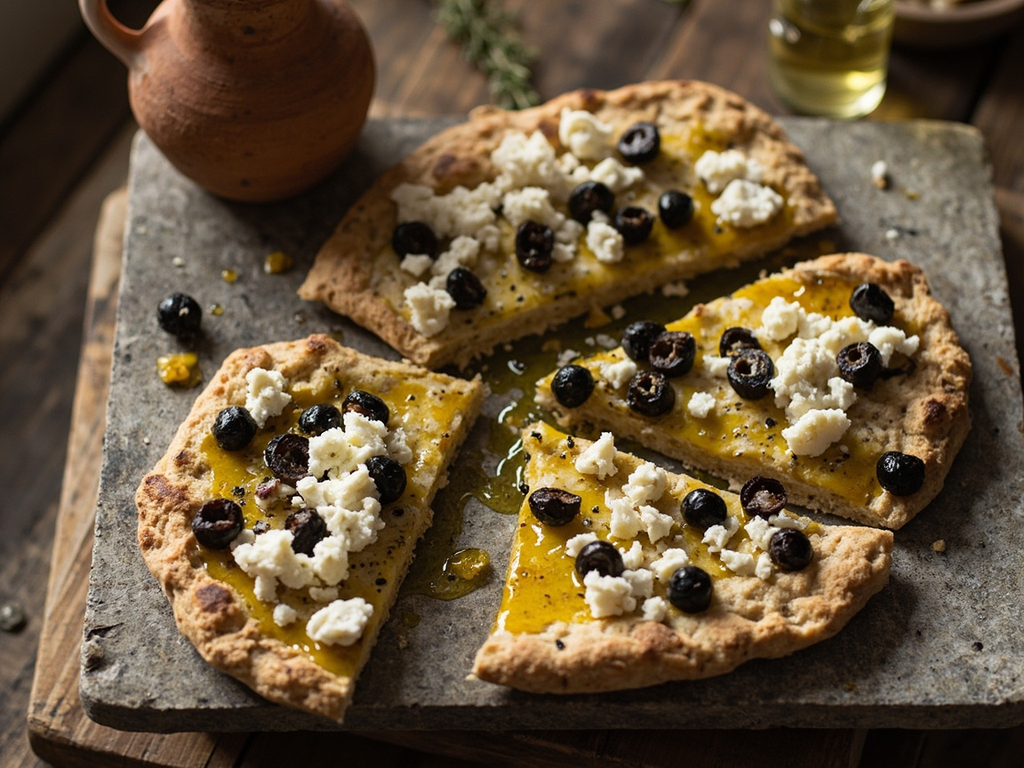
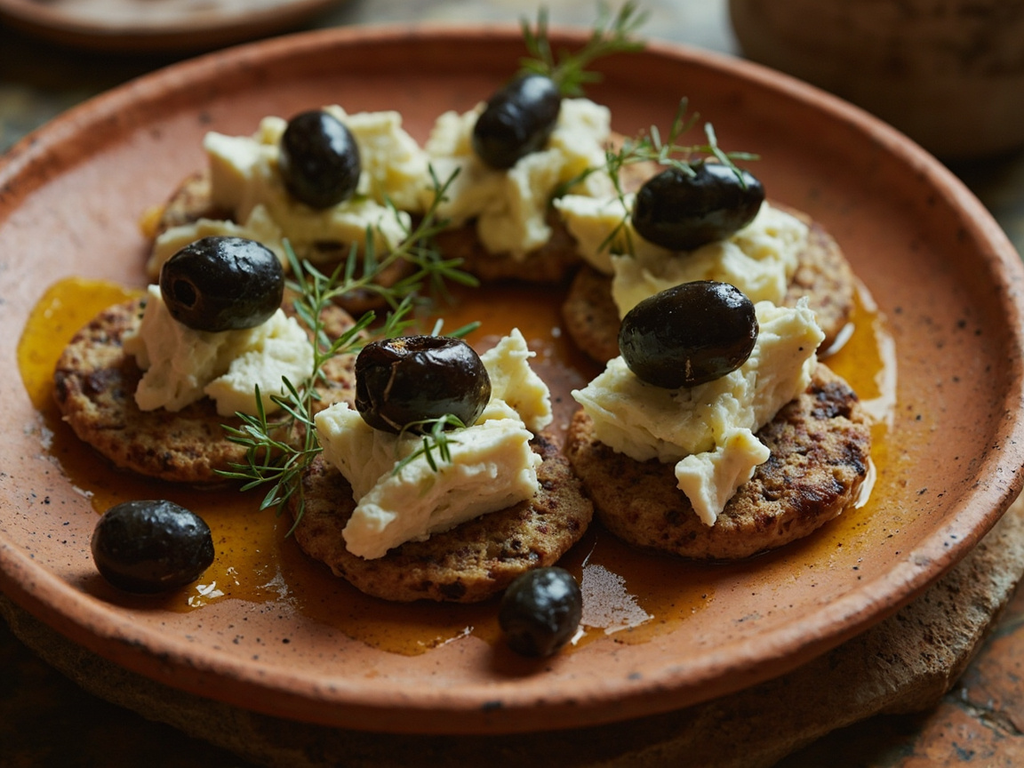
A dense, rustic barley flatbread, kneaded with olive oil and topped with black olives and fresh goat cheese: the simplest opson that 'relishes' the daily bread.
Do not think that only festive dishes were served at my table. The barley mâza, you see, is the bread of our entire city, from the porter of Piraeus to Pericles himself. I knead it with a drizzle of oil, place a few Attic olives and some cheese from our goats—and there you have enough to sustain a conversation that will last until dawn. First eat the bread, child: the rest is only there to relish it.
- •Toasted barley flour (álphita) — two handfuls (base)
- •Attic olive oil — a drizzle (binder and flavor)
- •Warm water — as needed (kneading)
- •Black olives — a handful (opson)
- •Fresh goat cheese — a piece (opson)
- •Sea salt — a pinch (seasoning)
Barley mâza with olives and goat cheese
A dense, rustic barley flatbread, kneaded with olive oil and topped with black olives and fresh goat cheese: the simplest opson that 'relishes' the daily bread.
Why this dish? The mâza, an unleavened barley flatbread, was the daily bread of every Athenian, even more so than wheat bread reserved for festive days. Aspasia, despite her fame, shared at her table this frugal staple that fed the entire city.
Do not think that only festive dishes were served at my table. The barley mâza, you see, is the bread of our entire city, from the porter of Piraeus to Pericles himself. I knead it with a drizzle of oil, place a few Attic olives and some cheese from our goats—and there you have enough to sustain a conversation that will last until dawn. First eat the bread, child: the rest is only there to relish it.
Ingredients (period version)
- Toasted barley flour (álphita) — two handfuls (base)
- Attic olive oil — a drizzle (binder and flavor)
- Warm water — as needed (kneading)
- Black olives — a handful (opson)
- Fresh goat cheese — a piece (opson)
- Sea salt — a pinch (seasoning)
Ingredients
- Barley flour — 200 g (base)
- Extra virgin olive oil — 3 tbsp (binder and flavor)
- Warm water — 100–120 ml (kneading)
- Pitted black olives — 80 g (topping)
- Fresh goat cheese — 120 g (topping)
- Salt — 1/2 tsp (seasoning)
Method
- Lightly toast the barley flour in a dry pan for 2–3 minutes to release its nutty aroma, then let cool.
- Mix the flour, salt, oil, and warm water until a soft but firm dough forms; knead for 5 minutes.
- Shape into flat cakes about 1 cm thick.
- Cook on a hot stone or dry pan, 4–5 minutes per side, until golden.
- Serve warm, topped with crumbled goat cheese and black olives, with a final drizzle of oil.
How it was made : Barley grew better than wheat in dry Attica: it was made into álphita (toasted flour) then transformed into mâza, kneaded raw or barely cooked. Unlike leavened wheat bread, sold expensively by the baker, mâza was prepared at home. The Greeks distinguished sîtos (bread) from opson (accompaniment), and a glutton too fond of opson was mocked as an 'opsophagos'.
The contemporary twist : Serve the mâza as an 'Athenian' appetizer board, each warm flatbread brushed with oregano oil, like a crostini from antiquity.
Sources : Andrew Dalby, Siren Feasts: A History of Food and Gastronomy in Greece, Routledge, 1996 · James Davidson, Courtesans and Fishcakes: The Consuming Passions of Classical Athens, 1997
Aspasia · Charactorium