 flip
flipCouscous with Lamb and Seven Vegetables
Couscous with Lamb and Seven Vegetables
Why this dish? Couscous is the center of gravity of the large tables of Cherchell and Algiers where Fatima-Zohra Imalayen grew up. A Friday and holiday dish, it gathered the women of the family who rolled the semolina together — exactly the circle of female voices that Assia Djebar spent her life listening to and writing.
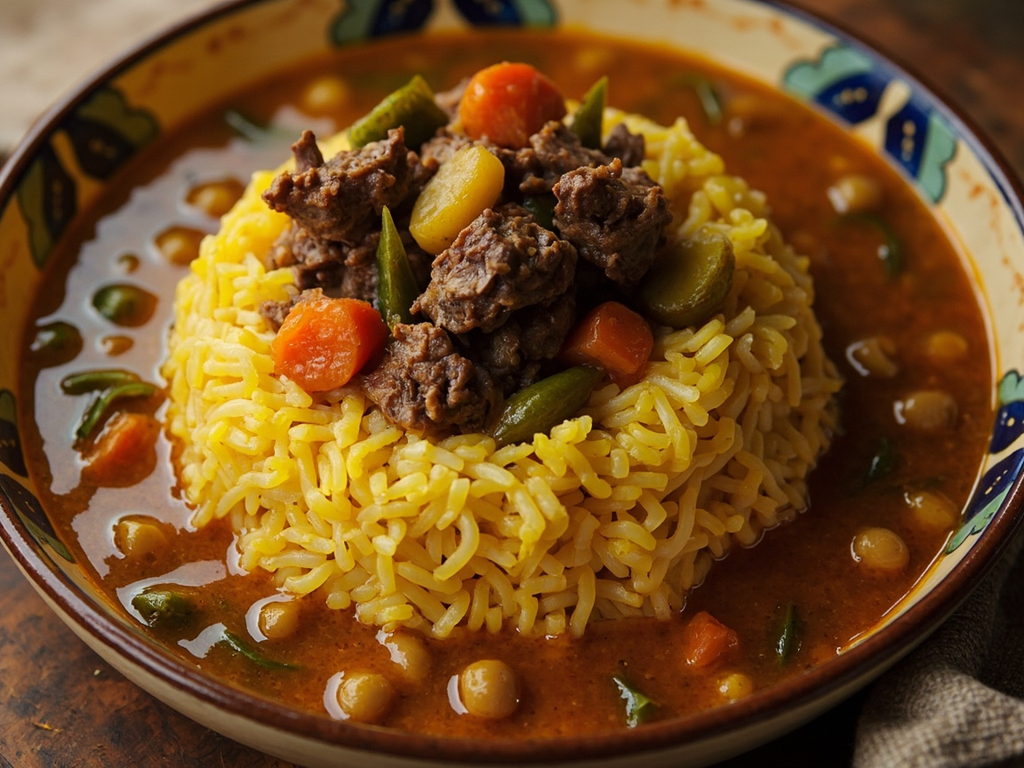
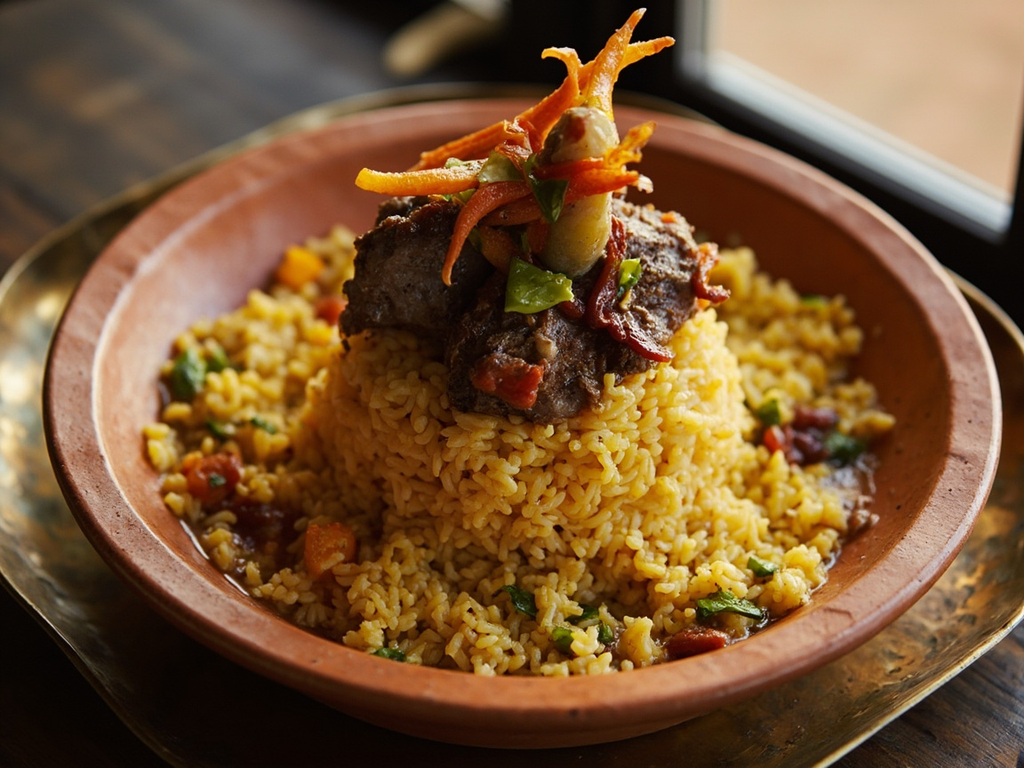
A mountain of blonde, fluffy semolina, crowned with tender lamb pieces and a bouquet of garden vegetables simmered in a fragrant broth. The quintessential shared dish, around which the whole household gathers.
I can still see the courtyard of my childhood, the women crouched around the large earthenware dish, rolling the semolina in the palms of their hands, grain by grain, in a murmur that was already a language. We never rushed the couscous: three times the semolina rose in the couscoussier above the broth, three times we aerated it and greased it with our fingertips. My grandmother placed a knob of smen on top, and that scent — ah, that scent — it was the whole house coming together. Serve it hot, and let everyone dip their hand in: that's how we speak to each other, in our home, without needing words.
- •Medium durum wheat semolina — a large platter (base, rolled and steamed)
- •Lamb shoulder — according to household (meat, tender in broth)
- •Soaked chickpeas — a handful (garnish, binder)
- •Zucchini, turnips, carrots, fava beans, pumpkin — from the garden (the seven vegetables)
- •Smen (fermented butter) — a spoonful (signature, depth)
- •Ras-el-hanout, turmeric, black pepper — by eye (broth spices)
Couscous with Lamb and Seven Vegetables
A mountain of blonde, fluffy semolina, crowned with tender lamb pieces and a bouquet of garden vegetables simmered in a fragrant broth. The quintessential shared dish, around which the whole household gathers.
Why this dish? Couscous is the center of gravity of the large tables of Cherchell and Algiers where Fatima-Zohra Imalayen grew up. A Friday and holiday dish, it gathered the women of the family who rolled the semolina together — exactly the circle of female voices that Assia Djebar spent her life listening to and writing.
I can still see the courtyard of my childhood, the women crouched around the large earthenware dish, rolling the semolina in the palms of their hands, grain by grain, in a murmur that was already a language. We never rushed the couscous: three times the semolina rose in the couscoussier above the broth, three times we aerated it and greased it with our fingertips. My grandmother placed a knob of smen on top, and that scent — ah, that scent — it was the whole house coming together. Serve it hot, and let everyone dip their hand in: that's how we speak to each other, in our home, without needing words.
Ingredients (period version)
- Medium durum wheat semolina — a large platter (base, rolled and steamed)
- Lamb shoulder — according to household (meat, tender in broth)
- Soaked chickpeas — a handful (garnish, binder)
- Zucchini, turnips, carrots, fava beans, pumpkin — from the garden (the seven vegetables)
- Smen (fermented butter) — a spoonful (signature, depth)
- Ras-el-hanout, turmeric, black pepper — by eye (broth spices)
Ingredients
- Medium couscous semolina — 500 g (base)
- Lamb shoulder, cut into pieces — 800 g (meat)
- Canned chickpeas — 1 can (250 g) (garnish)
- Zucchini (2), turnips (2), carrots (3), pumpkin (300 g) — 1.2 kg total (vegetables)
- Smen or salted butter — 1 tbsp (signature)
- Olive oil — 4 tbsp (grease semolina, sauté)
- Ras-el-hanout — 2 tsp (main spice)
- Turmeric, pepper, salt — to taste (seasoning)
- Onion — 1 large (broth base)
- Tomato paste — 1 tbsp (color and umami)
Method
- Sauté the chopped onion and meat in olive oil at the bottom of the couscoussier; add spices and tomato paste.
- Cover with water, add chickpeas, carrots, and turnips; simmer for 1 hour.
- Meanwhile, moisten the semolina, rub it with a drizzle of oil, then steam it for 20 minutes above the broth; repeat twice, aerating between each round.
- Add zucchini and pumpkin to the broth for the last 20 minutes.
- Mound the semolina in a dome, hollow the top, arrange meat and vegetables, drizzle with broth, and crown with a knob of smen.
How it was made : Semolina was never bought ready-made: it was hand-rolled from fine semolina and salted water, a collective gesture passed from mother to daughter. The triple steaming, without direct contact with the broth, gives the light, separate grains that distinguish true couscous.
The contemporary twist : Serve in individual small tajines, crowned with a fried zucchini blossom, for a contemporary table without betraying the sharing.
Assia Djebar · Charactorium