 flip
flipMoqueca de peixe baiana
Moqueca de peixe baiana
Why this dish? King dish of large Bahian gatherings and family reunions, *moqueca* embodies the coastal and warm Bahia that Gil carried everywhere, even in his London exile where he dreamed of the flavors of home.
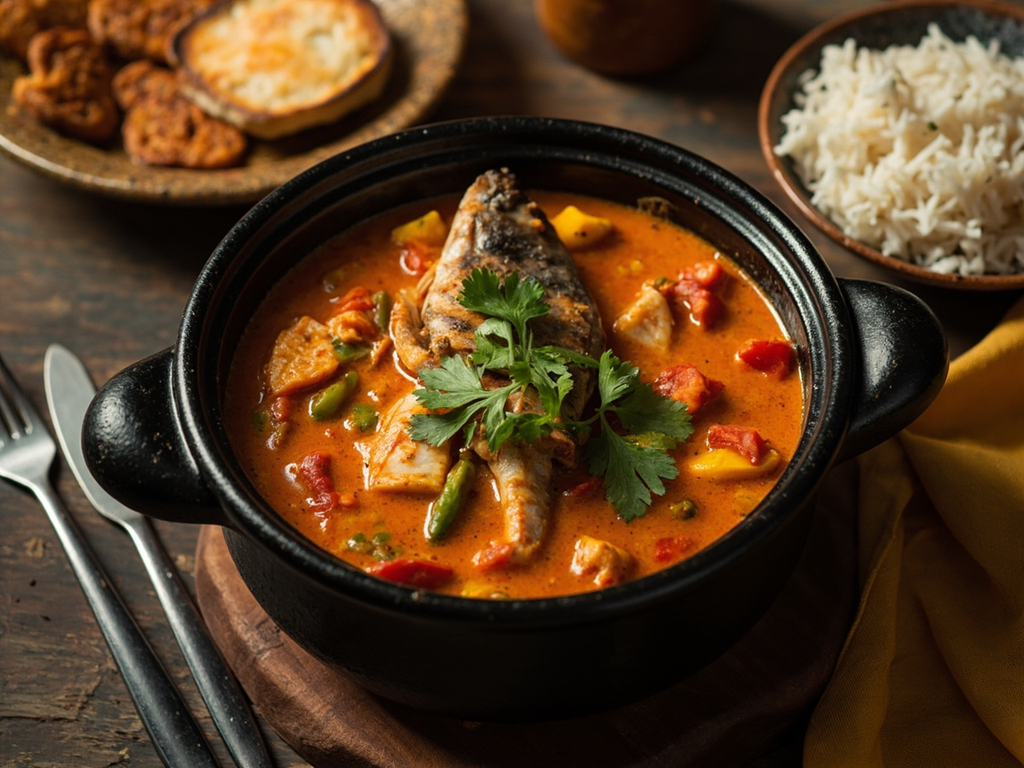
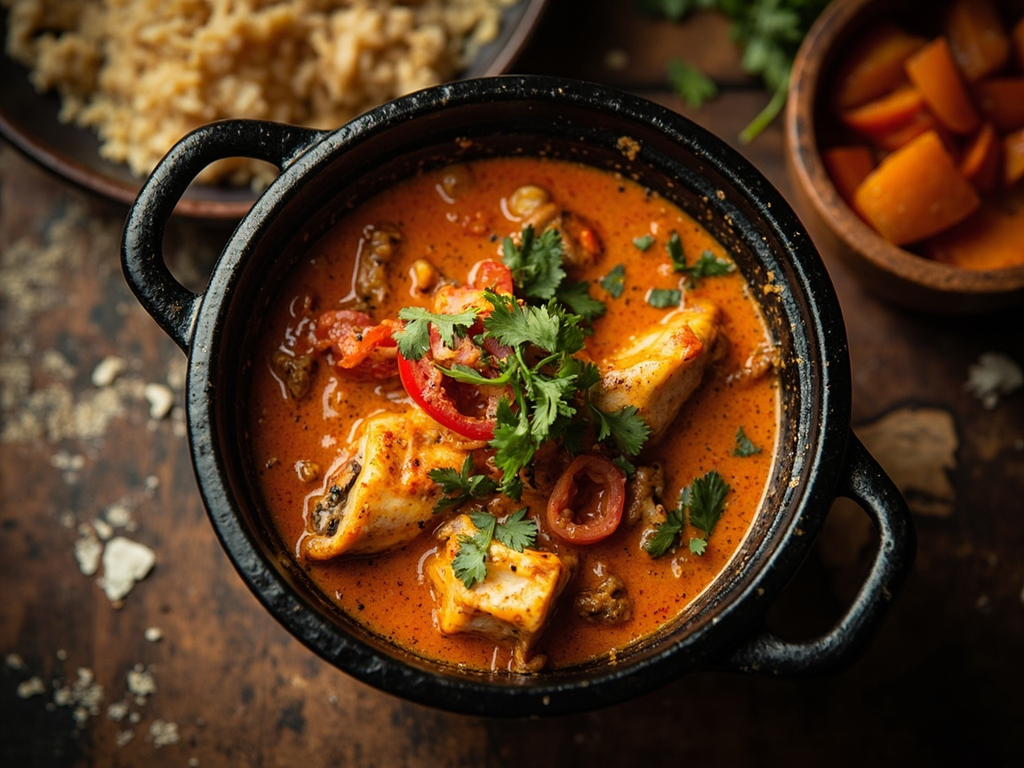
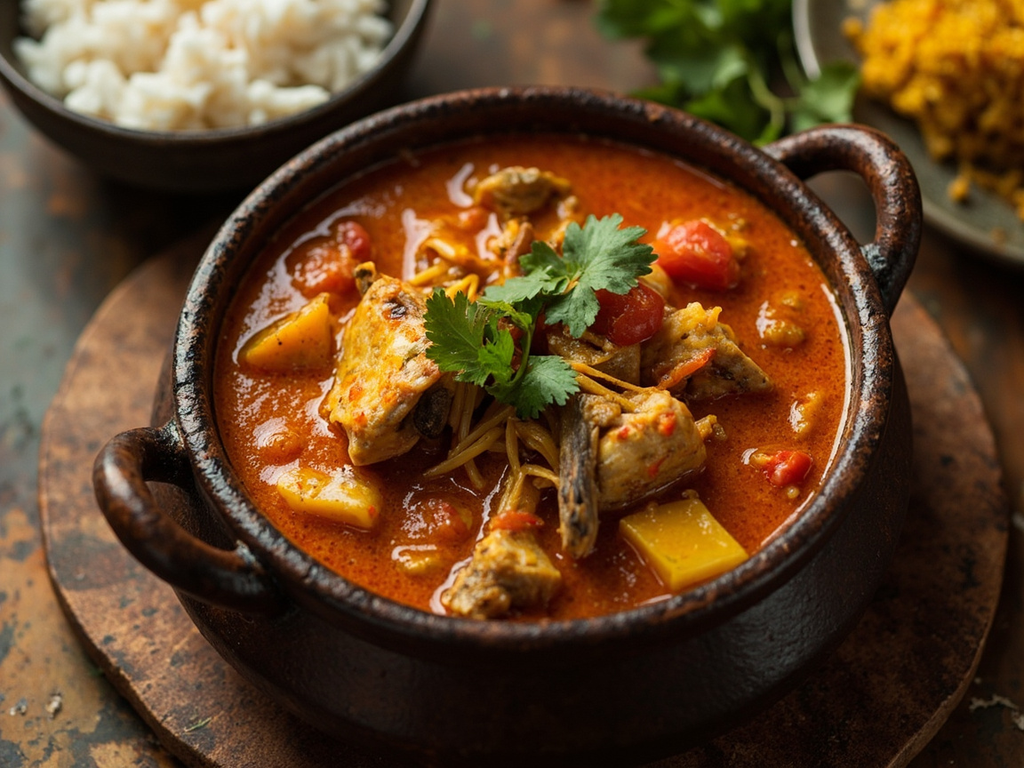
Thick fish slices marinated in lime and cilantro, gently simmered in a broth of coconut milk, tomato, bell pepper, and red palm oil. Served bright orange, with white rice and *farofa*.
A *moqueca* is *festa*, you know? When the house fills up, we take out the *panela de barro*, that old blackened clay pot that holds the memory of all meals. We lay the fish, the coconut, the *dendê*, and let it simmer without ever rushing — Bahian cuisine doesn't hurry, it sways like a slow samba. In London, in exile, it was this orange color and this coconut scent that brought me home, stronger than any song.
- •Firm sea fish (grouper, snapper) — in thick slices (heart of the dish)
- •Lime — a few (acidic marinade)
- •Fresh coconut milk — milk of one coconut (creamy binder)
- •Red palm oil (dendê) — a splash (color and flavor)
- •Tomato, onion, bell pepper, cilantro — as much as you like (aromatic base)
Moqueca de peixe baiana
Thick fish slices marinated in lime and cilantro, gently simmered in a broth of coconut milk, tomato, bell pepper, and red palm oil. Served bright orange, with white rice and *farofa*.
Why this dish? King dish of large Bahian gatherings and family reunions, *moqueca* embodies the coastal and warm Bahia that Gil carried everywhere, even in his London exile where he dreamed of the flavors of home.
A *moqueca* is *festa*, you know? When the house fills up, we take out the *panela de barro*, that old blackened clay pot that holds the memory of all meals. We lay the fish, the coconut, the *dendê*, and let it simmer without ever rushing — Bahian cuisine doesn't hurry, it sways like a slow samba. In London, in exile, it was this orange color and this coconut scent that brought me home, stronger than any song.
Ingredients (period version)
- Firm sea fish (grouper, snapper) — in thick slices (heart of the dish)
- Lime — a few (acidic marinade)
- Fresh coconut milk — milk of one coconut (creamy binder)
- Red palm oil (dendê) — a splash (color and flavor)
- Tomato, onion, bell pepper, cilantro — as much as you like (aromatic base)
Ingredients
- Firm fish fillets (cod, pollock, grouper) — 800 g (heart of the dish)
- Lime — 2 (juice) (acidic marinade)
- Coconut milk — 400 ml (creamy binder)
- Red palm oil (dendê) — 3 tbsp (color and flavor)
- Tomatoes — 3 (aromatic base)
- Red and yellow bell pepper — 2 (sweetness and color)
- Onion — 2 (base)
- Garlic — 3 cloves (flavor)
- Fresh cilantro — 1 bunch (final freshness)
Method
- Marinate the fish for 30 min with lime juice, garlic, salt, and a little cilantro.
- In a casserole (ideally clay), layer sliced onion, bell pepper, and tomato.
- Place the fish slices on top, pour in the coconut milk and red palm oil.
- Cover and simmer on low heat for 20-25 min without stirring, just shaking the pot.
- Sprinkle with chopped cilantro and serve with white rice and *farofa* (toasted cassava flour).
How it was made : *Moqueca* descends from indigenous techniques of wrapping and steaming fish; the Bahian version (*moqueca de dendê*) adds the African contribution — palm oil and coconut milk — which distinguishes it from the lighter *moqueca capixaba* of Espírito Santo. It was cooked in a *panela de barro*, a typical clay pot.
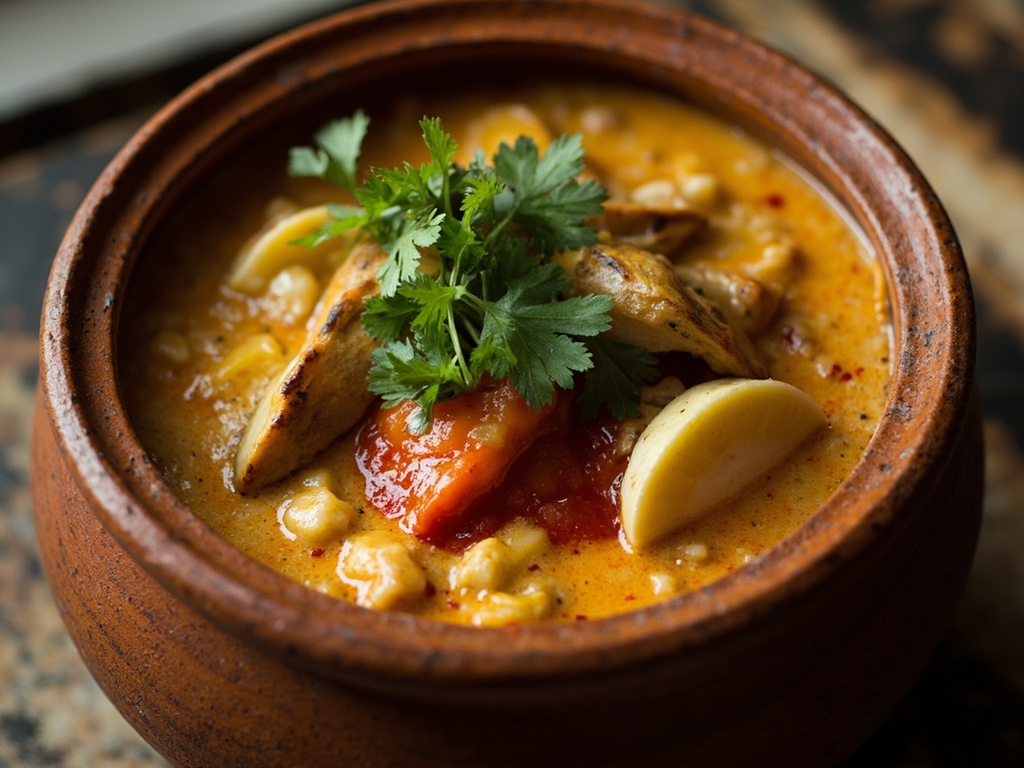
The contemporary twist : A version with grilled tofu and hearts of palm for vegetarian guests, faithful to Gil's dietary turn.
Gilberto Gil · Charactorium