 flip
flipMaza, the barley flatbread
Maza, the barley flatbread
Why this dish? Athena is the goddess of the city of Athens, and barley nourished the Athenian people long before wheat. Maza is the daily bread of the mortals she protects: humble, robust, it is the foundation of the Greek table upon which everything else rests.
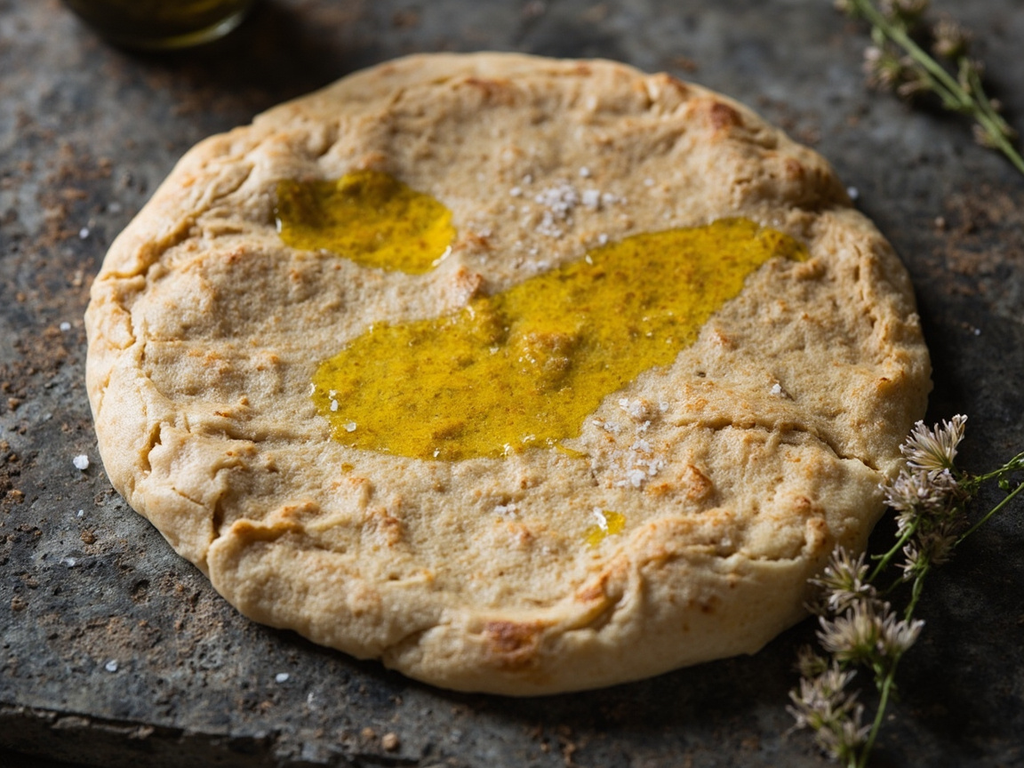
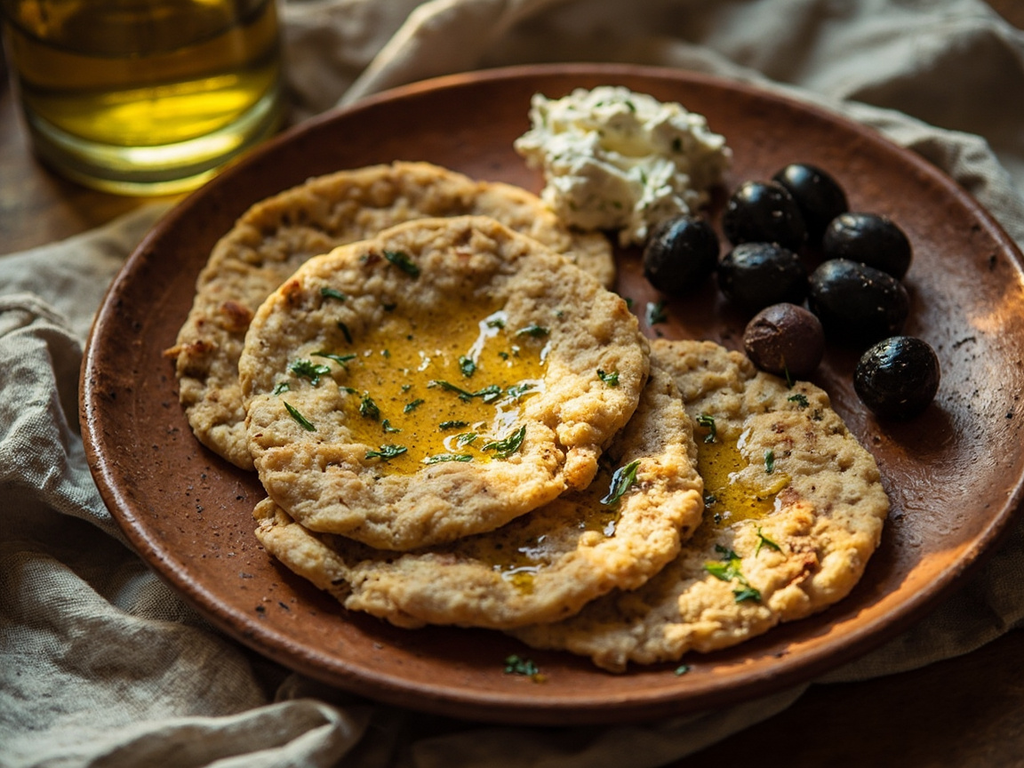
A dense flatbread of toasted barley flour, kneaded with water, salt, and a drizzle of olive oil. Sometimes eaten raw, barely cooked, or dried to last. The staple food of both citizen and farmer.
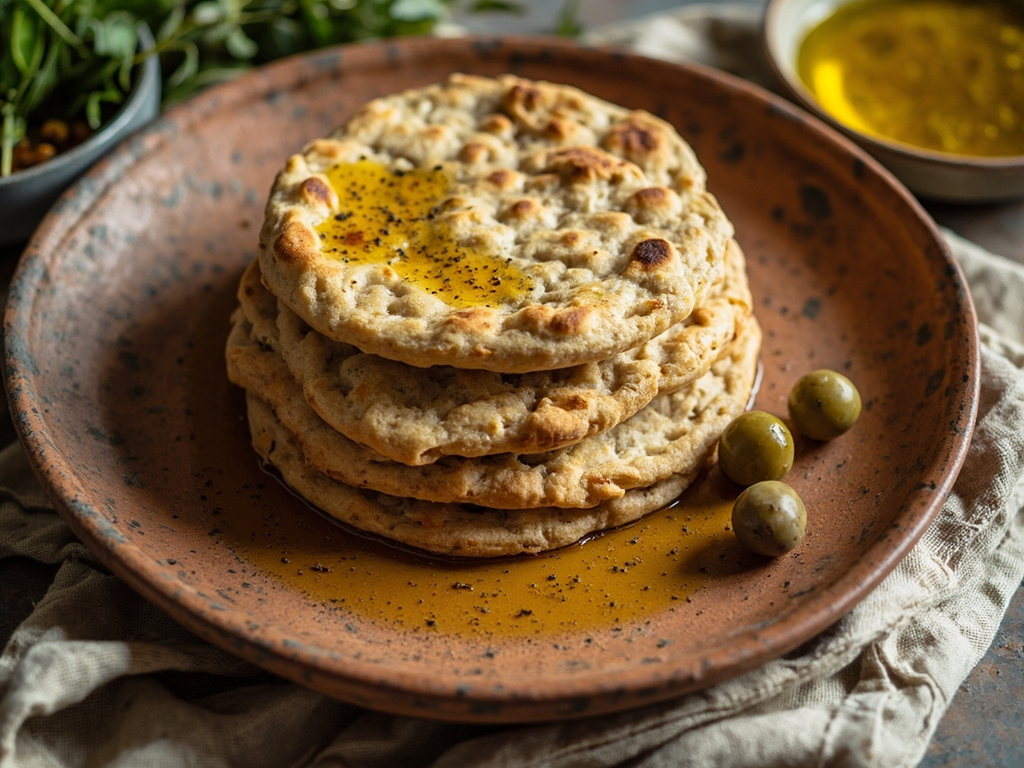
Mortal, look at this brown flatbread: it is less glorious than my temples, yet it is what keeps my people of Athens standing. The barley is toasted before grinding, for raw barley is sad and heavy; then it is kneaded with water and a trickle of the oil I gave your city. Eat it with a few olives, and you will have the meal of a free man. Remember: wisdom begins when one knows to be content with the simple.
- •Toasted barley flour (alphita) — two handfuls per diner (grain base)
- •Spring water — enough to bind (binder)
- •Olive oil — a drizzle (softness and signature)
- •Sea salt — a pinch (seasoning)
Maza, the barley flatbread
A dense flatbread of toasted barley flour, kneaded with water, salt, and a drizzle of olive oil. Sometimes eaten raw, barely cooked, or dried to last. The staple food of both citizen and farmer.
Why this dish? Athena is the goddess of the city of Athens, and barley nourished the Athenian people long before wheat. Maza is the daily bread of the mortals she protects: humble, robust, it is the foundation of the Greek table upon which everything else rests.
Mortal, look at this brown flatbread: it is less glorious than my temples, yet it is what keeps my people of Athens standing. The barley is toasted before grinding, for raw barley is sad and heavy; then it is kneaded with water and a trickle of the oil I gave your city. Eat it with a few olives, and you will have the meal of a free man. Remember: wisdom begins when one knows to be content with the simple.
Ingredients (period version)
- Toasted barley flour (alphita) — two handfuls per diner (grain base)
- Spring water — enough to bind (binder)
- Olive oil — a drizzle (softness and signature)
- Sea salt — a pinch (seasoning)
Ingredients
- Barley flour — 200 g (grain base)
- Warm water — 120 ml (binder)
- Olive oil — 2 tbsp (softness and signature)
- Fine salt — 1/2 tsp (seasoning)
Method
- Toast the barley flour in a dry pan for 3-4 minutes, stirring, until it smells nutty.
- Mix warm water, oil, and salt, then gradually incorporate the toasted flour.
- Knead until a firm, smooth dough forms.
- Shape into flat discs about 1 cm thick.
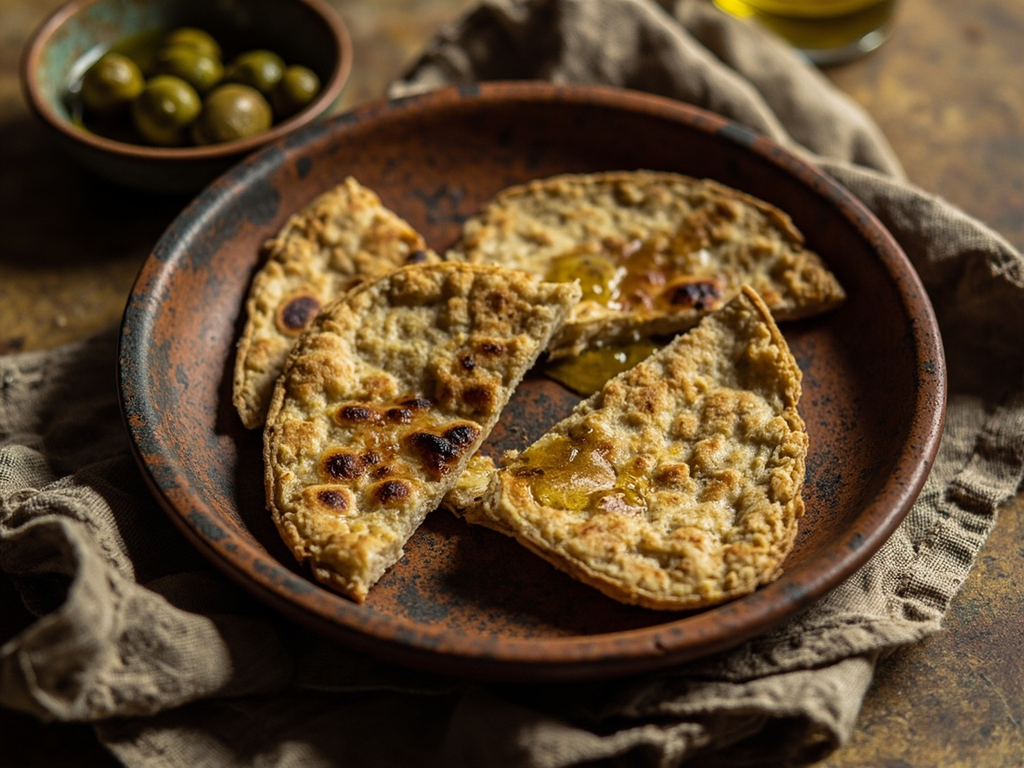
- Cook 4-5 minutes per side on a hot stone or dry pan, until browned.
How it was made : Maza, made from toasted barley flour (alphita), was the staple food of ancient Greece, often considered more common than wheat bread (artos), which was reserved for special occasions or the wealthier. It was sometimes eaten raw, simply kneaded, or dried for preservation and transport.
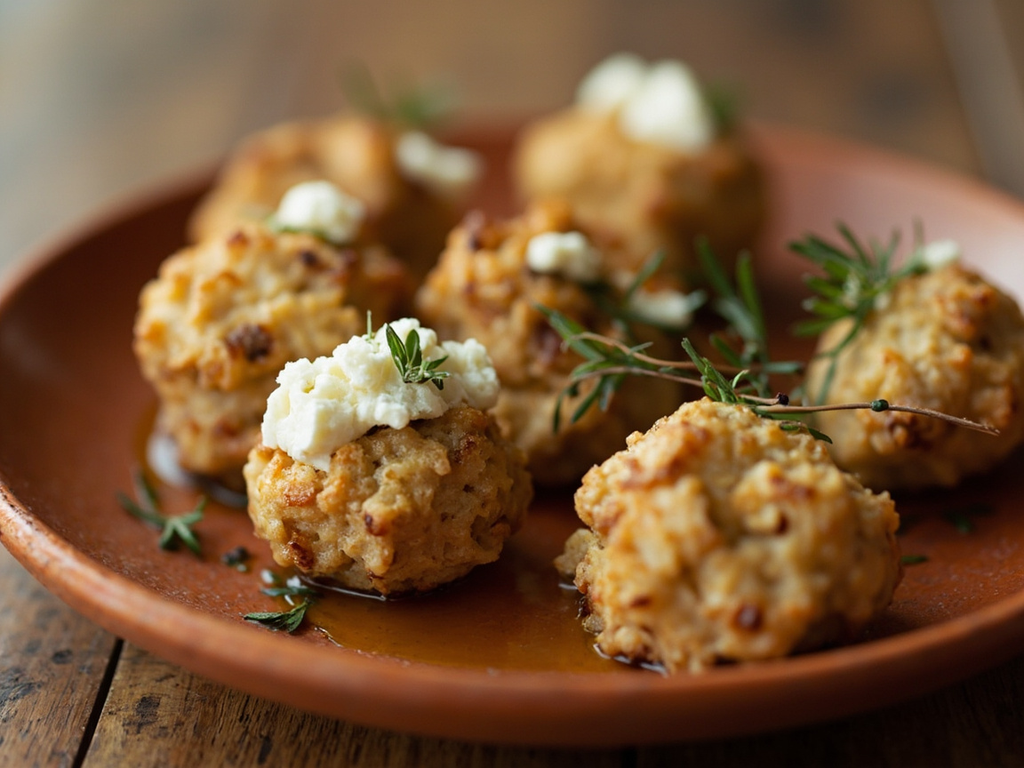
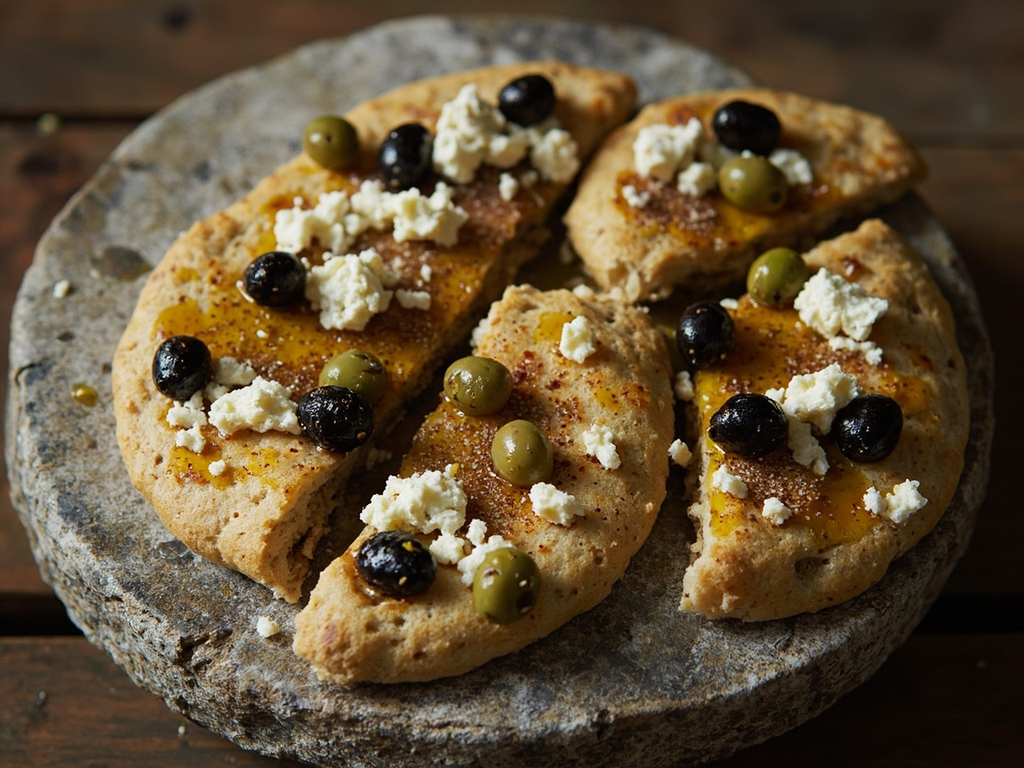
The contemporary twist : Served warm, broken by hand over a bed of olives and fresh cheese, 'Acropolis toast' style.
Sources : Andrew Dalby, Siren Feasts: A History of Food and Gastronomy in Greece, Routledge, 1996 · Athenaeus of Naucratis, Deipnosophistae, Book III
Athena · Charactorium