 flip
flipBarley maza with oil and olives
Barley maza with oil and olives
Why this dish? Maza, an unleavened barley flatbread, was the daily bread throughout Greece — including for a scholar absorbed in his geometry figures. Frugal and quick to prepare, it nourished the studying man bent over his wax tablet far more reliably than feasts.
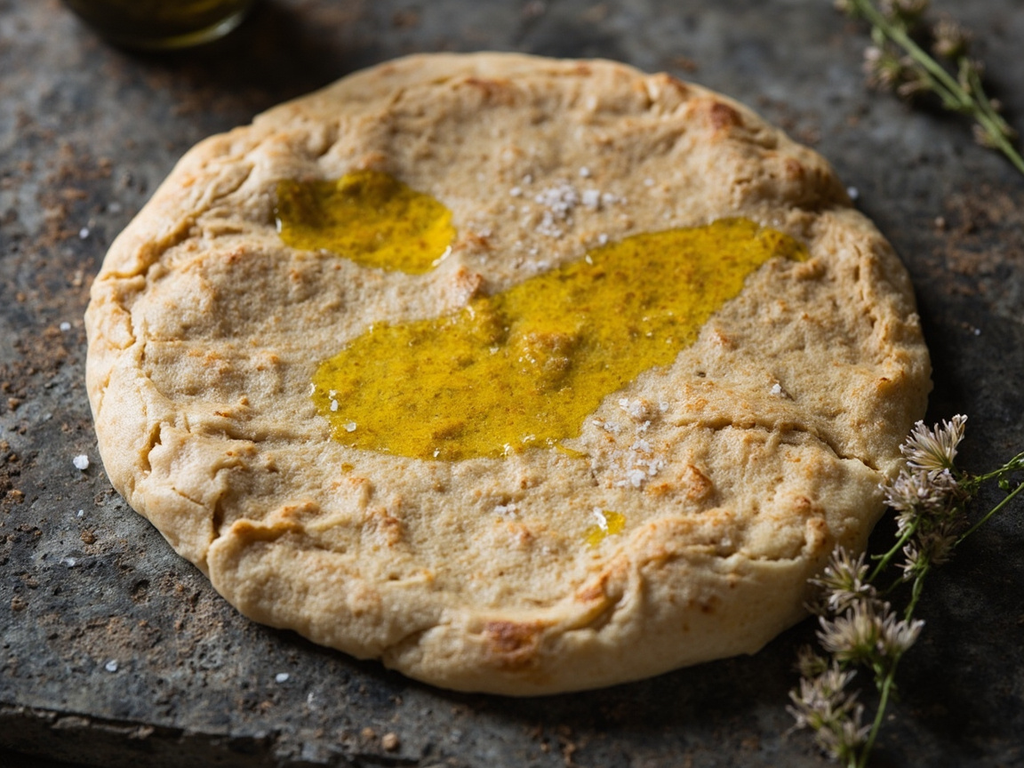
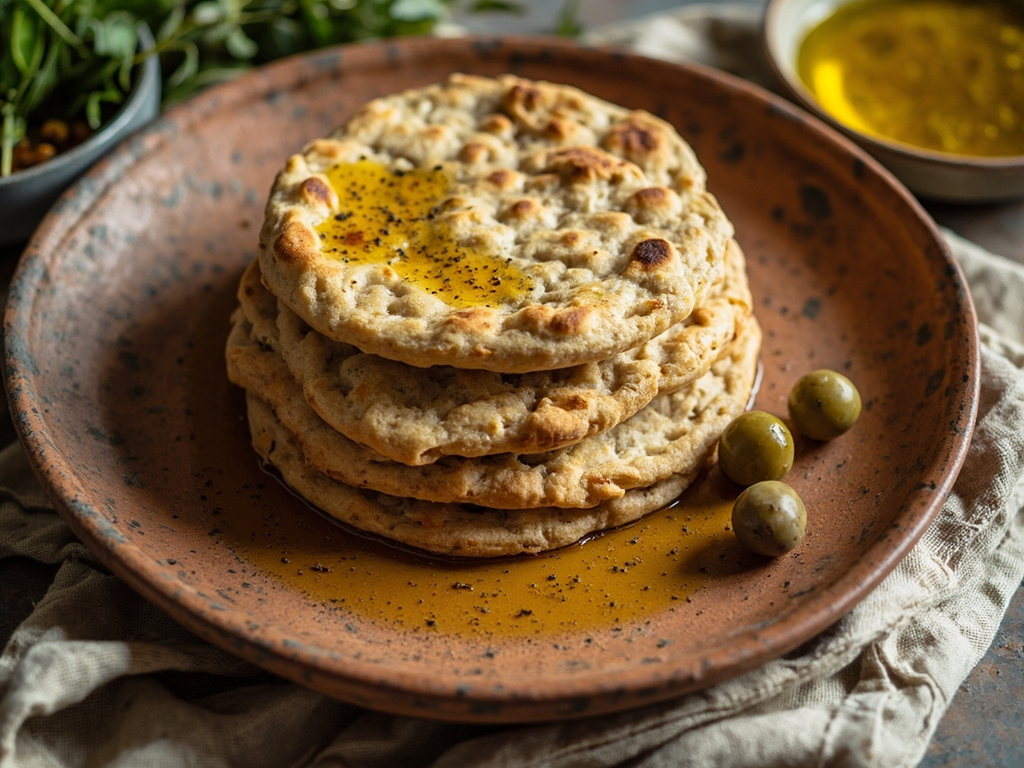
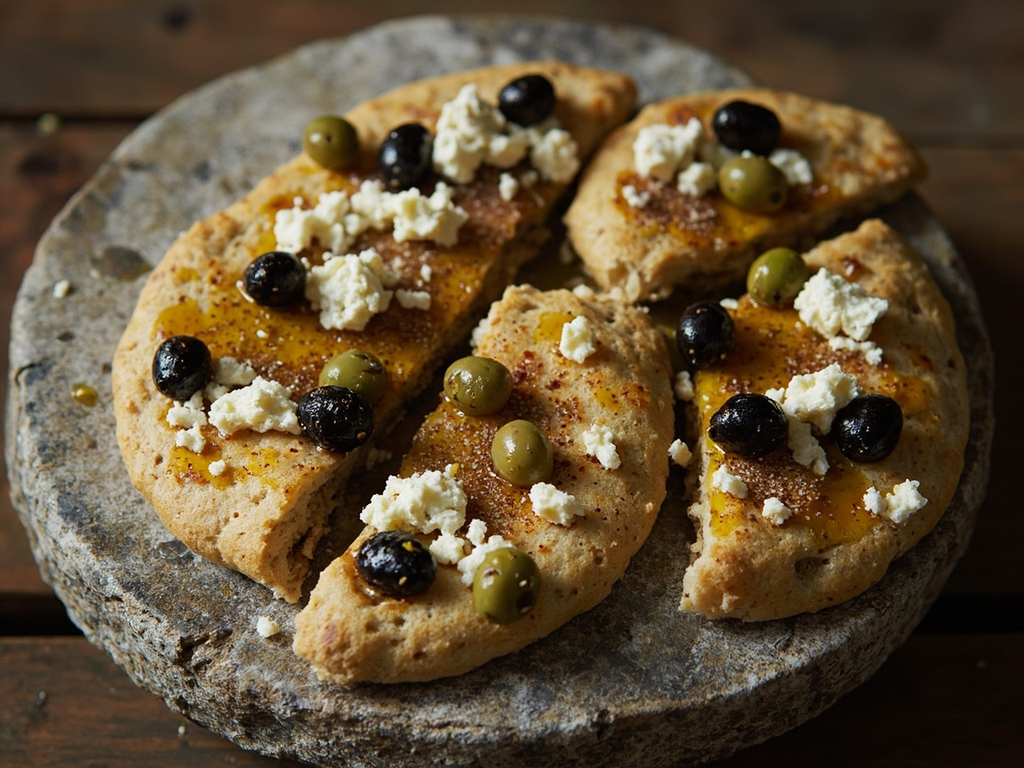
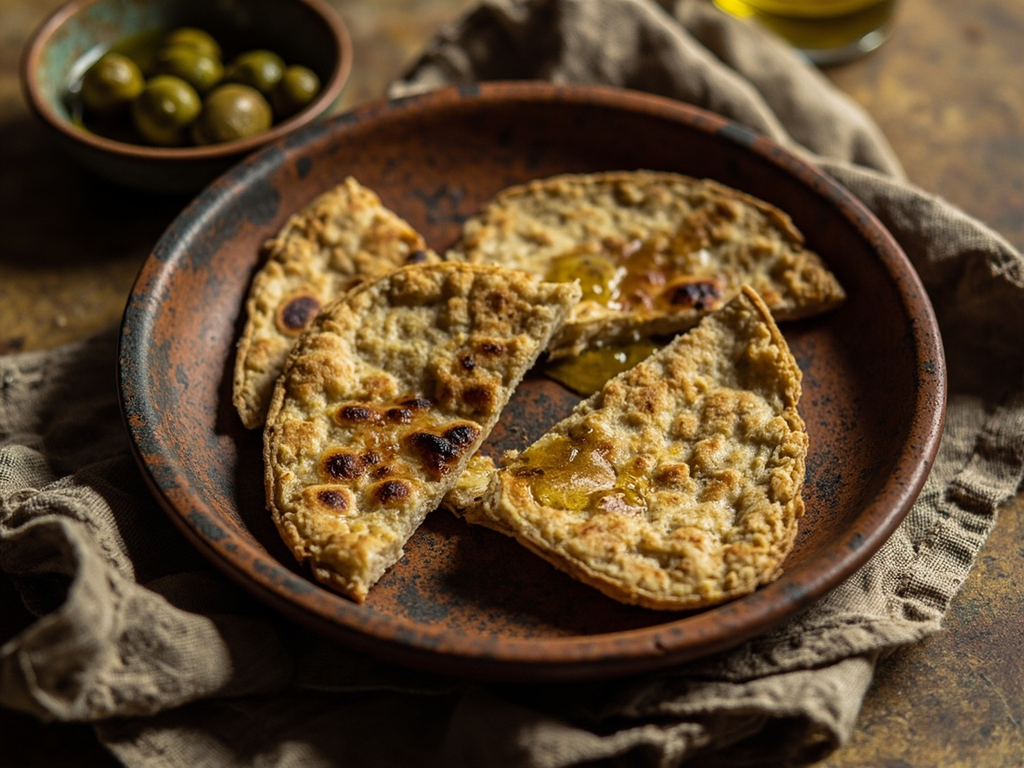
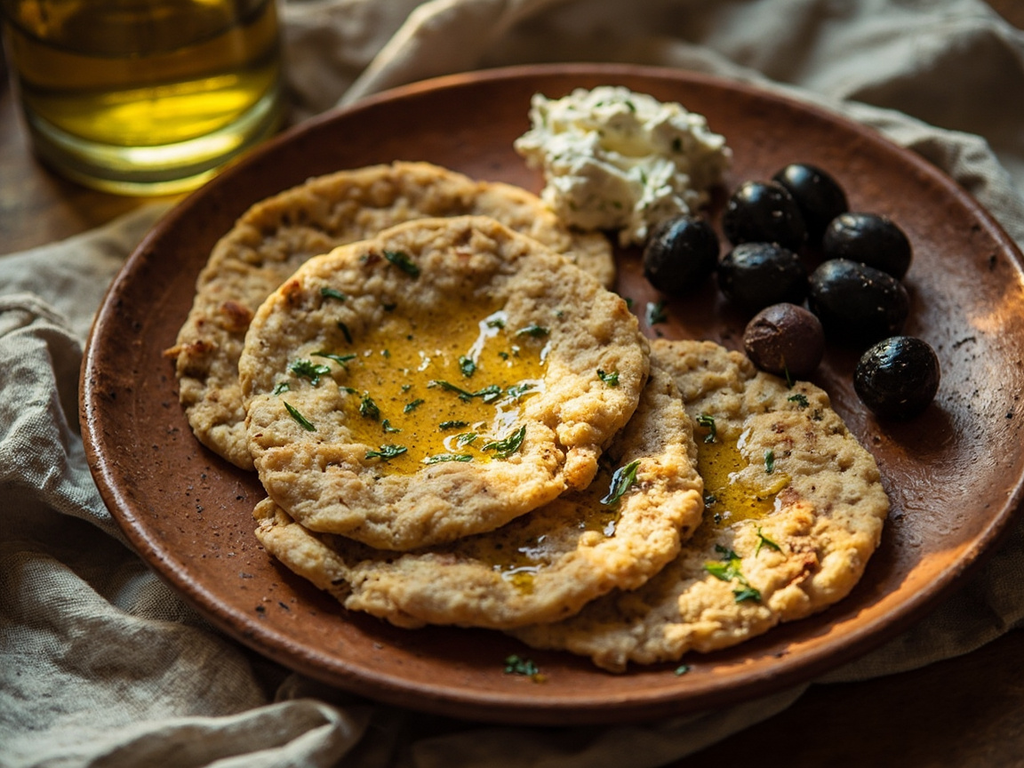
A dense flatbread of toasted barley kneaded with water and olive oil, placed on the table with olives and a little goat cheese. The simplest and most universal meal of ancient Greece: break, dip in oil, eat with the fingers.
See this flatbread: nothing more modest, and yet it keeps me going from sunrise to sunset. I toast the barley, grind it, moisten it with water and a splash of oil, and let it take shape under my palm like a figure under my stylus. Dip it in oil, bite into a bitter olive, and you will understand that the mind needs no heavy meats to work — it needs barley bread and silence. In Syracuse, even before my circles drawn in the sand, this is what I bring to my mouth.
- •Toasted barley flour (alphita) — two handfuls (cereal base)
- •Spring water — enough to bind (binder)
- •Olive oil — a generous drizzle (fat, flavor)
- •Olives — a small handful (opson, salty bitterness)
- •Fresh goat cheese — a piece (accompaniment)
Barley maza with oil and olives
A dense flatbread of toasted barley kneaded with water and olive oil, placed on the table with olives and a little goat cheese. The simplest and most universal meal of ancient Greece: break, dip in oil, eat with the fingers.
Why this dish? Maza, an unleavened barley flatbread, was the daily bread throughout Greece — including for a scholar absorbed in his geometry figures. Frugal and quick to prepare, it nourished the studying man bent over his wax tablet far more reliably than feasts.
See this flatbread: nothing more modest, and yet it keeps me going from sunrise to sunset. I toast the barley, grind it, moisten it with water and a splash of oil, and let it take shape under my palm like a figure under my stylus. Dip it in oil, bite into a bitter olive, and you will understand that the mind needs no heavy meats to work — it needs barley bread and silence. In Syracuse, even before my circles drawn in the sand, this is what I bring to my mouth.
Ingredients (period version)
- Toasted barley flour (alphita) — two handfuls (cereal base)
- Spring water — enough to bind (binder)
- Olive oil — a generous drizzle (fat, flavor)
- Olives — a small handful (opson, salty bitterness)
- Fresh goat cheese — a piece (accompaniment)
Ingredients
- Barley flour (or blended barley flakes) — 200 g (cereal base)
- Warm water — 100 to 120 ml (binder)
- Extra virgin olive oil — 3 tbsp (fat)
- Salt — 1 pinch (seasoning)
- Black or green olives — a handful (accompaniment)
- Fresh goat cheese — 80 g (accompaniment)
Method
- Toast the barley flour in a dry pan for a few minutes until it smells nutty (if not already pre-toasted).
- Mix the flour, salt, and oil, then add warm water little by little until you get a soft, non-sticky dough.
- Shape into flat patties about 0.5 cm thick by hand.
- Cook for 3 to 4 minutes per side on a hot stone or pan, until golden and firm.
- Serve warm, drizzled with a little oil, with olives and goat cheese on the side.
How it was made : Barley was the grain of the poor and of everyday Greek life; wheat, more expensive, was reserved for festive bread. Maza could be baked, dried, or simply kneaded raw (alphita). It was eaten everywhere, from soldiers to philosophers.
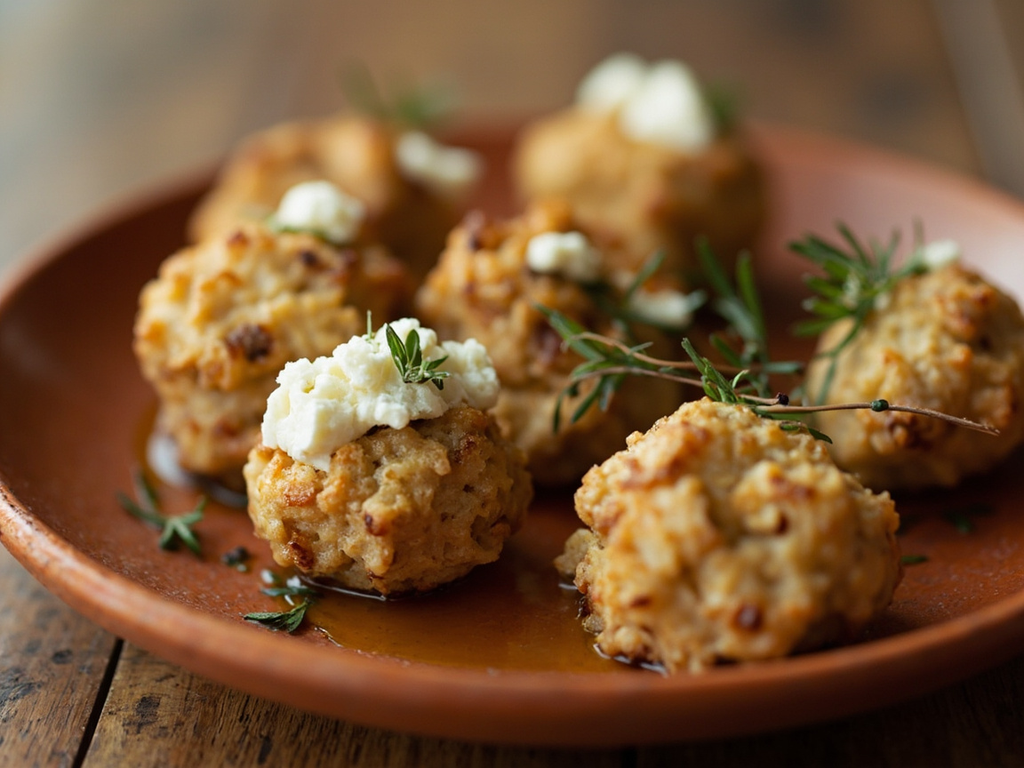
The contemporary twist : Served as small appetizer flatbreads topped with tapenade and a shaving of goat cheese: maza becomes an ancient toast.
Sources : Andrew Dalby, Siren Feasts: A History of Food and Gastronomy in Greece, Routledge, 1996 · Athenaeus of Naucratis, The Deipnosophists (The Banquet of the Learned)
Archimedes · Charactorium