 flip
flipBarley maza with olives and cheese
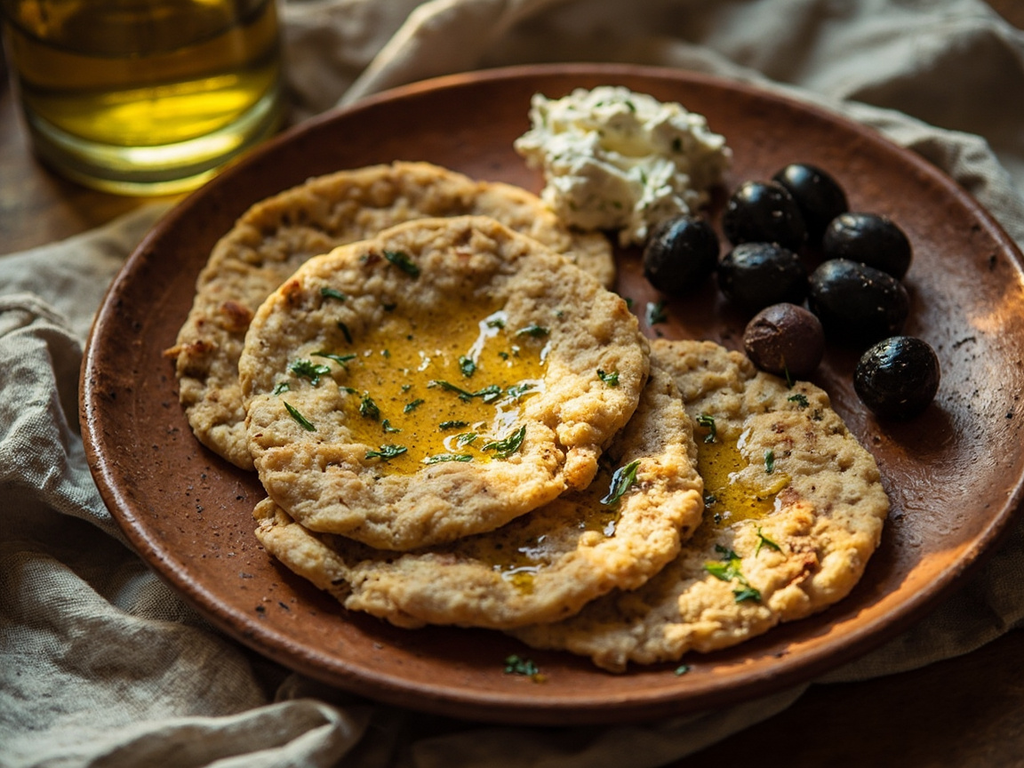
Barley maza with olives and cheese
Why this dish? Before being a goddess, Artemis haunts the wild margins where shepherds and hunters live. Their daily food is the *maza*: the unleavened barley flatbread, eaten with a few olives and a bit of goat cheese — exactly what a hunter takes in the morning before climbing to the woods she protects.
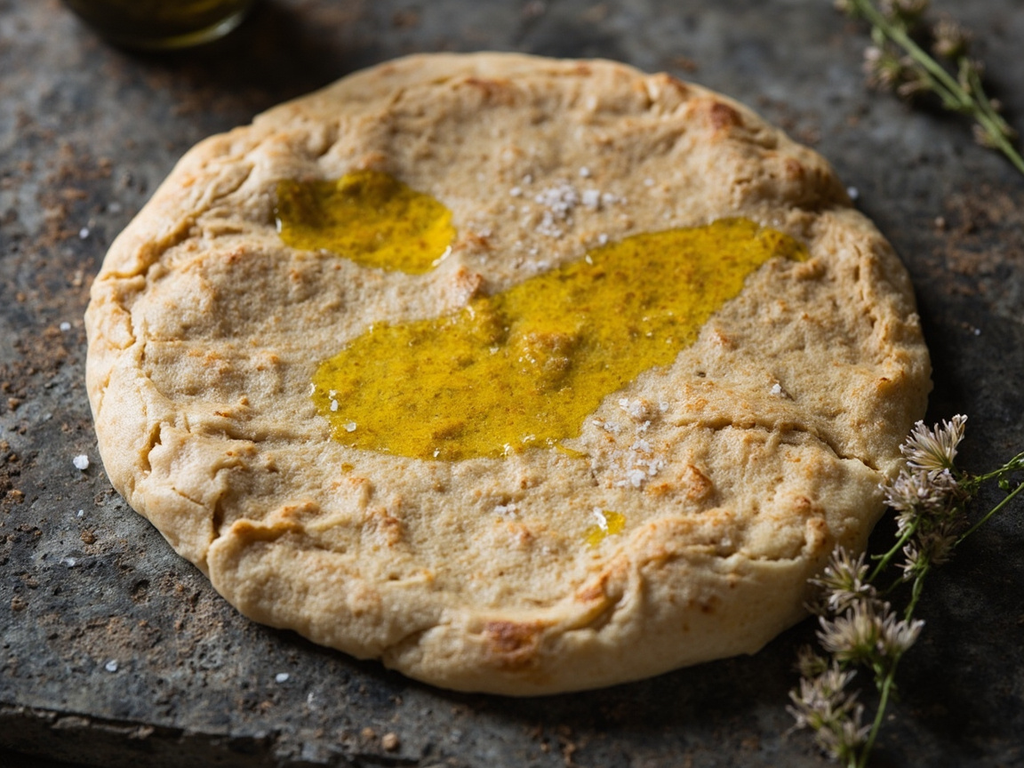
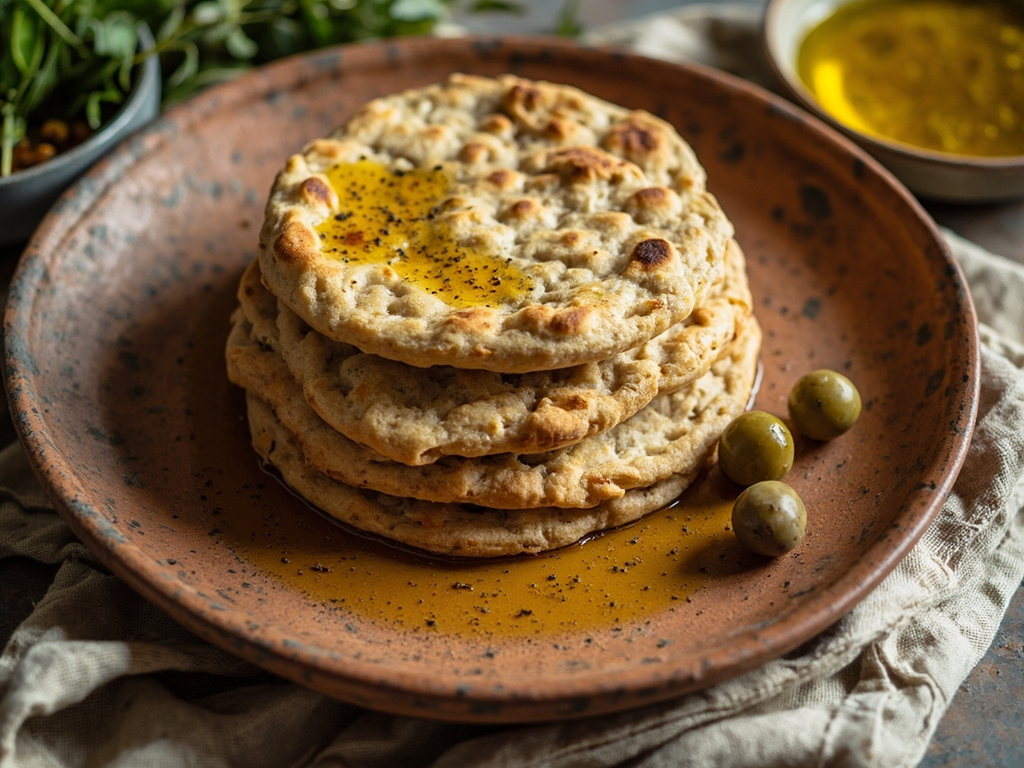
A dense, rustic barley flatbread, barely kneaded, cooked on a stone, broken and topped with bitter olives and fresh cheese drizzled with olive oil. The simplest meal in Greece — and the most faithful.
You seek my daily dish? Here it is, and it is no feast: ground barley, a little water, and a hot stone. Break the flatbread with your hands, place on it the sharp olive and the goat's cheese, pour the oil, and you are satisfied like my shepherds. Let whoever scorns it do so; I know that it is this that keeps a man going to the summit.
- •Toasted barley flour — two handfuls (base of the flatbread)
- •Water — as needed (binder)
- •Salt — a pinch (seasoning)
- •Olives — a handful (bitter opson)
- •Fresh goat cheese — a piece (accompaniment)
- •Olive oil — a drizzle (binder and flavor)
Barley maza with olives and cheese
A dense, rustic barley flatbread, barely kneaded, cooked on a stone, broken and topped with bitter olives and fresh cheese drizzled with olive oil. The simplest meal in Greece — and the most faithful.
Why this dish? Before being a goddess, Artemis haunts the wild margins where shepherds and hunters live. Their daily food is the *maza*: the unleavened barley flatbread, eaten with a few olives and a bit of goat cheese — exactly what a hunter takes in the morning before climbing to the woods she protects.
You seek my daily dish? Here it is, and it is no feast: ground barley, a little water, and a hot stone. Break the flatbread with your hands, place on it the sharp olive and the goat's cheese, pour the oil, and you are satisfied like my shepherds. Let whoever scorns it do so; I know that it is this that keeps a man going to the summit.
Ingredients (period version)
- Toasted barley flour — two handfuls (base of the flatbread)
- Water — as needed (binder)
- Salt — a pinch (seasoning)
- Olives — a handful (bitter opson)
- Fresh goat cheese — a piece (accompaniment)
- Olive oil — a drizzle (binder and flavor)
Ingredients
- Barley flour — 200 g (base)
- Warm water — 120 to 140 ml (binder)
- Olive oil — 2 tbsp + for serving (dough and finish)
- Salt — 1 tsp (seasoning)
- Black and green olives — 1 handful (bitter garnish)
- Fresh goat cheese (or feta) — 150 g (garnish)
- Dried oregano — 1 pinch (flavor)
Method
- Mix barley flour and salt, add oil then warm water gradually to form a firm dough.
- Knead briefly, divide into balls and flatten into flatbreads about 1 cm thick.
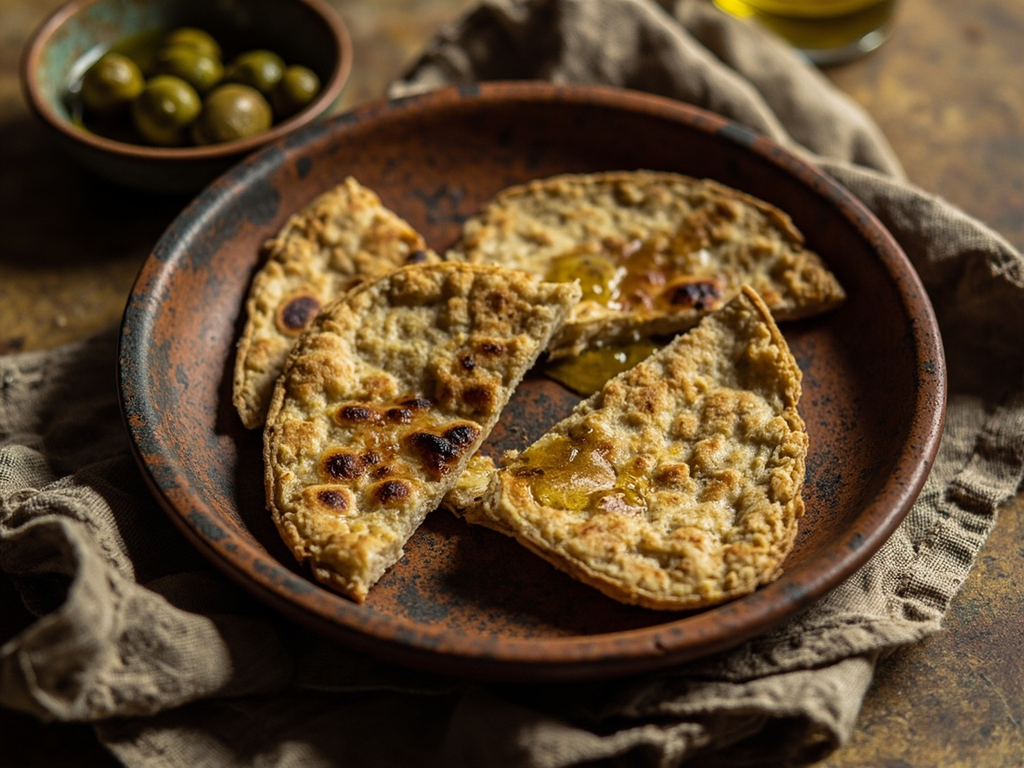
- Cook for 4 to 5 minutes per side on a very hot pan or stone, without fat, until golden spots appear.
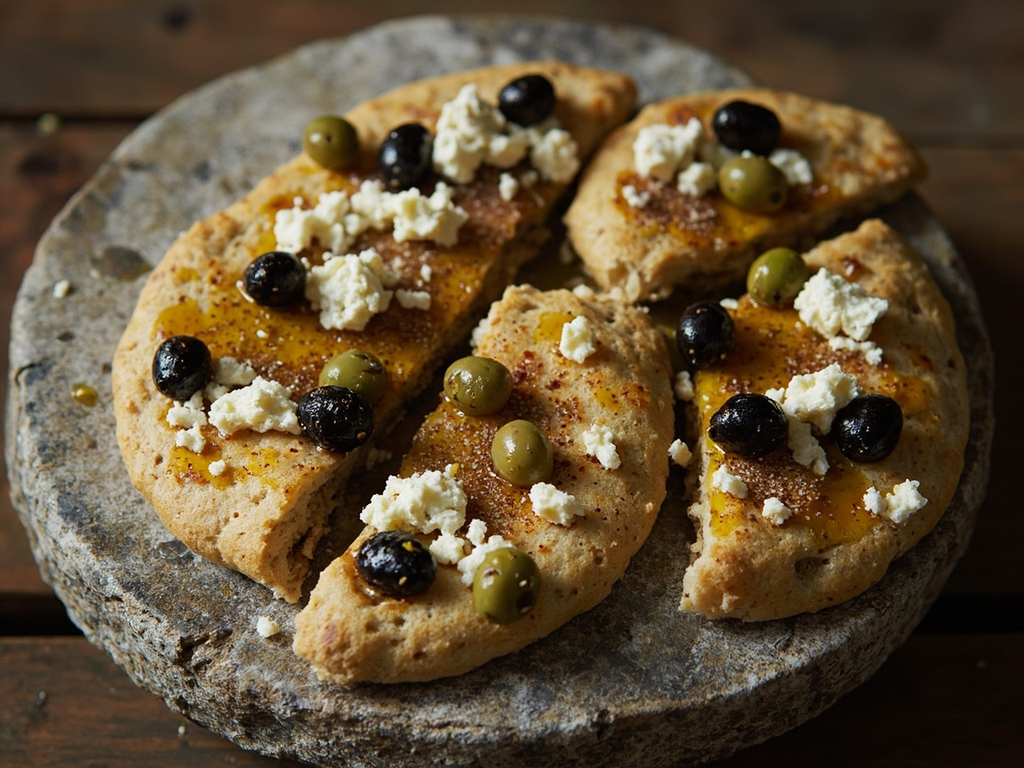
- Break the flatbreads, top with olives and crumbled cheese.
- Drizzle with olive oil and sprinkle with oregano; serve warm.
How it was made : The *maza*, a flatbread or porridge of barley flour, was the staple food of most Greeks, far more common than wheat bread reserved for feast days or the rich. Barley was often toasted before grinding, then simply mixed with water, sometimes honey or oil; cooked on a hot stone or eaten raw as a paste, it accompanied the *opson* (olives, cheese, vegetables).
The contemporary twist : Served as small "maza bar" bites: each person tops their flatbread with olives, feta, oregano, and a drizzle of oil.
Sources : Athenaeus, The Deipnosophists (descriptions of maza) · Andrew Dalby, Food in the Ancient World from A to Z
Artemis · Charactorium