 flip
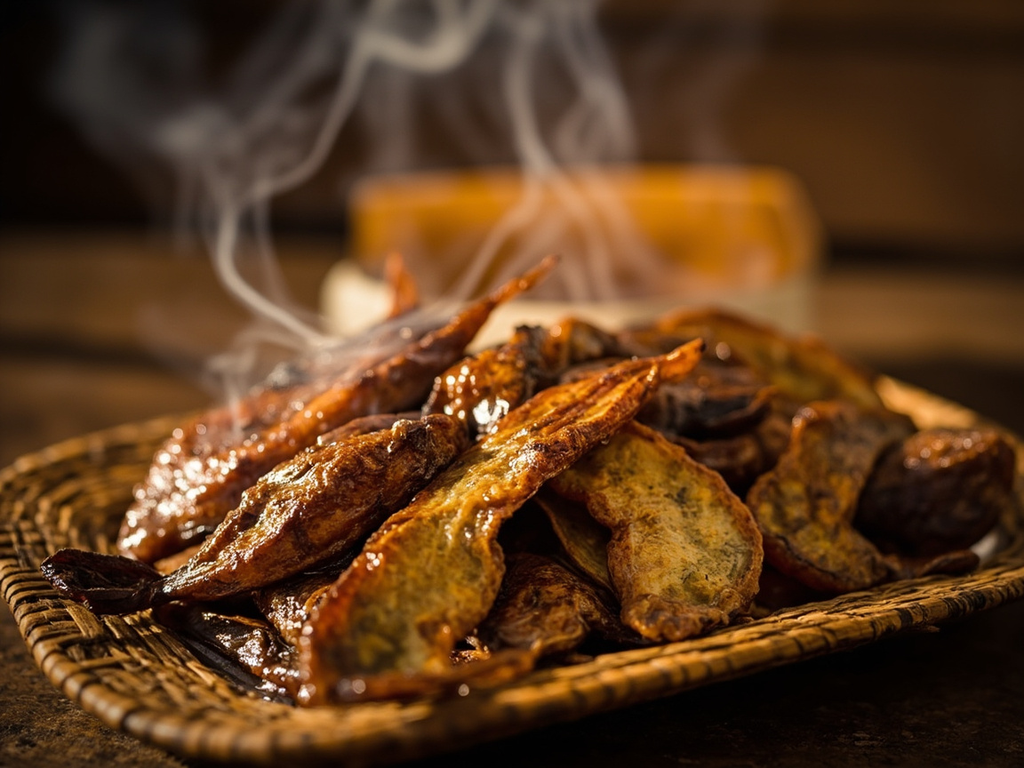
flipSmoked Comoé river fish for the journey
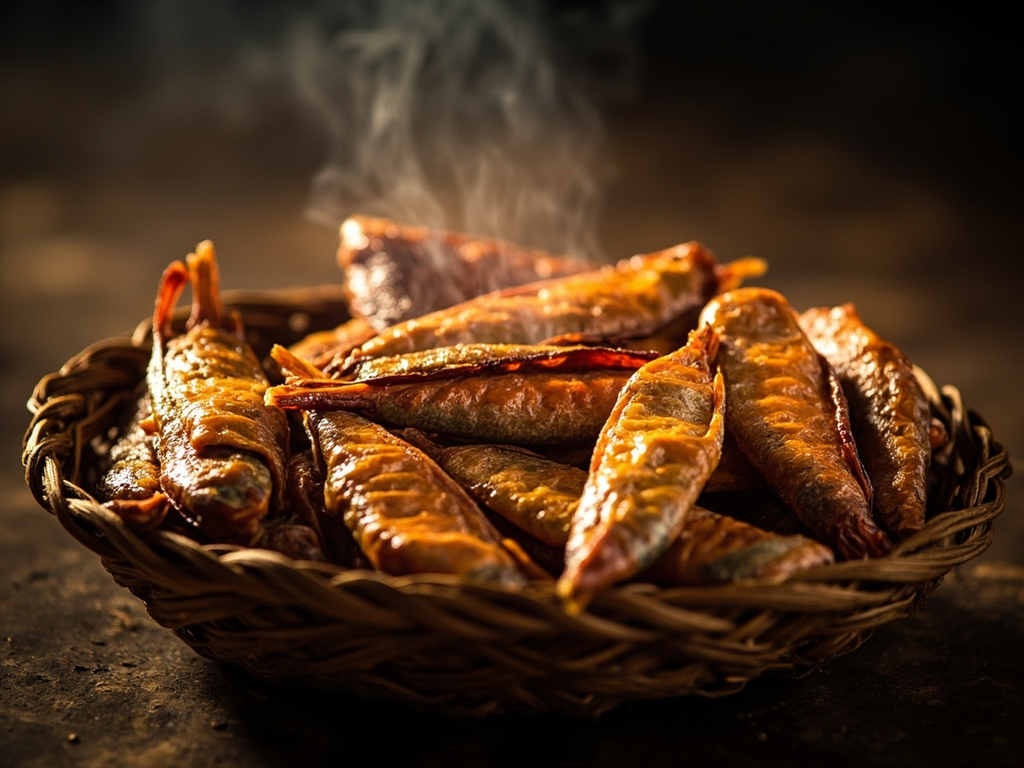
Smoked Comoé river fish for the journey
Why this dish? The founding story of Aura Pokou is one of exile, a long march, and the crossing of the Comoé River. A migrating people carries what keeps: smoked river fish, light, rich, lasting weeks, crumbled along the way without fire. It is the food of displacement, the one that accompanied the Baoulé to their new land.
River fish, gutted, salted, and slowly smoked over a wood fire until dry, amber, and hard. Eaten as is on the road, or crumbled to give depth to any campfire sauce.
On the road, fire does not always wait for you, and the belly is not patient. That is why we smoke the river fish: we gut it, salt it, lay it on the rack over the embers until it hardens and keeps without rotting. Tuck it into your loincloth for the march; one piece is enough to sustain, and thrown into the evening's hot water, it makes a sauce by itself. A people that knows how to preserve is a people that survives the crossing.
- •River fish (from the Comoé) — the day's catch (preserve material)
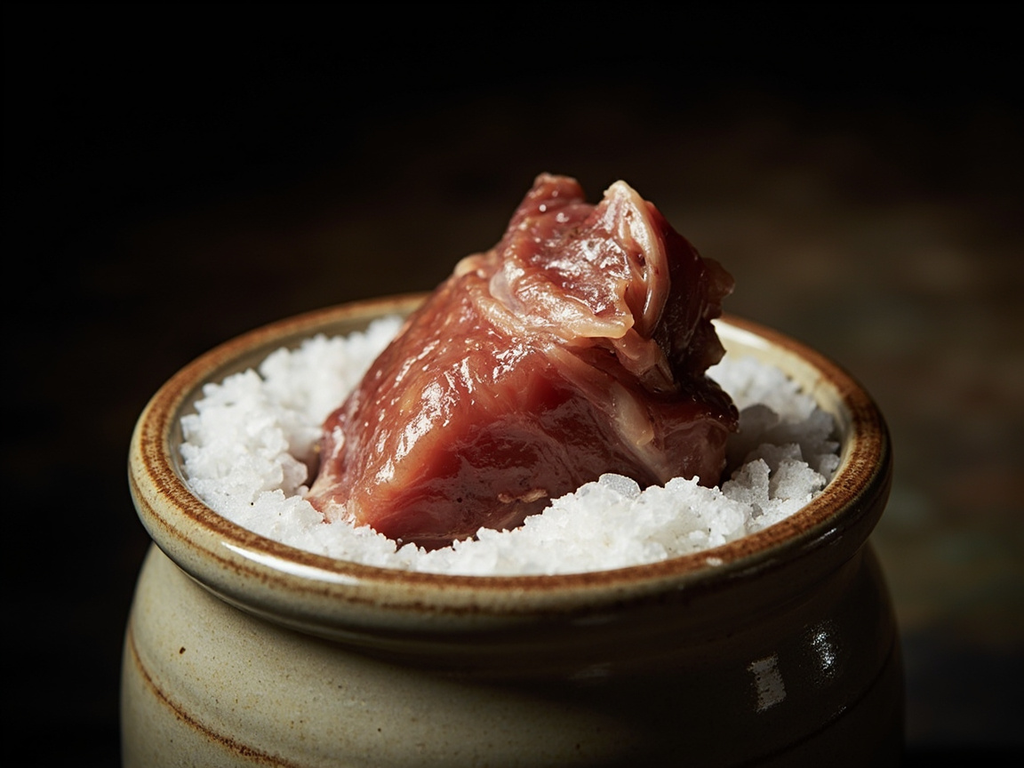
- •Salt — liberally rubbed (dehydration and preservation)
- •Wood and smoking embers — a slow fire (smoking and drying)
Smoked Comoé river fish for the journey
River fish, gutted, salted, and slowly smoked over a wood fire until dry, amber, and hard. Eaten as is on the road, or crumbled to give depth to any campfire sauce.
Why this dish? The founding story of Aura Pokou is one of exile, a long march, and the crossing of the Comoé River. A migrating people carries what keeps: smoked river fish, light, rich, lasting weeks, crumbled along the way without fire. It is the food of displacement, the one that accompanied the Baoulé to their new land.
On the road, fire does not always wait for you, and the belly is not patient. That is why we smoke the river fish: we gut it, salt it, lay it on the rack over the embers until it hardens and keeps without rotting. Tuck it into your loincloth for the march; one piece is enough to sustain, and thrown into the evening's hot water, it makes a sauce by itself. A people that knows how to preserve is a people that survives the crossing.
Ingredients (period version)
- River fish (from the Comoé) — the day's catch (preserve material)
- Salt — liberally rubbed (dehydration and preservation)
- Wood and smoking embers — a slow fire (smoking and drying)
Ingredients
- Small whole fish (sardines, tilapia, mackerel) — 1 kg, gutted (smoke material)
- Coarse salt — 3 tbsp (salting)
- Smoking wood chips (beech) — 1 handful (smoke)
Method
- Gut and rinse the fish, open them flat, then rub with coarse salt; let purge for 1 hour.
- Rinse quickly and pat dry thoroughly.
- Hot-smoke (in a smoker, covered barbecue with chips, or oven at 80-90°C with the door ajar) for 2 to 4 hours, until the flesh is firm, dry, and amber.
- Let cool completely in the air: the fish should be hard and will keep for several days.
- Eat as a snack, or crumble into a sauce or broth for umami.
How it was made : Smoke-drying fish is an ancient preservation technique of West African riverine societies: without refrigeration, smoke and salt allowed precious protein to be transported and stored during migrations and dry seasons. Smoked fish remains the aromatic base of countless sauces in the region today.
The contemporary twist : Served on an appetizer board with a little palm oil and grains of paradise, homemade smoked fish becomes a smoky, briny bite that tells, by itself, a river crossing.
Aura Pokou · Charactorium