 flip
flipDulcia Domestica — Palmyra Dates Stuffed and Honey-Glazed
Dulcia Domestica — Palmyra Dates Stuffed and Honey-Glazed
Why this dish? In 272–273, Aurelian subdued Palmyra and overthrew Queen Zenobia—the caravan oasis famous for its dates. These Eastern fruits featured at the banquet of his triumph in Rome. Serving honeyed dates is literally tasting the spoils of his greatest victory.
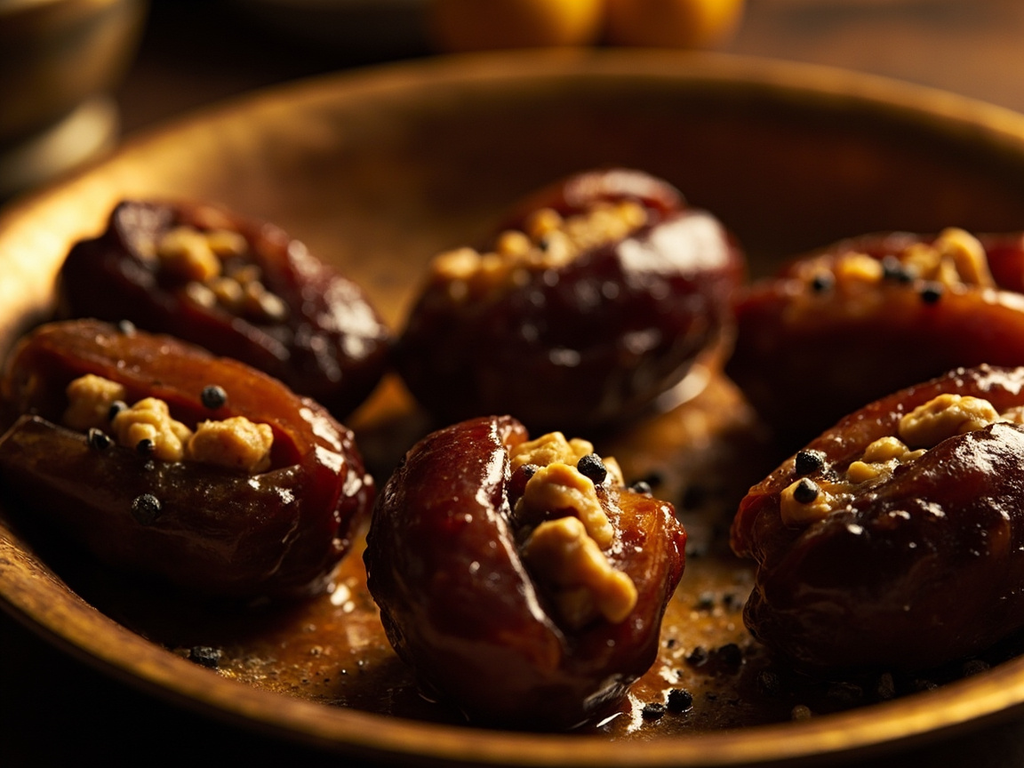
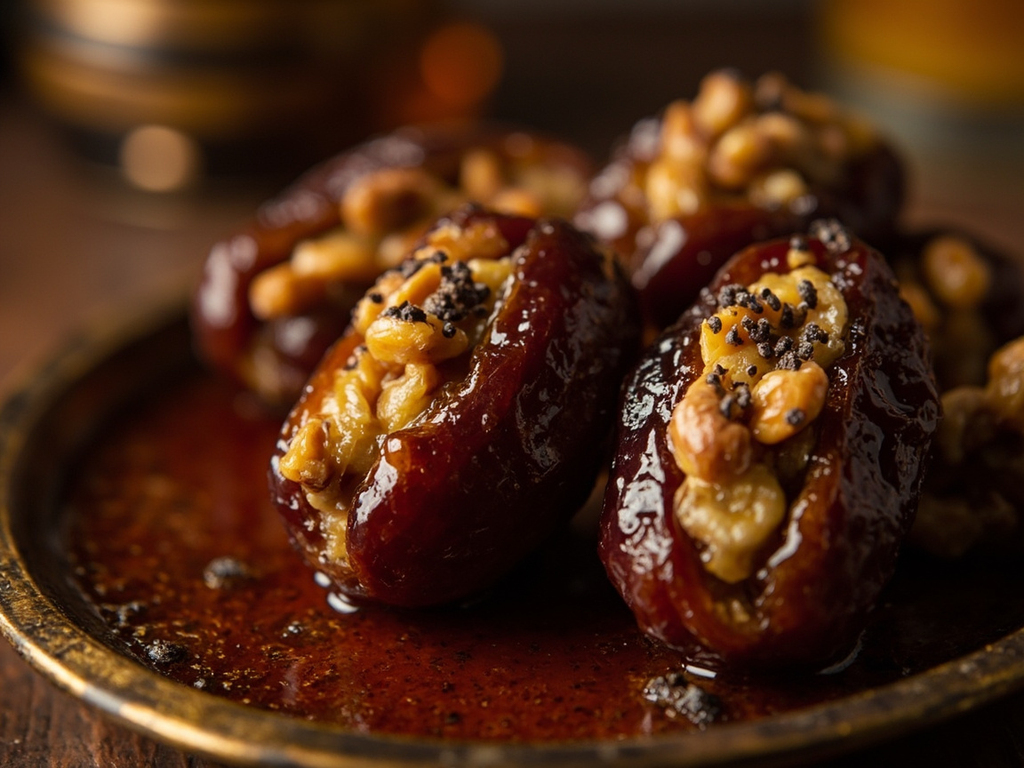
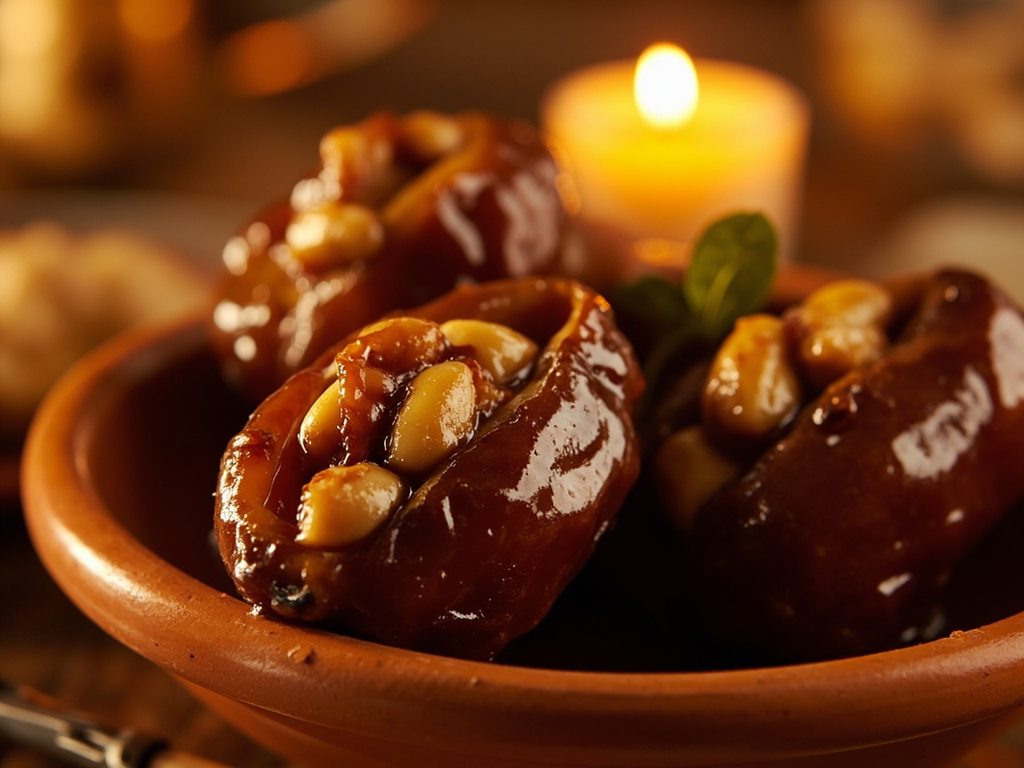
Pitted dates stuffed with nuts and pepper, rolled in salt then candied in hot honey. A sweet from Apicius typical of the secundae mensae, where the sweetness of honey meets the bite of pepper—Roman taste in all its surprising audacity.
I brought Palmyra back into the fold of Rome, and with it these golden dates that its caravans carried. On the day of my triumph, they were served stuffed with nuts and glazed in hot honey. Do not be surprised by the grain of pepper hidden inside nor the pinch of salt: that is how we Romans like sweetness to bite a little. Bite into one and think that you taste the subdued East—the world I restored to its unity fits in this mouthful.
- •Dates (from Palmyra or Jericho) — a cup (fruit shell)
- •Pine nuts and chopped walnuts — a handful (stuffing)
- •Black pepper — a few grains (spicy contrast)
- •Salt — a pinch (rolling and contrast)
- •Honey — as needed (candying)
Dulcia Domestica — Palmyra Dates Stuffed and Honey-Glazed
Pitted dates stuffed with nuts and pepper, rolled in salt then candied in hot honey. A sweet from Apicius typical of the secundae mensae, where the sweetness of honey meets the bite of pepper—Roman taste in all its surprising audacity.
Why this dish? In 272–273, Aurelian subdued Palmyra and overthrew Queen Zenobia—the caravan oasis famous for its dates. These Eastern fruits featured at the banquet of his triumph in Rome. Serving honeyed dates is literally tasting the spoils of his greatest victory.
I brought Palmyra back into the fold of Rome, and with it these golden dates that its caravans carried. On the day of my triumph, they were served stuffed with nuts and glazed in hot honey. Do not be surprised by the grain of pepper hidden inside nor the pinch of salt: that is how we Romans like sweetness to bite a little. Bite into one and think that you taste the subdued East—the world I restored to its unity fits in this mouthful.
Ingredients (period version)
- Dates (from Palmyra or Jericho) — a cup (fruit shell)
- Pine nuts and chopped walnuts — a handful (stuffing)
- Black pepper — a few grains (spicy contrast)
- Salt — a pinch (rolling and contrast)
- Honey — as needed (candying)
Ingredients
- Large Medjool dates — 12 pieces (fruit shell)
- Chopped pine nuts and walnut halves — 60 g (stuffing)
- Freshly ground black pepper — 1/4 teaspoon (contrast)
- Fine salt — 1 pinch (rolling)
- Liquid honey — 4 tablespoons (candying)
Method
- Pit the dates by slitting them open on one side, without separating them completely.
- Mix the chopped pine nuts and walnuts with the ground pepper, and stuff each date with this filling.
- Briefly roll the stuffed dates in a pinch of salt.
- Gently heat the honey in a small pan.
- Add the dates and let them candy for 2 to 3 minutes, turning them, until glossy and coated.
- Serve warm, with a little of the cooking honey drizzled on top.
How it was made : The recipe is almost word for word from Apicius (dulcia domestica): pitted dates stuffed with nuts or pine nuts and pepper, salted then fried in honey. The sweet-spicy-salty combination was the hallmark of refined Roman taste, far from our modern sweet/savory separation.
The contemporary twist : Sprinkle with a little fleur de sel and orange zest: a mignardise that would make Apicius pass for a Michelin-star chef.
Sources : Apicius, De re coquinaria, VII (Dulcia domestica) · Historia Augusta, Vita Aureliani (triumph and spoils of Palmyra)
Aurelian · Charactorium