 flip
flipHubing, the Western Merchants' Flatbread
Hubing, the Western Merchants' Flatbread
Why this dish? An Lushan was Sogdian: the hubing, this fashionable flatbread that came precisely from the Central Asian oases, was the bread of his childhood and of his soldiers. In Chang'an, it was sold on every street corner, hot and griddled; for a frontier man like him, it was both the taste of home and the practical food for long rides.
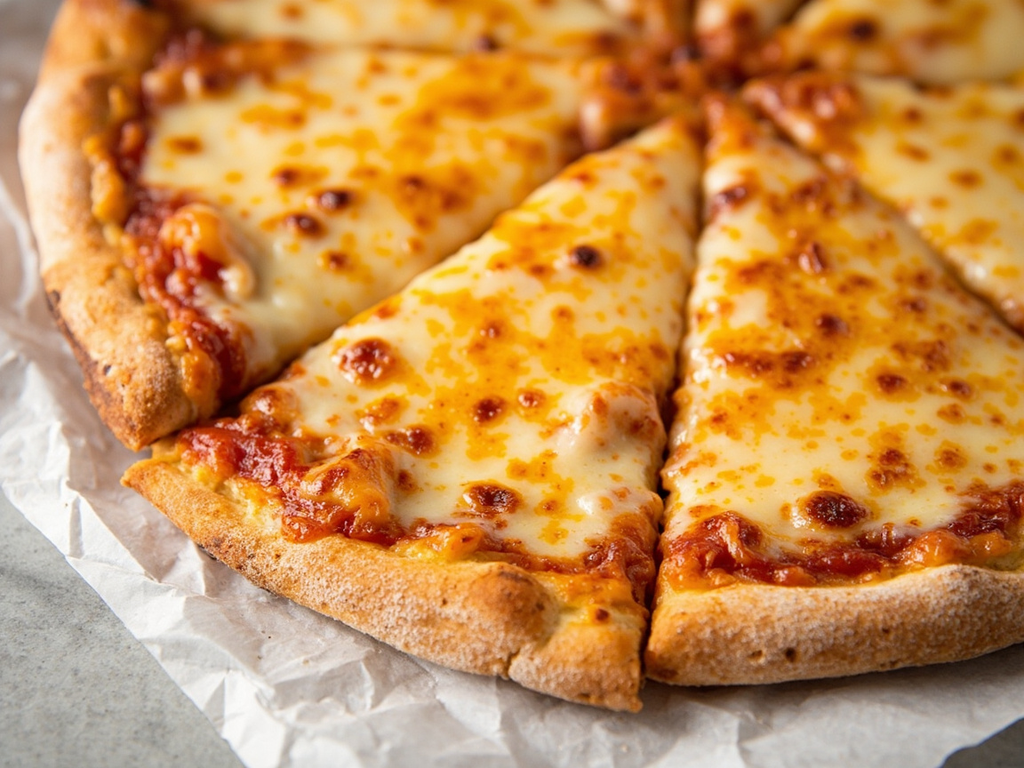
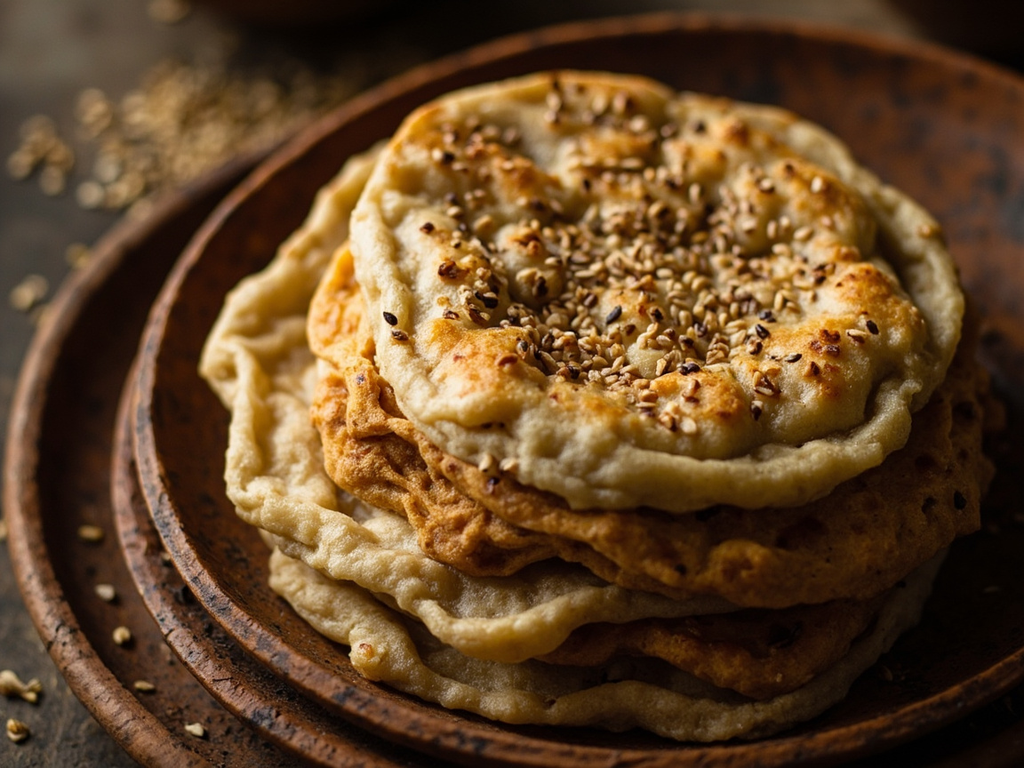
A wheat flatbaked against the oven wall, crispy, golden and studded with sesame. Flat and sturdy, it traveled in saddlebags and was dipped into meat juices.
Look at this flatbread, my friend! I was born out there, on the trails where the Sogdian camels raise the dust, and it's this bread that made me big and fat as you see me. You press it against the blazing oven, you sprinkle it with those little seeds that crack under the tooth, and when it comes out golden, you tear it with both hands, still steaming. I used to eat three while my officers finished one — and I dipped it in mutton fat, for a soldier who doesn't eat fat can't stay in the saddle!
- •Wheat flour — as much as needed (base of the flatbread)
- •Sourdough starter or yesterday's sour dough — a little (light leavening)
- •Water — as needed (kneading)
- •Sesame seeds — a good handful (fragrant topping)
- •Salt — a pinch (seasoning)
- •Sesame oil — a drizzle (glaze and fragrance)
Hubing, the Western Merchants' Flatbread
A wheat flatbaked against the oven wall, crispy, golden and studded with sesame. Flat and sturdy, it traveled in saddlebags and was dipped into meat juices.
Why this dish? An Lushan was Sogdian: the hubing, this fashionable flatbread that came precisely from the Central Asian oases, was the bread of his childhood and of his soldiers. In Chang'an, it was sold on every street corner, hot and griddled; for a frontier man like him, it was both the taste of home and the practical food for long rides.
Look at this flatbread, my friend! I was born out there, on the trails where the Sogdian camels raise the dust, and it's this bread that made me big and fat as you see me. You press it against the blazing oven, you sprinkle it with those little seeds that crack under the tooth, and when it comes out golden, you tear it with both hands, still steaming. I used to eat three while my officers finished one — and I dipped it in mutton fat, for a soldier who doesn't eat fat can't stay in the saddle!
Ingredients (period version)
- Wheat flour — as much as needed (base of the flatbread)
- Sourdough starter or yesterday's sour dough — a little (light leavening)
- Water — as needed (kneading)
- Sesame seeds — a good handful (fragrant topping)
- Salt — a pinch (seasoning)
- Sesame oil — a drizzle (glaze and fragrance)
Ingredients
- All-purpose wheat flour — 300 g (base)
- Baker's yeast — 5 g (leavening)
- Warm water — 180 ml (kneading)
- Golden sesame seeds — 40 g (topping)
- Salt — 5 g (seasoning)
- Toasted sesame oil — 1 tbsp (glaze)
Method
- Mix flour, salt and yeast, add warm water and knead for 8-10 minutes until smooth dough forms. Let rise 1 hour under a cloth.
- Punch down, divide into 4 balls, flatten each into a disc about 1.5 cm thick.
- Brush the top with sesame oil, press the oiled side into a plate of sesame seeds to adhere well.
- Preheat oven to 230°C with a baking sheet or stone inside.
- Bake the flatbreads on the hot sheet for 12-15 minutes until golden and the sesame smells fragrant.
- Serve hot, to be torn by hand, ideally with meat juices.
How it was made : The hubing (胡饼, "Hu flatbread") is one of the best-attested "exotic" foods of the Tang: sold on the streets of Chang'an, it was baked pressed against the wall of a clay oven, exactly like the naan or lepyochka of Central Asia from which it descends. Its popularity reflects the Tang court's craze for Sogdian fashion.
The contemporary twist : Take them out of the oven and stack them like contemporary street flatbreads: a pinch of sesame salt, and you've got Chang'an's 8th-century "street food".
Sources : Edward H. Schafer, The Golden Peaches of Samarkand: A Study of T'ang Exotics, University of California Press, 1963
An Lushan · Charactorium