 flip
flipBarley and herb pottage with chicken
Barley and herb pottage with chicken
Why this dish? Avicenna advocated light, balanced meals for himself: white meats, cooked vegetables, and wheat bread. This warm âsh, gentle on the stomach, is exactly the kind of dish he would recommend to a studious man whose temperament is heated by work.
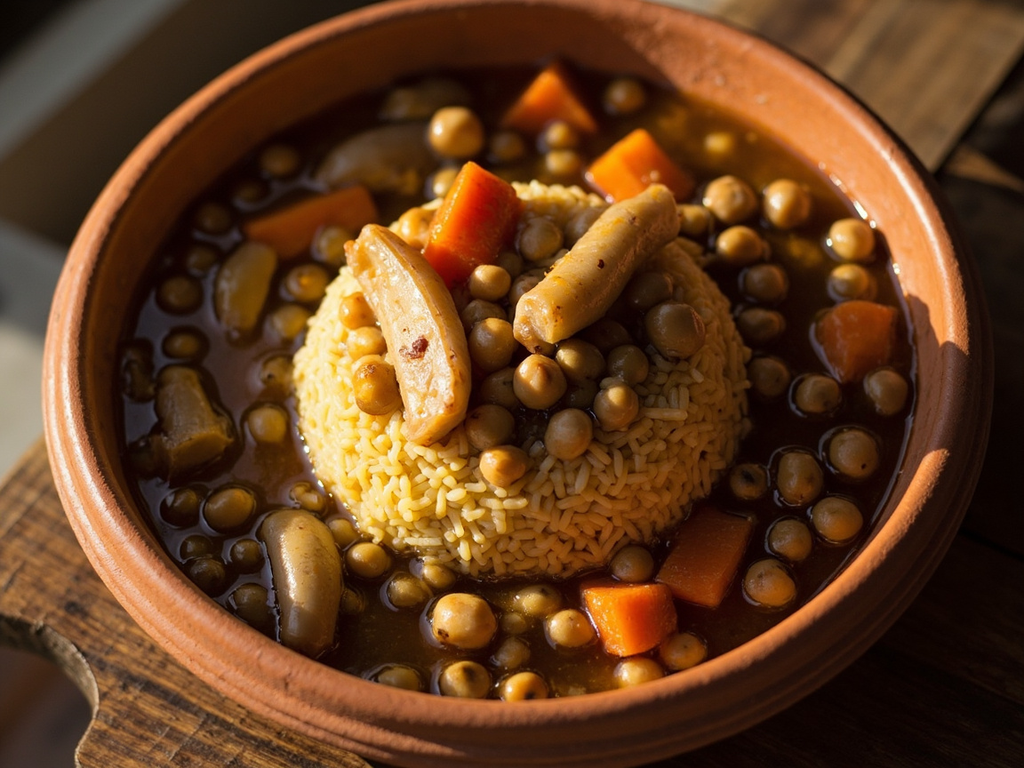
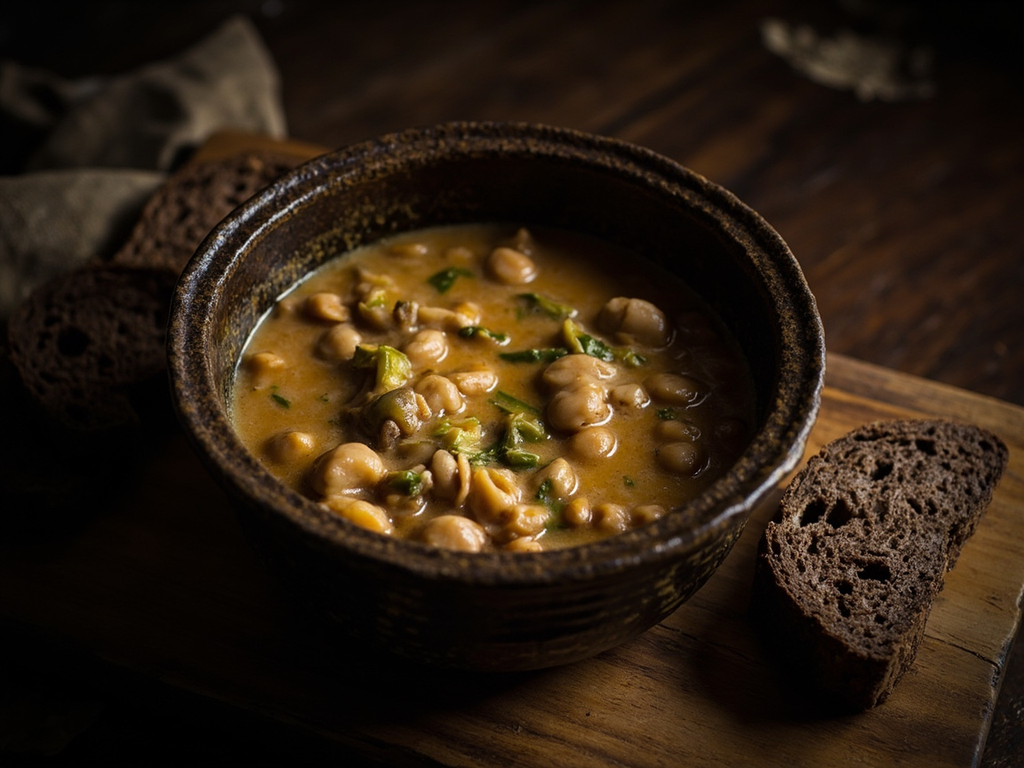
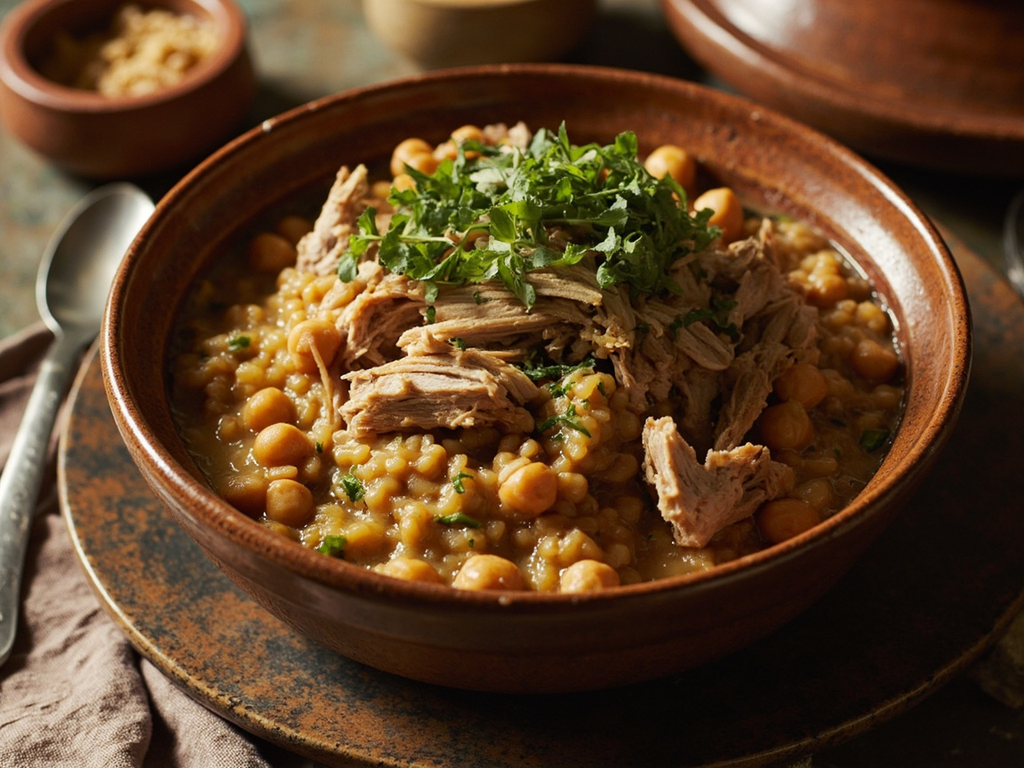
A thick pottage of hulled barley, simmered with chicken breast, spinach, chickpeas, and a bouquet of fresh herbs, lifted with a touch of murri. Nourishing without being heavy, this is a scholar's everyday meal.
Draw near, and heed the counsel of a physician: barley cools the humor of one inflamed by study. I would cook the grain long in water until it yielded its sweetness, then blend in the white flesh of fowl, spinach, and good herbs from the garden. A drop of murri suffices to awaken all—but not too much, for measure is the first of medicines. Eat it warm, never scalding: thus the body receives its strength without the belly suffering.
- •Hulled barley — two handfuls (cooling base cereal)
- •White poultry meat — one breast (light recommended meat)
- •Soaked chickpeas — one handful (body)
- •Spinach and chard — one bunch (cooked vegetables)
- •Fresh herbs (coriander, parsley, mint) — one bouquet (freshness)
- •Murri — a few drops (umami depth)
- •Salt — to taste (seasoning)
Barley and herb pottage with chicken
A thick pottage of hulled barley, simmered with chicken breast, spinach, chickpeas, and a bouquet of fresh herbs, lifted with a touch of murri. Nourishing without being heavy, this is a scholar's everyday meal.
Why this dish? Avicenna advocated light, balanced meals for himself: white meats, cooked vegetables, and wheat bread. This warm âsh, gentle on the stomach, is exactly the kind of dish he would recommend to a studious man whose temperament is heated by work.
Draw near, and heed the counsel of a physician: barley cools the humor of one inflamed by study. I would cook the grain long in water until it yielded its sweetness, then blend in the white flesh of fowl, spinach, and good herbs from the garden. A drop of murri suffices to awaken all—but not too much, for measure is the first of medicines. Eat it warm, never scalding: thus the body receives its strength without the belly suffering.
Ingredients (period version)
- Hulled barley — two handfuls (cooling base cereal)
- White poultry meat — one breast (light recommended meat)
- Soaked chickpeas — one handful (body)
- Spinach and chard — one bunch (cooked vegetables)
- Fresh herbs (coriander, parsley, mint) — one bouquet (freshness)
- Murri — a few drops (umami depth)
- Salt — to taste (seasoning)
Ingredients
- Pearl barley — 150 g (base cereal)
- Chicken breast — 1 (about 200 g) (white meat)
- Cooked chickpeas — 150 g (body)
- Fresh spinach — 200 g (cooked vegetable)
- Coriander, parsley, mint — 1 bunch, chopped (freshness)
- Fish sauce (if no murri) or a little miso — 1 tsp (umami)
- Salt — to taste (seasoning)
Method
- Rinse the barley and cook it in 1.5 L of simmering water for 40 min.
- Add the whole chicken breast and poach for 15 min, then remove and shred.
- Stir in the chickpeas and spinach, continue cooking for 10 min until thick.
- Return the shredded chicken, season with a dash of umami sauce and salt.
- Off the heat, sprinkle generously with chopped fresh herbs and serve warm.
How it was made : Âsh—thick pottages of barley, wheat, or legumes—formed the backbone of daily meals throughout the Persian and Mesopotamian world. They were bound with herbs and lifted with murri, the fermented condiment described in al-Warrāq's Kitāb al-Tabīkh (10th century).
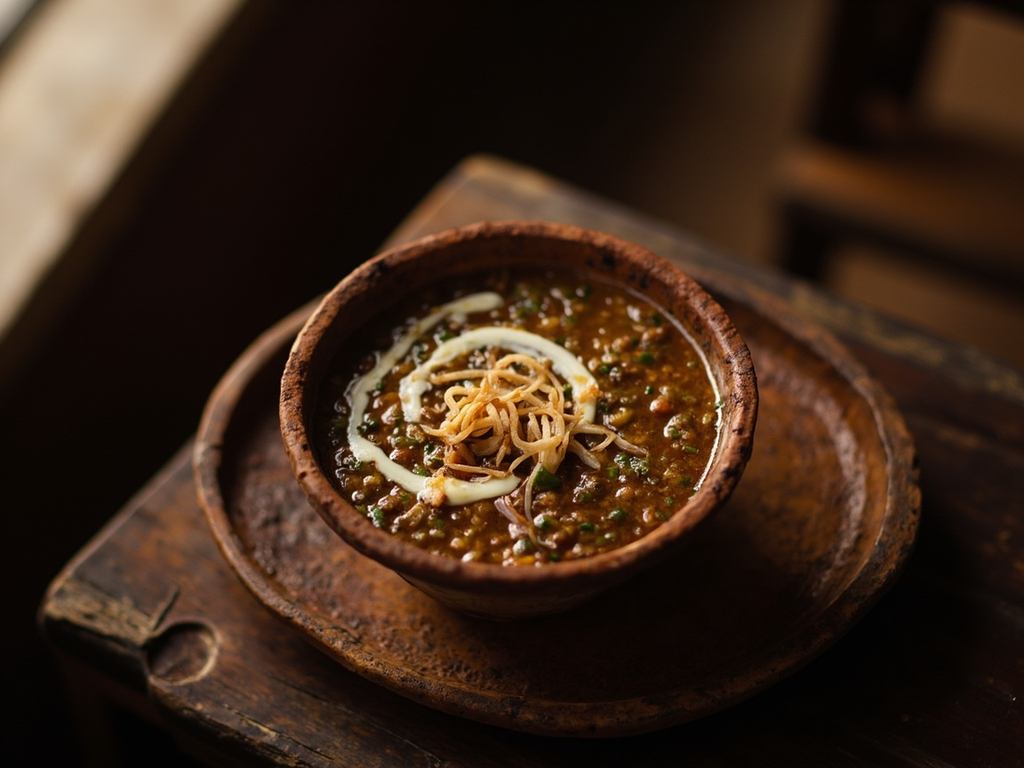
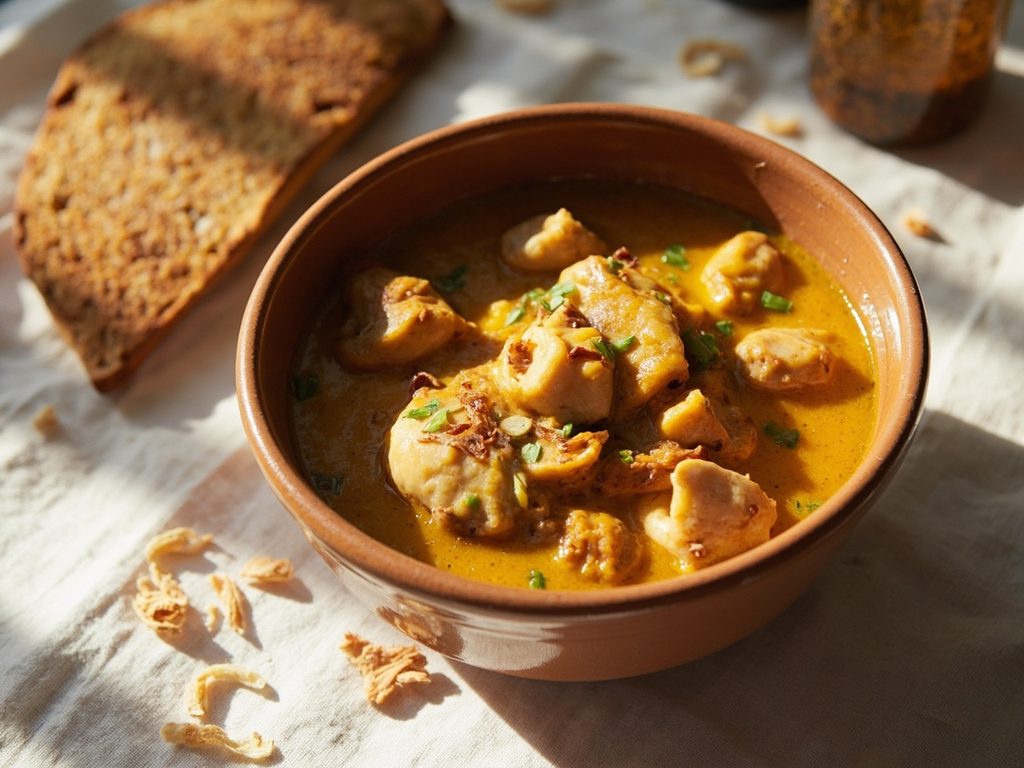
The contemporary twist : Serve the âsh in a deep bowl with a drizzle of olive oil and a few crispy fried onion petals on top—a nod to contemporary Iranian âsh.
Sources : Ibn Sayyār al-Warrāq, Kitāb al-Tabīkh (10th century) · Nawal Nasrallah, Annals of the Caliphs' Kitchens (2007)
Avicenna · Charactorium