 flip
flipIppocras — spiced mulled wine, clarified
Ippocras — spiced mulled wine, clarified
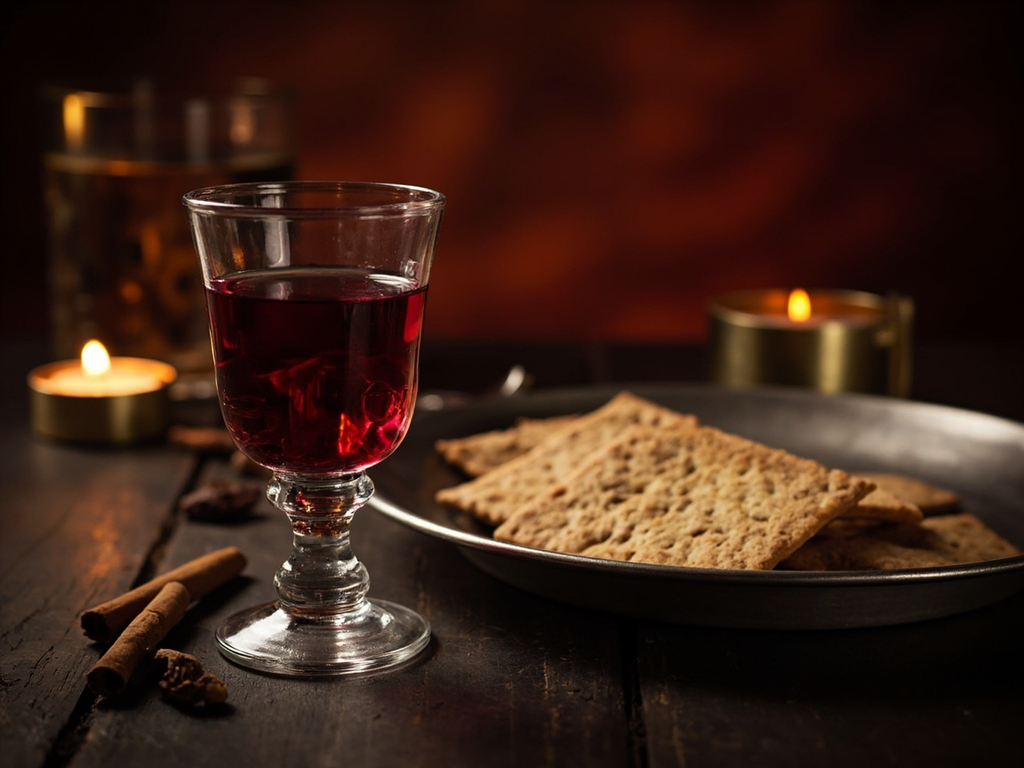
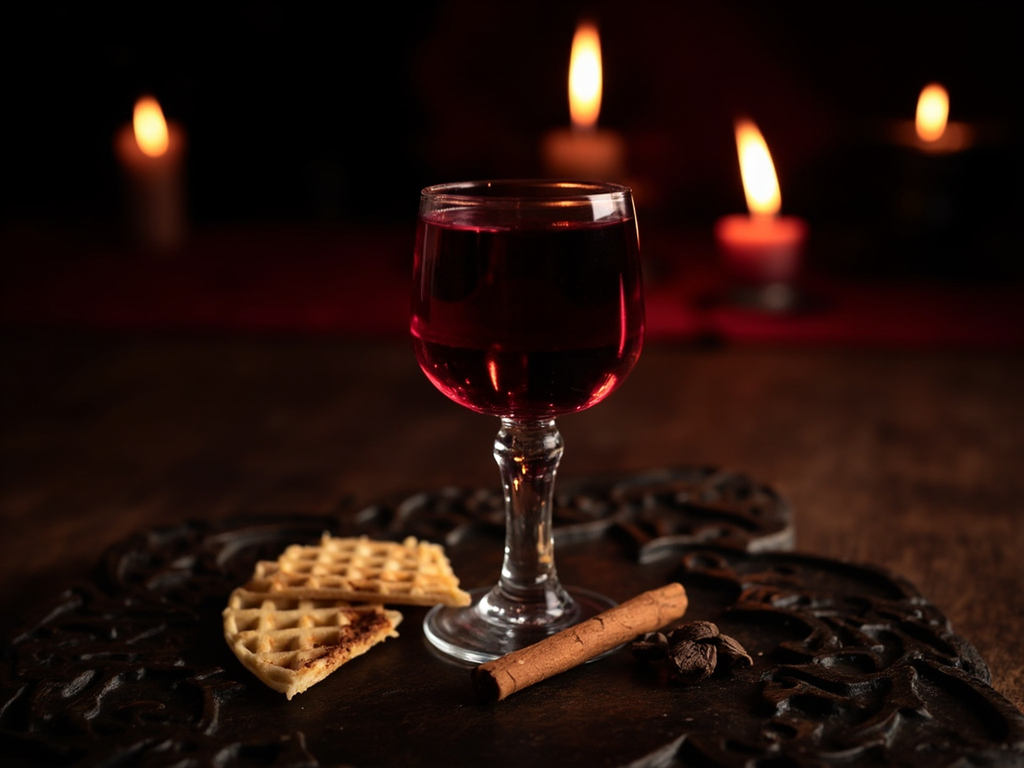
Why this dish? The Marche region around Urbino produced wines that the court served at its tables. At the close of the banquet, *ippocras* — sweetened, spiced, filtered wine — was presented with wafers (*cialde*). This was the moment when, the meal over, the learned conversation that Castiglione stages in his *Cortegiano* could extend late into the night.
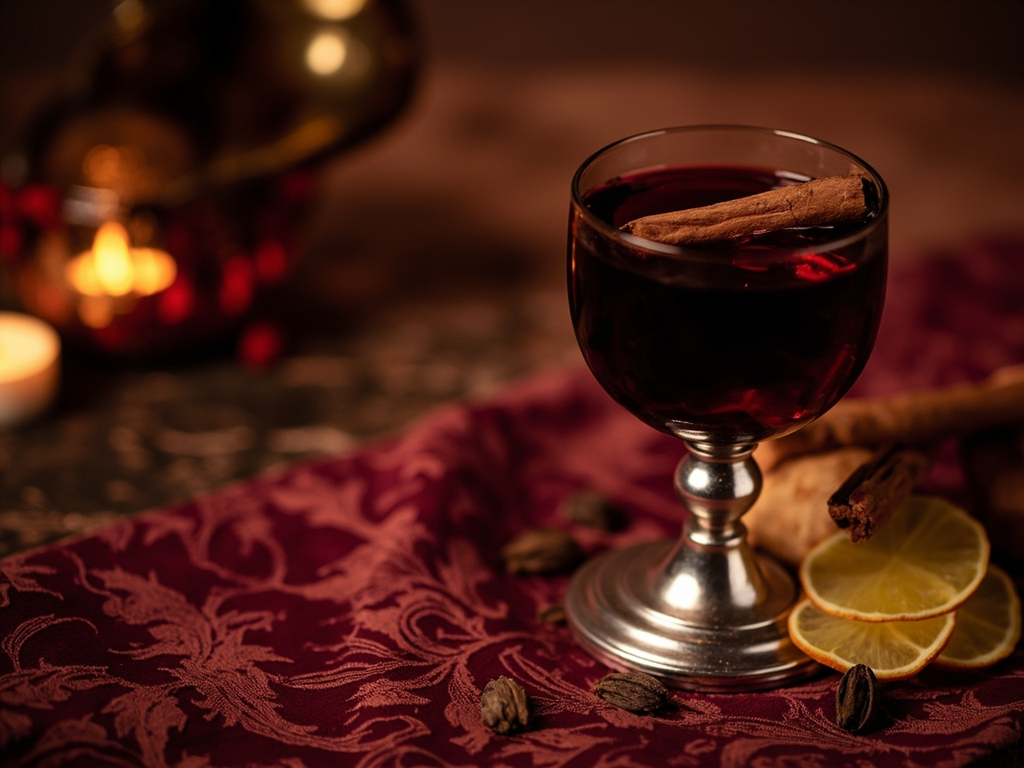
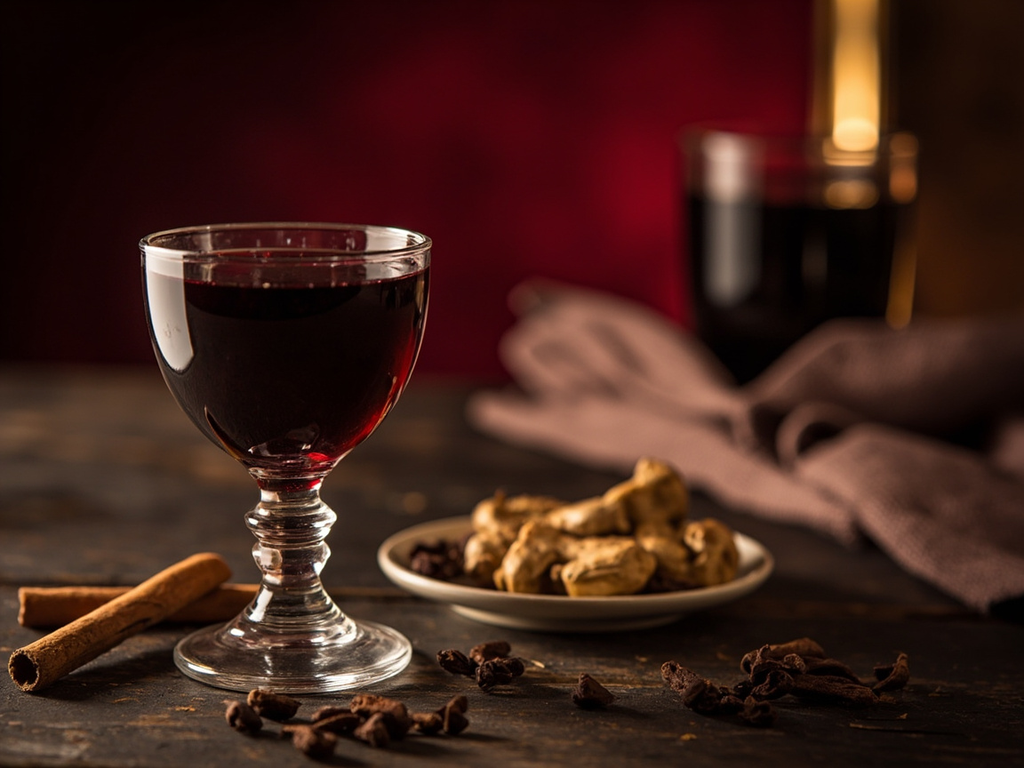
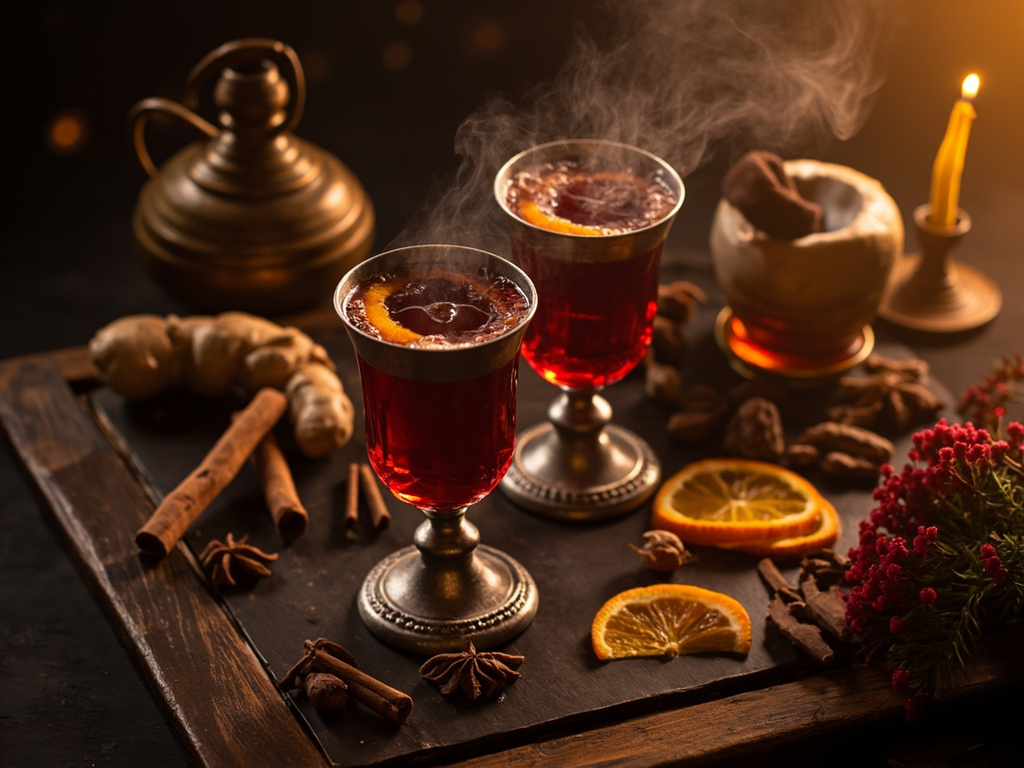
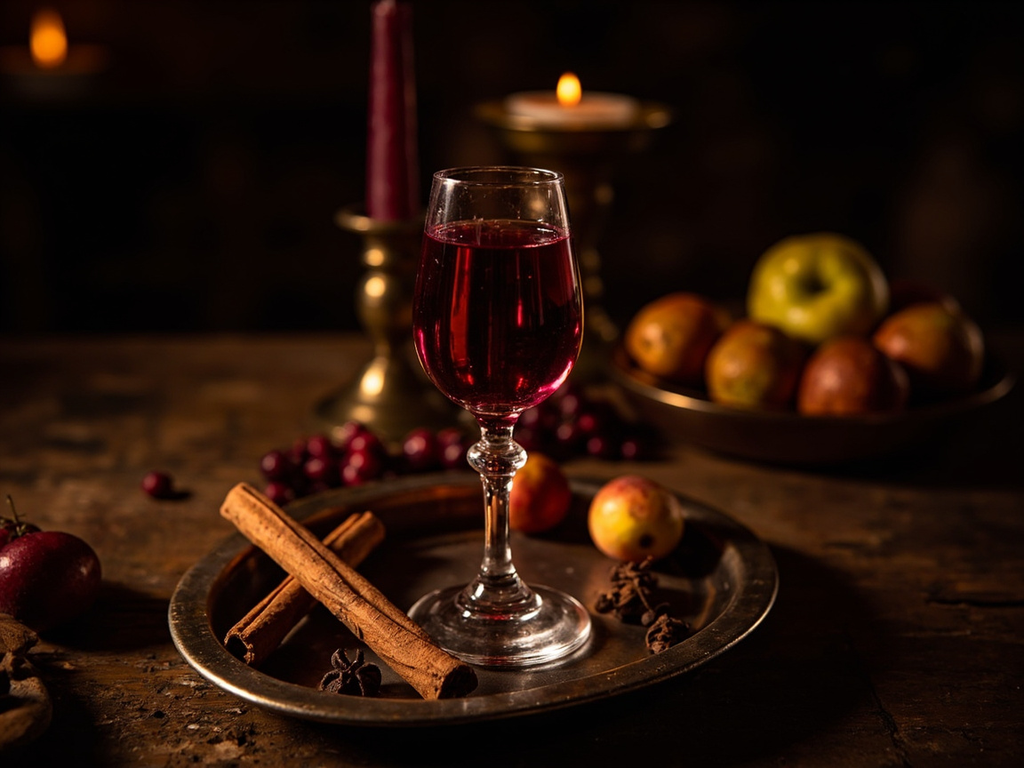
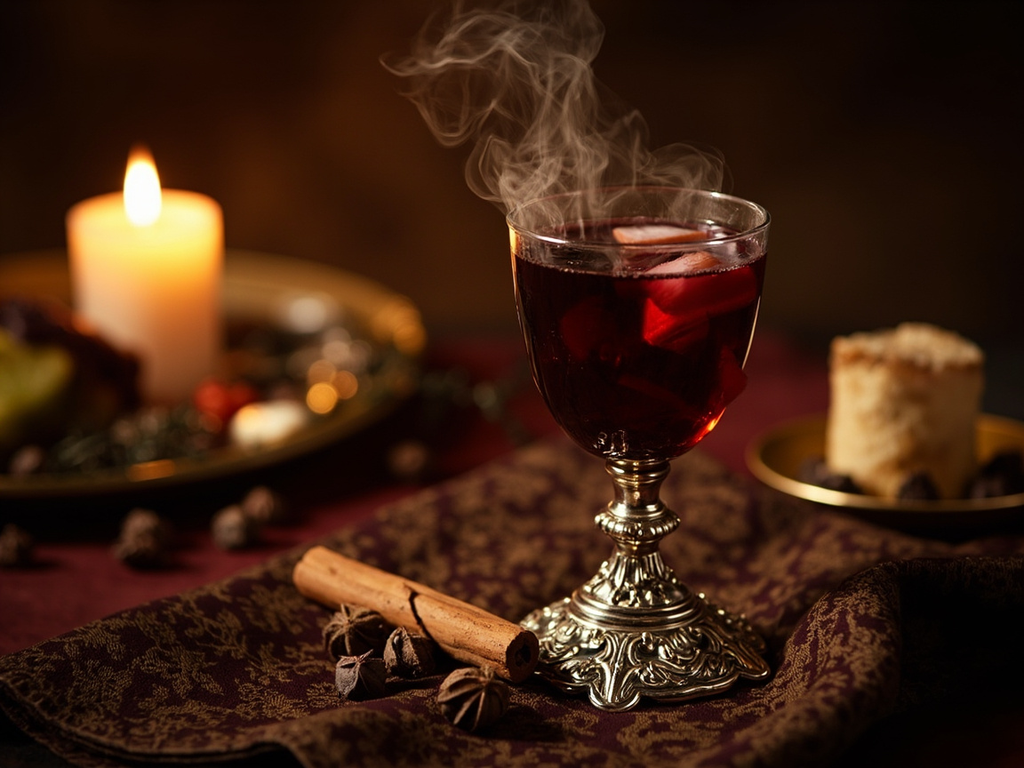
A red wine warmed and infused with cinnamon, ginger, cloves, and grains of paradise, sweetened with sugar, then filtered until clear. Comforting and fragrant, it crowned the meal and, it was said, aided digestion.
The service done, the *ippocras* is brought with the *cialde*. Warm a good wine of the Marche, throw in cinnamon, ginger, and cloves, sweeten generously, then pass it and repass it through the filter bag until it is clear as a ruby. Sip it slowly: this is the hour when the table becomes an academy, where one discourses of love and grace well into the night. Yet moderate the cup, for nothing suits the courtier less than excess.
- •Red wine from the Marche — a flask (base)
- •Cinnamon stick — a piece (master spice)
- •Ginger — a root (spice)
- •Cloves — a few heads (spice)
- •Grains of paradise — a pinch (hot spice)
- •Sugar — to taste (sweetness)
Ippocras — spiced mulled wine, clarified
A red wine warmed and infused with cinnamon, ginger, cloves, and grains of paradise, sweetened with sugar, then filtered until clear. Comforting and fragrant, it crowned the meal and, it was said, aided digestion.
Why this dish? The Marche region around Urbino produced wines that the court served at its tables. At the close of the banquet, *ippocras* — sweetened, spiced, filtered wine — was presented with wafers (*cialde*). This was the moment when, the meal over, the learned conversation that Castiglione stages in his *Cortegiano* could extend late into the night.
The service done, the *ippocras* is brought with the *cialde*. Warm a good wine of the Marche, throw in cinnamon, ginger, and cloves, sweeten generously, then pass it and repass it through the filter bag until it is clear as a ruby. Sip it slowly: this is the hour when the table becomes an academy, where one discourses of love and grace well into the night. Yet moderate the cup, for nothing suits the courtier less than excess.
Ingredients (period version)
- Red wine from the Marche — a flask (base)
- Cinnamon stick — a piece (master spice)
- Ginger — a root (spice)
- Cloves — a few heads (spice)
- Grains of paradise — a pinch (hot spice)
- Sugar — to taste (sweetness)
Ingredients
- Fruity red wine (Marche: Rosso Piceno, or a soft red) — 750 ml (base)
- Cinnamon stick — 1 (master spice)
- Fresh ginger, sliced — 4 slices (spice)
- Cloves — 4 (spice)
- Grains of paradise (or long pepper, as substitute) — 1 pinch (hot spice)
- Sugar — 80 to 100 g (sweetness)
Method
- Heat the wine without boiling, with the sugar, until dissolved.
- Add all the spices, remove from heat, and let infuse covered for 30 minutes to 1 hour, depending on desired intensity.
- Taste and adjust sugar.
- Filter two or three times through a fine cloth (the 'Hippocras bag') until clear.
- Serve warm in small glasses, with dry wafers.
- Enjoy in moderation.
How it was made : *Ippocras* (named after Hippocrates, via the filtering 'sleeve' called *chausse*) was the prestige spiced beverage of all medieval and Renaissance Europe. The costly spices and abundant sugar made it a marker of wealth; it was also considered digestive and cordial.
The contemporary twist : Served chilled in summer, filtered clear over a large ice cube with an orange zest, it becomes a Renaissance-inspired cocktail without losing any of its spice bouquet.
Sources : Bartolomeo Platina, *De honesta voluptate et valetudine* (1474) · Le Ménagier de Paris (1393), recipe for hypocras
Baldassare Castiglione · Charactorium