 flip
flipMostarda of quinces and pears with must and mustard
Mostarda of quinces and pears with must and mustard
Why this dish? Castiglione was born in Casatico, in the Mantuan region — the very land of *mostarda*. This fruit preserve in cooked must and mustard kept for months and accompanied meats; it was also packed in chests during the long diplomatic journeys of a man constantly on the road between Mantua, Rome, and Spain.
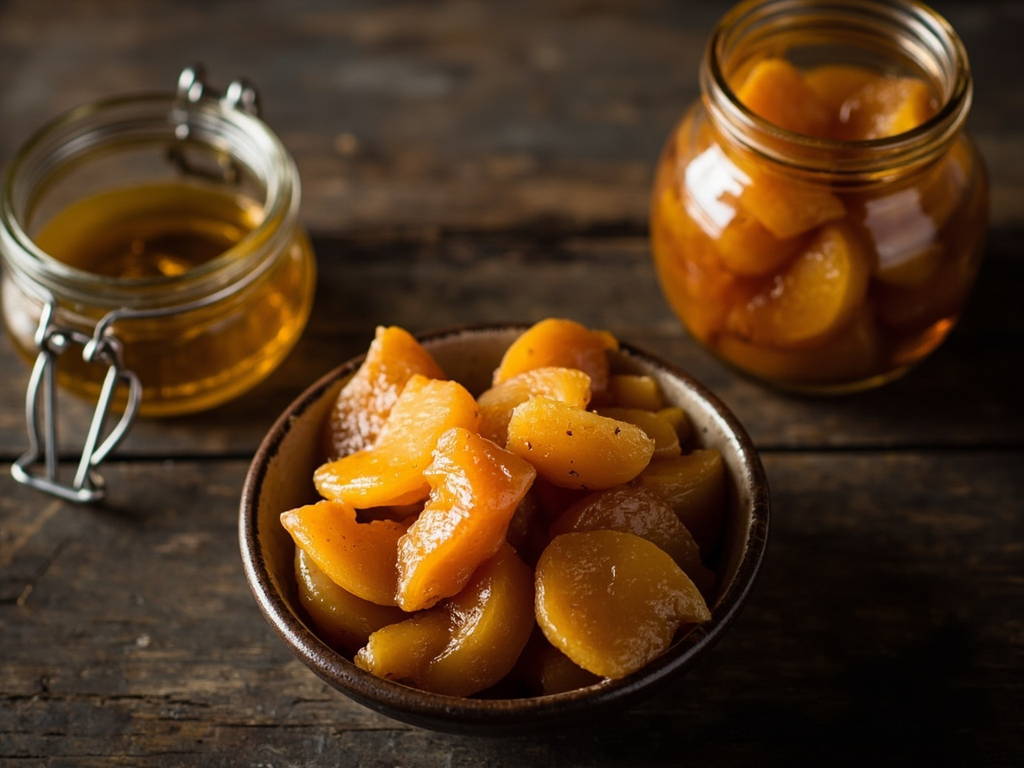
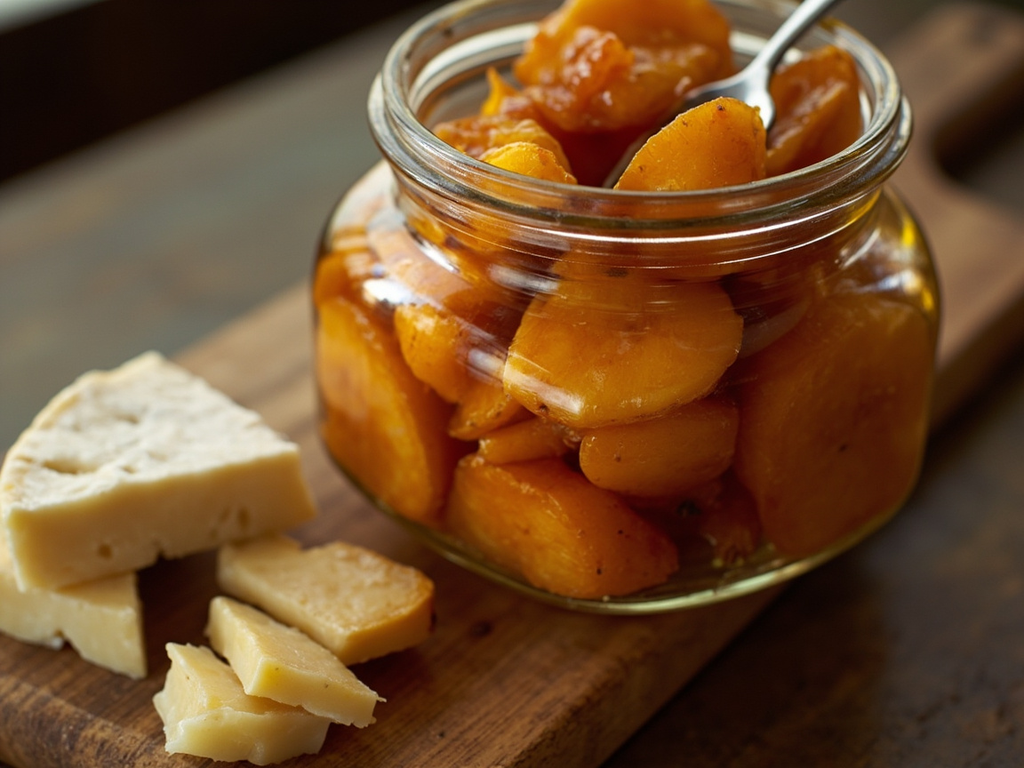
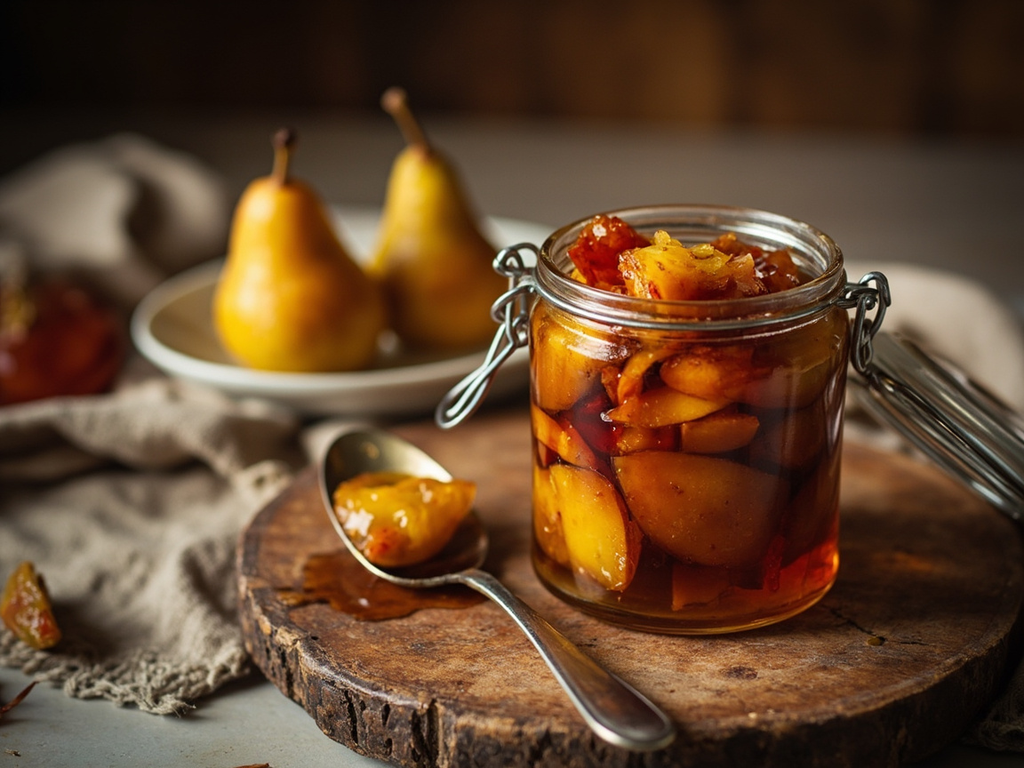
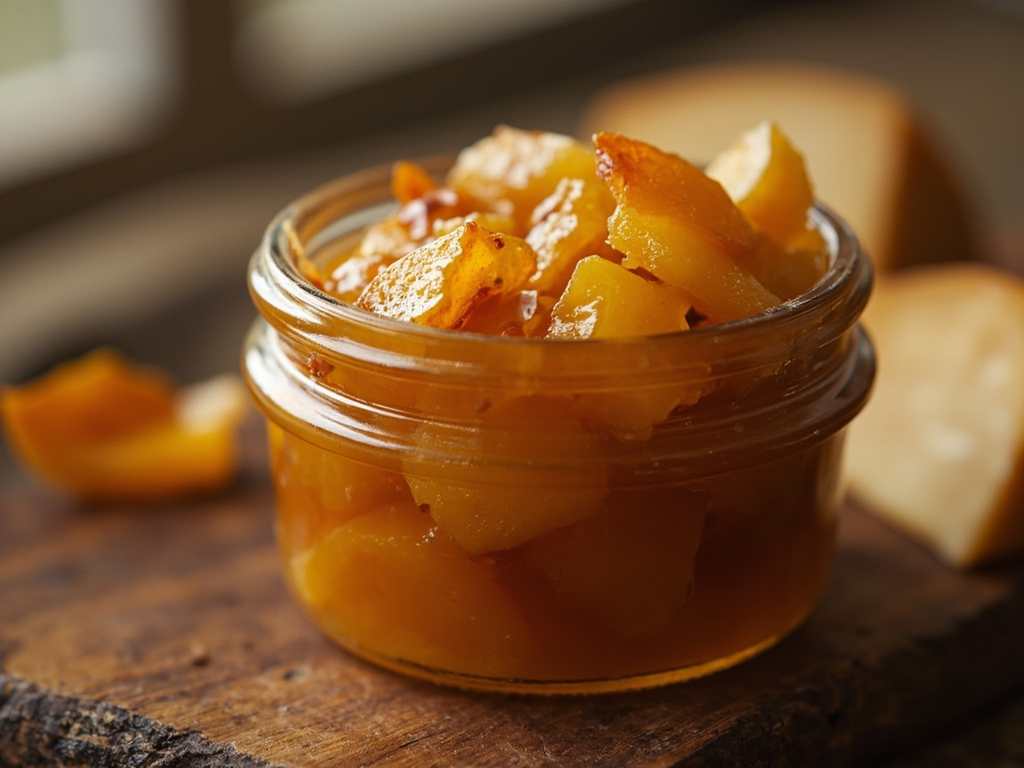
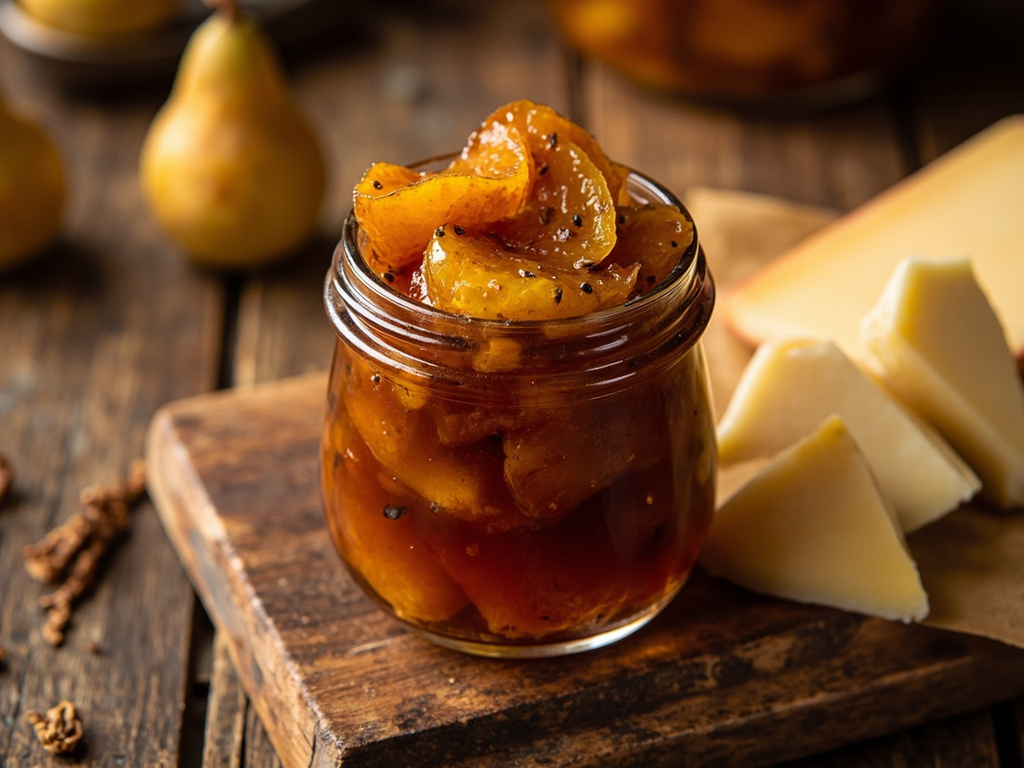
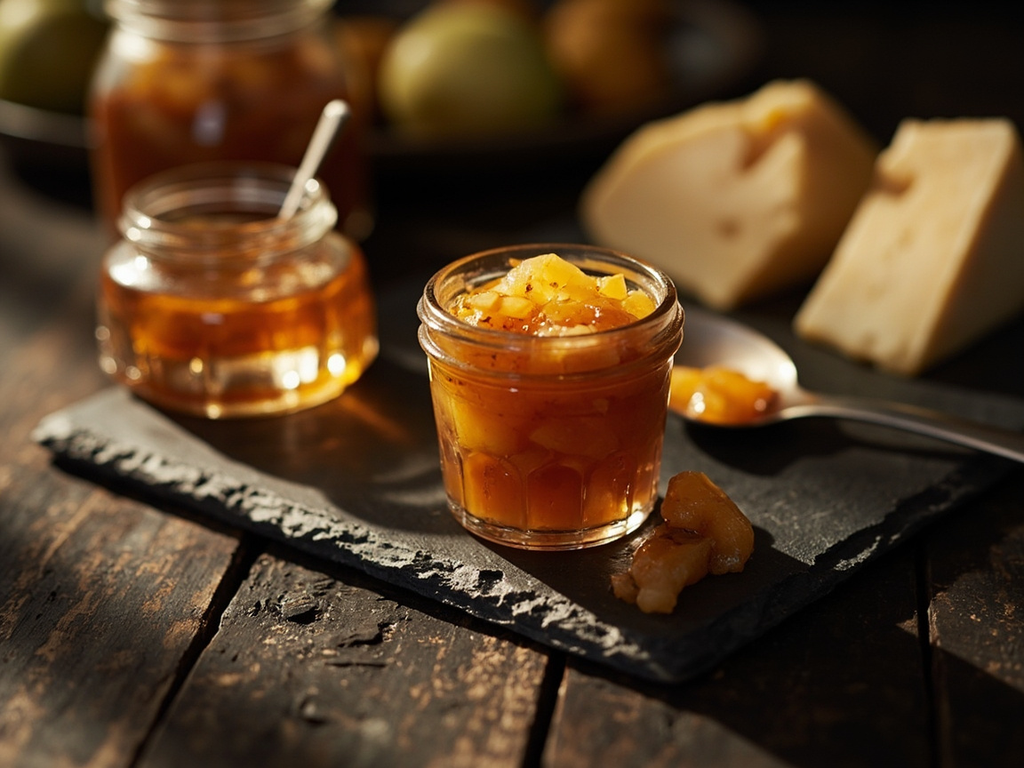
Quarters of quinces and pears candied in cooked grape must (*sapa*), spiked with a fiery touch of mustard. Sweet-sour and pungent to the nose, it keeps for a long time and enlivens roasted meats and cheeses alike.
Here is a preserve from my country of Mantua, called *mostarda*. One thickens the must of the grape harvest to a syrup, candies quinces and pears in it, then mixes in the mustard that stings the nose and brings a tear to the eye. It keeps all winter in a sealed pot; I carried it in my chests on the roads of Spain and Rome, for it enlivens cold meat when the inn offers nothing good. Taste it: sweet and fiery contend marvelously.
- •Quinces and firm pears — enough to fill a pot (fruits)
- •Cooked grape must (sapa/mosto cotto) — enough to cover (preserving syrup)
- •Mustard seeds — a good pinch, crushed (heat)
- •Honey or sugar — depending on the sourness of the must (additional sweetness)
Mostarda of quinces and pears with must and mustard
Quarters of quinces and pears candied in cooked grape must (*sapa*), spiked with a fiery touch of mustard. Sweet-sour and pungent to the nose, it keeps for a long time and enlivens roasted meats and cheeses alike.
Why this dish? Castiglione was born in Casatico, in the Mantuan region — the very land of *mostarda*. This fruit preserve in cooked must and mustard kept for months and accompanied meats; it was also packed in chests during the long diplomatic journeys of a man constantly on the road between Mantua, Rome, and Spain.
Here is a preserve from my country of Mantua, called *mostarda*. One thickens the must of the grape harvest to a syrup, candies quinces and pears in it, then mixes in the mustard that stings the nose and brings a tear to the eye. It keeps all winter in a sealed pot; I carried it in my chests on the roads of Spain and Rome, for it enlivens cold meat when the inn offers nothing good. Taste it: sweet and fiery contend marvelously.
Ingredients (period version)
- Quinces and firm pears — enough to fill a pot (fruits)
- Cooked grape must (sapa/mosto cotto) — enough to cover (preserving syrup)
- Mustard seeds — a good pinch, crushed (heat)
- Honey or sugar — depending on the sourness of the must (additional sweetness)
Ingredients
- Quinces — 400 g (peeled, in wedges) (fruit)
- Firm pears — 400 g (peeled, in wedges) (fruit)
- Cooked grape must (vincotto/sapa), or grape juice reduced by half — 300 ml (syrup)
- Sugar — 150 g (sweetness and preservation)
- Brown mustard seeds — 1 tbsp (crushed) (heat)
- Water — 100 ml (syrup)
Method
- Bring the cooked must (or reduced grape juice), sugar, and water to a simmer until a light syrup forms.
- Add the quince wedges, cook for 15 minutes (quinces are hard), then add the pears and continue for 10-15 minutes: the fruits should remain firm but translucent.
- Crush the mustard seeds and mix with 2 tablespoons of the hot syrup; let the heat develop for 10 minutes.
- Stir the mustard into the syrup off the heat (do not boil again, to preserve the pungency).
- Pour into sterilized jars, cover with syrup, seal, and store in a cool place: the *mostarda* improves after a few days.
- Serve in small quantities with roasted or cold meats and aged cheeses.
How it was made : *Mostarda* takes its name from *mosto* (grape must) in which the fruits were candied, the pungency of mustard being added later. It is a typical preserve of the Po plain — Mantua, Cremona — well attested in the Renaissance, which allowed autumn fruits to be kept and winter tables to be brightened.
The contemporary twist : A spoonful on a platter of aged cheeses, or paired with *bollito*: Castiglione's Mantuan *mostarda* still holds its place on tables today.
Sources : Tradition of Mantuan and Cremonese mostarda (Po plain, Renaissance) · Bartolomeo Scappi, *Opera* (1570), fruit preserves in must
Baldassare Castiglione · Charactorium