 flip
flipKer Sangri (Dried Desert Berries and Pods)
Ker Sangri (Dried Desert Berries and Pods)
Why this dish? In arid Rajasthan where water and green vegetables are scarce, ker berries and khejri pods (sangri) were dried to last through rainless months. This is the survival cuisine of the desert that Mirabai knew, made from what the land gives when nothing grows.
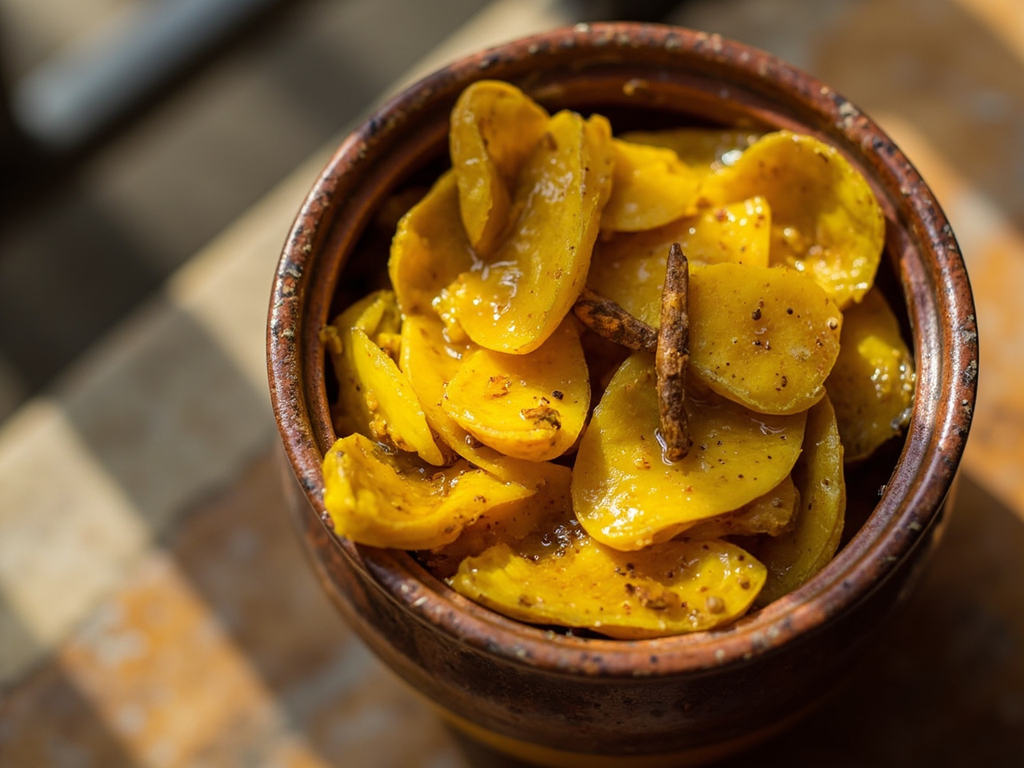
Dried ker berries and long sangri pods, desalted then simmered in ghee with yogurt, whole seeds and rock salt. A rustic preparation, slightly bitter and tangy, that keeps for several days.
Here, friend, when the rain is stingy and not a single green vegetable sprouts, the desert does not abandon us. I gather the small ker berries and the khejri pods, dry them in the sun on the roof, then keep them for the lean months. We soak them, throw them in ghee with sour curd and seeds, and there is a dish that keeps without spoiling—for the Lord feeds even the barren land.
- •Dried ker berries — a handful (base)
- •Dried sangri (khejri) pods — a handful (base)
- •Ghee — generously (fat)
- •Sour curd (dahi) — a little (tangy binder)
- •Cumin, coriander, fenugreek seeds — to taste (whole spices)
- •Asafoetida and turmeric — a pinch (aromatic and color)
- •Rock salt — to taste (seasoning and preservation)
Ker Sangri (Dried Desert Berries and Pods)
Dried ker berries and long sangri pods, desalted then simmered in ghee with yogurt, whole seeds and rock salt. A rustic preparation, slightly bitter and tangy, that keeps for several days.
Why this dish? In arid Rajasthan where water and green vegetables are scarce, ker berries and khejri pods (sangri) were dried to last through rainless months. This is the survival cuisine of the desert that Mirabai knew, made from what the land gives when nothing grows.
Here, friend, when the rain is stingy and not a single green vegetable sprouts, the desert does not abandon us. I gather the small ker berries and the khejri pods, dry them in the sun on the roof, then keep them for the lean months. We soak them, throw them in ghee with sour curd and seeds, and there is a dish that keeps without spoiling—for the Lord feeds even the barren land.
Ingredients (period version)
- Dried ker berries — a handful (base)
- Dried sangri (khejri) pods — a handful (base)
- Ghee — generously (fat)
- Sour curd (dahi) — a little (tangy binder)
- Cumin, coriander, fenugreek seeds — to taste (whole spices)
- Asafoetida and turmeric — a pinch (aromatic and color)
- Rock salt — to taste (seasoning and preservation)
Ingredients
- Dried ker sangri (commercial mix) — 100 g (base)
- Ghee — 3 tbsp (fat)
- Plain yogurt — 3 tbsp (tangy binder)
- Cumin seeds — 1 tsp (spice)
- Crushed coriander seeds — 1 tsp (spice)
- Fenugreek seeds (methi) — ¼ tsp (bitterness)
- Asafoetida + turmeric — 1 pinch each (aromatic and color)
- Salt — to taste (seasoning)
Method
- Soak ker sangri for several hours (ideally overnight) in lightly salted water, then rinse to remove excess bitterness.
- Boil in water 10–15 min until pods soften; drain.
- Heat ghee, crackle cumin, coriander, fenugreek, hing and turmeric.
- Add ker sangri, sauté a few minutes.
- Thin yogurt with a little water, stir in off high heat to prevent curdling, season with salt.
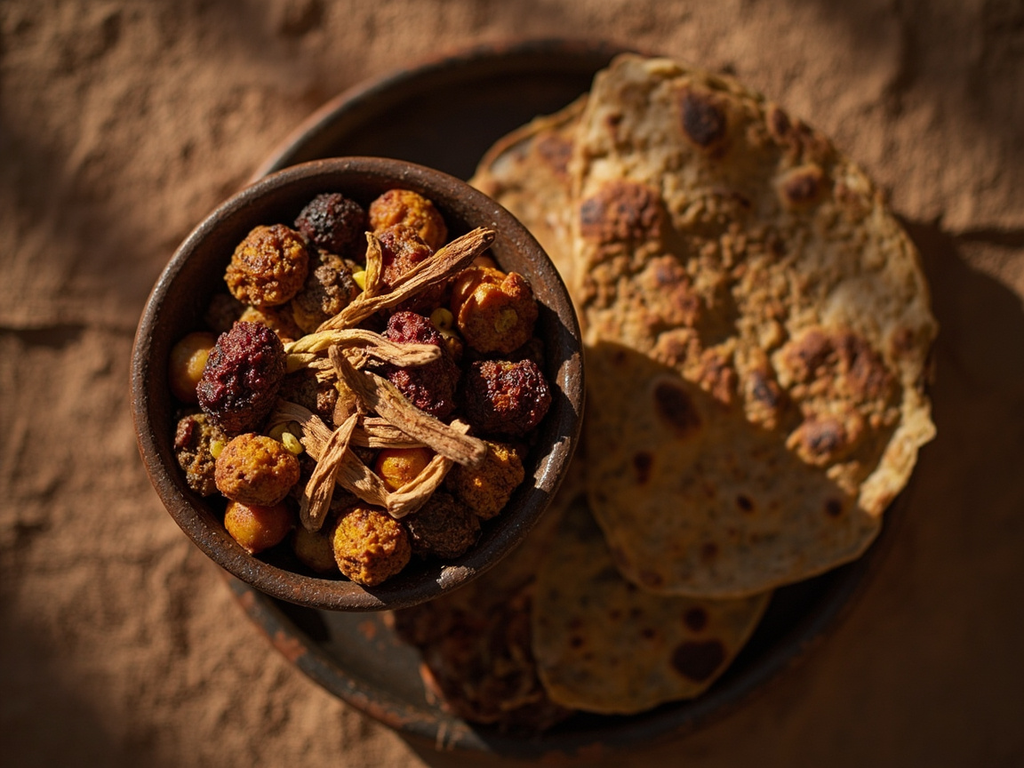
- Simmer gently 10 min; serve warm with a roti.
How it was made : Ker (berry of Capparis decidua) and sangri (pod of Prosopis cineraria, the sacred khejri tree) were harvested then sun-dried on rooftops, forming a reserve for the dry season. Cooked in ghee and curd—fat and acid also serving as preservatives—they kept for days without refrigeration. This arid-zone cuisine relies entirely on drying, the oldest desert preservation method.
The contemporary twist : Serve in small portions on a spoonful of thick buttermilk, as a 'desert terroir' appetizer bite.
Sources : K.T. Achaya, Indian Food: A Historical Companion, Oxford University Press, 1994
Mirabai · Charactorium