 flip
flipPike in Verjuice and Herbs
Pike in Verjuice and Herbs
Why this dish? Fish was the only 'luxury' allowed in the refectory on permitted days and major liturgical feasts. In the Flemish Brabant crisscrossed by rivers and abbey ponds, pike was the noble fish par excellence—the one Abbess Beatrice could have served to her community on Easter or a dedication day.
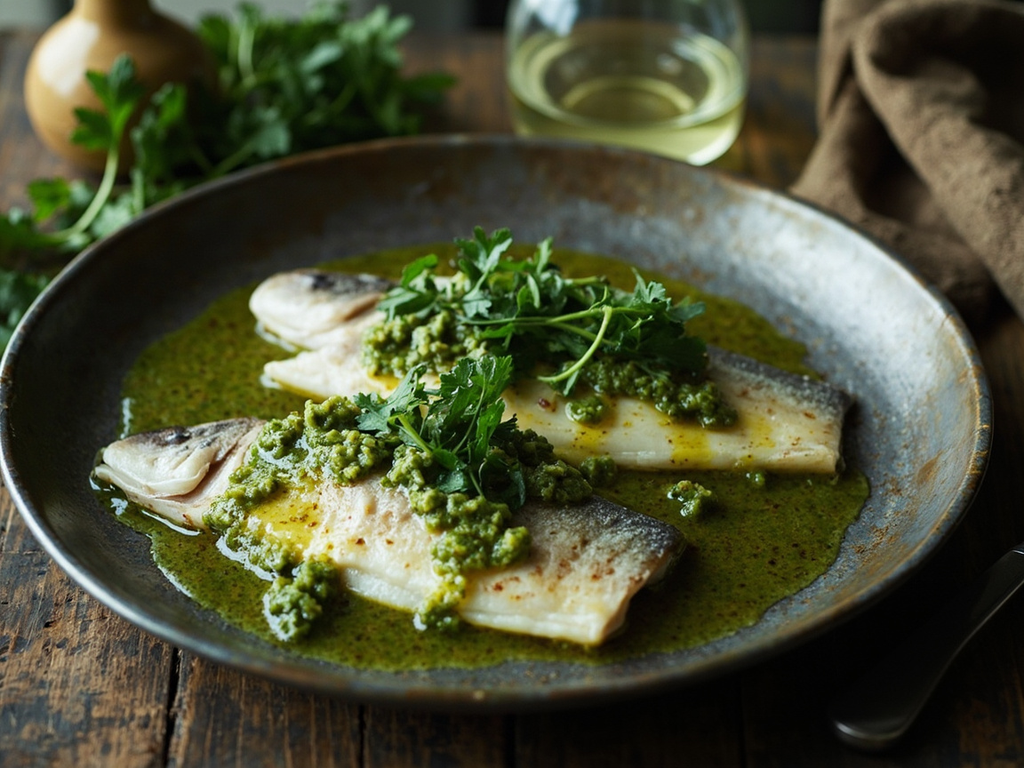
Pike pieces poached then napped with a tangy green sauce of verjuice, parsley, and ginger. The lean festive dish, lively on the palate, that broke the monotony of pottages.
Here, for the feast of our dedication, is what I have brought to the common table: a fine pike from our fishpond, drawn before matins. It is poached in salted water in a short broth, then I cover it with a green sauce I love well—verjuice from our thin vines, pounded parsley, a hint of ginger brought from the fair. It is sharp and fresh on the tongue, and rejoices the sisters without offending abstinence, for there is no animal flesh. Give thanks, and beware of gluttony even on a joyful day.
- •Pike from the fishpond — one, gutted and cut into pieces (lean centerpiece)
- •Verjuice — a good cup (acidity)
- •Parsley — a bunch (color and freshness)
- •Ginger — a knob, grated (feast spice)
- •Breadcrumbs — a handful (sauce thickener)
- •Salt — to taste (seasoning)
Pike in Verjuice and Herbs
Pike pieces poached then napped with a tangy green sauce of verjuice, parsley, and ginger. The lean festive dish, lively on the palate, that broke the monotony of pottages.
Why this dish? Fish was the only 'luxury' allowed in the refectory on permitted days and major liturgical feasts. In the Flemish Brabant crisscrossed by rivers and abbey ponds, pike was the noble fish par excellence—the one Abbess Beatrice could have served to her community on Easter or a dedication day.
Here, for the feast of our dedication, is what I have brought to the common table: a fine pike from our fishpond, drawn before matins. It is poached in salted water in a short broth, then I cover it with a green sauce I love well—verjuice from our thin vines, pounded parsley, a hint of ginger brought from the fair. It is sharp and fresh on the tongue, and rejoices the sisters without offending abstinence, for there is no animal flesh. Give thanks, and beware of gluttony even on a joyful day.
Ingredients (period version)
- Pike from the fishpond — one, gutted and cut into pieces (lean centerpiece)
- Verjuice — a good cup (acidity)
- Parsley — a bunch (color and freshness)
- Ginger — a knob, grated (feast spice)
- Breadcrumbs — a handful (sauce thickener)
- Salt — to taste (seasoning)
Ingredients
- Pike or pikeperch fillets — 600 g (fish)
- Verjuice — 100 ml (or green grape juice + 1 tbsp vinegar) (acidity)
- Flat-leaf parsley — 1 large bunch (green sauce)
- Fresh ginger — 1 cm, grated (spice)
- White breadcrumbs — 30 g (thickener)
- Salt — to taste (seasoning)
Method
- Poach the fish fillets 6 to 8 min in barely simmering salted water; drain gently.
- Blend (or pound) the parsley, ginger, breadcrumbs soaked in a little poaching water, and verjuice until a smooth green sauce forms.
- Warm the sauce over low heat without boiling, adjust salt and acidity.
- Nap the hot fish pieces with the sauce, serve at once with bread.
How it was made : Verjuice—the juice of unripe green grapes—was the medieval acidulant par excellence, where we would use lemon or vinegar. Abbeys owned fishponds and lakes to supply fish for lean days and feasts. Green sauces of parsley and herbs, thickened with bread, appear in contemporary collections like the Viandier (c. 1300).
The contemporary twist : Plate the fillets on a mirror of green sauce, scatter with borage flowers from the garden: the 'lean' dish becomes a gastronomic plate.
Sources : Le Viandier (attributed to Taillevent, c. 1300) · Le Mesnagier de Paris (1393)
Beatrice of Nazareth · Charactorium