 flip
flipCaliphal Sikbaj (Sweet-and-Sour Meat Stew)
Caliphal Sikbaj (Sweet-and-Sour Meat Stew)
Why this dish? Sikbaj was considered the favorite dish of kings and caliphs: tradition attributed its invention to King Khosro of Persia, and the Abbasids, heirs to Sassanid splendor in Baghdad, made it their own. For a prince like al-Ma'mun, son of Harun al-Rashid, it was the ultimate prestige dish, sweet-and-sour and colored with saffron.
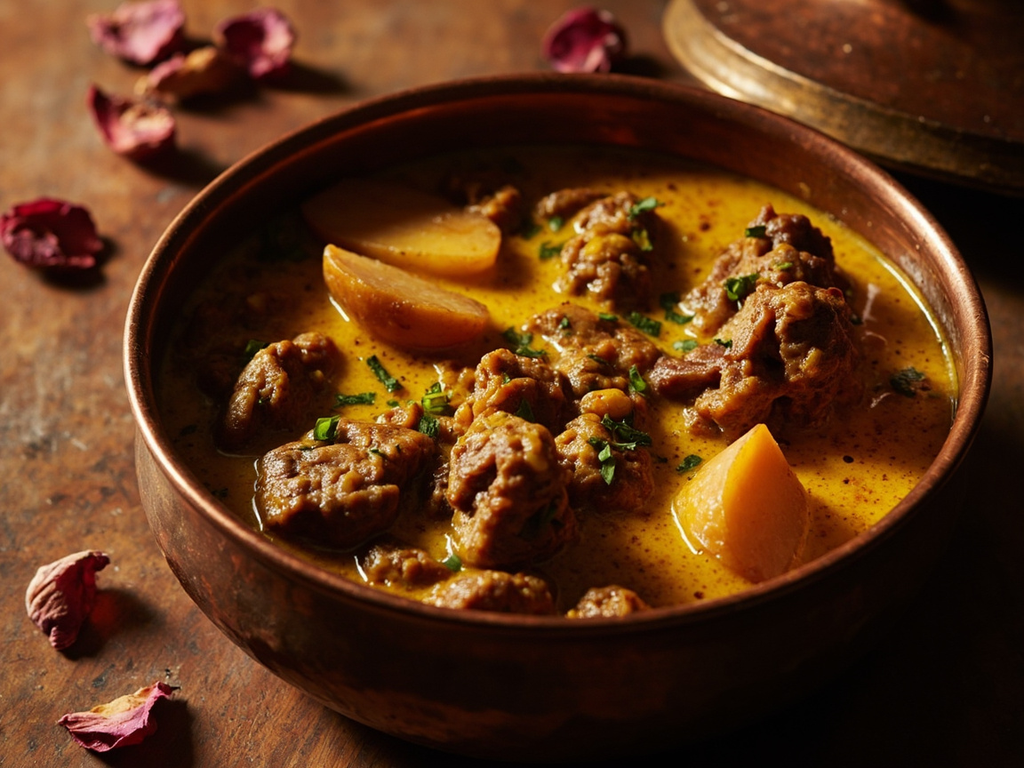
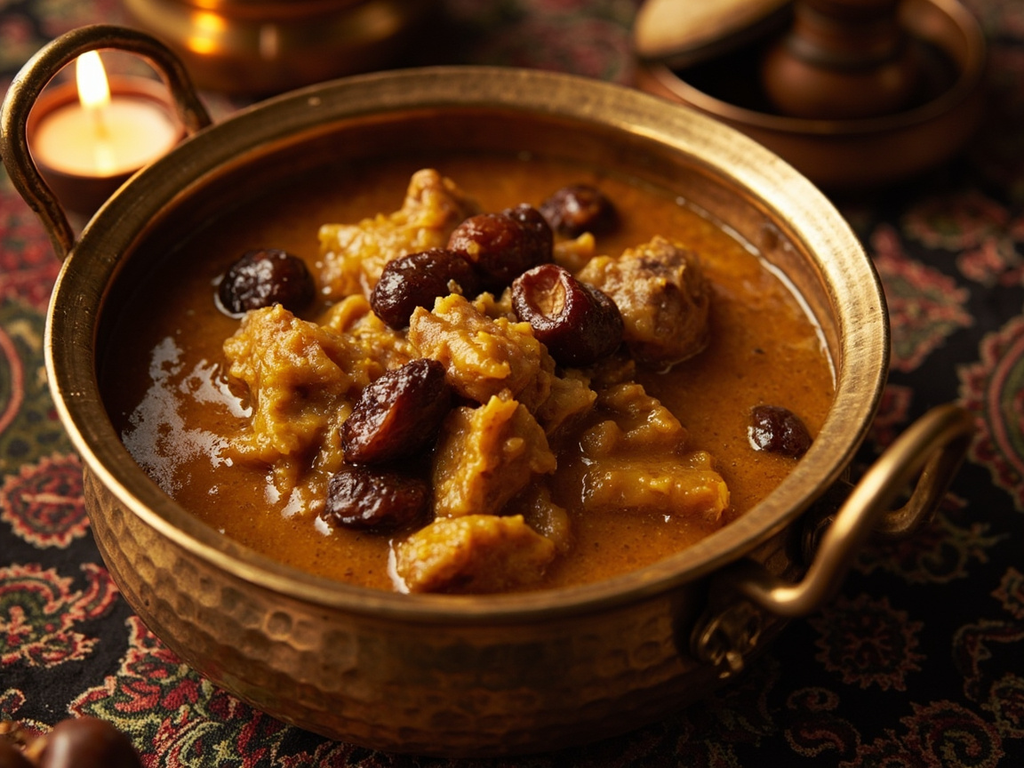
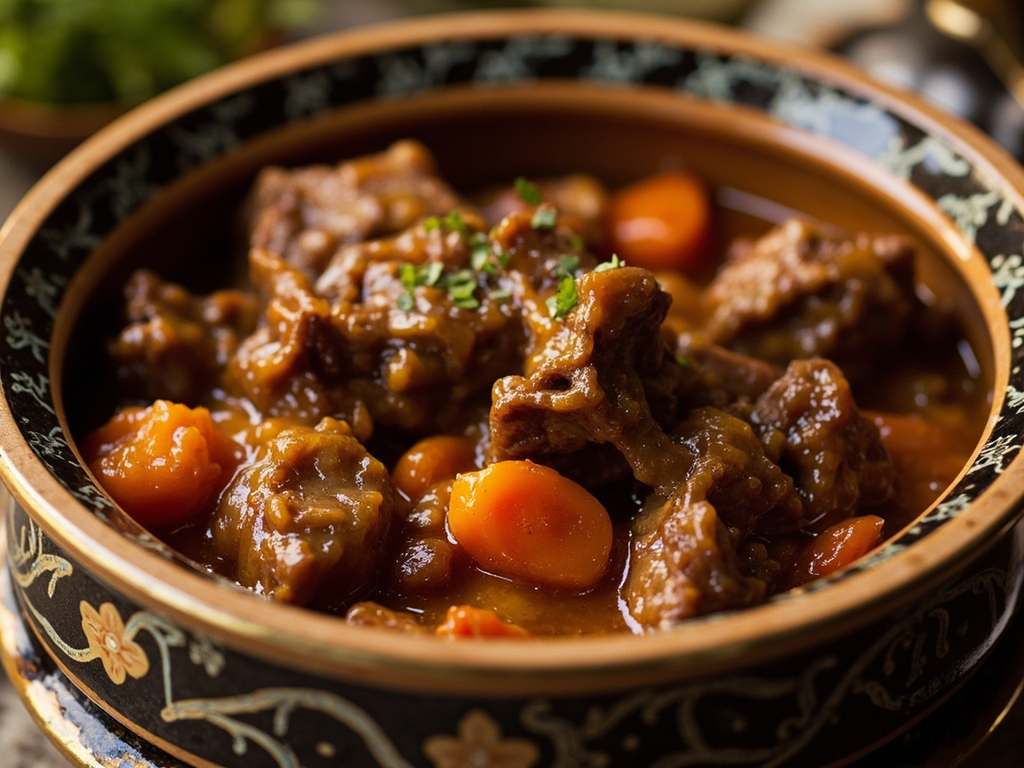
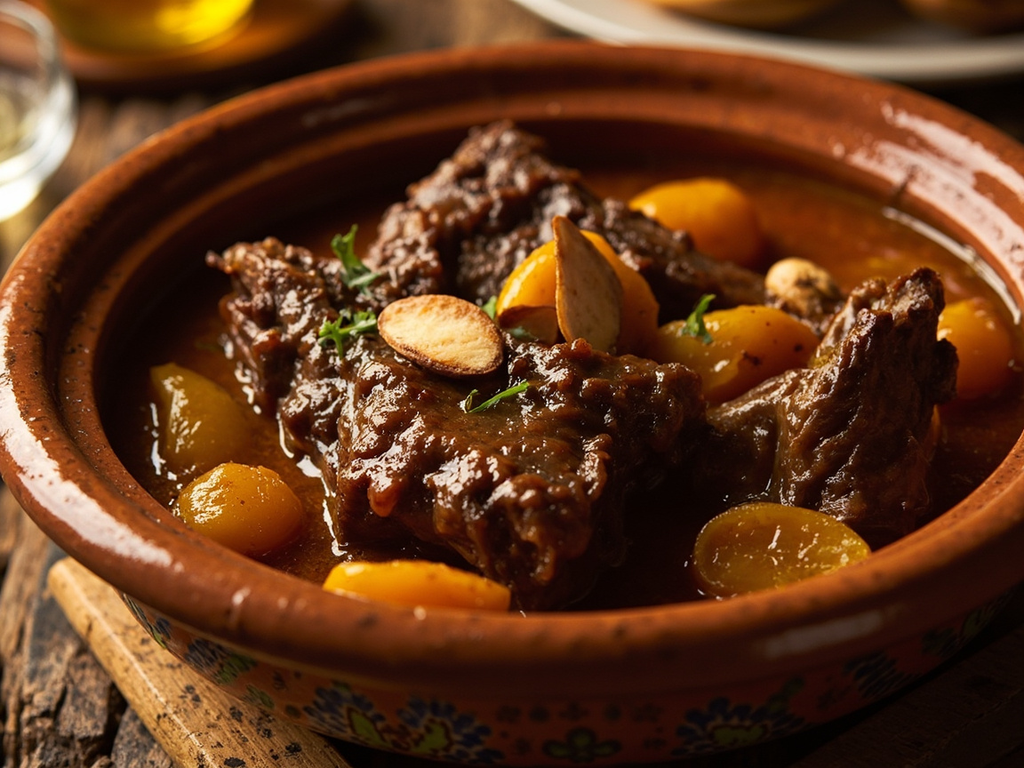
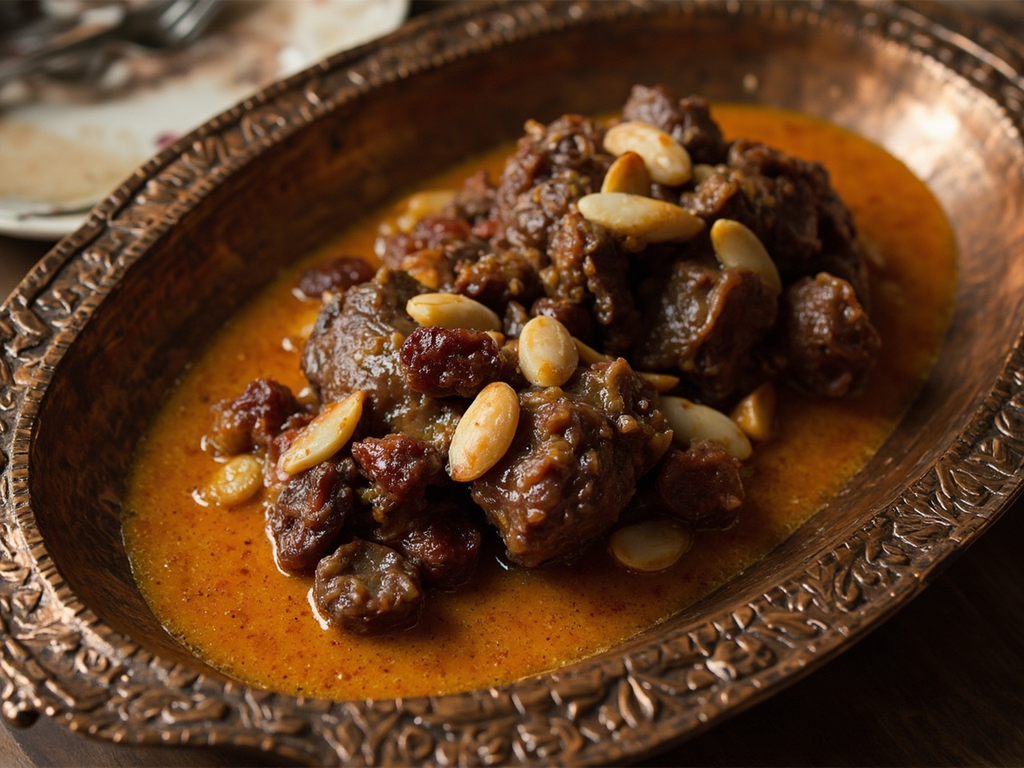
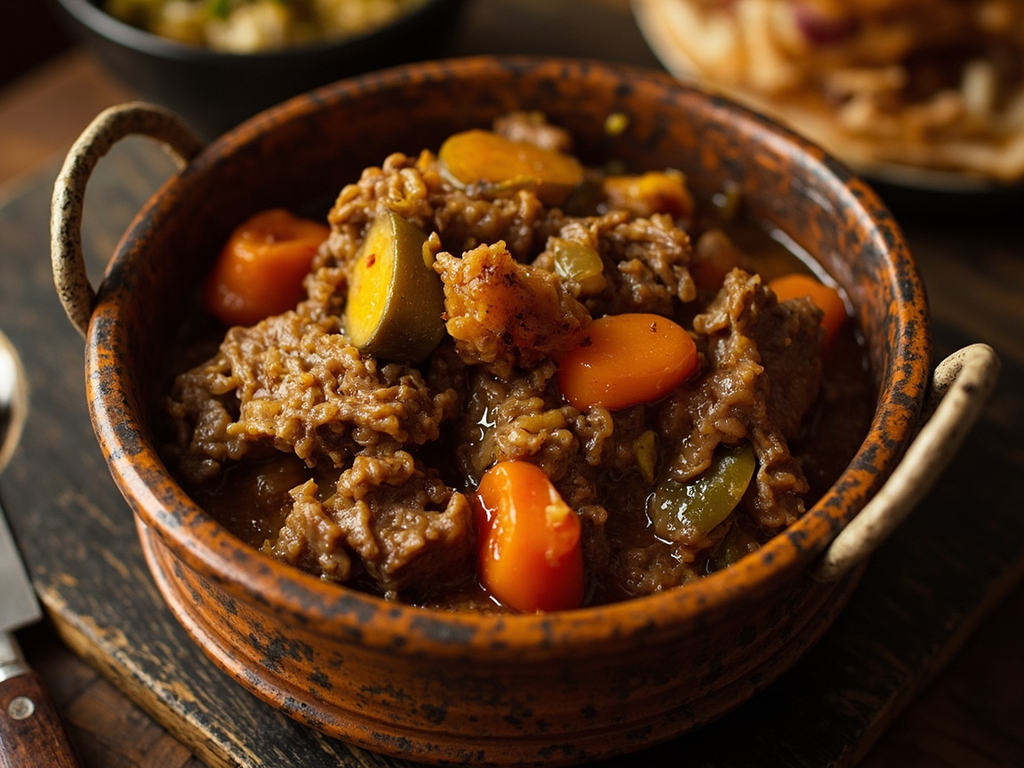
A meat stew simmered with vinegar sweetened with honey, perfumed with saffron and coriander, enriched with carrots, eggplant, and dried fruits. The sweet-and-sour balance, signature of the royal table, offsets the richness of the lamb.
Draw near my table, and peace be upon you. This dish, sikbaj, the kings of Persia loved before us, and my father Harun never tired of it; I, al-Ma'mun, Commander of the Faithful by God's grace, have it dyed with saffron until it gleams like gold dinars. Remember my advice: pour the vinegar only when the meat is tender, else it hardens and resists you. A drop of murri, a little honey, and you hold in your mouth the sour and the sweet together, like wisdom holds knowledge and moderation.
- •Lamb or beef, cut into pieces — a good piece (base)
- •Wine vinegar — a cup (acidity)
- •Honey or date syrup — to taste (sweetness)
- •Murri (fermented sauce) — a few drops (umami / salt)
- •Onions and leeks — a handful (aromatics)
- •Saffron, coriander, cinnamon — a pinch each (spices)
- •Carrots, eggplant — a few (vegetables)
- •Raisins and dried apricots — a handful (sweet garnish)
Caliphal Sikbaj (Sweet-and-Sour Meat Stew)
A meat stew simmered with vinegar sweetened with honey, perfumed with saffron and coriander, enriched with carrots, eggplant, and dried fruits. The sweet-and-sour balance, signature of the royal table, offsets the richness of the lamb.
Why this dish? Sikbaj was considered the favorite dish of kings and caliphs: tradition attributed its invention to King Khosro of Persia, and the Abbasids, heirs to Sassanid splendor in Baghdad, made it their own. For a prince like al-Ma'mun, son of Harun al-Rashid, it was the ultimate prestige dish, sweet-and-sour and colored with saffron.
Draw near my table, and peace be upon you. This dish, sikbaj, the kings of Persia loved before us, and my father Harun never tired of it; I, al-Ma'mun, Commander of the Faithful by God's grace, have it dyed with saffron until it gleams like gold dinars. Remember my advice: pour the vinegar only when the meat is tender, else it hardens and resists you. A drop of murri, a little honey, and you hold in your mouth the sour and the sweet together, like wisdom holds knowledge and moderation.
Ingredients (period version)
- Lamb or beef, cut into pieces — a good piece (base)
- Wine vinegar — a cup (acidity)
- Honey or date syrup — to taste (sweetness)
- Murri (fermented sauce) — a few drops (umami / salt)
- Onions and leeks — a handful (aromatics)
- Saffron, coriander, cinnamon — a pinch each (spices)
- Carrots, eggplant — a few (vegetables)
- Raisins and dried apricots — a handful (sweet garnish)
Ingredients
- Boneless lamb shoulder — 800 g, cubed (base)
- Wine vinegar — 120 ml (acidity)
- Honey — 2 tbsp (sweetness)
- Fish sauce or miso paste (instead of murri) — 1 tsp (umami / salt)
- Onions — 2 large, sliced (aromatics)
- Carrots — 3, cut into chunks (vegetable)
- Eggplant — 1, diced (vegetable)
- Saffron — 1 good pinch, infused (color / fragrance)
- Cinnamon + ground coriander — 1/2 tsp each (spices)
- Dried apricots + raisins — 80 g + 50 g (sweet garnish)
Method
- Brown the lamb cubes in a little oil until colored, then remove.
- Sauté the onions until soft, return the meat, cover with water, season with the umami sauce, and simmer covered for 1 hour.
- Add carrots, eggplant, infused saffron, cinnamon, and coriander; cook for another 30 minutes.
- When the meat is tender, add the vinegar and honey, then the apricots and raisins.
- Uncover and let reduce for 15 minutes until the sauce coats and the sweet-and-sour balances.
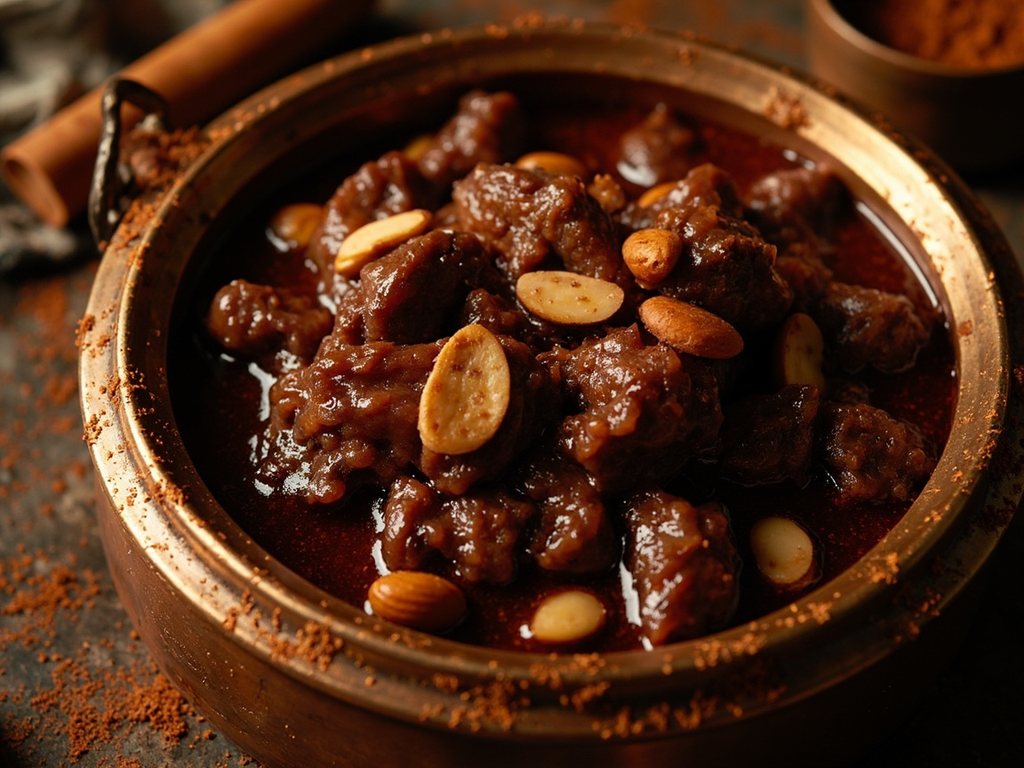
- Adjust seasoning and serve hot, sprinkled with slivered almonds.
How it was made : Sikbaj features prominently in the Kitab al-Tabikh by Ibn Sayyar al-Warraq (10th century), which gives several versions. At the time, the sauce was thickened with pure vinegar and heavily colored with saffron; murri replaced our salt. The dish was often left to rest overnight, as sikbaj was also eaten cold, jellied, during travels.
The contemporary twist : Serve in individual casseroles with a sprinkle of crushed pistachios and a strip of candied lemon: the caliphs' sweet-and-sour in bistro style.
Sources : Ibn Sayyār al-Warrāq, Kitāb al-Ṭabīkh (10th century) · Nawal Nasrallah, Annals of the Caliphs' Kitchens (2007) · Lilia Zaouali, L'Islam à table — Du Moyen Âge à nos jours (2004)
Al-Ma'mun · Charactorium