 flip
flipSikbâj of lamb with vinegar and saffron
Sikbâj of lamb with vinegar and saffron
Why this dish? When the Artuqid prince held court, the court engineer was invited to the ceremonial tables. Sikbâj, a sweet-and-sour stew once called 'the dish of kings', was the prestige dish par excellence in Mesopotamia: it is exactly the kind of dish that al-Jazari, in the service of the Artuqids of Amid, shared at palace receptions.
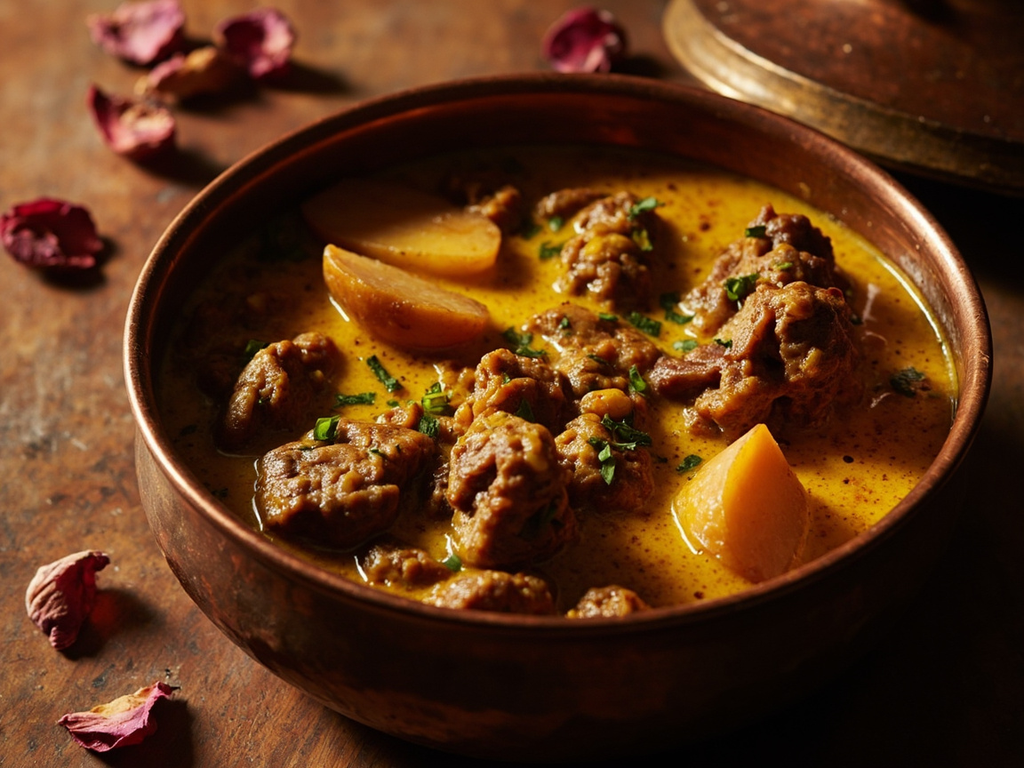
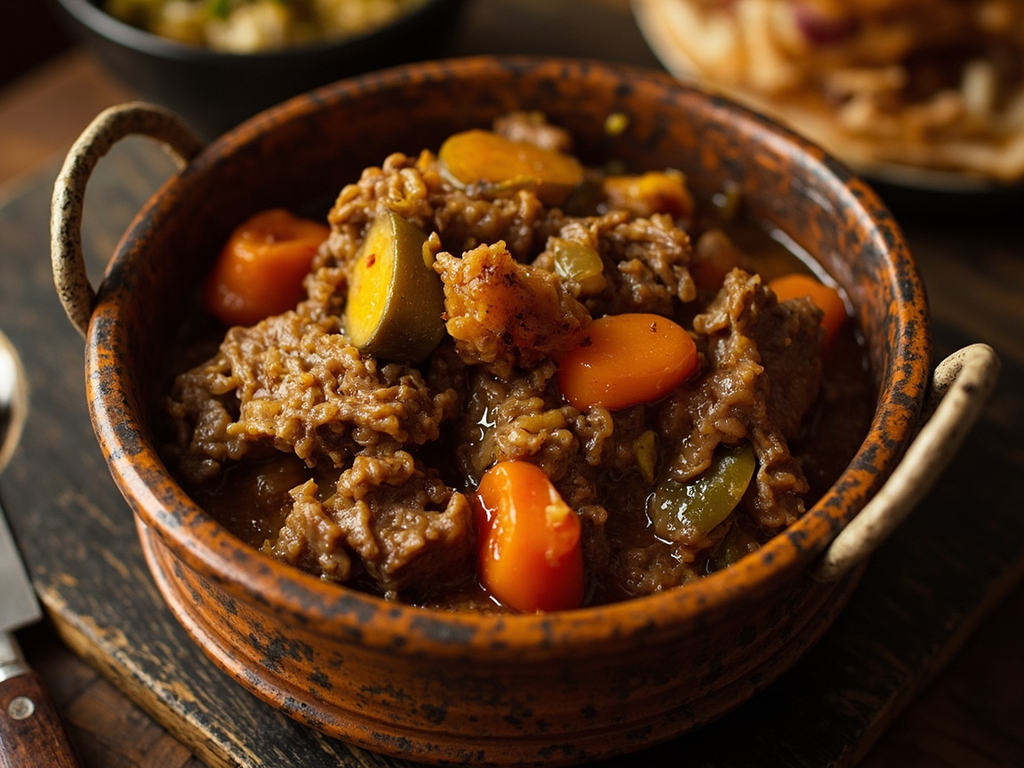
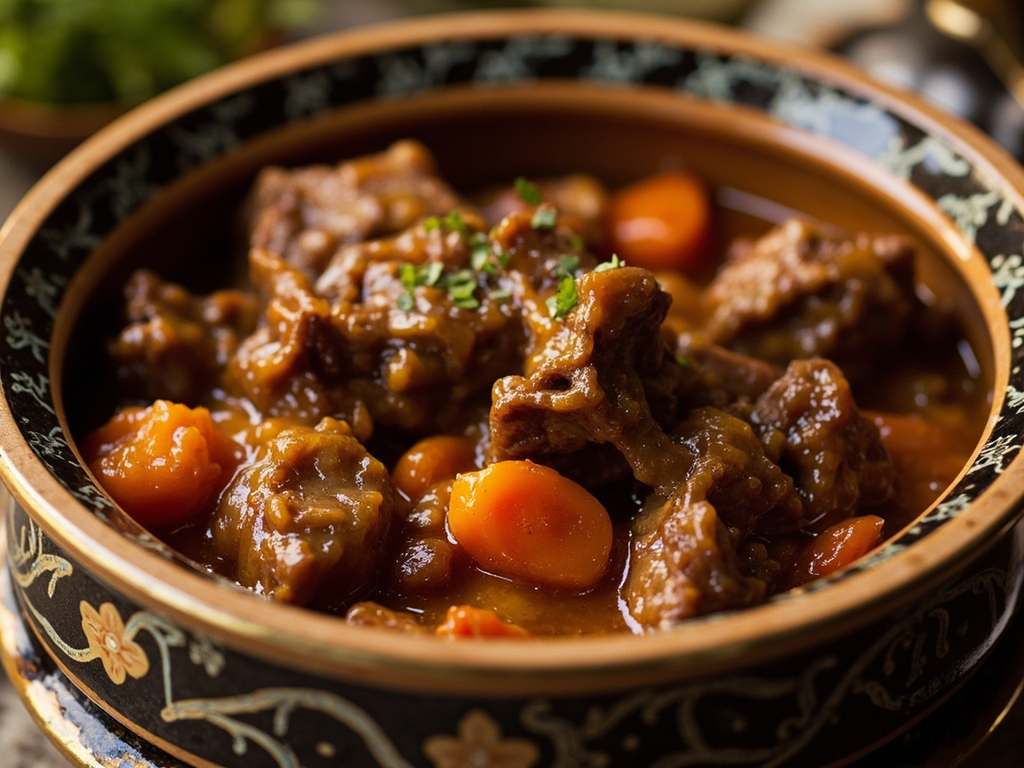
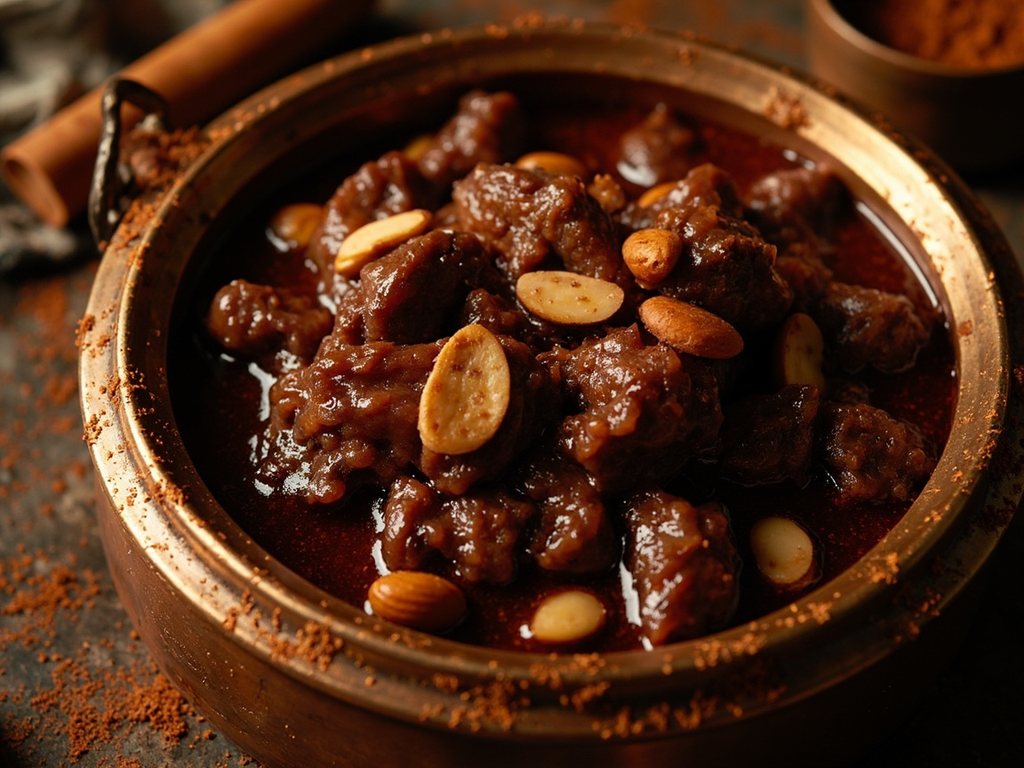
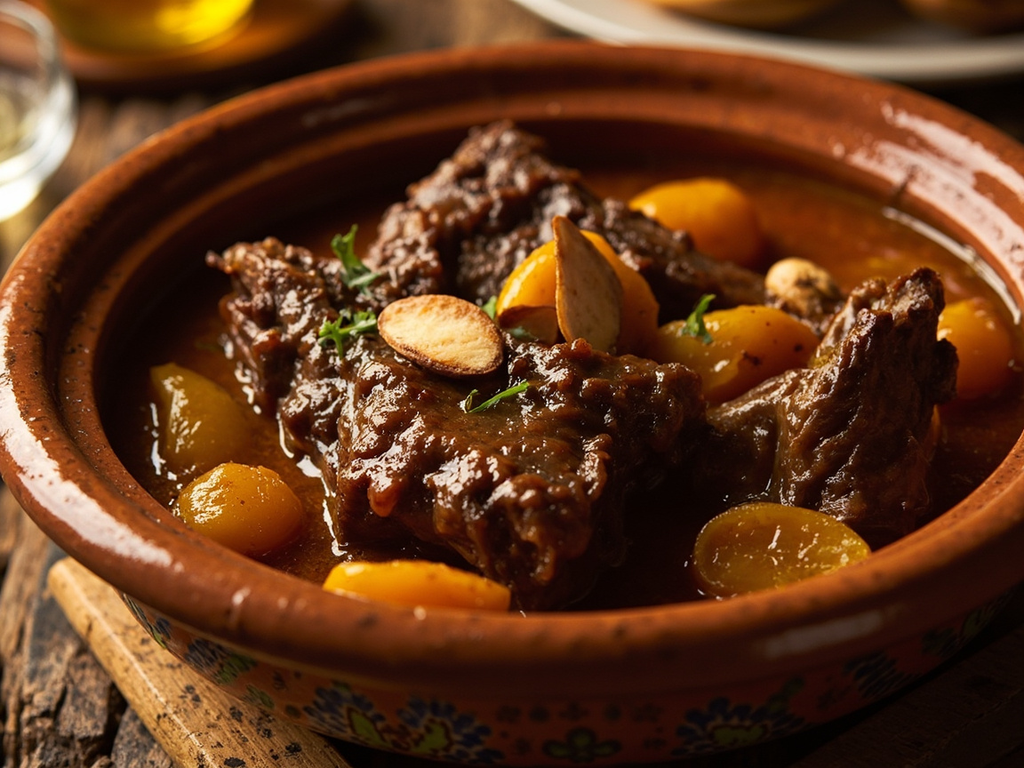
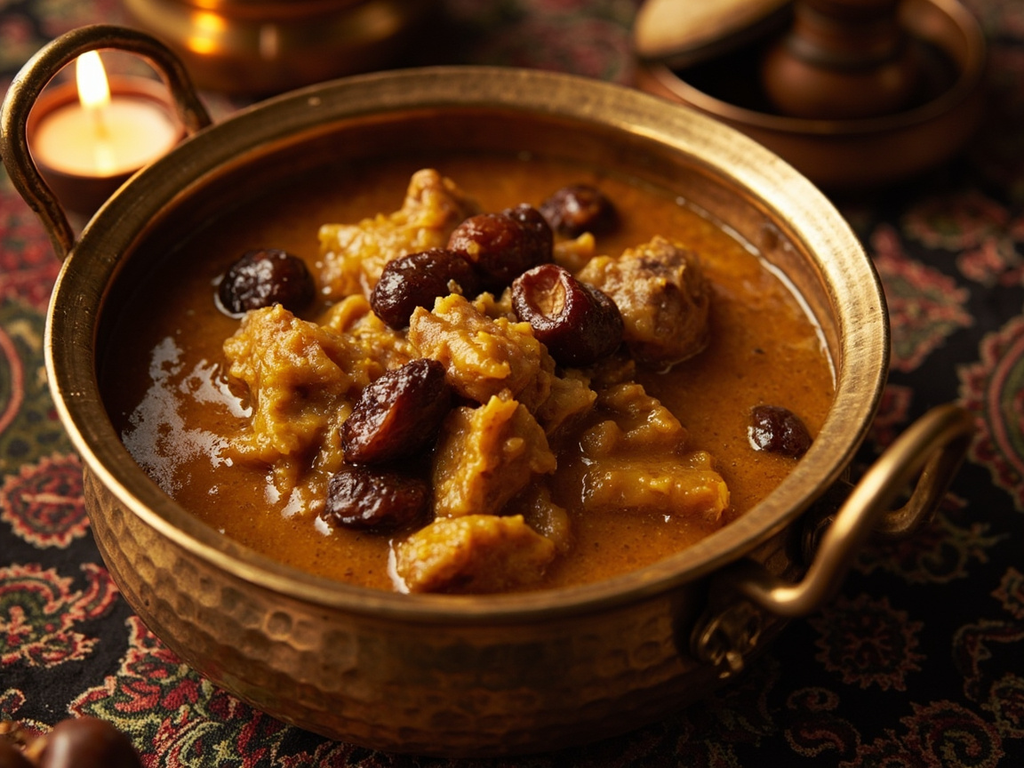
A lamb stew simmered with onions and carrots, soured with vinegar then sweetened with honey and dried fruits, gilded with saffron. Sour and sweet hold each other in balance, like two pans of a scale — a dish that chroniclers said was worthy of caliphs.
When my master the sultan held audience, the steaming sikbâj was brought in, and everyone knew the feast had begun. Believe me, a man who measures everything: this dish is a matter of balance, exactly like the water measured in a basin so that a clock strikes true — too much vinegar and the tongue winces, too much honey and one falls asleep. Pour the sour, wait, then return the sweetness with dates and saffron, until the two march in step.
- •Lamb shoulder — in large pieces (stew meat)
- •Wine or date vinegar — a good glass (signature acidity)
- •Honey or cooked grape juice (dibs) — a few spoonfuls (balancing sweetness)
- •Onions and carrots — several (base vegetables)
- •Dates and raisins — a handful (sweet softness)
- •Saffron, cinnamon, dried ginger — pinches (courtly aroma and color)
Sikbâj of lamb with vinegar and saffron
A lamb stew simmered with onions and carrots, soured with vinegar then sweetened with honey and dried fruits, gilded with saffron. Sour and sweet hold each other in balance, like two pans of a scale — a dish that chroniclers said was worthy of caliphs.
Why this dish? When the Artuqid prince held court, the court engineer was invited to the ceremonial tables. Sikbâj, a sweet-and-sour stew once called 'the dish of kings', was the prestige dish par excellence in Mesopotamia: it is exactly the kind of dish that al-Jazari, in the service of the Artuqids of Amid, shared at palace receptions.
When my master the sultan held audience, the steaming sikbâj was brought in, and everyone knew the feast had begun. Believe me, a man who measures everything: this dish is a matter of balance, exactly like the water measured in a basin so that a clock strikes true — too much vinegar and the tongue winces, too much honey and one falls asleep. Pour the sour, wait, then return the sweetness with dates and saffron, until the two march in step.
Ingredients (period version)
- Lamb shoulder — in large pieces (stew meat)
- Wine or date vinegar — a good glass (signature acidity)
- Honey or cooked grape juice (dibs) — a few spoonfuls (balancing sweetness)
- Onions and carrots — several (base vegetables)
- Dates and raisins — a handful (sweet softness)
- Saffron, cinnamon, dried ginger — pinches (courtly aroma and color)
Ingredients
- Boneless lamb shoulder — 800 g (stew meat)
- Red wine vinegar — 100 ml (signature acidity)
- Honey — 2 tbsp (balancing sweetness)
- Onions — 2 (base)
- Carrots — 3 (vegetable)
- Pitted dates — 8 (sweet softness)
- Raisins — 50 g (sweet softness)
- Saffron — 1 pinch, infused (color and aroma)
- Ground cinnamon and ginger — 1/2 tsp each (spices)
- Salt — to taste (seasoning)
Method
- Brown the lamb on all sides in a little fat, then set aside.
- In the same pot, sweat the sliced onions and carrot rounds.
- Return the meat, cover with hot water, lightly salt, and simmer covered for 1 hour.
- Add the vinegar, cinnamon, and ginger; continue for 30 minutes: the acidity should mellow.
- Stir in the honey, dates, raisins, and infused saffron; let reduce 15 minutes until the sauce coats and glistens.
- Adjust the sweet-sour balance and serve with bread or rice.
How it was made : Sikbâj (from Arabic-Persian, vinegar stew) is one of the most famous dishes of medieval Arab cuisine, present from the 10th-century cookbooks and in al-Baghdādī's Kitāb al-Ṭabīkh (1226). Meat, vinegar, and sugar (honey or date dibs) were combined, sometimes thickened with dried fruits. It was a prestige dish, and was even kept cold, jellied, for travel.
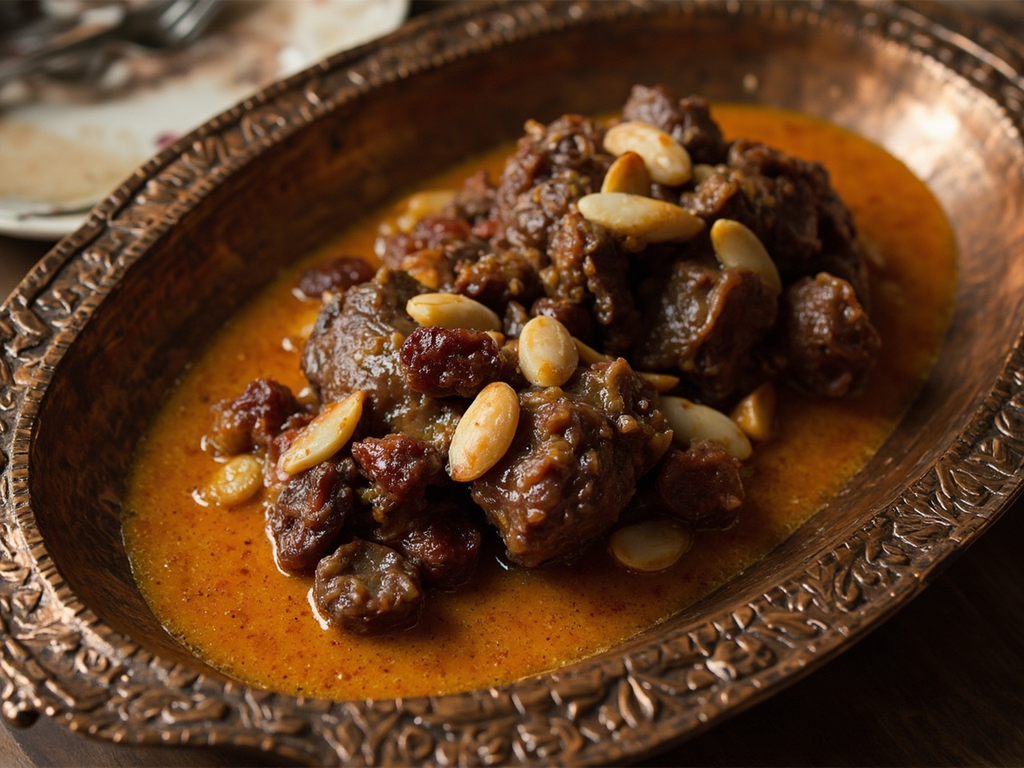
The contemporary twist : Plate the meat on a mirror of saffron sauce and plant a roasted date on top, a nod to al-Jazari's taste for perfectly balanced mechanisms.
Sources : Charles Perry (trans.), A Baghdad Cookery Book: The Book of Dishes (Kitāb al-Ṭabīkh) of al-Baghdādī, Prospect Books, 2005 · Lilia Zaouali, L'Islam à table. Du Moyen Âge à nos jours, La Découverte, 2007
Al-Jazari · Charactorium