 flip
flipOshi palov (Royal Pilaf of Samarkand)
Oshi palov (Royal Pilaf of Samarkand)
Why this dish? Pilaf is the emblematic dish of great Timurid banquets. Ruy González de Clavijo, the Castilian ambassador received at Tamerlane's court in 1404, describes feasts where mutton rice was served in mountains on golden platters. Bibi Khanym, as chief wife, presided over the women's banquets parallel to Tamerlane's, with the same splendor.
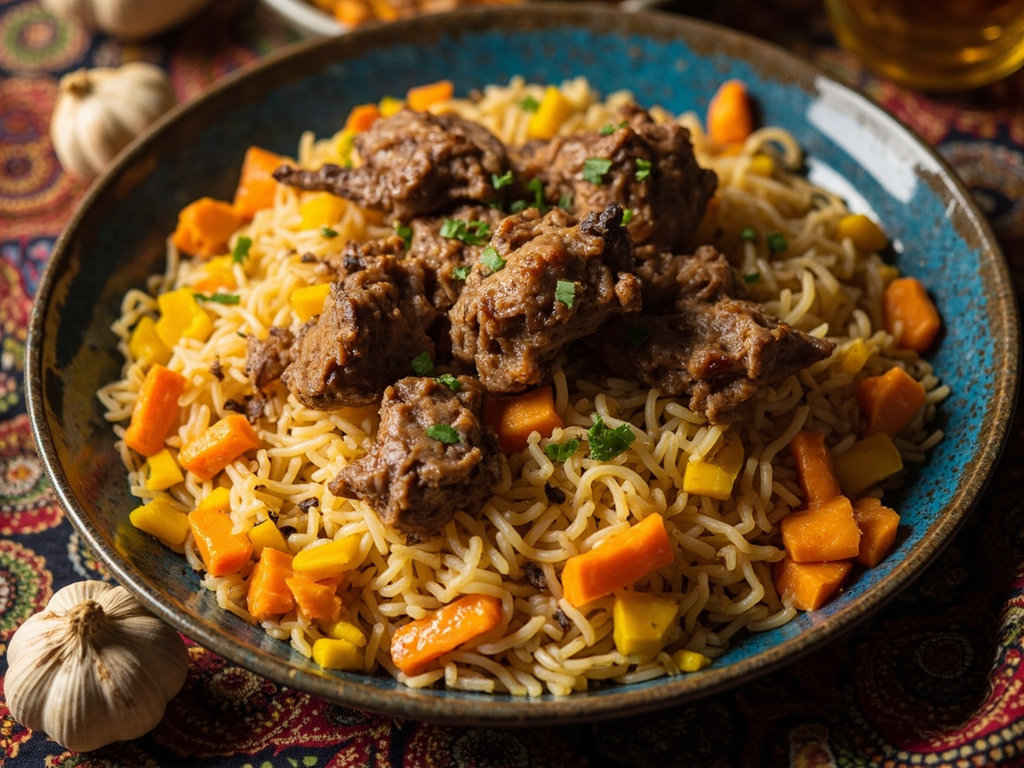
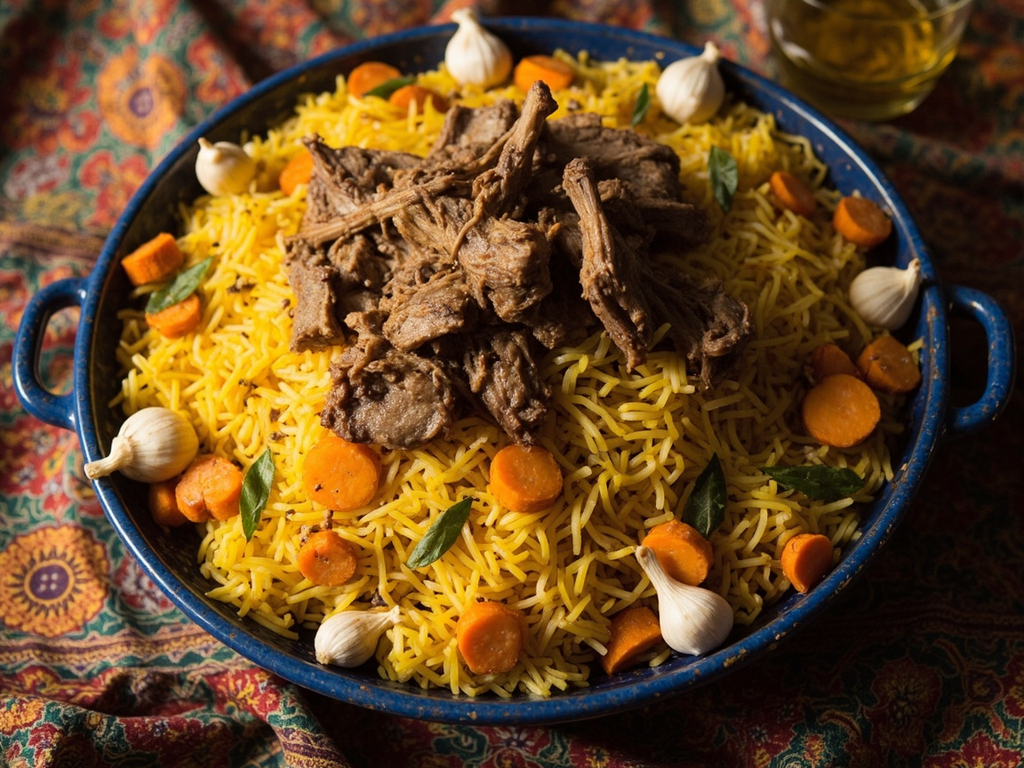
A pilaf of long-grain rice cooked in mutton broth perfumed with cumin, enriched with carrots, onions, and chickpeas, crowned with tender mutton pieces. This monumental dish, cooked in a large kazan (cauldron), has been the heart of every Central Asian feast for centuries.
When my lord Temür returned from campaign, I would have the dastarkhan laid out on the garden carpets and the palov brought in dishes as wide as shields. The rice must drink the mutton fat and the fragrance of zira until it turns golden — each grain separate, that is the sign of a skilled cook. At my table, we served this palov with quince wedges when the season allowed, for the fruit sweetens the meat and pleases refined guests. Know that in our Samarkand, to refuse palov to a guest would be a graver offense than an insult.
- •Mutton (shoulder with bone) — a good portion, half an animal for a feast (main meat)
- •Long-grain rice — generous measure, as much as the meat (starch base)
- •Sheep tail fat (dumba) — a good piece (cooking fat)
- •Yellow carrots — plentiful (sweetening vegetable)
- •Onions — several (aromatic base)
- •Dried chickpeas — a handful, soaked (enrichment)
- •Whole cumin (zira) — a good pinch (main spice)
- •Salt — to taste (seasoning)
- •Whole heads of garlic — one or two heads (aroma buried in the rice)
Oshi palov (Royal Pilaf of Samarkand)
A pilaf of long-grain rice cooked in mutton broth perfumed with cumin, enriched with carrots, onions, and chickpeas, crowned with tender mutton pieces. This monumental dish, cooked in a large kazan (cauldron), has been the heart of every Central Asian feast for centuries.
Why this dish? Pilaf is the emblematic dish of great Timurid banquets. Ruy González de Clavijo, the Castilian ambassador received at Tamerlane's court in 1404, describes feasts where mutton rice was served in mountains on golden platters. Bibi Khanym, as chief wife, presided over the women's banquets parallel to Tamerlane's, with the same splendor.
When my lord Temür returned from campaign, I would have the dastarkhan laid out on the garden carpets and the palov brought in dishes as wide as shields. The rice must drink the mutton fat and the fragrance of zira until it turns golden — each grain separate, that is the sign of a skilled cook. At my table, we served this palov with quince wedges when the season allowed, for the fruit sweetens the meat and pleases refined guests. Know that in our Samarkand, to refuse palov to a guest would be a graver offense than an insult.
Ingredients (period version)
- Mutton (shoulder with bone) — a good portion, half an animal for a feast (main meat)
- Long-grain rice — generous measure, as much as the meat (starch base)
- Sheep tail fat (dumba) — a good piece (cooking fat)
- Yellow carrots — plentiful (sweetening vegetable)
- Onions — several (aromatic base)
- Dried chickpeas — a handful, soaked (enrichment)
- Whole cumin (zira) — a good pinch (main spice)
- Salt — to taste (seasoning)
- Whole heads of garlic — one or two heads (aroma buried in the rice)
Ingredients
- Mutton or lamb shoulder with bone — 800 g (main meat)
- Basmati or long-grain rice — 500 g (base)
- Sheep tail fat or neutral vegetable oil — 100 g or 80 ml (fat)
- Carrots (preferably yellow, or orange) — 500 g (vegetable)
- Yellow onions — 3 medium (aromatic base)
- Dried chickpeas (soaked overnight) — 100 g (enrichment)
- Whole cumin — 2 tsp (main spice)
- Garlic — 2 whole heads, unpeeled (aroma)
- Salt — 2 tsp (seasoning)
- Hot water — about 1 L (rice cooking liquid)
Method
- Rinse the rice in plenty of water until the water runs clear, then soak for 30 minutes. Drain.
- Cut the meat into 5 cm pieces with the bone. Slice the onions into half-moons. Cut the carrots into thick sticks (1 cm).
- In a large pot or deep wok (kazan), melt the tail fat over high heat (or heat the oil). Sear the meat pieces until golden brown, then set aside.
- In the same fat, sauté the onions until golden brown. Add the carrots and cook for 5 minutes, stirring.
- Return the meat, add cumin, salt, and drained chickpeas. Cover with hot water (about 2 cm above). Bring to a boil, then simmer for 40 minutes over low heat (this is the zirvak, the base).
- Spread the drained rice in an even layer over the zirvak without stirring. Press the whole garlic heads into the rice. Gently pour hot water to 1 cm above the rice.
- Cook over high heat uncovered until the water is absorbed visibly, then reduce heat to minimum, cover tightly, and steam for 25 minutes without lifting the lid.
- Remove the garlic, then carefully invert the pilaf onto a large serving platter so the meat ends up on top. Serve the pressed garlic heads on the side.
How it was made : Central Asian pilaf is attested well before the Timurids, but under Tamerlane, feasts reached a splendor described by several foreign ambassadors. Clavijo (1404) mentions huge dishes of rice and mutton served on embroidered cloths. Sheep tail fat (dumba) was the fat of choice, and yellow carrots — a local variety — predate the orange Dutch carrots of the 17th century.
The contemporary twist : Serve the pilaf on a blue Samarkand ceramic (or cobalt blue) dish to evoke Timurid faience. Garnish with pomegranate seeds — a fruit well attested in medieval Central Asia.
Sources : Clavijo, Ruy González de. Embajada a Tamorlán (1406), French trans.: Voyage à Samarcande · Paul D. Buell, Eugene N. Anderson. A Soup for the Qan: Chinese Dietary Medicine of the Mongol Era (2010) · Batmanglich, Najmieh. Silk Road Cooking: A Vegetarian Journey (2004)
Bibi Khanym · Charactorium