 flip
flipGimbap for the shoot (rice rolls to go)
Gimbap for the shoot (rice rolls to go)
Why this dish? On long outdoor shoots, in Seoul or elsewhere, the crew eats what Korea takes everywhere: gimbap, rice and seaweed rolls that are eaten cold, by hand, between takes. A picnic dish, train food, and film set staple, it accompanies the itinerant life of a director like Bong Joon-ho.
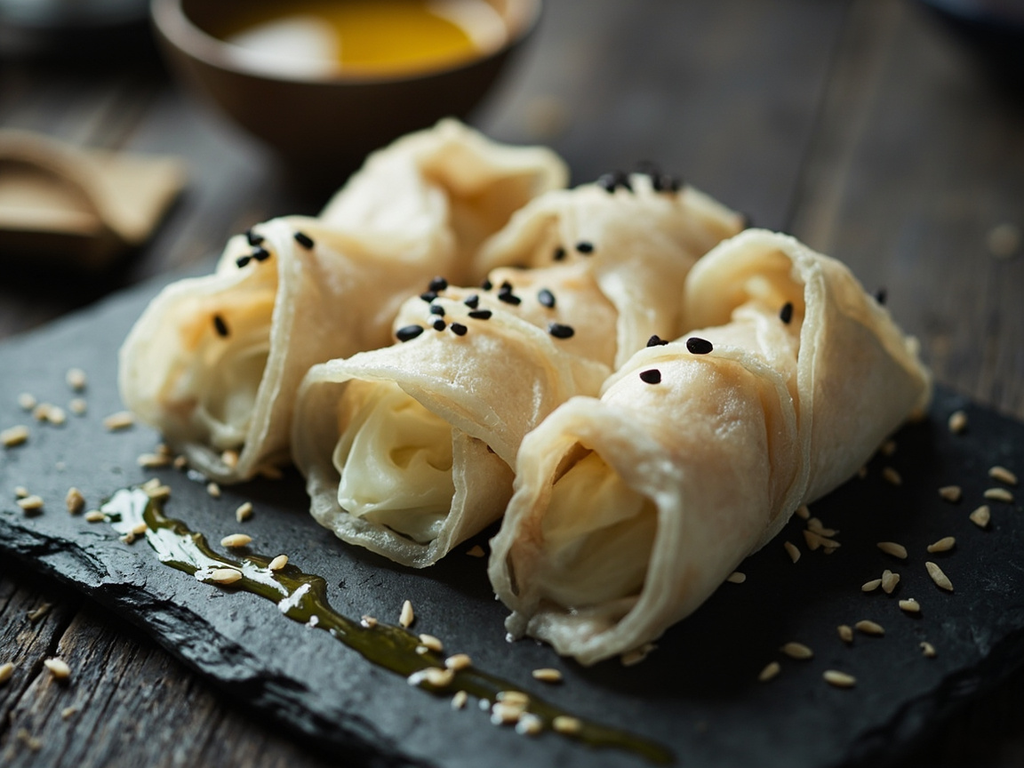
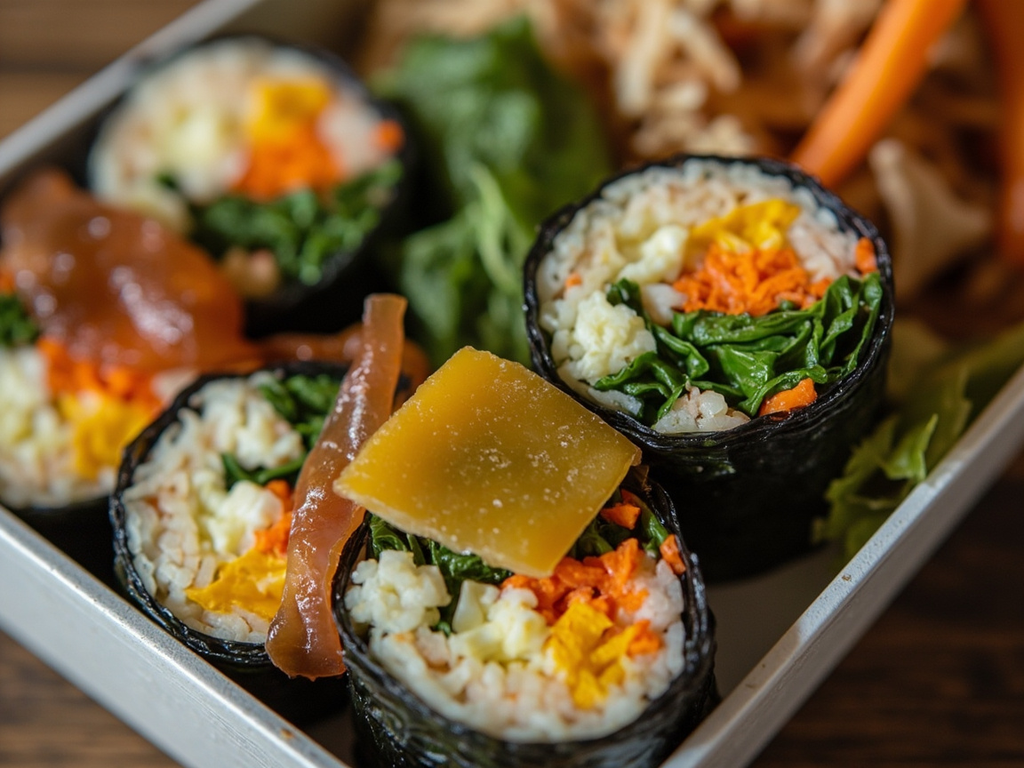
Thin slices of a roll of sesame-seasoned rice, wrapped in dried seaweed and filled with crunchy vegetables, omelette, and surimi or beef. Prepared in advance, carried in a box, and eaten cold without utensils.
A film shoot is about waiting, cold, and never a set table — so we unroll gimbap. My rule: oil the last seaweed leaf with a stroke of sesame to make it shine, and slice with a clean knife wiped between each cut, otherwise it sticks and tears. Eating this roll standing up, between takes, with the whole shivering crew, is one of my true joys in cinema.
- •Short-grain rice seasoned (salt, sesame oil) — two bowls (base)
- •Dried seaweed sheets (gim) — a few (wrapper)
- •Blanched spinach — a handful (green filling)
- •Carrot, julienned — one (crunch, color)
- •Eggs, made into omelette — two (soft filling)
- •Yellow pickled radish (danmuji) — a few sticks (acidity, crunch)
- •Sesame seeds — a pinch (finish)
Gimbap for the shoot (rice rolls to go)
Thin slices of a roll of sesame-seasoned rice, wrapped in dried seaweed and filled with crunchy vegetables, omelette, and surimi or beef. Prepared in advance, carried in a box, and eaten cold without utensils.
Why this dish? On long outdoor shoots, in Seoul or elsewhere, the crew eats what Korea takes everywhere: gimbap, rice and seaweed rolls that are eaten cold, by hand, between takes. A picnic dish, train food, and film set staple, it accompanies the itinerant life of a director like Bong Joon-ho.
A film shoot is about waiting, cold, and never a set table — so we unroll gimbap. My rule: oil the last seaweed leaf with a stroke of sesame to make it shine, and slice with a clean knife wiped between each cut, otherwise it sticks and tears. Eating this roll standing up, between takes, with the whole shivering crew, is one of my true joys in cinema.
Ingredients (period version)
- Short-grain rice seasoned (salt, sesame oil) — two bowls (base)
- Dried seaweed sheets (gim) — a few (wrapper)
- Blanched spinach — a handful (green filling)
- Carrot, julienned — one (crunch, color)
- Eggs, made into omelette — two (soft filling)
- Yellow pickled radish (danmuji) — a few sticks (acidity, crunch)
- Sesame seeds — a pinch (finish)
Ingredients
- Cooked sushi rice — 400 g (base)
- Sesame oil — 1 tbsp (seasoning rice and seaweed)
- Nori/gim seaweed sheets — 4 (wrapper)
- Spinach — 100 g, blanched and squeezed dry (green filling)
- Carrot — 1, julienned and sautéed (crunch, color)
- Eggs — 3, made into omelette and cut into strips (soft filling)
- Yellow pickled radish (danmuji) — 4 sticks (acidity, crunch)
- Surimi or seasoned beef strips — 100 g (protein filling)
- Sesame seeds + salt — 1 tsp (finish)
Method
- Season the warm rice with a drizzle of sesame oil and a pinch of salt; let cool slightly.
- Prepare the fillings: blanch the spinach, sauté the carrot, cook the omelette and cut into strips.
- Place a seaweed sheet (shiny side down) on a mat, spread a thin layer of rice leaving 2 cm at the top.
- Arrange the fillings in strips at the bottom third, then roll firmly using the mat.
- Brush the roll with a little sesame oil and sprinkle with sesame seeds.
- Slice into bite-sized pieces with a clean knife wiped between cuts; pack in a box to go.
How it was made : Gimbap became popular in the 20th century as a portable meal, linked to the rise of railways and school outings. Without refrigeration, dried seaweed, vinegared-salted rice, and pickled vegetables ensured enough preservation for a day away from home.
The contemporary twist : 'Mini gimbap' (kkomak gimbap) version in small bite-sized pieces without cutting, ideal for snacking one-handed while watching rushes on screen.
Sources : Maangchi, Real Korean Cooking (2015) · Korean Food Foundation, Korean Cuisine
Bong Joon-ho · Charactorium