 flip
flipThe Bowl Meal: Rice and Mung Bean Dal
The Bowl Meal: Rice and Mung Bean Dal
Why this dish? Every morning, the Buddha and his monks walked barefoot through the villages of Magadha, bowl in hand, silently receiving whatever each household could give. Rice and mung lentils, seasoned with a little ghee and ginger, formed the nourishing base of this single meal taken before noon.
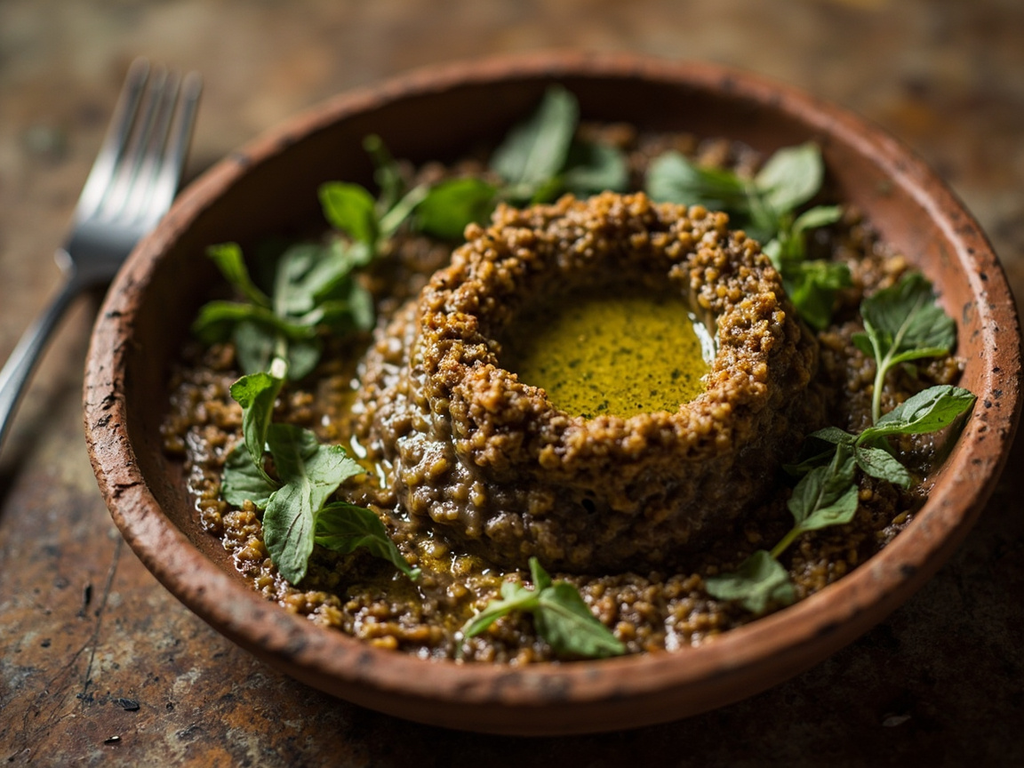
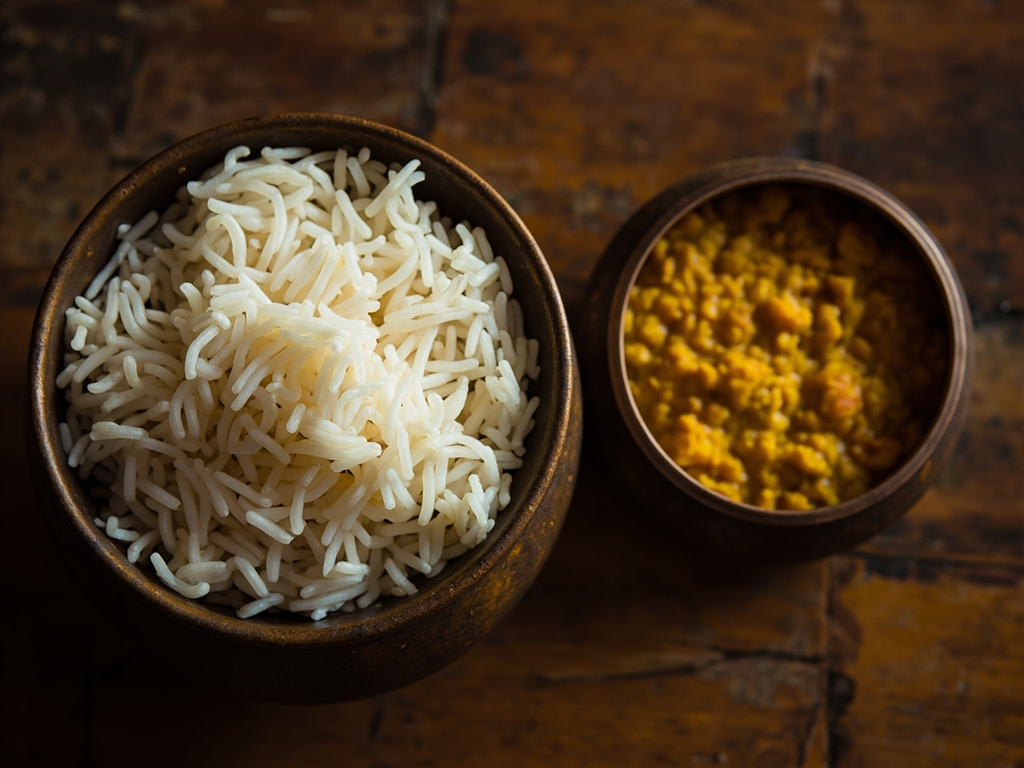
Simple rice served with a golden purée of mung lentils, scented with turmeric, ginger, and ghee — comforting, mildly savory, the everyday meal.
See this mixed bowl: a little rice from one house, lentils from another, a drop of melted butter on top. I do not ask, I do not choose — I hold out the bowl and I receive. The rich pour abundance, the poor a handful, and all mingles alike. Eat once, before the sun is high, and let this food only sustain the body on the Path, neither for pleasure nor for adornment.
- •Rice — one portion (staple starch)
- •Hulled mung lentils — one portion (protein, dal)
- •Ghee (clarified butter) — a spoonful (fat, one of the five medicines)
- •Fresh turmeric — a little (color, digestive virtue)
- •Ginger — a piece (warmth, digestion)
- •Cumin and mustard seeds — a pinch (fragrance)
- •Salt — to taste (seasoning)
The Bowl Meal: Rice and Mung Bean Dal
Simple rice served with a golden purée of mung lentils, scented with turmeric, ginger, and ghee — comforting, mildly savory, the everyday meal.
Why this dish? Every morning, the Buddha and his monks walked barefoot through the villages of Magadha, bowl in hand, silently receiving whatever each household could give. Rice and mung lentils, seasoned with a little ghee and ginger, formed the nourishing base of this single meal taken before noon.
See this mixed bowl: a little rice from one house, lentils from another, a drop of melted butter on top. I do not ask, I do not choose — I hold out the bowl and I receive. The rich pour abundance, the poor a handful, and all mingles alike. Eat once, before the sun is high, and let this food only sustain the body on the Path, neither for pleasure nor for adornment.
Ingredients (period version)
- Rice — one portion (staple starch)
- Hulled mung lentils — one portion (protein, dal)
- Ghee (clarified butter) — a spoonful (fat, one of the five medicines)
- Fresh turmeric — a little (color, digestive virtue)
- Ginger — a piece (warmth, digestion)
- Cumin and mustard seeds — a pinch (fragrance)
- Salt — to taste (seasoning)
Ingredients
- Basmati rice — 150 g (starch)
- Hulled mung lentils (moong dal) — 120 g (dal)
- Ghee — 2 tbsp (fat)
- Turmeric powder — 1/2 tsp (color)
- Fresh grated ginger — 1 tsp (warmth)
- Cumin seeds — 1 tsp (tempering)
- Mustard seeds — 1/2 tsp (tempering)
- Salt — to taste (seasoning)
Method
- Rinse the mung lentils, cook them in 3 times their volume of water with turmeric for 25 minutes until they break down into a light purée.
- Cook the rice separately in salted water.
- Prepare the tempering: heat the ghee, crackle cumin and mustard seeds, add the ginger.
- Pour this fragrant tempering over the dal, season with salt.
- Serve the rice and dal side by side in the same bowl, like a mixed alms.
How it was made : Monks did not cook themselves: they received already prepared food. Rice, lentils, ghee, and barley were the common staples of the Ganges basin. The rule of 'three purities' even allowed meat if the animal had not been killed for the monk, but the ordinary foundation remained vegetarian.
The contemporary twist : Khichdi directly descends from this rice-lentil marriage; serve with a lime wedge to brighten.
Sources : Vinaya Pitaka, Mahavagga (monastic food rules)
Buddha · Charactorium