Puroḍāśa — The Rice Cake of the Sacred Fire
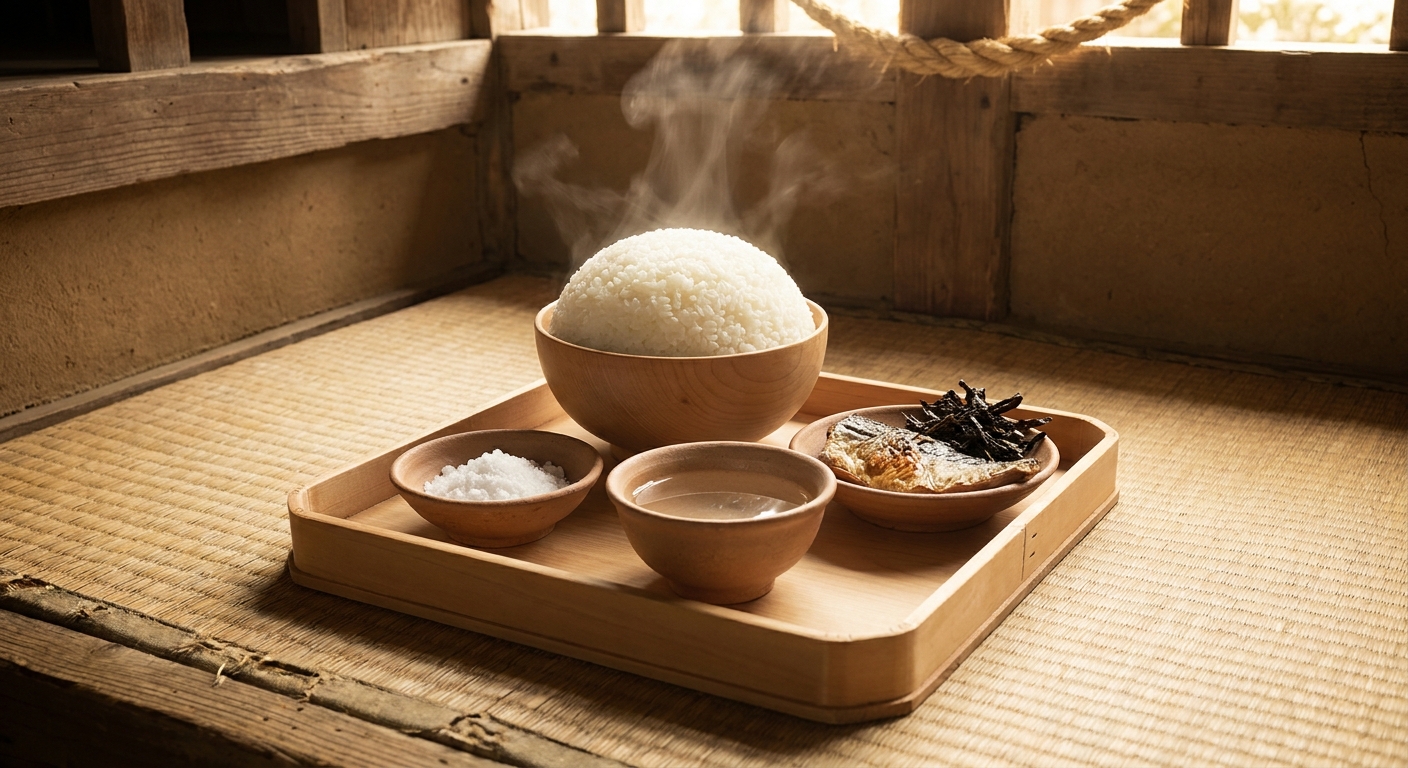
A dense cake of ground rice, kneaded with ghee and water, gently cooked on embers. Plain, almost austere, it has no other flavor than that of toasted grain and butter — the naked food offered to the fire.
A dense cake of ground rice, kneaded with ghee and water, gently cooked on embers. Plain, almost austere, it has no other flavor than that of toasted grain and butter — the naked food offered to the fire.
Listen to me, you who were born from my thought. Before the worlds were named, I set grain and fire side by side. Take the rice flour, mix it with water and melted butter, shape it into a round wheel like the egg from which all things sprang, and lay it on the burning shards. Pour more ghṛta over it, for it is through this that the offering rises to me. Seek neither sugar nor spice: here, the grain alone speaks the truth of the beginning.
- •Husked ground rice (taṇḍula) — one measure (base of the cake)
- •Ghee (ghṛta) — as needed (binder and sacred substance)
- •Water — as needed (kneading)
- •Rock salt (saindhava) — a pinch (light seasoning)
Puroḍāśa — The Rice Cake of the Sacred Fire
A dense cake of ground rice, kneaded with ghee and water, gently cooked on embers. Plain, almost austere, it has no other flavor than that of toasted grain and butter — the naked food offered to the fire.
Why this dish? Brahmā is the master of the Vedas and of all rites. The puroḍāśa, a rice flour cake baked on clay shards and drizzled with ghee, is the central offering of many Vedic sacrifices: it is precisely the 'portion of the sacrifice' on which, according to the texts, the creator feeds.
Listen to me, you who were born from my thought. Before the worlds were named, I set grain and fire side by side. Take the rice flour, mix it with water and melted butter, shape it into a round wheel like the egg from which all things sprang, and lay it on the burning shards. Pour more ghṛta over it, for it is through this that the offering rises to me. Seek neither sugar nor spice: here, the grain alone speaks the truth of the beginning.
Ingredients (period version)
- Husked ground rice (taṇḍula) — one measure (base of the cake)
- Ghee (ghṛta) — as needed (binder and sacred substance)
- Water — as needed (kneading)
- Rock salt (saindhava) — a pinch (light seasoning)
Ingredients
- Rice flour — 200 g (base)
- Ghee — 4 tbsp (binder + drizzling)
- Warm water — 120 ml approx. (kneading)
- Rock salt (or fine salt) — 1 pinch (seasoning)
Method
- Mix the rice flour and salt in a bowl.
- Incorporate 2 tbsp melted ghee, then gradually add warm water until a firm, smooth dough forms.
- Shape into a round, thick cake (1.5 cm) or several smaller ones.
- Cook in a cast-iron pan (or tava) over low heat, 5-6 minutes per side, until golden and firm.
- Drizzle with the remaining ghee just before serving, warm.
How it was made : In the Śrauta Sūtras, the puroḍāśa was baked on a ritual number of kapālas (clay shards) placed on the embers, then offered into the fire to various deities. Rice or barley flour, water, and ghee sufficed: no embellishment, for the offering had to be pure.
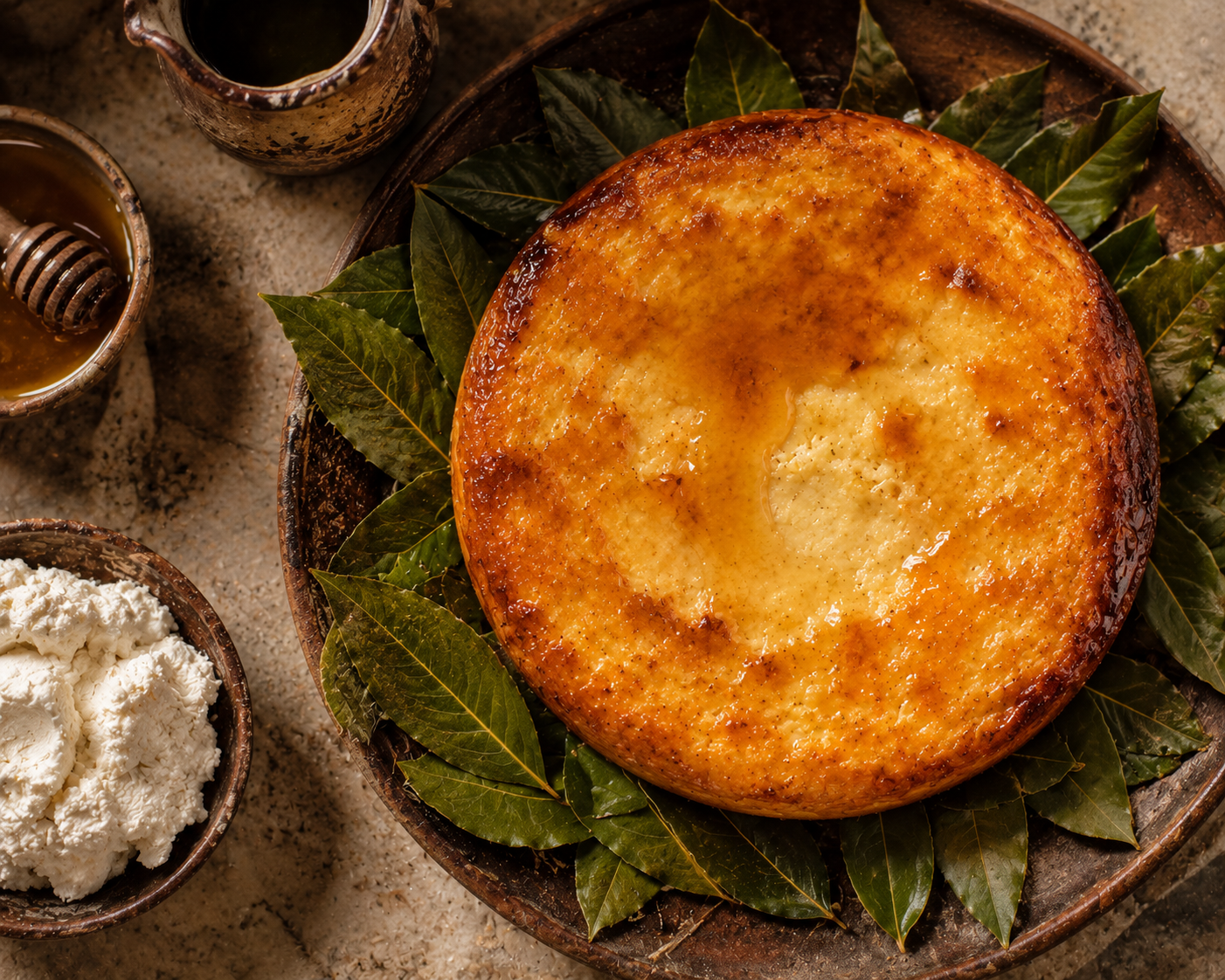
The contemporary twist : Plated as a small golden wheel on a banana leaf, dusted with a veil of toasted sesame seeds for crunch — a nod to the original grain.
Sources : K.T. Achaya, Indian Food: A Historical Companion, Oxford University Press, 1994 · Āpastamba Śrauta Sūtra (descriptions of puroḍāśa)
Brahma · Charactorium