 flip
flipPatina of pears with honey and pepper
Patina of pears with honey and pepper
Why this dish? A wealthy senator, Brutus hosted the elite of Rome at his table. At the banquet, the *mensa secunda* offered these fragrant custards where the sweetness of honey marries pepper from the East — a discreet luxury, a sign of rank without the ostentation his Stoic temperament disapproved of.
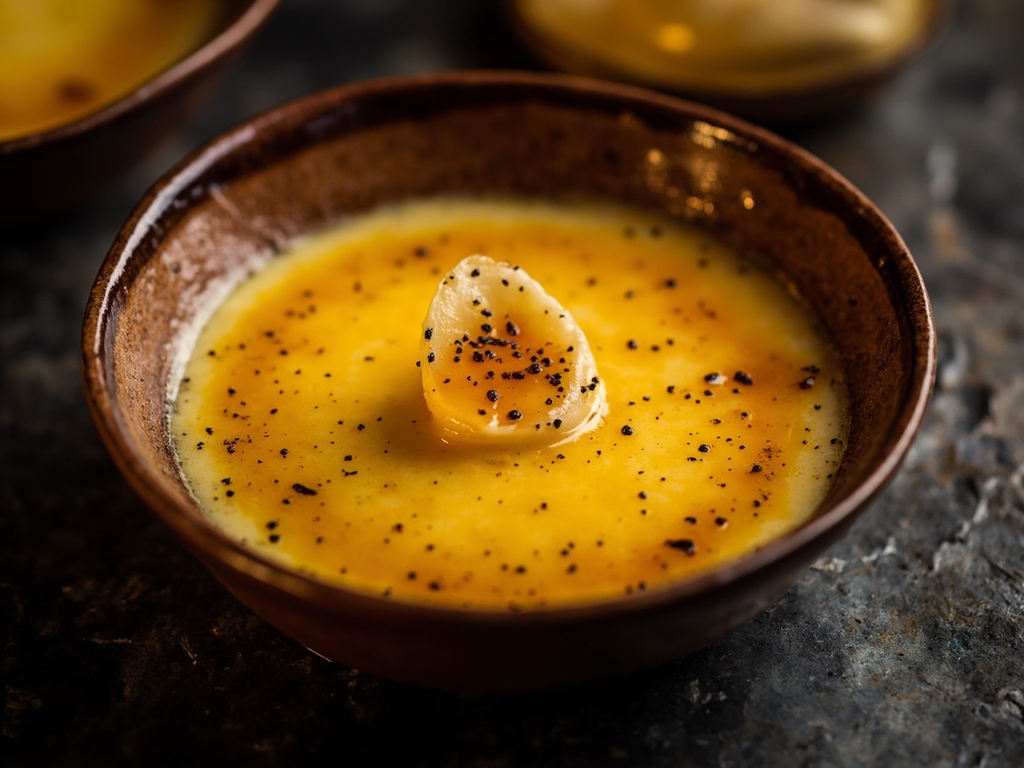
A tender custard of poached pears, mashed with honey, pepper, cumin, and a little raisin wine, bound with eggs and gently baked. The refined dessert of wealthy Roman tables, after a recipe from Apicius.
When I entertain, I do not think one should stun one's guests with a hundred dishes — a single dish, well made, is worth more than a debauch. To close the meal, cook your pears, crush them in the mortar with honey, pepper, and a drop of garum — yes, even here, for salt awakens sweetness. Bind it all with beaten eggs and let it set gently over dying embers. You will see your guests fall silent for a moment: that is the only silence a Roman grants willingly.
- •Ripe pears — a basketful (fruit base)
- •Honey — to taste (sweetness)
- •Black pepper — a few crushed grains (warm spice)
- •Cumin — a pinch (spice)
- •Passum (raisin wine) — a dash (sweet perfume)
- •Garum — a drop (salty enhancer)
- •Eggs — a few (binder)
- •Olive oil — a drizzle (grease the dish)
Patina of pears with honey and pepper
A tender custard of poached pears, mashed with honey, pepper, cumin, and a little raisin wine, bound with eggs and gently baked. The refined dessert of wealthy Roman tables, after a recipe from Apicius.
Why this dish? A wealthy senator, Brutus hosted the elite of Rome at his table. At the banquet, the *mensa secunda* offered these fragrant custards where the sweetness of honey marries pepper from the East — a discreet luxury, a sign of rank without the ostentation his Stoic temperament disapproved of.
When I entertain, I do not think one should stun one's guests with a hundred dishes — a single dish, well made, is worth more than a debauch. To close the meal, cook your pears, crush them in the mortar with honey, pepper, and a drop of garum — yes, even here, for salt awakens sweetness. Bind it all with beaten eggs and let it set gently over dying embers. You will see your guests fall silent for a moment: that is the only silence a Roman grants willingly.
Ingredients (period version)
- Ripe pears — a basketful (fruit base)
- Honey — to taste (sweetness)
- Black pepper — a few crushed grains (warm spice)
- Cumin — a pinch (spice)
- Passum (raisin wine) — a dash (sweet perfume)
- Garum — a drop (salty enhancer)
- Eggs — a few (binder)
- Olive oil — a drizzle (grease the dish)
Ingredients
- Ripe pears — 4 (approx. 600 g) (fruit base)
- Honey — 3 tablespoons (sweetness)
- Ground black pepper — 1/2 teaspoon (warm spice)
- Ground cumin — 1 pinch (spice)
- Sweet wine (muscat / passito) — 4 tablespoons (sweet perfume)
- Fish sauce (garum) — 1/2 teaspoon (salty enhancer)
- Eggs — 3 (binder)
- Olive oil — for the dish (non-stick)
Method
- Peel and core the pears, poach them in a little water for 10 minutes until tender, then drain.
- Blend or mash the pears with honey, pepper, cumin, sweet wine, and fish sauce.
- Beat the eggs and stir into the pear purée.
- Pour into an oiled dish and bake in a water bath at 160 °C for 30 to 35 minutes, until the custard is set.
- Let cool slightly, grind a final turn of pepper over the top, and serve.
How it was made : Apicius, the Roman cookbook, describes this *patina de pirum*: pears boiled and crushed in a mortar with pepper, cumin, honey, *passum*, garum, and a little oil, bound with eggs and baked. *Patina* referred to any preparation cooked and bound with eggs, sweet or savory, served in the baking dish of the same name.
The contemporary twist : Unmolded as individual custards, with a peppered honey mirror and toasted hazelnut crunch: a chef's dessert two thousand years old.
Sources : Apicius, De re coquinaria, book IV (patinae)
Brutus · Charactorium