 flip
flipHoney-Roasted Goose with Cumin
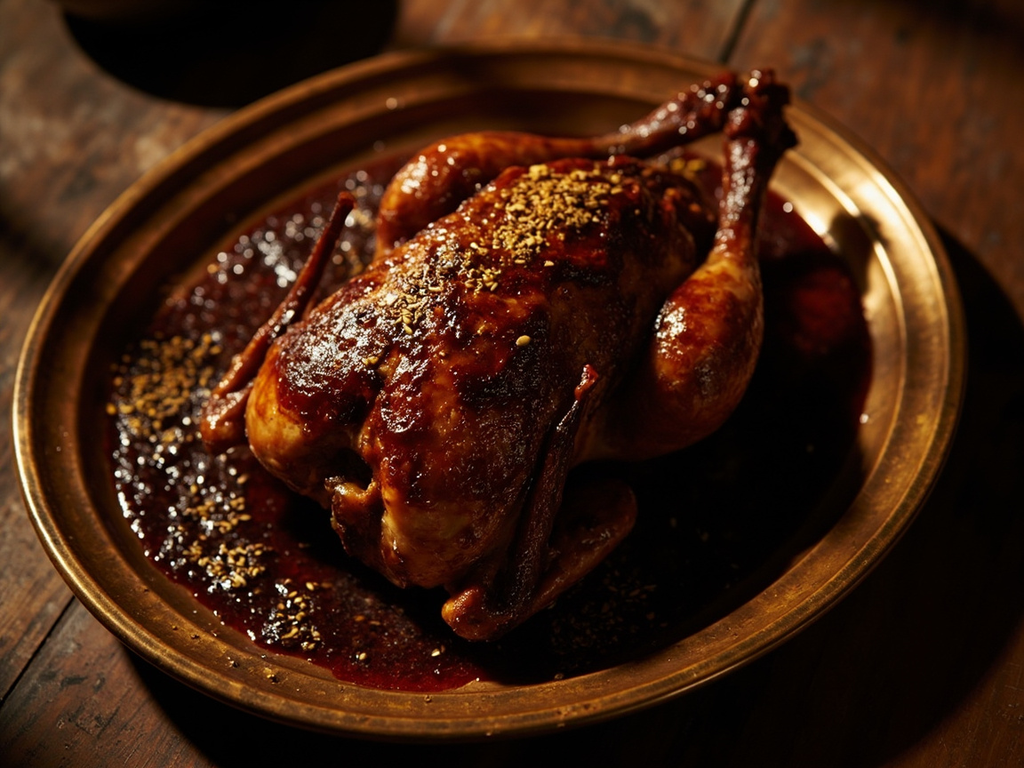
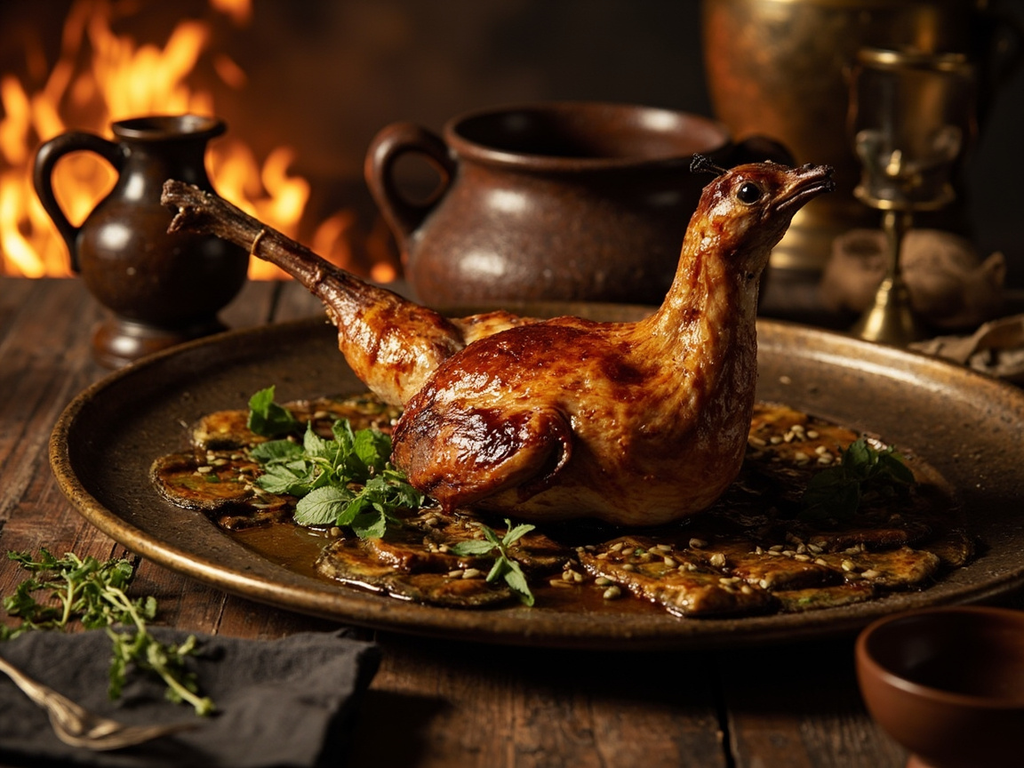
Honey-Roasted Goose with Cumin
Why this dish? The goose was the queen of poultry in ancient Egypt, raised and force-fed on Nile estates and served on great occasions. For the lavish feasts Cleopatra gave Mark Antony — where, it is said, several geese were slaughtered at once so that one would always be perfectly roasted whenever the queen decided to sit down to table — this golden dish embodied the dazzling generosity of the Alexandrian court.
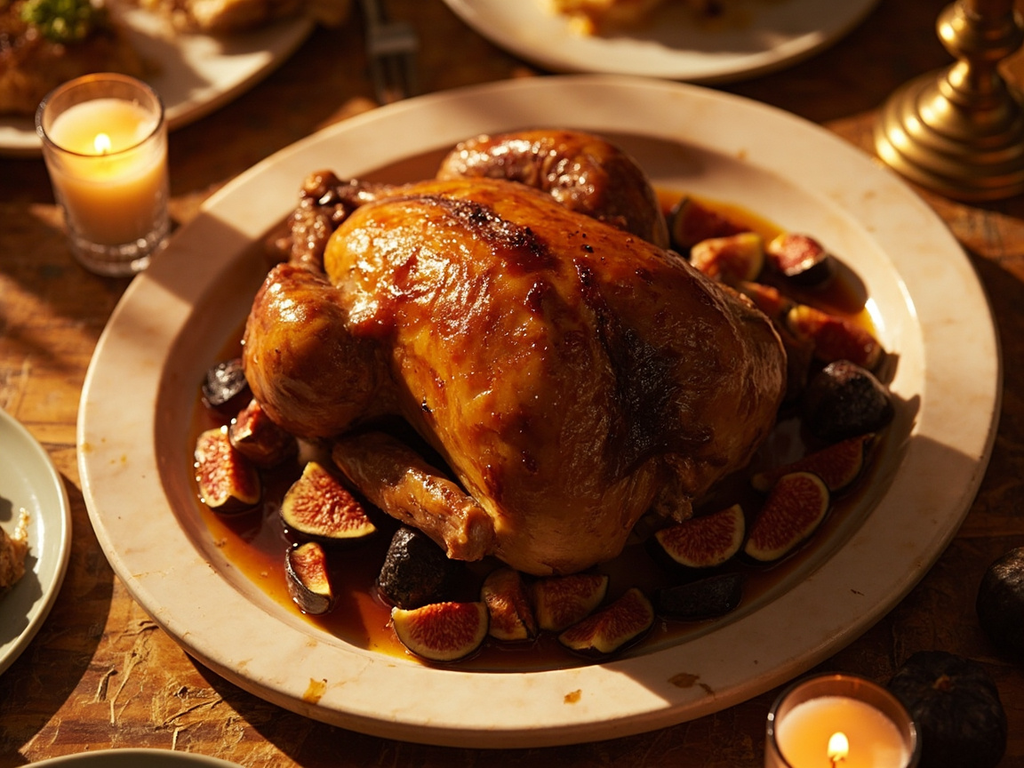
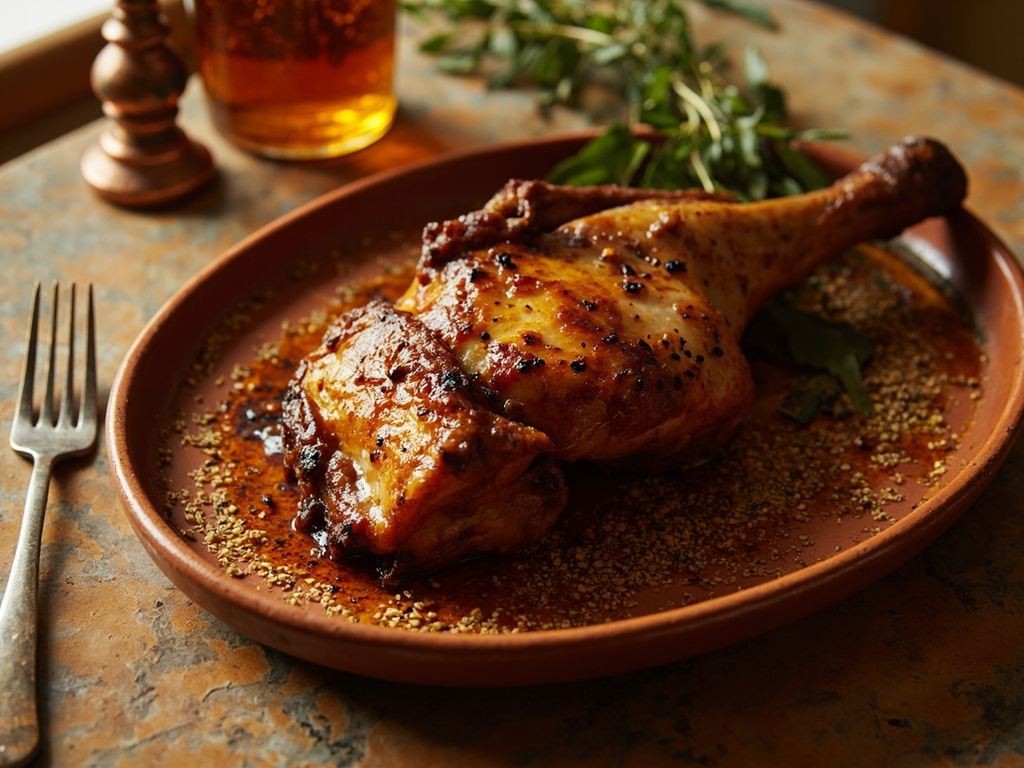
A goose lacquered with honey, perfumed with cumin and coriander, crispy on the outside and melting on the inside. The honey caramelizes on the skin while Egyptian spices perfume the flesh: an opulent dish designed to dazzle guests.
Draw near and see what my table can offer. This goose, my cooks gild with honey from our Delta hives and rub with cumin as the servants of the pharaohs already did. When Antony dined under my roof, I ordered several roasted one after another, so that whenever I chose to rise from my banquet couch, one would be perfect — for a queen does not eat overcooked poultry, nor does she make her hunger wait. Taste, stranger: you will know why Rome envied Egypt.
- •Force-fed Nile goose — one, whole (centerpiece)
- •Honey — as much as needed (glaze, sweetness)
- •Cumin and coriander seeds — a good pinch of each (Egyptian perfume)
- •Salt — to taste (seasoning)
- •Greek wine — one cup (basting liquid)
Honey-Roasted Goose with Cumin
A goose lacquered with honey, perfumed with cumin and coriander, crispy on the outside and melting on the inside. The honey caramelizes on the skin while Egyptian spices perfume the flesh: an opulent dish designed to dazzle guests.
Why this dish? The goose was the queen of poultry in ancient Egypt, raised and force-fed on Nile estates and served on great occasions. For the lavish feasts Cleopatra gave Mark Antony — where, it is said, several geese were slaughtered at once so that one would always be perfectly roasted whenever the queen decided to sit down to table — this golden dish embodied the dazzling generosity of the Alexandrian court.
Draw near and see what my table can offer. This goose, my cooks gild with honey from our Delta hives and rub with cumin as the servants of the pharaohs already did. When Antony dined under my roof, I ordered several roasted one after another, so that whenever I chose to rise from my banquet couch, one would be perfect — for a queen does not eat overcooked poultry, nor does she make her hunger wait. Taste, stranger: you will know why Rome envied Egypt.
Ingredients (period version)
- Force-fed Nile goose — one, whole (centerpiece)
- Honey — as much as needed (glaze, sweetness)
- Cumin and coriander seeds — a good pinch of each (Egyptian perfume)
- Salt — to taste (seasoning)
- Greek wine — one cup (basting liquid)
Ingredients
- Goose legs (or duck legs) — 4 large legs (main ingredient)
- Liquid honey — 4 tbsp (glaze)
- Ground cumin — 2 tsp (signature spice)
- Ground coriander seeds — 1 tsp (perfume)
- Salt — 1 tsp (seasoning)
- Dry white wine — 150 ml (deglazing/basting)
Method
- Mix honey, cumin, coriander, and salt to form a fragrant paste.
- Lightly score the skin of the legs and coat generously with the paste; let rest for 1 hour.
- Place in a dish, pour wine into the bottom, and roast at 180°C for 1 hour 15 minutes.
- Every 20 minutes, baste the meat with the juices and a little extra honey to make the skin shine.
- Finish at 210°C for 10 minutes to caramelize, then let rest before serving.
How it was made : The Egyptians mastered goose force-feeding as early as the Old Kingdom — it is depicted on tomb walls. Roasted meat was basted with fat and honey, and cumin was among the most common aromatics in the Nile Valley. Honey, harvested from terracotta hives along the river, served as sugar, preservative, and offering.
The contemporary twist : Serve shredded on a warm flatbread with a few fresh figs roasted in honey: a nod to Alexandrian splendor in a convivial version.
Sources : Darby, Ghalioungui & Grivetti, Food: The Gift of Osiris (1977) · Plutarch, Life of Antony (on the feasts of Alexandria)
Cleopatra · Charactorium