 flip
flipSmoked Fish Steamed in Leaves
Smoked Fish Steamed in Leaves
Why this dish? The fish from the rivers and the Loango coast, smoked on a rack to withstand the humid heat, accompanied Büttner from stage to stage. Like his dried specimens under a press, it was a way of fixing the perishable so it would last the journey.
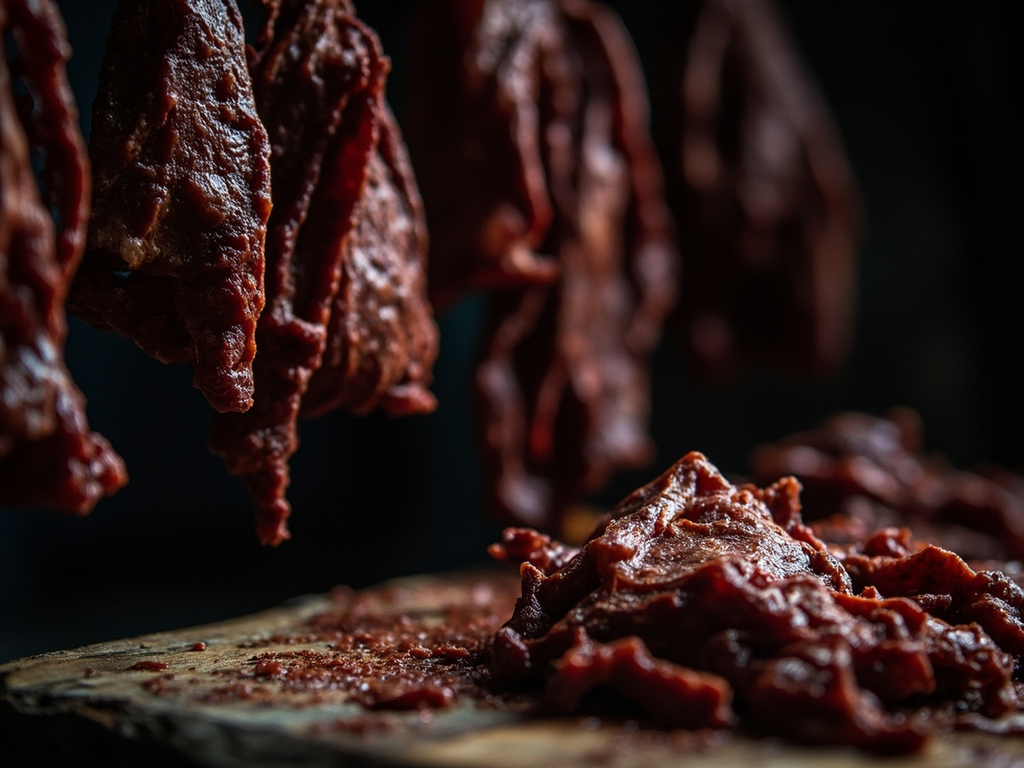
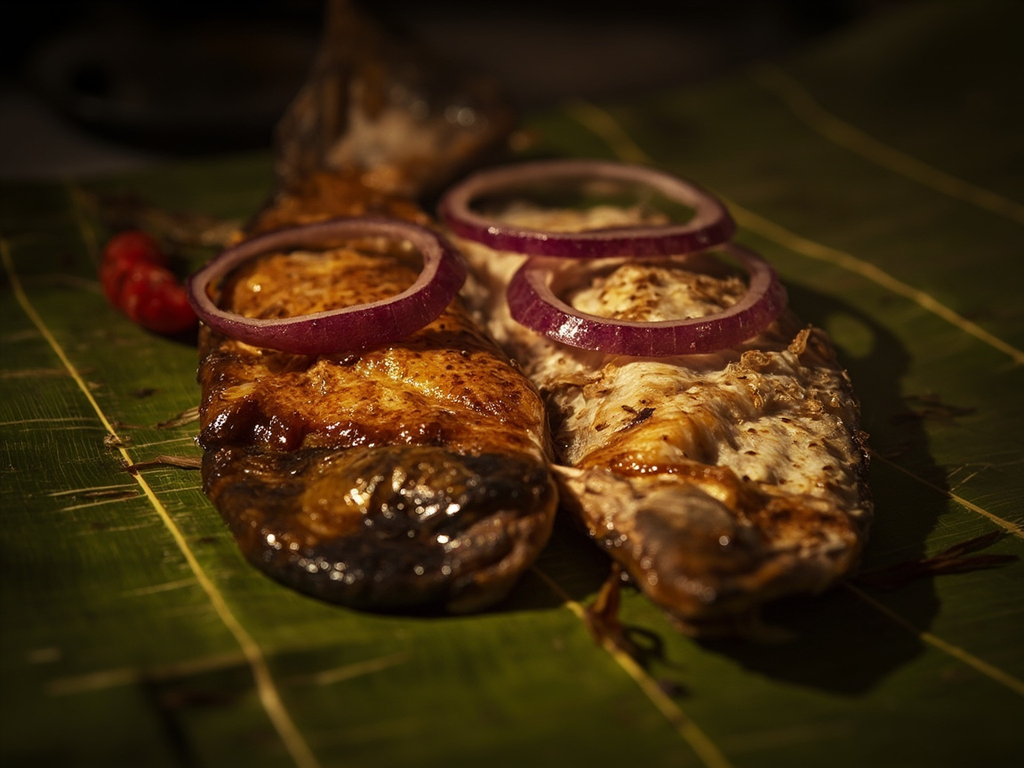
Fish lightly salted then slowly smoked over a wood fire until firm and amber. It is then flaked into a sauce, or eaten as is on the march. The ultimate preservation technique for hot, humid regions.
Voici comment l'on garde le poisson sous ce climat où tout se corrompt en une journée. On le pose sur une claie de bois vert, au-dessus d'un feu couvant, et on l'y laisse fumer jusqu'à ce qu'il prenne cette teinte d'ambre et cette fermeté du cuir. Ainsi traité, il m'a suivi des semaines durant dans la caisse, sans jamais tourner. J'en mâchais un morceau sur le sentier, entre deux relevés de plantes, et il rendait la marche moins longue. Le procédé, vous le voyez, n'a rien à envier à mes presses d'herbier : il s'agit en somme de dessécher pour conserver.
- •River or sea fish — according to catch (base)
- •Sea salt — to rub (salting / preservation)
- •Green wood for fire — — (smoking)
- •Banana leaves — a few (steaming and serving)
Smoked Fish Steamed in Leaves
Fish lightly salted then slowly smoked over a wood fire until firm and amber. It is then flaked into a sauce, or eaten as is on the march. The ultimate preservation technique for hot, humid regions.
Why this dish? The fish from the rivers and the Loango coast, smoked on a rack to withstand the humid heat, accompanied Büttner from stage to stage. Like his dried specimens under a press, it was a way of fixing the perishable so it would last the journey.
Voici comment l'on garde le poisson sous ce climat où tout se corrompt en une journée. On le pose sur une claie de bois vert, au-dessus d'un feu couvant, et on l'y laisse fumer jusqu'à ce qu'il prenne cette teinte d'ambre et cette fermeté du cuir. Ainsi traité, il m'a suivi des semaines durant dans la caisse, sans jamais tourner. J'en mâchais un morceau sur le sentier, entre deux relevés de plantes, et il rendait la marche moins longue. Le procédé, vous le voyez, n'a rien à envier à mes presses d'herbier : il s'agit en somme de dessécher pour conserver.
Ingredients (period version)
- River or sea fish — according to catch (base)
- Sea salt — to rub (salting / preservation)
- Green wood for fire — — (smoking)
- Banana leaves — a few (steaming and serving)
Ingredients
- Mackerel or sardines (whole, gutted) — 4 fish (base)
- Coarse salt — 3 tbsp (salting)
- Smoking chips (beech) — 1 handful (smoking)
- Red palm oil — 1 tbsp (brushing, signature)
- Onion and chili — 1 + to taste (final steaming)
- Banana leaves — 2 (or parchment paper) (steaming and serving)
Method
- Rub the fish with coarse salt and let drain for 1 h in the fridge; rinse and dry.
- Hot-smoke for 25 to 30 min (smoker, wok with chips and rack, or covered barbecue) until the flesh is firm and golden.
- Brush with a touch of red palm oil.
- To serve hot: place the smoked fish on a bed of onion and chili in a banana leaf, close it, and bake at 180°C for 10 min in a parcel.
- Enjoy with kwanga, or let cool and keep as a trail snack.
How it was made : Smoking-drying was the main preservation technique before refrigeration: it combines dehydration, light salting, and the antiseptic action of smoke. Fixed smoking racks were part of the furniture of every fishing village on the Loango coast.
The contemporary twist : Flaked onto a slice of toasted bread with a drizzle of palm oil, smoked fish becomes a smoky, briny appetizer toast.
Büttner · Charactorium