 flip
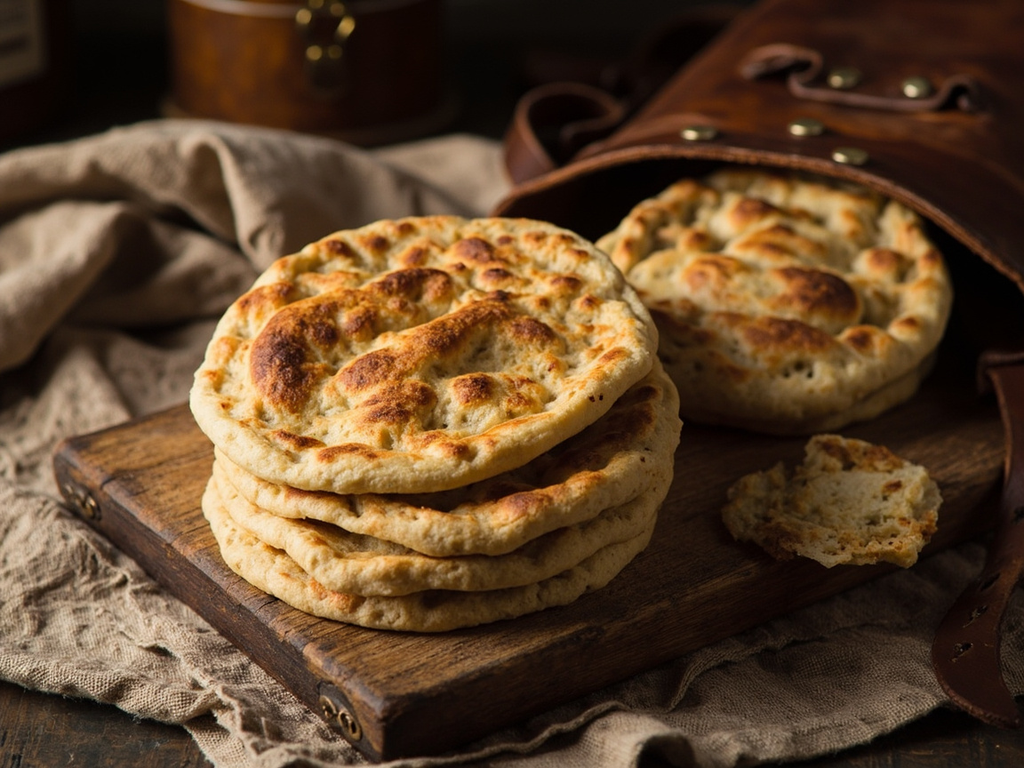
Bucellatum — Twice-Baked Marching Bread
Bucellatum — Twice-Baked Marching Bread
Why this dish? Bucellatum, bread baked twice to last for weeks, was the field ration carried in the legionary's pack. Caracalla, on perpetual march from Britain (Eboracum) to Mesopotamia, ate it with his soldiers to maintain his legend as the soldier-emperor.
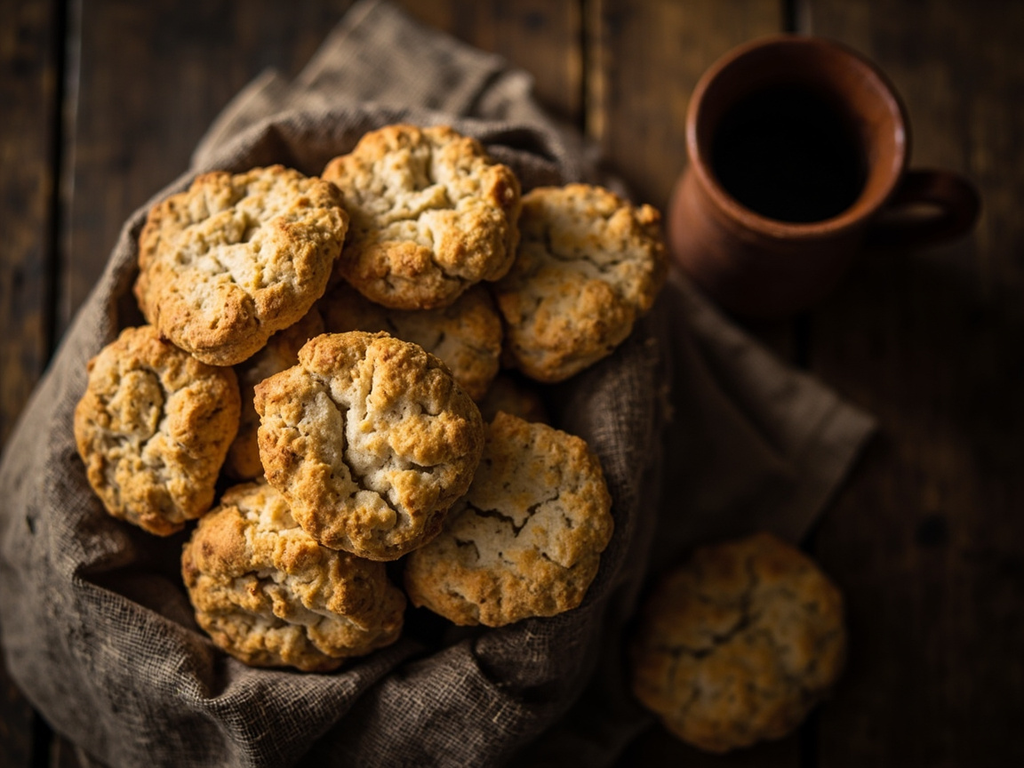
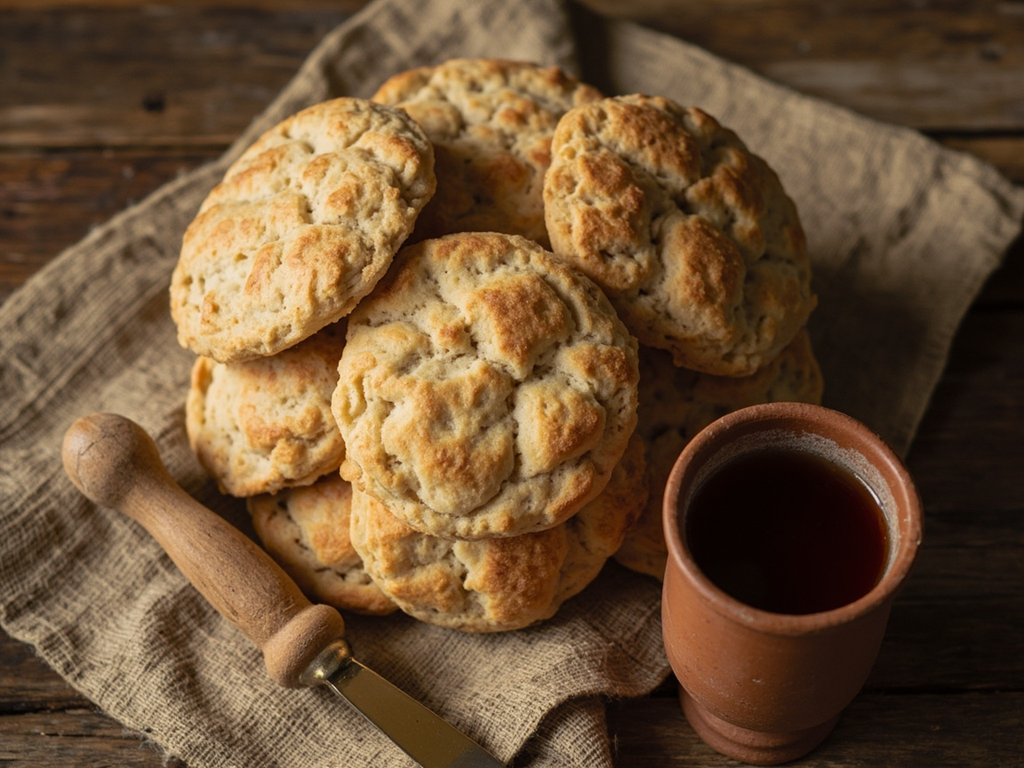
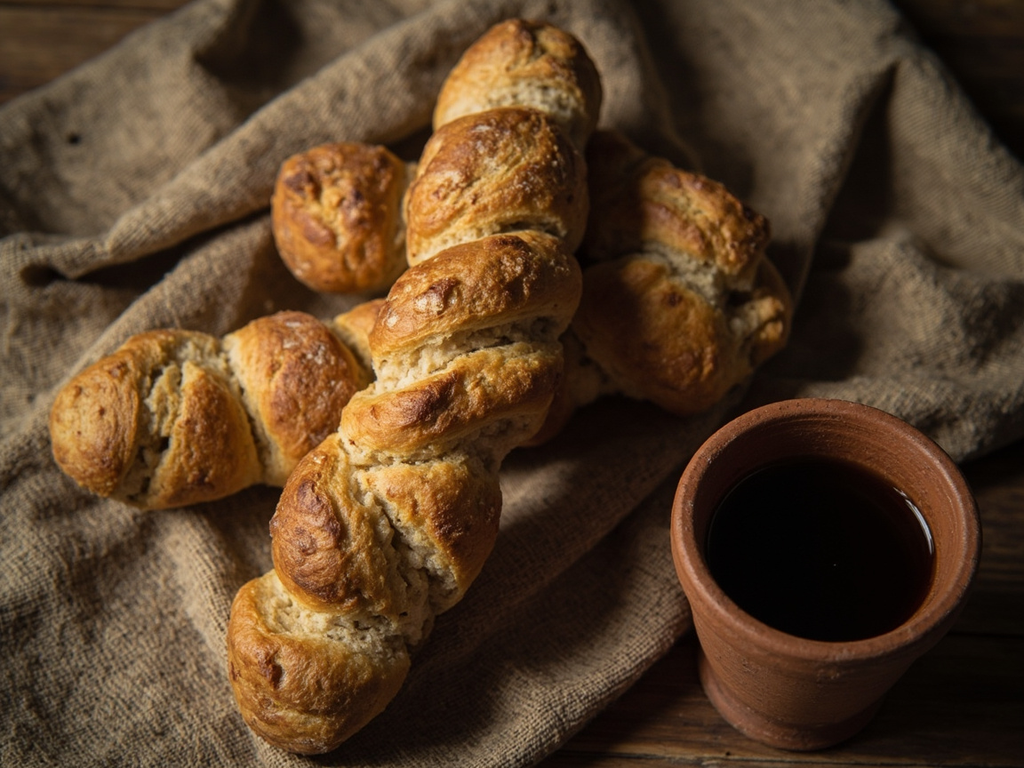
A dense wheat bread baked, dried, then rebaked until hard as stone—the ancestor of ship's biscuit—that kept for months and was softened in posca or soup.
You want to know how a soldier covers a thousand miles without faltering? In his pack he carries bucellatum, bread that is baked, sliced, and baked again until it rings under the finger like a roof tile. Hard? Indeed. You dip it in posca or broth, and it becomes a loaf again. I, the Augustus, have broken it under the rain of Eboracum and in the sands of Syria. The soft king's bread goes mouldy; the soldier's never does.
- •Wheat flour (with a little spelt/emmer) — one measure (base)
- •Sourdough starter — a piece (fermentation)
- •Salt — a pinch (flavor and preservation)
- •Water — as needed (hydration)
Bucellatum — Twice-Baked Marching Bread
A dense wheat bread baked, dried, then rebaked until hard as stone—the ancestor of ship's biscuit—that kept for months and was softened in posca or soup.
Why this dish? Bucellatum, bread baked twice to last for weeks, was the field ration carried in the legionary's pack. Caracalla, on perpetual march from Britain (Eboracum) to Mesopotamia, ate it with his soldiers to maintain his legend as the soldier-emperor.
You want to know how a soldier covers a thousand miles without faltering? In his pack he carries bucellatum, bread that is baked, sliced, and baked again until it rings under the finger like a roof tile. Hard? Indeed. You dip it in posca or broth, and it becomes a loaf again. I, the Augustus, have broken it under the rain of Eboracum and in the sands of Syria. The soft king's bread goes mouldy; the soldier's never does.
Ingredients (period version)
- Wheat flour (with a little spelt/emmer) — one measure (base)
- Sourdough starter — a piece (fermentation)
- Salt — a pinch (flavor and preservation)
- Water — as needed (hydration)
Ingredients
- Wheat flour T80 — 400 g (base)
- Spelt flour — 100 g (rusticity)
- Sourdough starter (or 5 g dry yeast) — 100 g (fermentation)
- Salt — 10 g (flavor)
- Warm water — 300 ml (hydration)
Method
- Knead the flours, starter, salt, and water into a firm dough; let rise 2–3 hours.
- Shape into small thick discs, let rise 1 hour.
- Bake at 220°C for about 25 minutes until nicely crusted.
- Slice the discs in half, lower the oven to 130°C, and dry the slices 40–60 minutes until hard and dry. Store away from moisture.
How it was made : Bucellatum (from buccella, “mouthful”) was a twice-baked bread intended to last on campaign. It was rehydrated in a hot liquid. It is the direct ancestor of ship's biscuit and military hardtack.
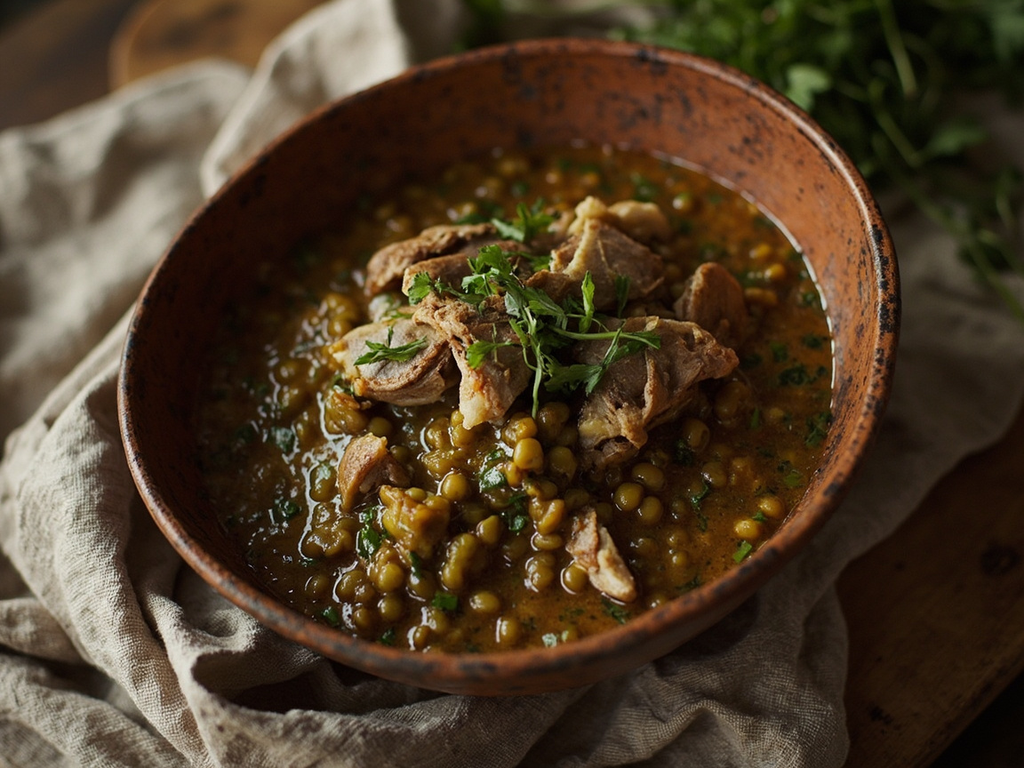
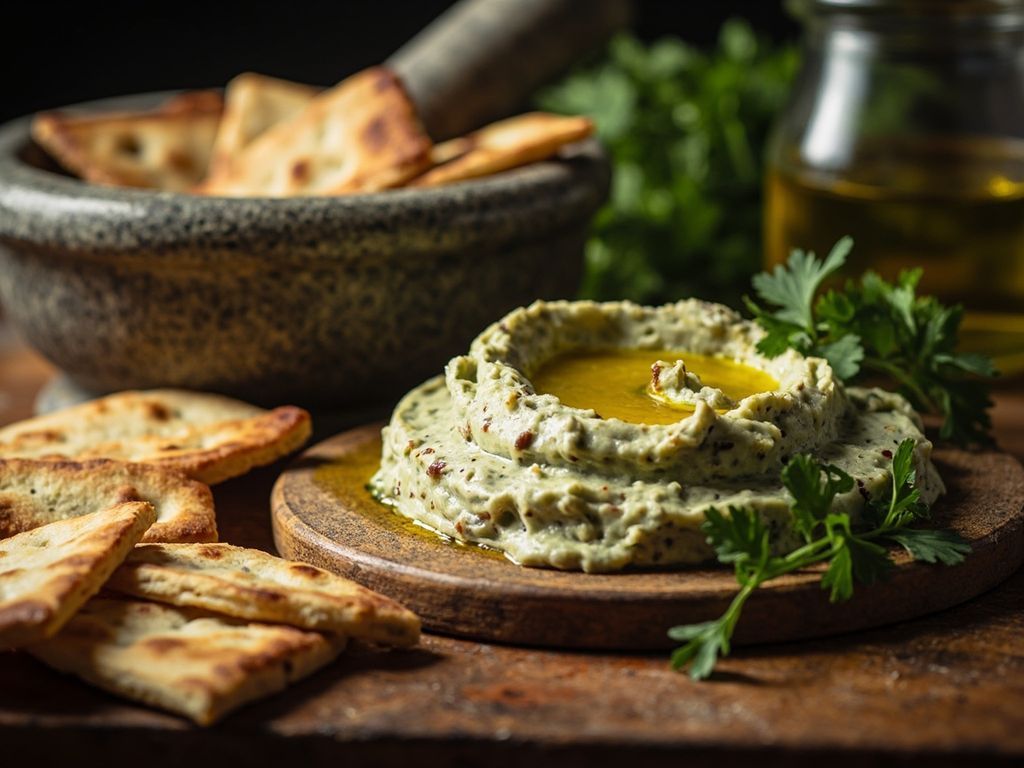
The contemporary twist : Serve as an ancient bruschetta: rehydrate for one minute in broth, then top with chickpea purée and a drizzle of garum.
Sources : Vegetius, De re militari (military rations) · Anthimus, De observatione ciborum (bucellatum)
Caracalla · Charactorium