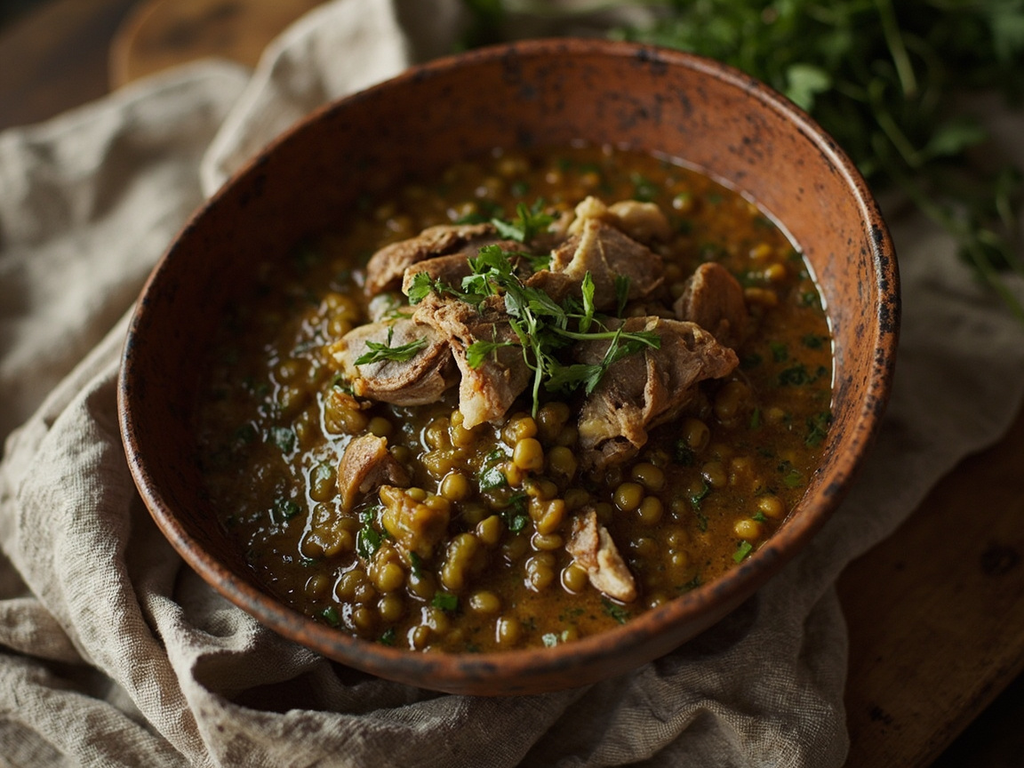
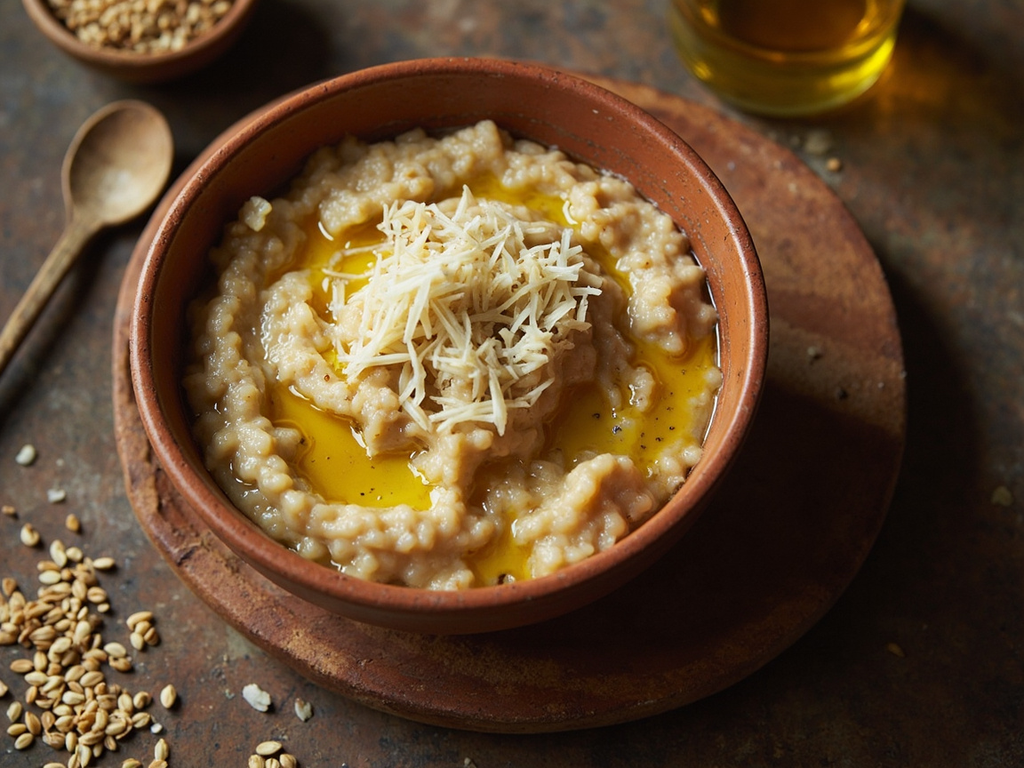
 flip
flipBucellatum & Moretum — The Legionary's Bread and Paste
Bucellatum & Moretum — The Legionary's Bread and Paste
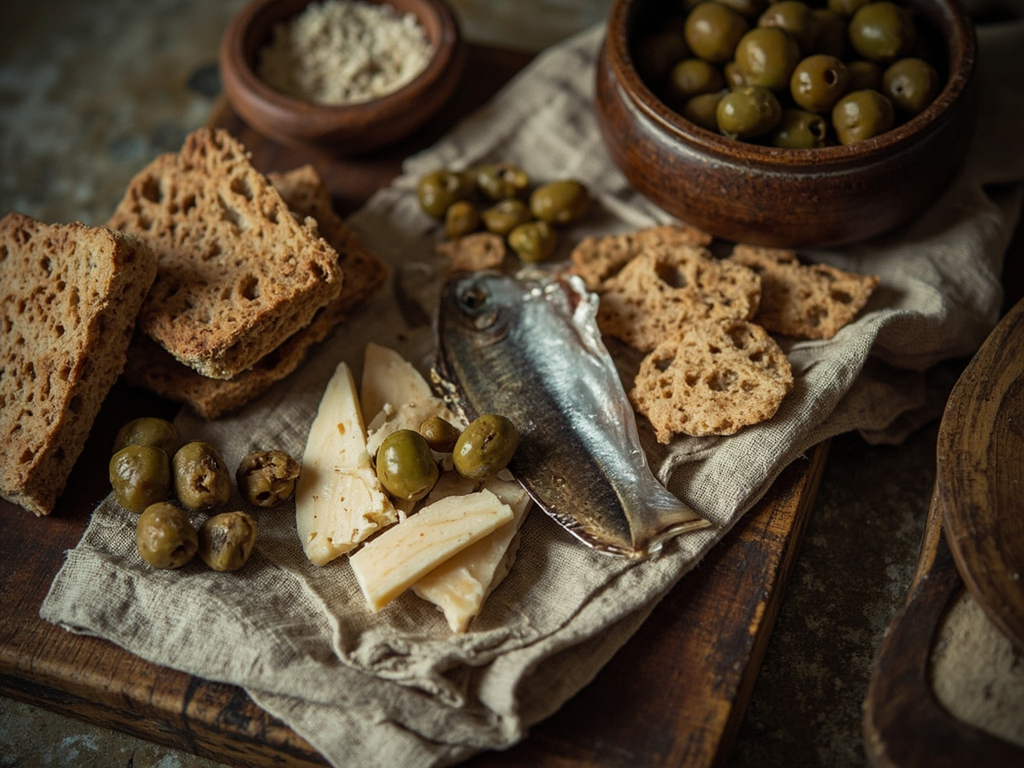
Why this dish? During the eight years of the Gallic Wars, Caesar's legions advanced carrying their own provisions: bucellatum, a twice-baked campaign biscuit that kept for weeks, accompanied by moretum, a paste of garlic, cheese, and herbs pounded in a mortar. This was the fuel of conquest.
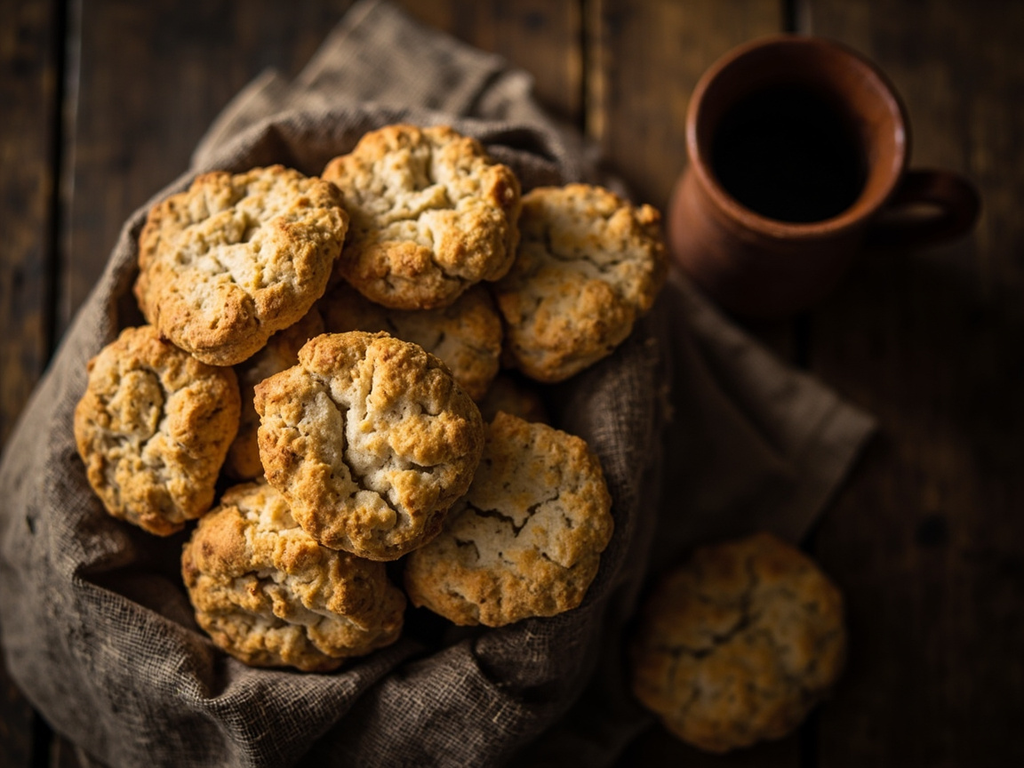
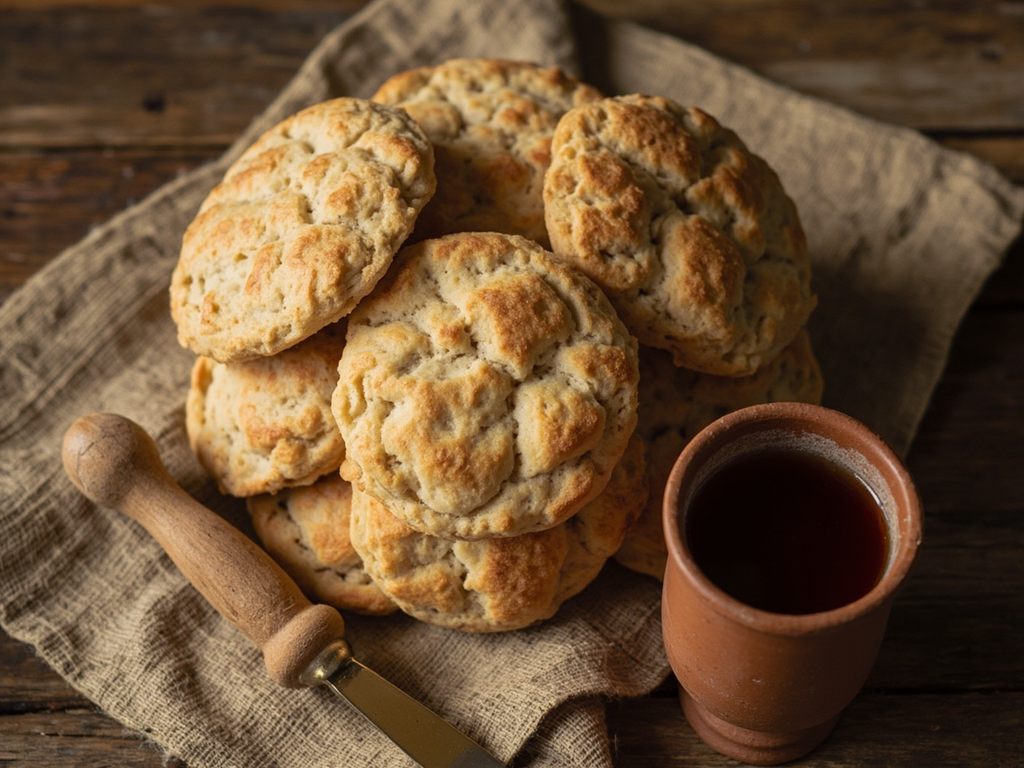
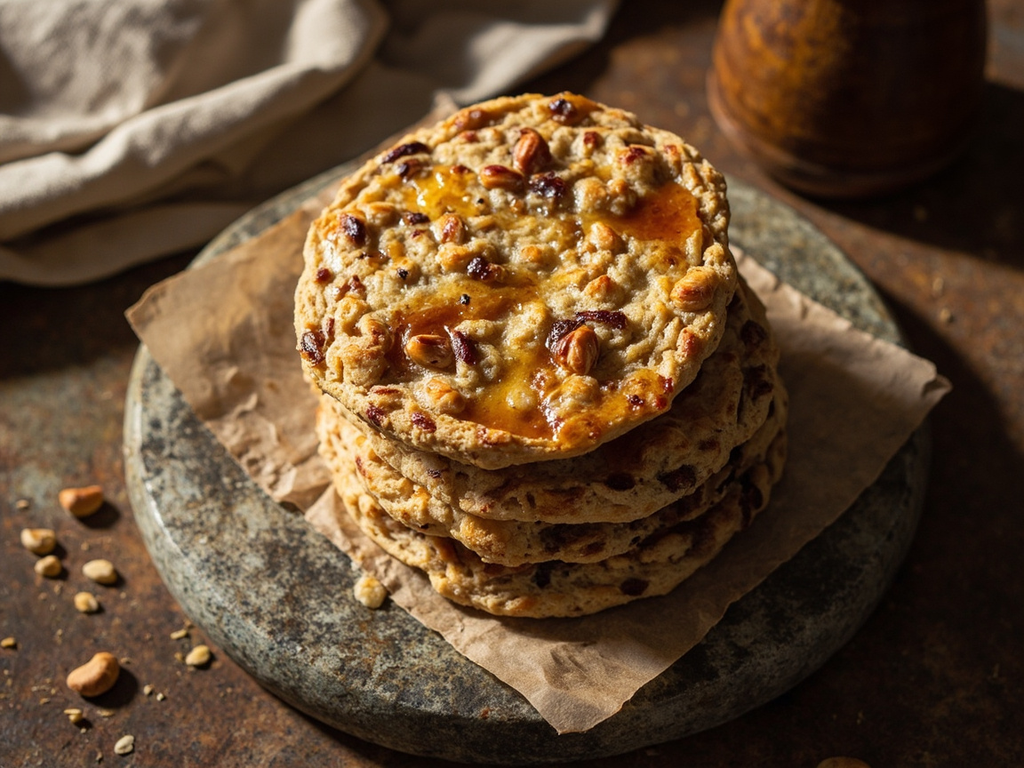
A flat bread baked twice, hard and dry to withstand travel, softened in water or posca, spread with a garlicky paste of cheese, fresh herbs, and oil. The complete mess tin of a Roman soldier on the march.
On the road to Alesia, one does not stop to roast a boar: the legionary carries his grain and his biscuit on his shoulder, and he marches. Bake your bread twice, so it becomes hard as a shield — it will last until the snows. Pound garlic, cheese, and herbs in the mortar, moisten with oil, and spread: this will make even the toughest crust edible. I have seen my men endure entire sieges on this, without a complaint.
- •Far or wheat flour — according to ration (bread)
- •Water and salt — for the dough (base)
- •Garlic — several cloves (moretum)
- •Hard sheep cheese — a piece (moretum)
- •Fresh herbs (coriander, lovage, a touch of rue) — a bunch (moretum)
- •Olive oil and a little vinegar — a splash (binding)
Bucellatum & Moretum — The Legionary's Bread and Paste
A flat bread baked twice, hard and dry to withstand travel, softened in water or posca, spread with a garlicky paste of cheese, fresh herbs, and oil. The complete mess tin of a Roman soldier on the march.
Why this dish? During the eight years of the Gallic Wars, Caesar's legions advanced carrying their own provisions: bucellatum, a twice-baked campaign biscuit that kept for weeks, accompanied by moretum, a paste of garlic, cheese, and herbs pounded in a mortar. This was the fuel of conquest.
On the road to Alesia, one does not stop to roast a boar: the legionary carries his grain and his biscuit on his shoulder, and he marches. Bake your bread twice, so it becomes hard as a shield — it will last until the snows. Pound garlic, cheese, and herbs in the mortar, moisten with oil, and spread: this will make even the toughest crust edible. I have seen my men endure entire sieges on this, without a complaint.
Ingredients (period version)
- Far or wheat flour — according to ration (bread)
- Water and salt — for the dough (base)
- Garlic — several cloves (moretum)
- Hard sheep cheese — a piece (moretum)
- Fresh herbs (coriander, lovage, a touch of rue) — a bunch (moretum)
- Olive oil and a little vinegar — a splash (binding)
Ingredients
- Wheat flour (or half spelt) — 300 g (bread)
- Warm water — 150 ml (base)
- Salt — 1 tsp (base)
- Garlic — 2 cloves (moretum)
- Pecorino or aged sheep cheese — 100 g (moretum)
- Fresh coriander + celery stalks — 1 small bunch (moretum)
- Olive oil — 3 tbsp (binding)
- Wine vinegar — 1 tsp (binding)
Method
- Knead flour, water, and salt into a firm dough; shape into flat rounds.
- Bake at 200°C for 15 minutes, then reduce to 130°C and dry for 30–40 minutes until hard (the double baking, 'bis coctum').
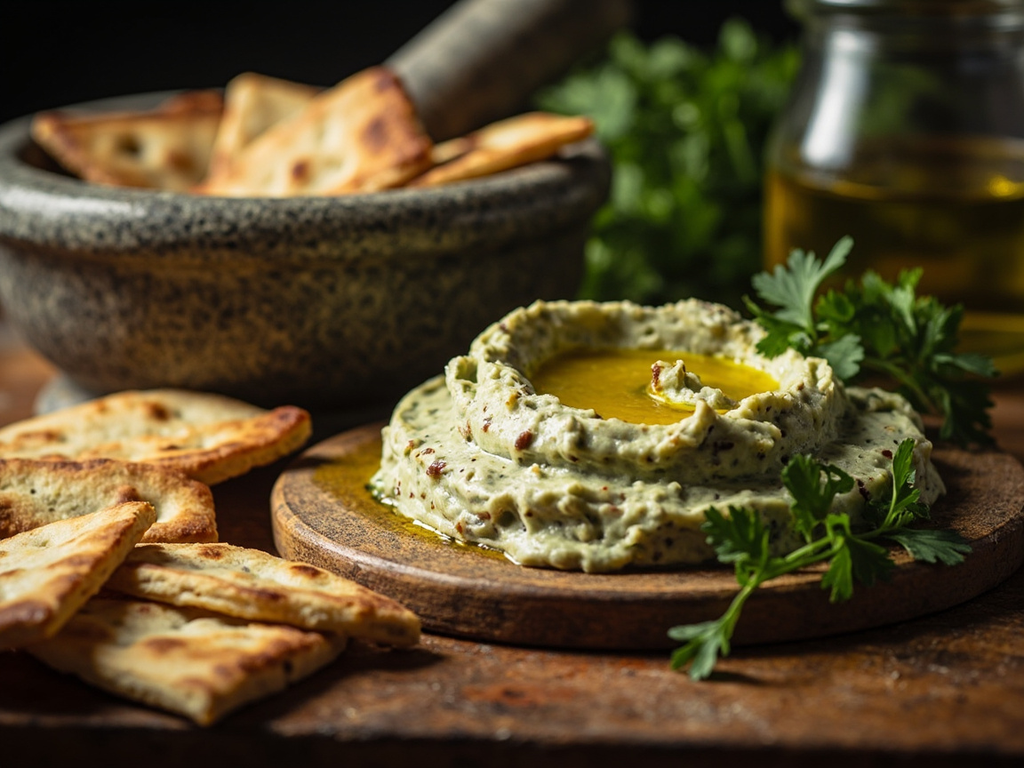
- For the moretum: pound garlic in a mortar with cheese, then add chopped herbs.
- Work in oil and vinegar to form a lumpy paste.
- At table, soften the biscuit with a little water or posca, and spread generously with moretum.
How it was made : Bucellatum ('little mouthful') was the dry ration of armies, ancestor of the ship's biscuit. Moretum is known from a pseudo-Virgilian poem describing a farmer pounding garlic, cheese, and herbs in a mortar at dawn: a poor man's recipe that became an emblem of subsistence cooking.
The contemporary twist : Served as an appetizer board: homemade spelt crackers and moretum shaped into a quenelle like 'Roman hummus' — the ancestor of the spreadable snack.
Sources : Appendix Vergiliana, Moretum · Vegetius, De re militari (military rations)
Julius Caesar · Charactorium