 flip
flipMaccheroni al ragù napoletano (macaroni Neapolitan-style)
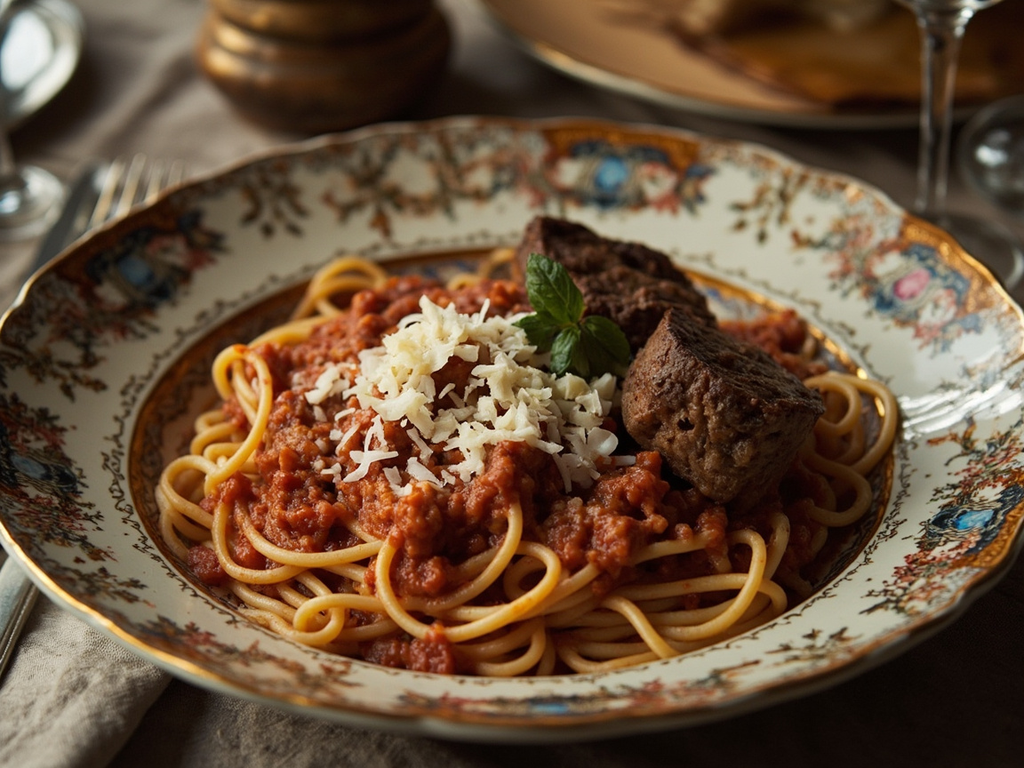
Maccheroni al ragù napoletano (macaroni Neapolitan-style)
Why this dish? To reconquer Naples was to reconquer the capital of maccherone: at the end of the 18th century, Neapolitans were nicknamed 'mangiamaccheroni'. In the noble houses that opened their doors to the victorious cardinal, ragù simmered for hours was the prestige dish par excellence — the southern table in all its richness.
Long pasta coated in a tomato sauce slowly simmered with a large piece of meat, flavored with onion and wine. The emblematic dish of Naples, festive and generous, crowned with grated pecorino.
When the gates of Naples were finally opened to me, they set before me those maccheroni that the whole city adores — and I assure you that no siege is waged on an empty stomach. The sauce had been simmering since dawn by the fire, the meat had become tender, and the fragrance filled the entire palace. Once they were eaten with the fingers, in the street as at court; I prefer them served with a bit more decorum, and plenty of cheese. This is a dish that reconciles prince and people — is that not what a restored kingdom should seek?
- •Maccheroni (long Naples pasta) — a good portion per guest (base)
- •Beef in a large piece — a fine cut (heart of the ragù)
- •Tomatoes (preserved or fresh in season) — in quantity (sauce)
- •Onion — two (melting aromatic)
- •Lard or olive oil — as needed (cooking)
- •Red wine from the Mezzogiorno — a glass (deglazing, depth)
- •Grated pecorino — to taste (finishing)
Maccheroni al ragù napoletano (macaroni Neapolitan-style)
Long pasta coated in a tomato sauce slowly simmered with a large piece of meat, flavored with onion and wine. The emblematic dish of Naples, festive and generous, crowned with grated pecorino.
Why this dish? To reconquer Naples was to reconquer the capital of maccherone: at the end of the 18th century, Neapolitans were nicknamed 'mangiamaccheroni'. In the noble houses that opened their doors to the victorious cardinal, ragù simmered for hours was the prestige dish par excellence — the southern table in all its richness.
When the gates of Naples were finally opened to me, they set before me those maccheroni that the whole city adores — and I assure you that no siege is waged on an empty stomach. The sauce had been simmering since dawn by the fire, the meat had become tender, and the fragrance filled the entire palace. Once they were eaten with the fingers, in the street as at court; I prefer them served with a bit more decorum, and plenty of cheese. This is a dish that reconciles prince and people — is that not what a restored kingdom should seek?
Ingredients (period version)
- Maccheroni (long Naples pasta) — a good portion per guest (base)
- Beef in a large piece — a fine cut (heart of the ragù)
- Tomatoes (preserved or fresh in season) — in quantity (sauce)
- Onion — two (melting aromatic)
- Lard or olive oil — as needed (cooking)
- Red wine from the Mezzogiorno — a glass (deglazing, depth)
- Grated pecorino — to taste (finishing)
Ingredients
- Long pasta (ziti, mezzani, or bucatini) — 400 g (base)
- Beef for braising (chuck) — 500 g (heart of the ragù)
- Passata and peeled tomatoes — 800 g (sauce)
- Onions — 2, sliced (melting aromatic)
- Olive oil — 3 tbsp (cooking)
- Red wine — 150 ml (deglazing, depth)
- Grated pecorino (or parmesan) — 80 g (finishing)
- Salt, pepper — to taste (seasoning)
Method
- Sear the beef piece on all sides in hot oil, then set aside.
- Gently sweat the onions in the same pot until golden.
- Deglaze with red wine, let reduce, return the meat, then add the tomatoes.
- Cover and simmer on very low heat for 2 to 3 hours, stirring occasionally; season with salt and pepper.
- Remove the meat (served separately or shredded into the sauce); cook the pasta al dente.
- Generously coat the maccheroni with sauce, sprinkle with grated pecorino, and serve immediately.
How it was made : The marriage of pasta and tomato became established in Naples at the turn of the 18th–19th centuries, the tomato (from America) having been acclimated there during the 17th. Ragù napoletano — meat simmered for hours in the sauce — was the Sunday and holiday dish. In Ruffo's time, maccheroni were sold cooked in the street and eaten by hand.
The contemporary twist : Serve the shredded meat as a second course, as per the Neapolitan tradition of 'ragù in two stages': sauce on the pasta, then the meat alone, a sharing-style dish.
Cardinal Ruffo · Charactorium