 flip
flipRoast Venison with Cameline Sauce
Roast Venison with Cameline Sauce
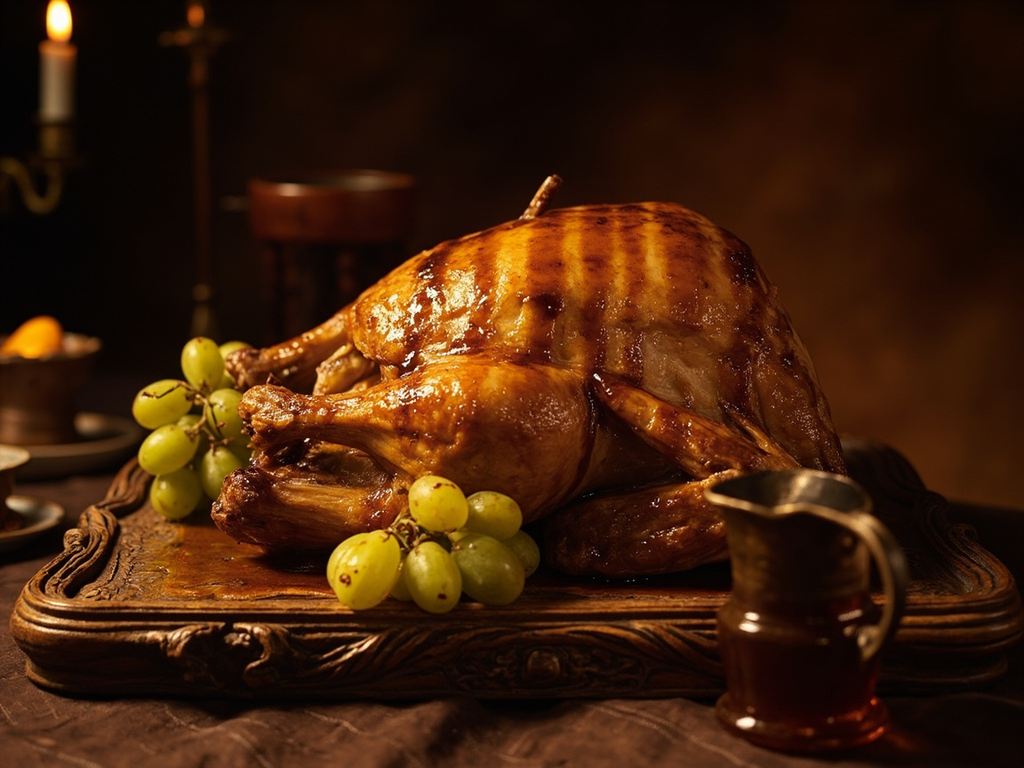
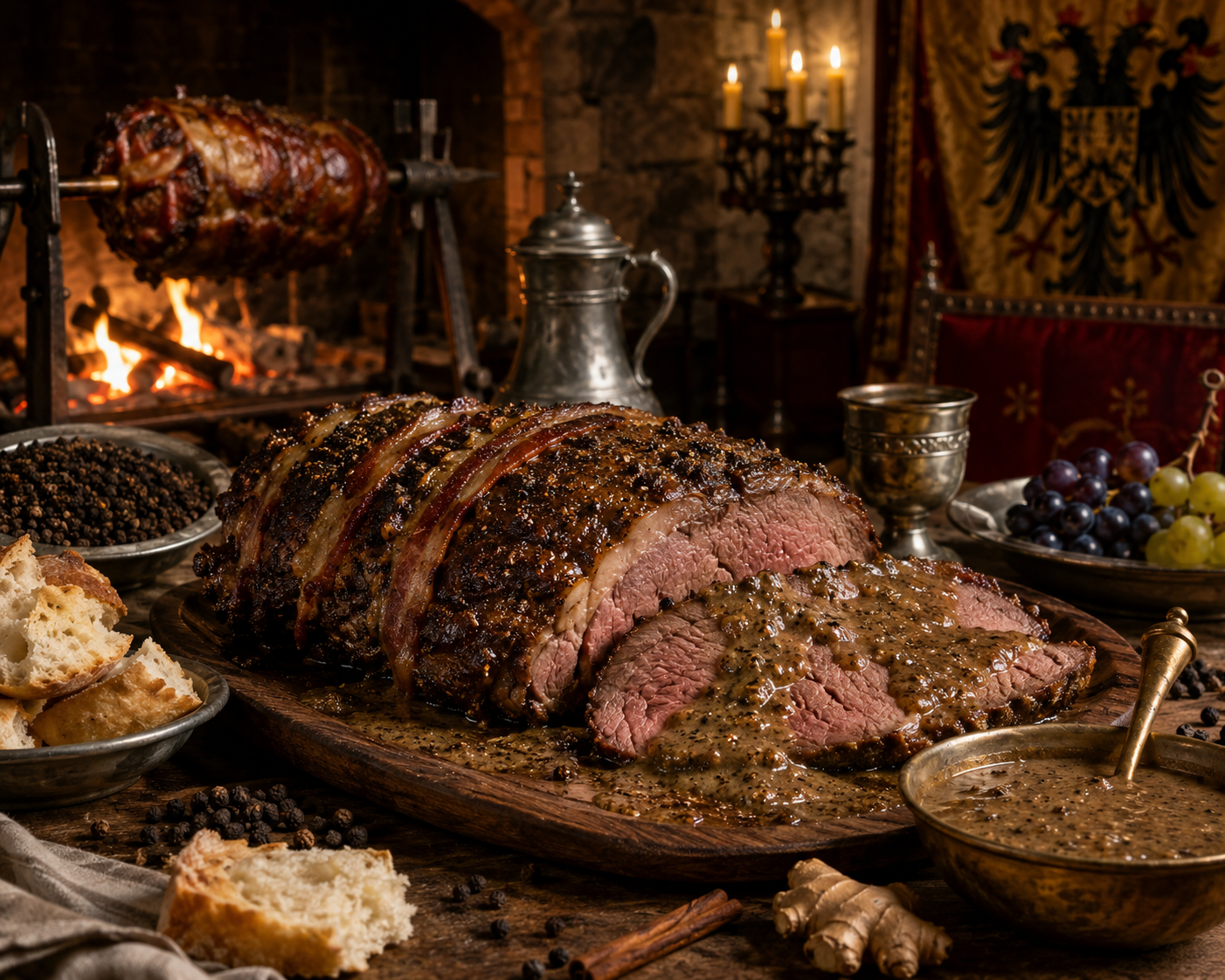
Why this dish? Like any great sword lord, Charles d'Amboise hunted game and gave banquets—at the Castello Sforzesco in Milan and at Chaumont-sur-Loire. Roast venison napped with a spiced sauce in the French manner was the dish of honor at these tables.
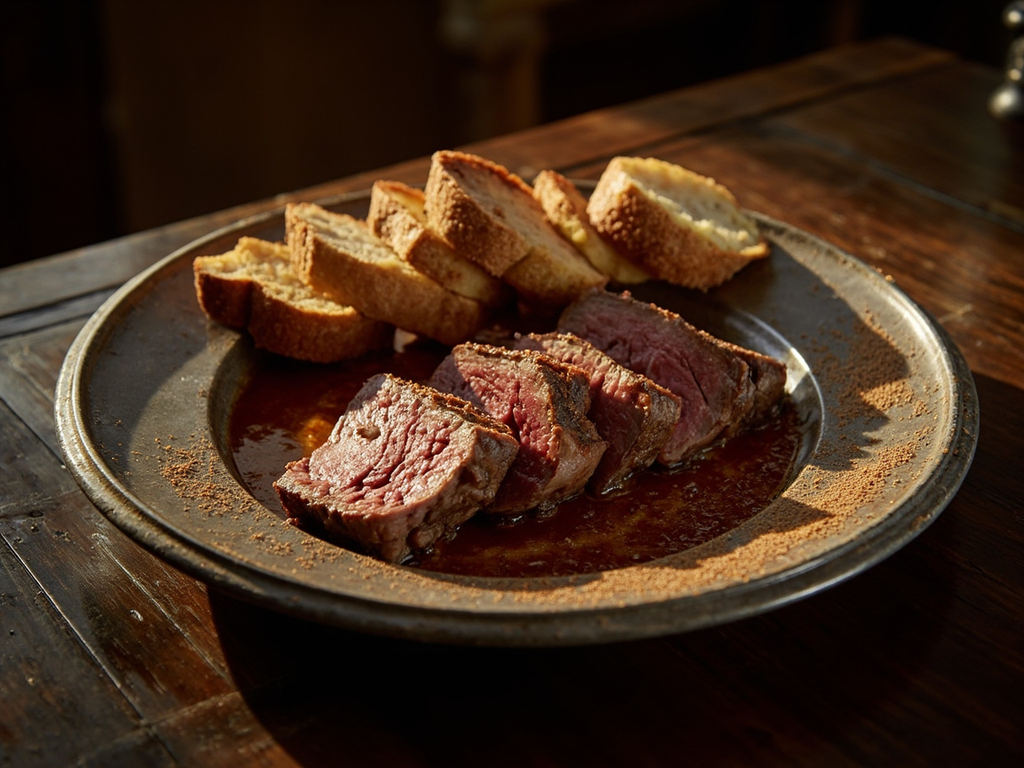
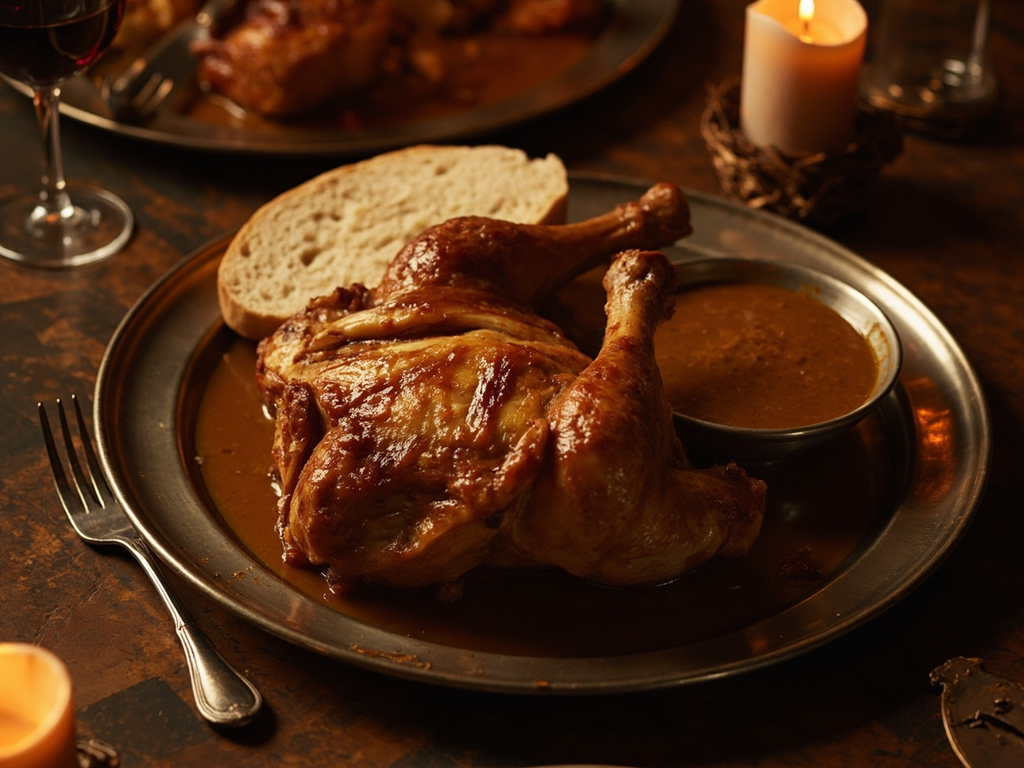
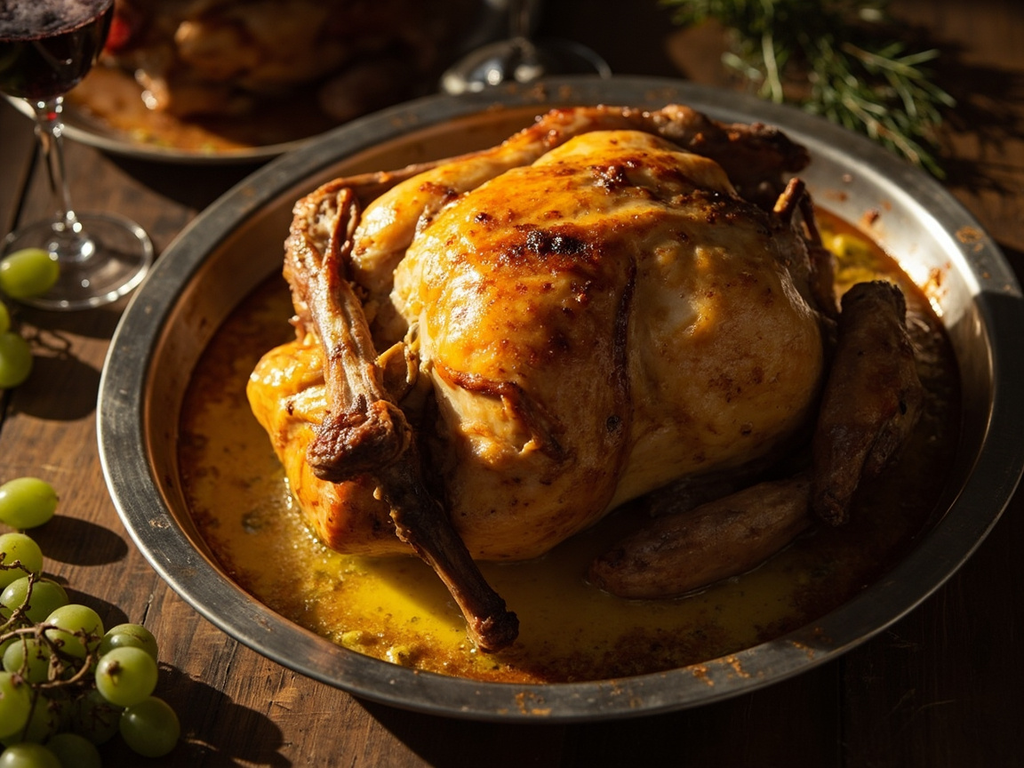
A piece of game (venison, doe) roasted and served with cameline sauce: a cold, brownish-red sauce thickened with toasted bread, flavored with cinnamon, ginger, and vinegar. Tangy and powerfully spiced, it was the noble accompaniment for roasts.
When I keep open table at my castle of Chaumont or in the great hall of the Sforza, there is no feast without a fine roast of venison from my hunts. It is served with cameline, a sauce that every French gentleman knows: bread toasted on the embers, soaked in vinegar, pounded in a mortar with cinnamon and ginger until it runs brown and smooth. Beware of cooking it—cameline is served cold, and it is its sour-spicy edge that wakes the flesh of the game. My Lombard guests marveled at it as a French fashion.
- •Piece of venison (roe deer) — a haunch (roast)
- •Bread toasted on embers — a few slices (sauce thickener)
- •Wine vinegar — as needed (acidity)
- •Cinnamon — good amount (signature spice)
- •Ginger — a pinch (spice)
- •Grains of paradise and cloves — a touch (spices)
Roast Venison with Cameline Sauce
A piece of game (venison, doe) roasted and served with cameline sauce: a cold, brownish-red sauce thickened with toasted bread, flavored with cinnamon, ginger, and vinegar. Tangy and powerfully spiced, it was the noble accompaniment for roasts.
Why this dish? Like any great sword lord, Charles d'Amboise hunted game and gave banquets—at the Castello Sforzesco in Milan and at Chaumont-sur-Loire. Roast venison napped with a spiced sauce in the French manner was the dish of honor at these tables.
When I keep open table at my castle of Chaumont or in the great hall of the Sforza, there is no feast without a fine roast of venison from my hunts. It is served with cameline, a sauce that every French gentleman knows: bread toasted on the embers, soaked in vinegar, pounded in a mortar with cinnamon and ginger until it runs brown and smooth. Beware of cooking it—cameline is served cold, and it is its sour-spicy edge that wakes the flesh of the game. My Lombard guests marveled at it as a French fashion.
Ingredients (period version)
- Piece of venison (roe deer) — a haunch (roast)
- Bread toasted on embers — a few slices (sauce thickener)
- Wine vinegar — as needed (acidity)
- Cinnamon — good amount (signature spice)
- Ginger — a pinch (spice)
- Grains of paradise and cloves — a touch (spices)
Ingredients
- Roast venison or doe — 1 kg (roast)
- Grilled country bread — 2 slices (thickener)
- Red wine vinegar — 80 ml (acidity)
- Ground cinnamon — 1 tsp (signature spice)
- Ground ginger — 1/2 tsp (spice)
- Ground cloves + pepper — 1 pinch each (spices)
- Broth or water — 100 ml (to loosen sauce)
- Salt — to taste (seasoning)
Method
- Salt the venison roast and sear on all sides, then roast in the oven (about 20 min at 200°C for pink meat). Let rest.
- For the cameline: grill the bread, then soak it in vinegar mixed with a little broth.
- Blend the soaked bread with cinnamon, ginger, cloves, pepper, and salt until smooth and brown.
- Adjust acidity and spice: the cameline should be bold and lively. Serve cold or at room temperature.
- Slice the venison and nap with sauce, or serve sauce on the side.
How it was made : Cameline sauce appears in *Le Viandier* by Taillevent and *Le Ménagier de Paris*: grilled bread, vinegar, and spices (cinnamon dominating—hence the name, perhaps). It was served cold, without cooking, to accompany roasted meats and fish. Medieval and Renaissance sauces were thickened with bread, not flour or butter as later.
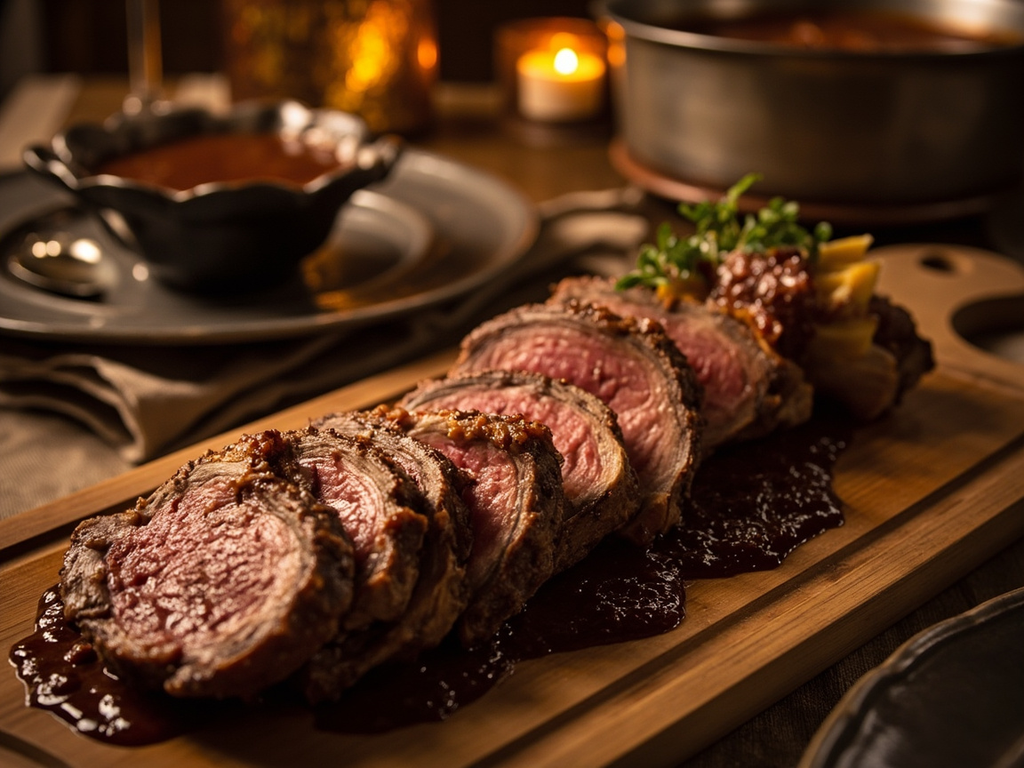
The contemporary twist : Arrange the venison in thin slices in a fan, drizzle with cameline sauce using a spoon, and scatter a few shards of grilled bread for crunch—a 'deconstructed cameline'.
Sources : Le Viandier de Taillevent (14th-15th c.) · Le Ménagier de Paris (c. 1393)
Charles d'Amboise · Charactorium