 flip
flipRoast venison with spiced *savore* and *agresto*
Roast venison with spiced *savore* and *agresto*
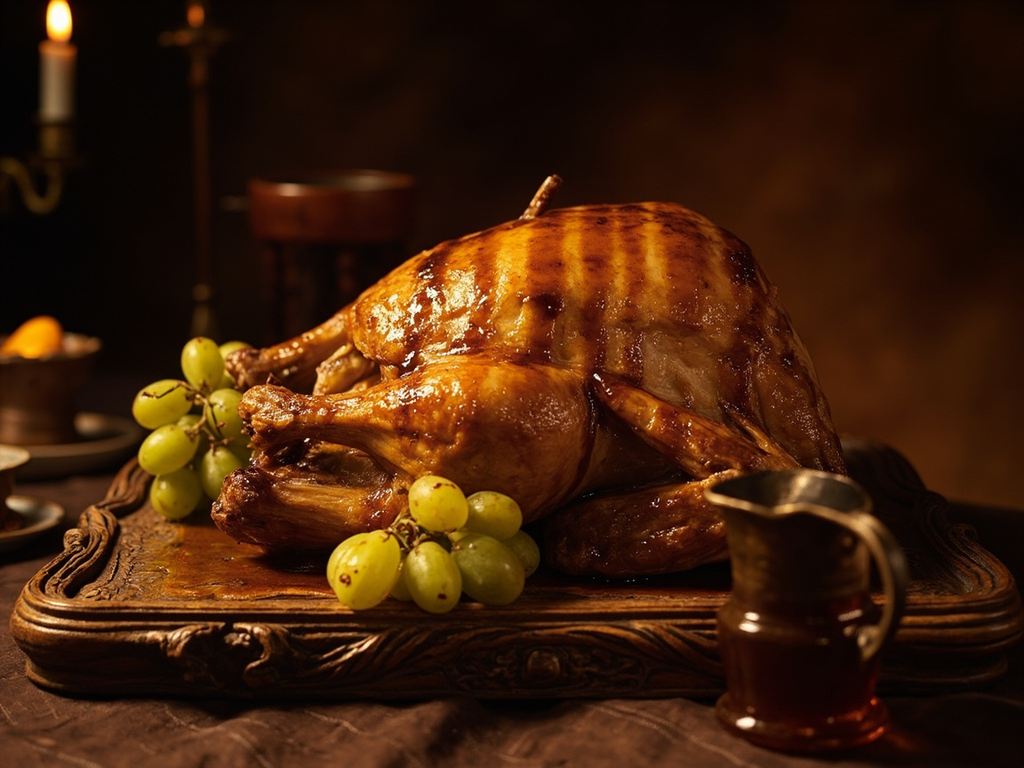
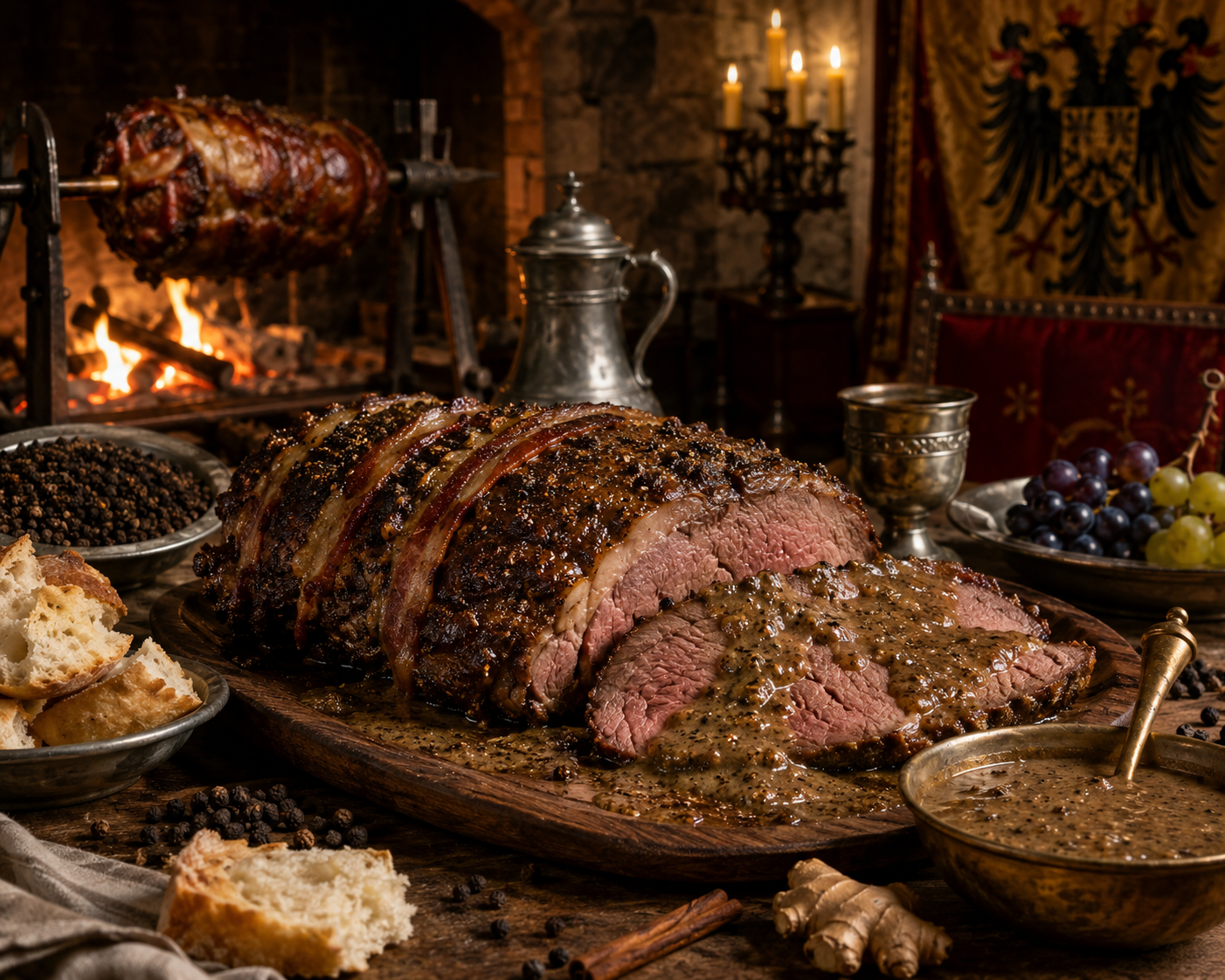
Why this dish? The table of Urbino was supplied with game hunted in the Apennine hills. For a banquet at the court of Duke Guidobaldo da Montefeltro, which Castiglione made the setting of his *Book of the Courtier*, a piece of venison coated in a spiced and sour sauce held pride of place in the hot service.
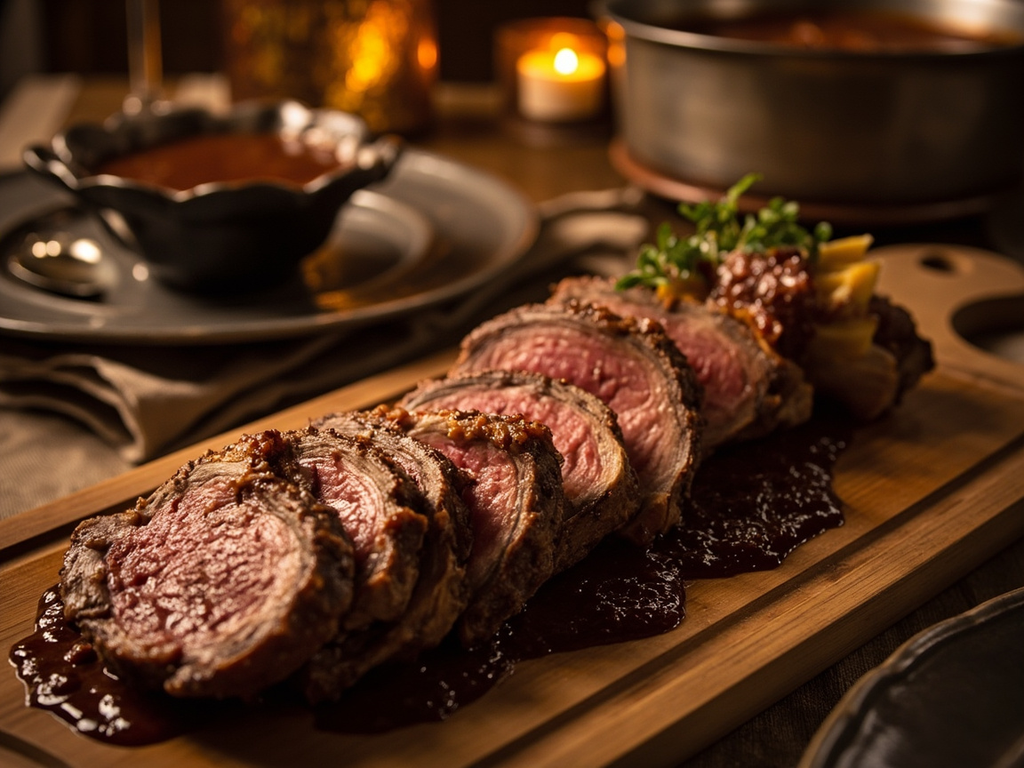
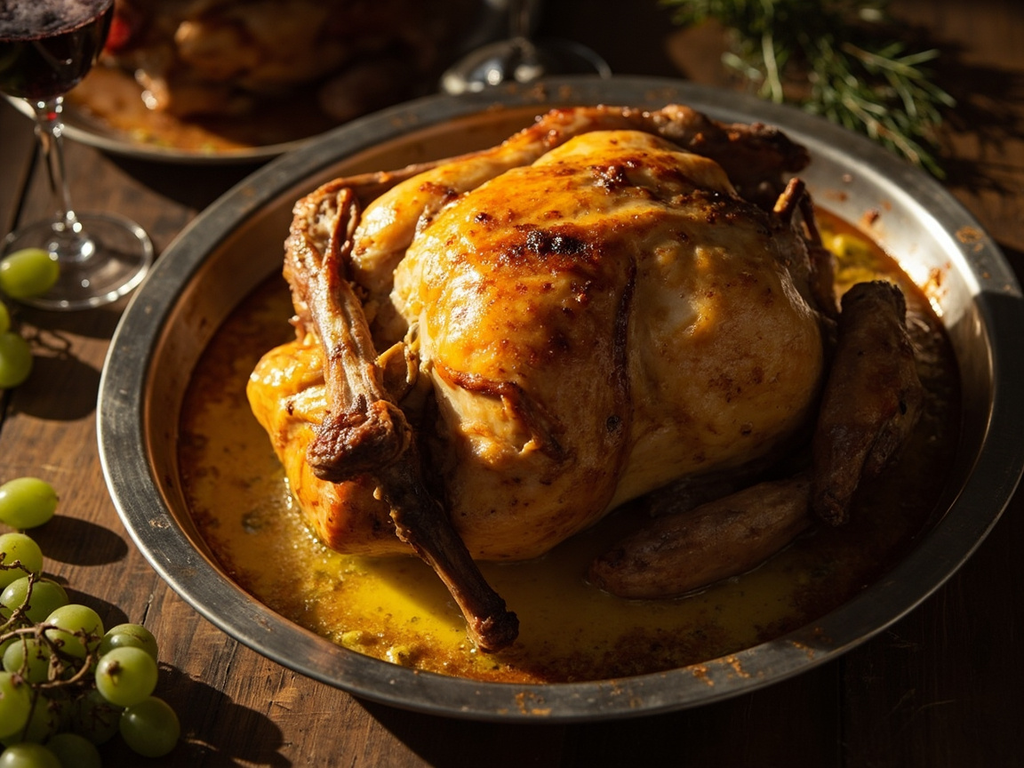
A shoulder or haunch of venison roasted and served with a *savore* — the characteristic sauce of Italian cuisine of the time: pounded toasted bread, wine, *agresto* (verjuice from unripe grapes), cinnamon, ginger, and cloves. The acidity cuts through the fat of the game, the spices signal the rank of the household.
Pray approach the sideboard and behold this venison drawn from the woods of Urbino. At a prince's table, mere meat does not suffice: there must be grace — what I call *sprezzatura*, the art of seeming effortless. My cook coats the venison with a *savore* where the *agresto* pricks the tongue and the cinnamon speaks of distant lands; he also dusts it with a little sugar, for mingling sweet with savory is a mark of refinement. Eat without haste, and let conversation be as worthy as the dish.
- •Haunch of venison — one piece for the company (centerpiece roast)
- •Lard — a few strips (for larding, to prevent dryness)
- •Agresto (verjuice from unripe grapes) — a good cupful (acidity)
- •Toasted bread crumbs — a handful (thickener for the sauce)
- •Cinnamon, ginger, cloves — to taste (prestige spices)
- •Red wine — a glass (to moisten the sauce)
- •Sugar — a pinch (sweet-savory roundness)
Roast venison with spiced *savore* and *agresto*
A shoulder or haunch of venison roasted and served with a *savore* — the characteristic sauce of Italian cuisine of the time: pounded toasted bread, wine, *agresto* (verjuice from unripe grapes), cinnamon, ginger, and cloves. The acidity cuts through the fat of the game, the spices signal the rank of the household.
Why this dish? The table of Urbino was supplied with game hunted in the Apennine hills. For a banquet at the court of Duke Guidobaldo da Montefeltro, which Castiglione made the setting of his *Book of the Courtier*, a piece of venison coated in a spiced and sour sauce held pride of place in the hot service.
Pray approach the sideboard and behold this venison drawn from the woods of Urbino. At a prince's table, mere meat does not suffice: there must be grace — what I call *sprezzatura*, the art of seeming effortless. My cook coats the venison with a *savore* where the *agresto* pricks the tongue and the cinnamon speaks of distant lands; he also dusts it with a little sugar, for mingling sweet with savory is a mark of refinement. Eat without haste, and let conversation be as worthy as the dish.
Ingredients (period version)
- Haunch of venison — one piece for the company (centerpiece roast)
- Lard — a few strips (for larding, to prevent dryness)
- Agresto (verjuice from unripe grapes) — a good cupful (acidity)
- Toasted bread crumbs — a handful (thickener for the sauce)
- Cinnamon, ginger, cloves — to taste (prestige spices)
- Red wine — a glass (to moisten the sauce)
- Sugar — a pinch (sweet-savory roundness)
Ingredients
- Leg or shoulder of venison (or doe) — 1.2 kg (centerpiece roast)
- Smoked bacon in thin slices — 100 g (for larding and barding)
- Verjuice (or unripe grape juice, or half wine vinegar half water) — 150 ml (acidity)
- Toasted country bread crumbs — 40 g (thickener)
- Cinnamon — 1 tsp (spice)
- Ground ginger — 1/2 tsp (spice)
- Ground cloves — 2 pinches (spice)
- Full-bodied red wine — 150 ml (sauce)
- Sugar — 1 tsp (balance)
- Salt — to taste (seasoning)
Method
- Lard the venison with thin strips of bacon, salt it, bard it, and let it come to room temperature for 30 minutes.
- Sear it on all sides in a Dutch oven, then roast at 180°C, basting regularly (about 20 minutes per 500 g for medium-rare).
- Meanwhile, soak the toasted bread crumbs in the verjuice and wine.
- Blend or pound the soaked crumbs with the spices and sugar to obtain a smooth *savore*; simmer for 5 minutes over low heat, season with salt.
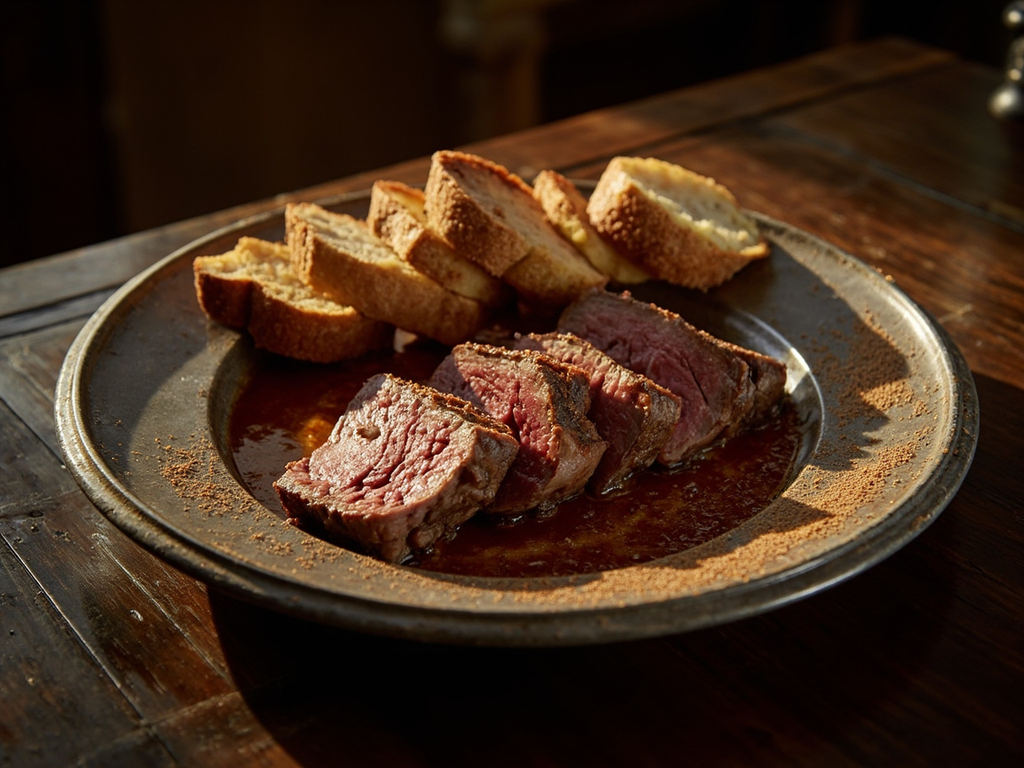
- Let the roast rest for 10 minutes, slice it, coat with a ribbon of *savore*, and serve the rest in a sauceboat.
- Serve hot as the centerpiece, accompanied by white bread.
How it was made : Maestro Martino and, after him, Bartolomeo Platina describe these bread-thickened *savori*, sharpened with *agresto* or verjuice and heavily spiced — sugar sprinkled on the roast was a common refinement. Game, reserved for nobles who alone had hunting rights, was the aristocratic meat par excellence.
The contemporary twist : Drizzle the *savore* in a streak under the slices rather than drowning the meat, and scatter a few fresh verjuice grapes: a graphic nod to the 'effortless grace' dear to Castiglione.
Sources : Maestro Martino, *Libro de arte coquinaria* (c. 1465) · Bartolomeo Platina, *De honesta voluptate et valetudine* (1474)
Baldassare Castiglione · Charactorium