 flip
flipRoast Capon with Cameline Sauce
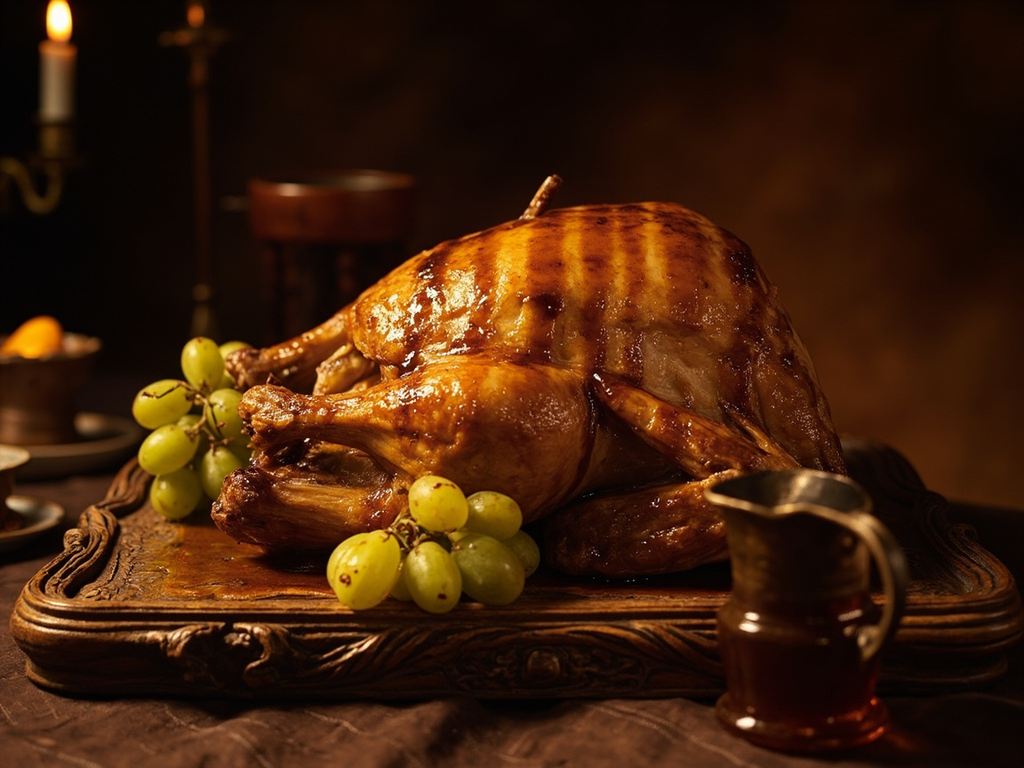
Roast Capon with Cameline Sauce
Why this dish? At humanist banquets in Basel, at his printer Froben's house, roasts worthy of great households were served. Thanks to his meat dispensation, Erasmus could honor these tables. Cameline sauce — spicy and tangy with verjuice or vinegar — was THE sauce for roasts in the Renaissance, and its spices came precisely from Venice, which he knew well.
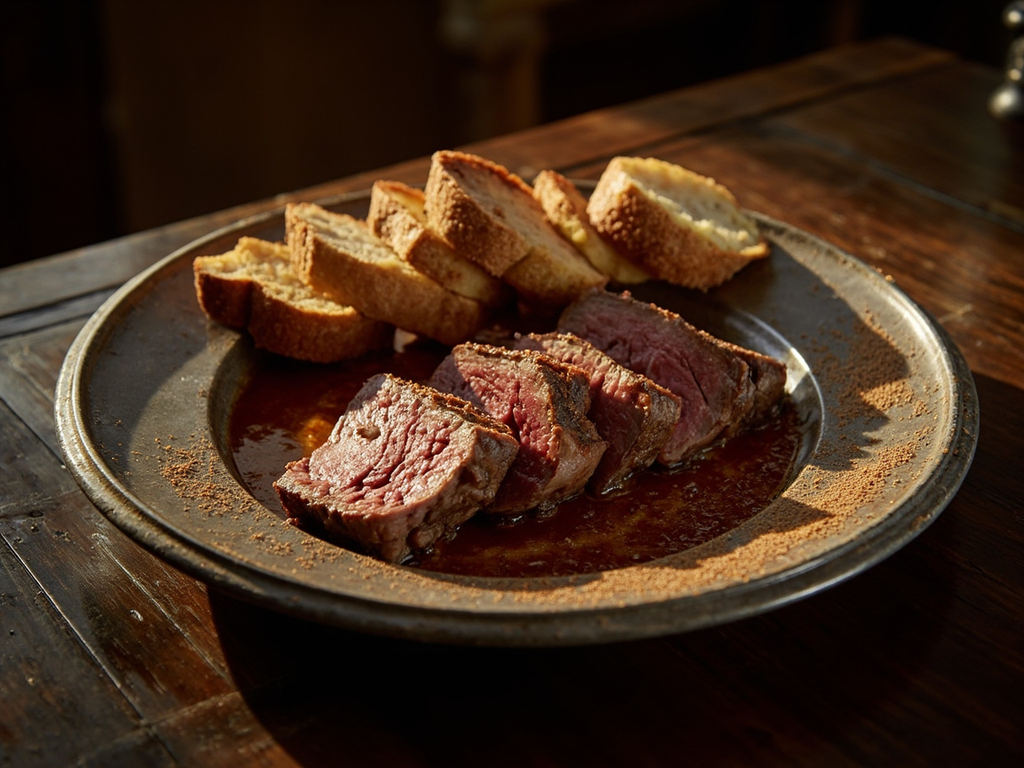
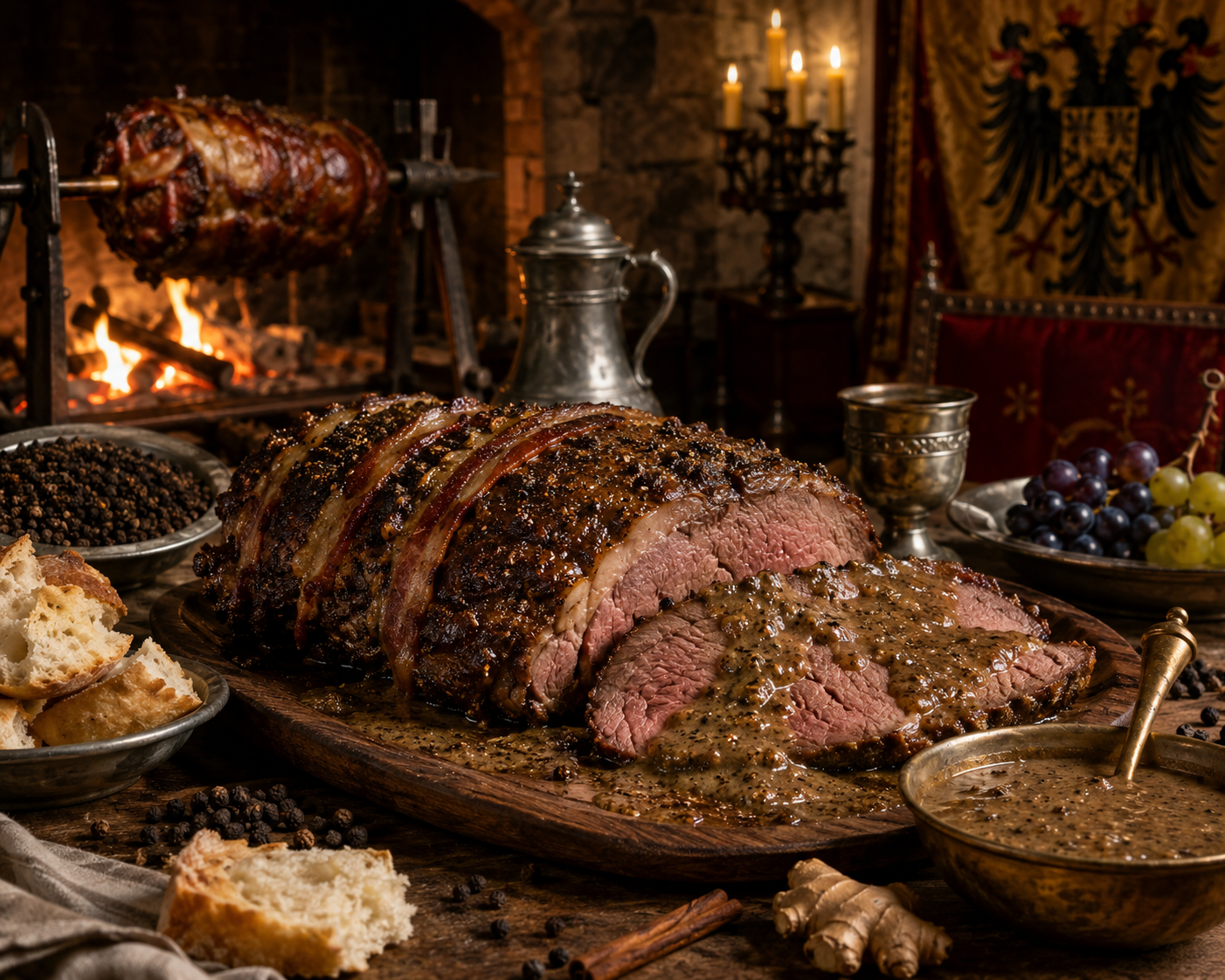
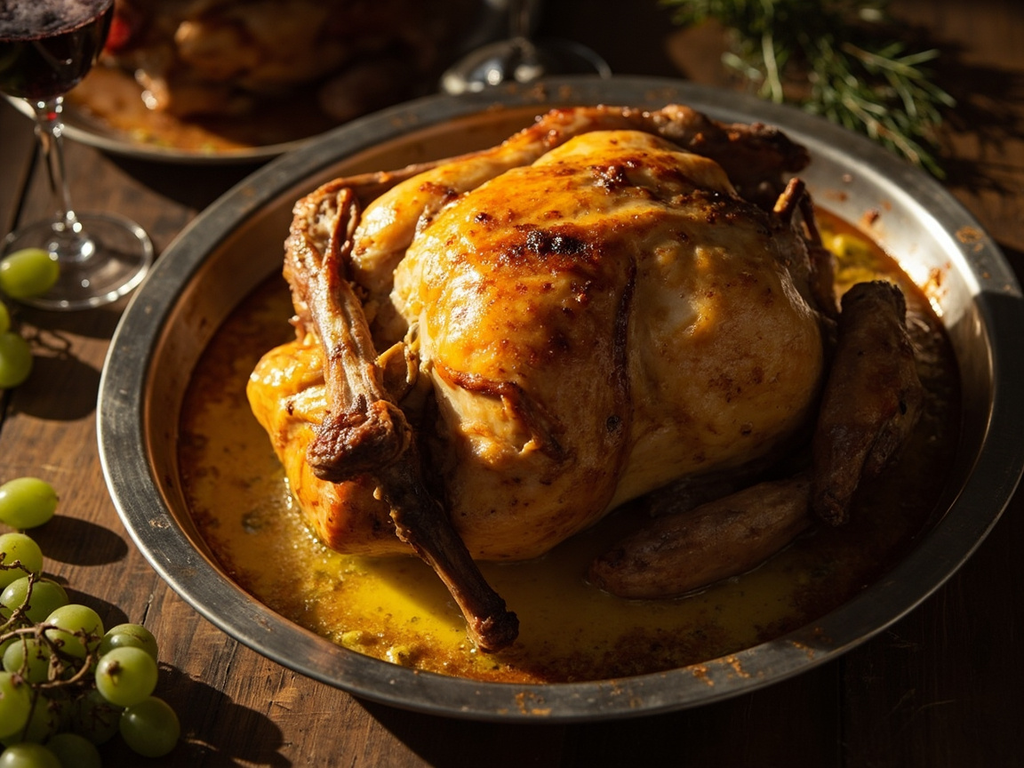
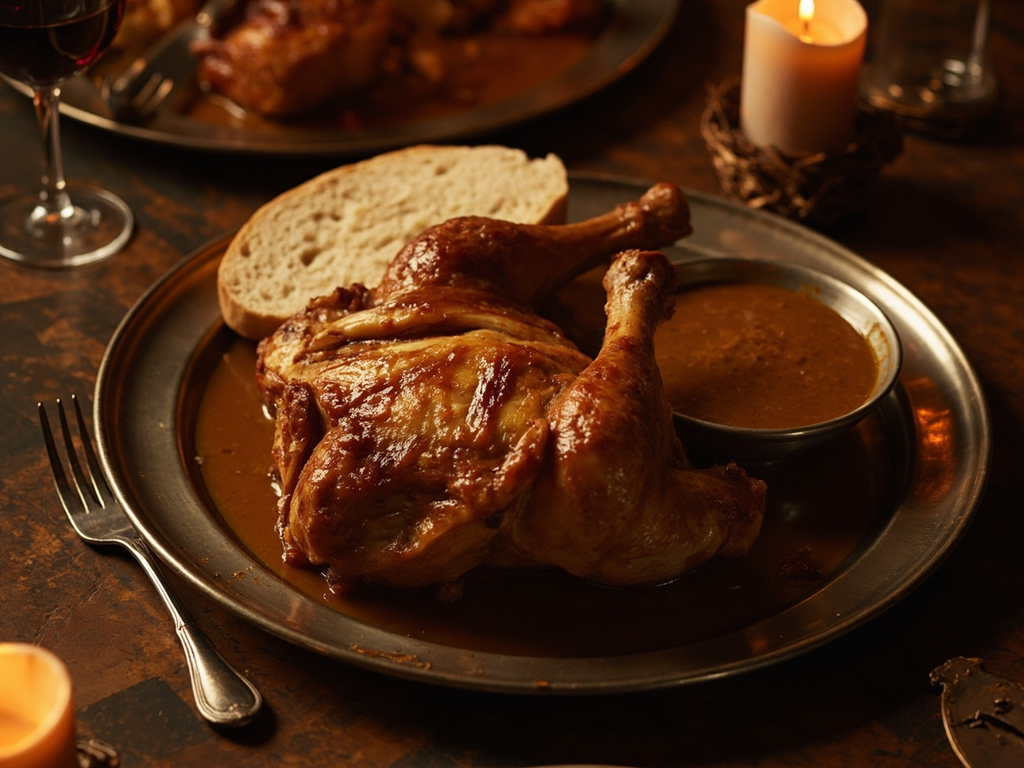
A golden roasted capon, napped with a cold cameline sauce: toasted bread, cinnamon, ginger, and cloves, brightened with verjuice. A brown, fragrant, and lively sauce that awakens the meat without weighing it down.
Here is a dish for a day of joy, when Froben my printer gathers around his table the friends of good letters! The capon turns on the spit until it gleams like an illuminated parchment, then it is bathed in this cameline where cinnamon and ginger sent by Venice sing. Beware, I implore you, of adding too much vinegar: moderation in all things, that is my rule, in cooking as in controversies. Break the white bread, raise your cup, and let learned merriment preside over the feast!
- •Capon — one, drawn (roast piece)
- •Toasted bread — two slices (sauce thickener)
- •Cinnamon — generous (dominant spice)
- •Ginger — a good pinch (warming spice)
- •Cloves and grains of paradise — a few (spices)
- •Verjuice or vinegar — to taste (acidity)
- •Salt — to taste (seasoning)
Roast Capon with Cameline Sauce
A golden roasted capon, napped with a cold cameline sauce: toasted bread, cinnamon, ginger, and cloves, brightened with verjuice. A brown, fragrant, and lively sauce that awakens the meat without weighing it down.
Why this dish? At humanist banquets in Basel, at his printer Froben's house, roasts worthy of great households were served. Thanks to his meat dispensation, Erasmus could honor these tables. Cameline sauce — spicy and tangy with verjuice or vinegar — was THE sauce for roasts in the Renaissance, and its spices came precisely from Venice, which he knew well.
Here is a dish for a day of joy, when Froben my printer gathers around his table the friends of good letters! The capon turns on the spit until it gleams like an illuminated parchment, then it is bathed in this cameline where cinnamon and ginger sent by Venice sing. Beware, I implore you, of adding too much vinegar: moderation in all things, that is my rule, in cooking as in controversies. Break the white bread, raise your cup, and let learned merriment preside over the feast!
Ingredients (period version)
- Capon — one, drawn (roast piece)
- Toasted bread — two slices (sauce thickener)
- Cinnamon — generous (dominant spice)
- Ginger — a good pinch (warming spice)
- Cloves and grains of paradise — a few (spices)
- Verjuice or vinegar — to taste (acidity)
- Salt — to taste (seasoning)
Ingredients
- Capon or free-range chicken — 1.8 kg (roast piece)
- Sourdough bread, toasted — 2 slices (thickener)
- Ground cinnamon — 1 tsp (dominant spice)
- Ground ginger — 1/2 tsp (warming spice)
- Ground cloves — 1 pinch (spice)
- Verjuice (or sweet wine vinegar) — 6 tbsp (acidity)
- Chicken broth — 100 ml (sauce thinner)
- Salt — to taste (seasoning)
Method
- Salt the capon, roast at 190°C, basting regularly with its juices, about 1 hour 15 minutes until nicely browned.
- For the cameline: soak the toasted bread in verjuice for a few minutes.
- Blend the soaked bread with cinnamon, ginger, cloves, and a little broth until smooth and fluid.
- Adjust acidity and salt: the sauce should be tangy but balanced, never harsh; serve cold.
- Carve the capon, arrange on a platter, and serve the cameline on the side for dipping each bite.
How it was made : Cameline sauce (from *chameau*, camel-colored, light brown) was one of the most common sauces of the 14th-16th centuries. It was prepared cold, without cooking, by pounding toasted bread, spices, and vinegar or verjuice in a mortar. It was mainly served with roasted meats and game. The "Tournai-style" version added sugar and raisins.
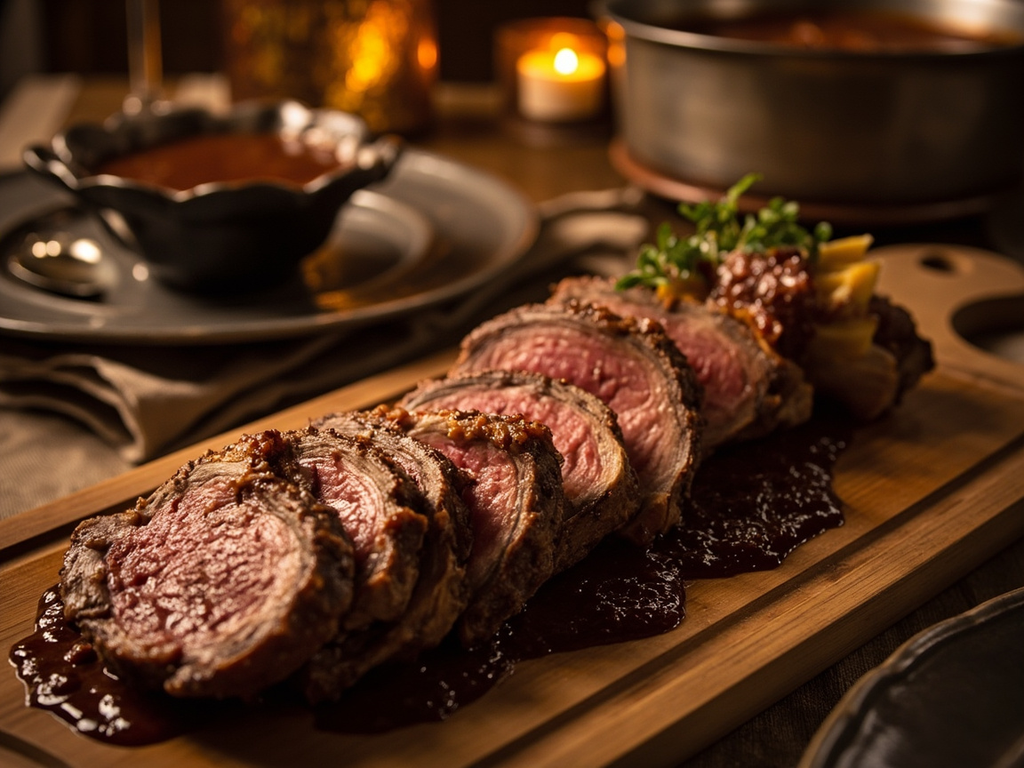
The contemporary twist : Drizzle the cameline in a swoosh under slices of lacquered capon, bistro-style — the medieval sauce reinvented as a gourmet condiment.
Sources : Le Viandier de Taillevent · Le Ménagier de Paris (c. 1393)
Erasmus · Charactorium