 flip
flipSalt Pork and Dried Meat of the Warrior on Campaign
Salt Pork and Dried Meat of the Warrior on Campaign
Why this dish? Charles Martel led his Franks on the roads all the way to Poitiers in 732, hundreds of leagues from Austrasia. An army on the march lives on what it can preserve: salt pork and strips of meat dried with salt and smoke, which keep for weeks in the saddlebags of horsemen.
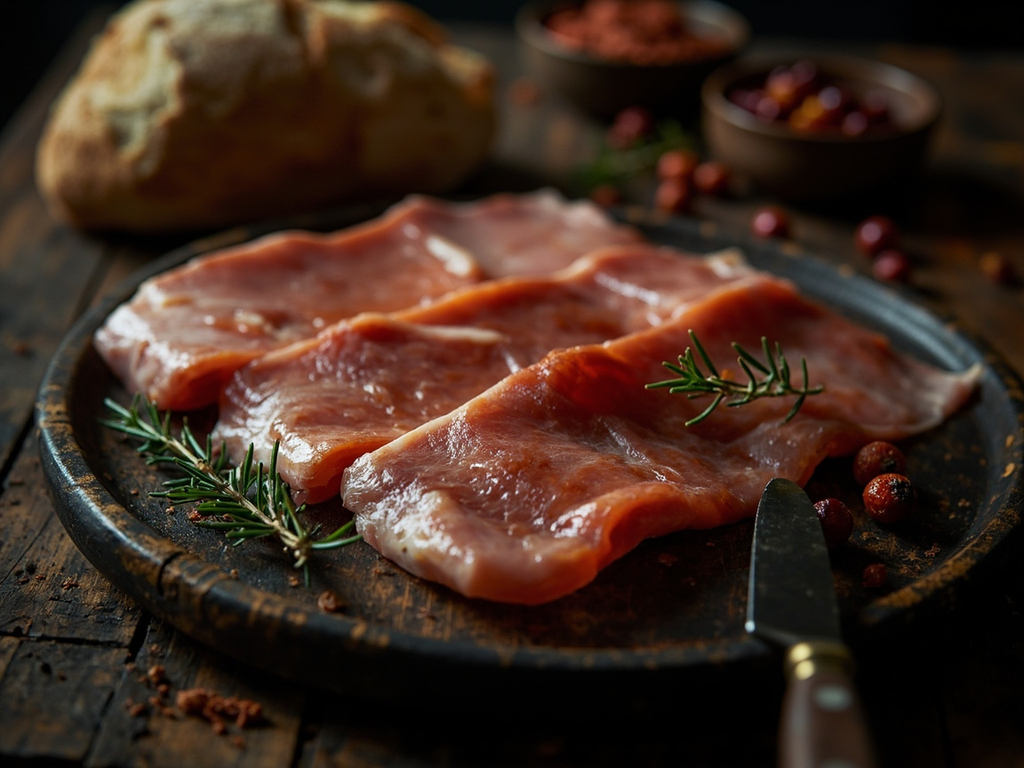
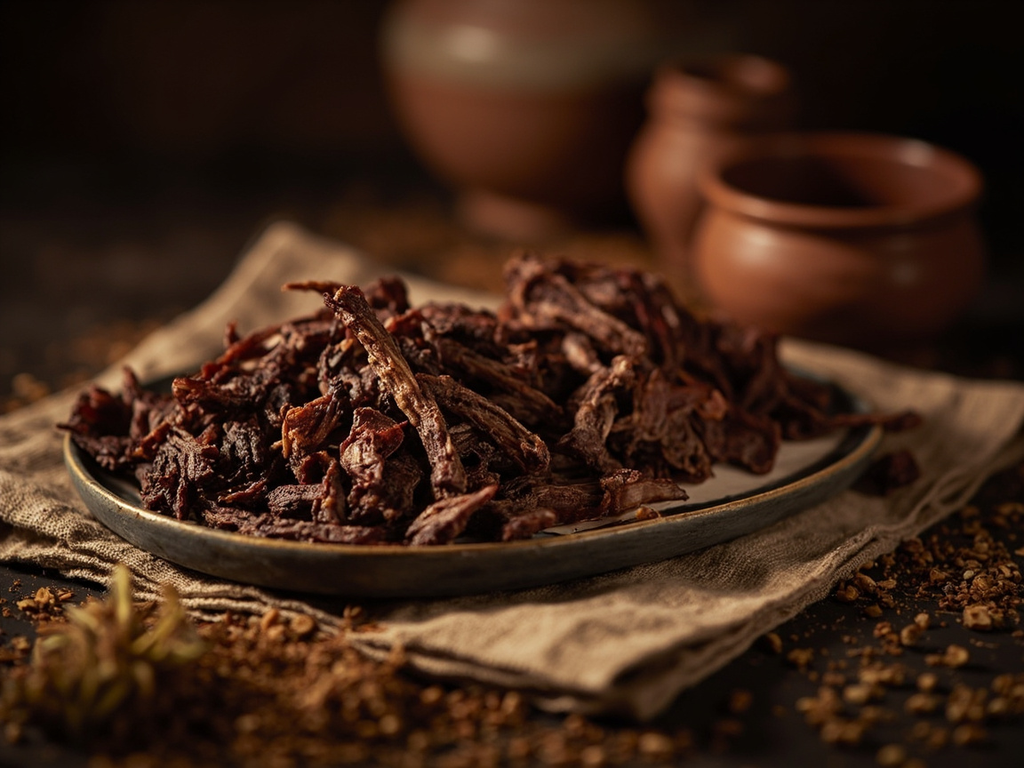
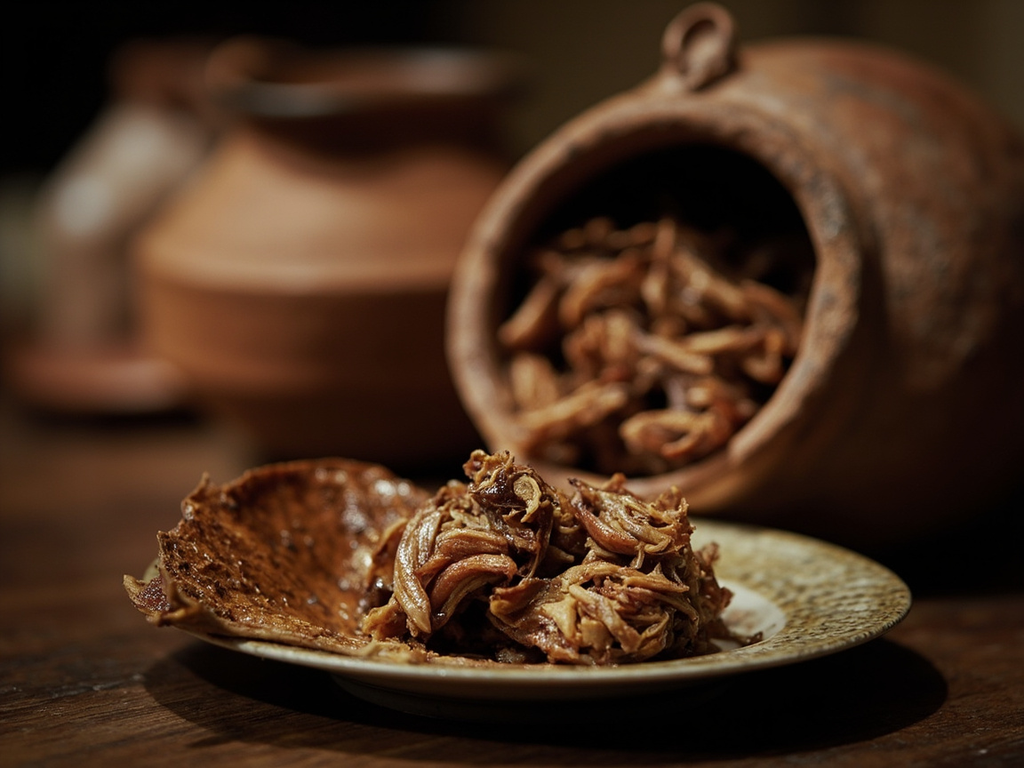
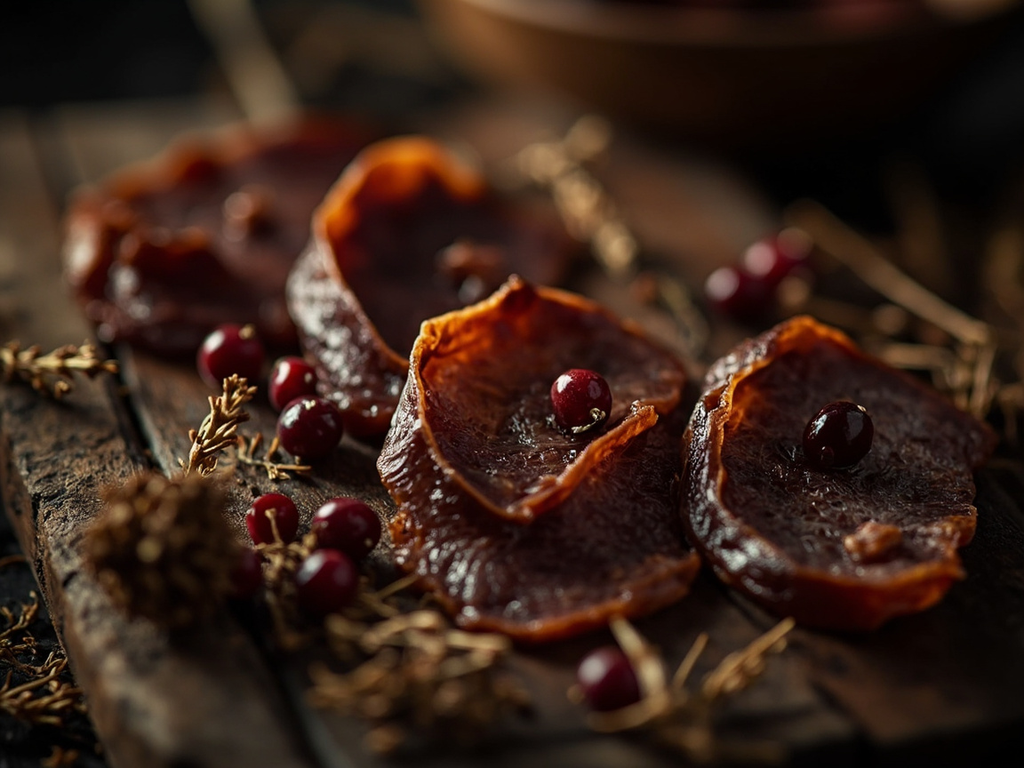
Thin strips of pork and game salted, perfumed with juniper, dried then smoked until hard and flavorful. The food that does not spoil, the one that carried the Frankish armies from one end of the kingdom to the other.
A battle is won before the first sword stroke: it is won at the salting trough. Before marching on the Saracens, I had meat salted and smoked by whole barrels. Cut it thin, rub it with salt and juniper berries, hang it in cold smoke until it is hard as a shield strap. The horseman chews it in the saddle; it does not rot under the rain of Vasconia. A belly that holds — that is my true cavalry.
- •Lean pork or game meat — in thin strips (material to preserve)
- •Salt — in abundance (preserving agent)
- •Juniper berries — a handful crushed (flavor and preservation)
- •Wood smoke (beech, juniper) — according to the smokehouse (preservation and flavor)
Salt Pork and Dried Meat of the Warrior on Campaign
Thin strips of pork and game salted, perfumed with juniper, dried then smoked until hard and flavorful. The food that does not spoil, the one that carried the Frankish armies from one end of the kingdom to the other.
Why this dish? Charles Martel led his Franks on the roads all the way to Poitiers in 732, hundreds of leagues from Austrasia. An army on the march lives on what it can preserve: salt pork and strips of meat dried with salt and smoke, which keep for weeks in the saddlebags of horsemen.
A battle is won before the first sword stroke: it is won at the salting trough. Before marching on the Saracens, I had meat salted and smoked by whole barrels. Cut it thin, rub it with salt and juniper berries, hang it in cold smoke until it is hard as a shield strap. The horseman chews it in the saddle; it does not rot under the rain of Vasconia. A belly that holds — that is my true cavalry.
Ingredients (period version)
- Lean pork or game meat — in thin strips (material to preserve)
- Salt — in abundance (preserving agent)
- Juniper berries — a handful crushed (flavor and preservation)
- Wood smoke (beech, juniper) — according to the smokehouse (preservation and flavor)
Ingredients
- Pork tenderloin or lean game (e.g. duck breast) — 500 g (meat to dry)
- Coarse salt — 300 g (salting)
- Juniper berries — 1 tbsp crushed (preservative aromatic)
- Dried thyme and savory — 1 tbsp (flavor)
- Pepper (period luxury, optional) — 1 tsp (rare spice of the great)
Method
- Cut the meat into regular strips about 2 cm thick.
- Mix the salt, crushed juniper and herbs. Coat the meat completely in a dish.
- Let it cure in the refrigerator for 24 to 36 hours, turning the strips (water is drawn out, salt penetrates).
- Rinse quickly, pat dry thoroughly, rub with a little fresh herbs.
- Suspend the strips in a cool, dry, airy place (or in the refrigerator on a rack) for 1 to 2 weeks, until firm.
- For an authentic smoky touch: cold-smoke briefly before drying. Slice very thinly to serve.
How it was made : Before refrigeration, salting, drying and smoking were the only ways to preserve meat for winter and war. Early medieval armies largely lived on salt pork, dried meats, hard bread and dried legumes. Salt, a strategic commodity, was worth its weight in gold, and controlling salt routes was a matter of power.
The contemporary twist : Served in thin slices on an appetizer board with cheese and nuts: a 'country ham' version for a war chief.
Charles Martel · Charactorium