 flip
flipSmoked Pork Belly and Meat from Campaign Provisions
Smoked Pork Belly and Meat from Campaign Provisions
Why this dish? Clovis was a king almost constantly at war — Soissons, Alemannia, Vouillé. An army on campaign eats what it can carry: salted and smoked meat, which does not spoil, sustained warriors on the long roads of the kingdom. This is the cuisine of conquest, the one that founded the dynasty.
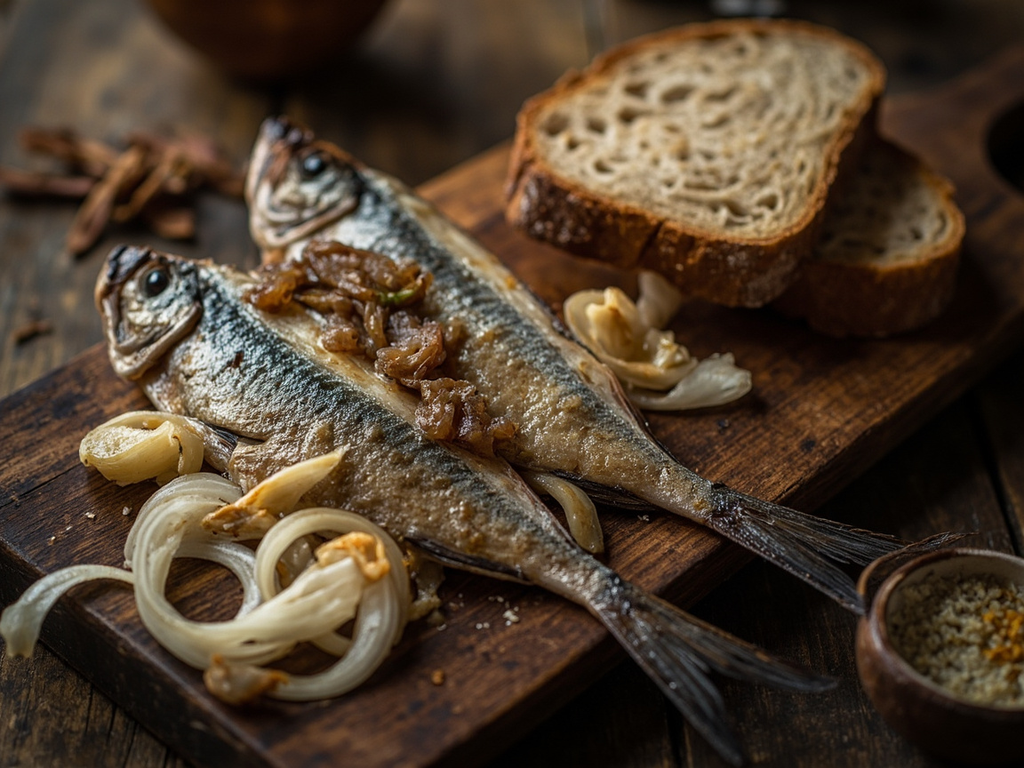
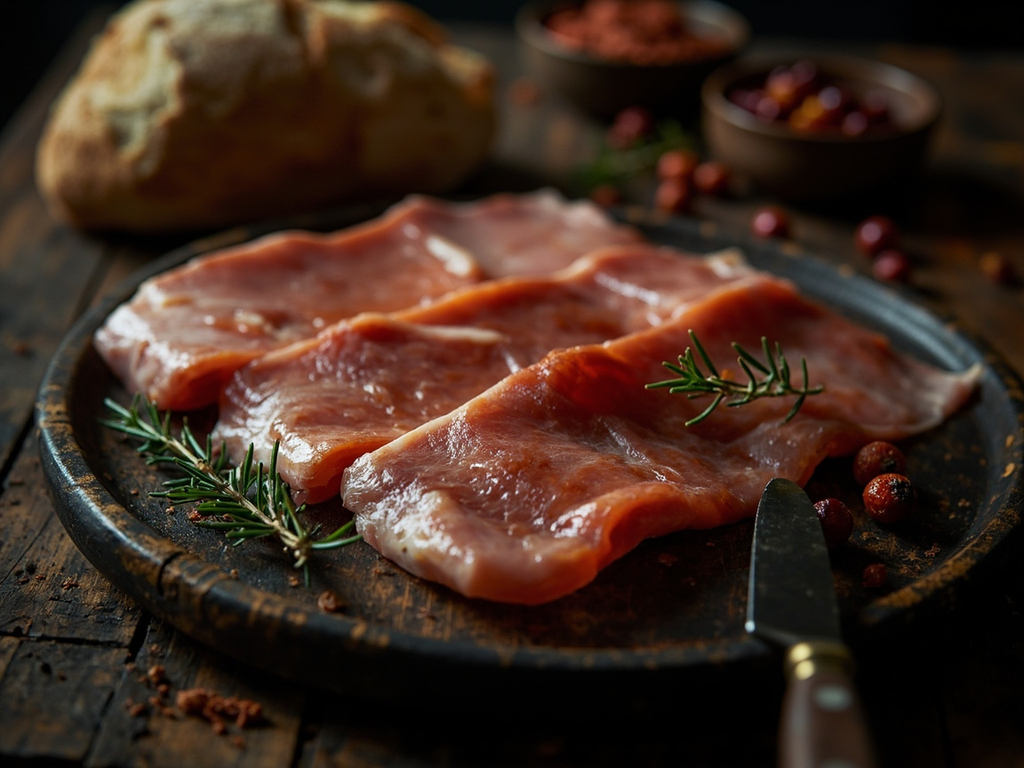
Strips of pork belly and meat, salted then smoked, which keep for weeks. Eaten as is, in slices, or tossed into the evening porridge to enrich it. The mobile pantry of the warrior king.
An army does not live on banquets, believe me. When I led my Franks toward Soissons or against the Visigoths, what filled the sacks was this: pork salted with coarse salt, hung for days in the hearth smoke until it became hard and brown. You slice it with a knife on the road, or throw it into the evening cauldron to give heart to the porridge. Honey and wine are for victory; smoked belly, on the other hand, leads you to it.
- •Pork belly and meat — wide strips (meat to preserve)
- •Coarse salt — in abundance (salting, preservation)
- •Juniper berries, dried herbs — to taste (flavor)
- •Wood smoke (beech, oak) — — (preservation, flavor)
Smoked Pork Belly and Meat from Campaign Provisions
Strips of pork belly and meat, salted then smoked, which keep for weeks. Eaten as is, in slices, or tossed into the evening porridge to enrich it. The mobile pantry of the warrior king.
Why this dish? Clovis was a king almost constantly at war — Soissons, Alemannia, Vouillé. An army on campaign eats what it can carry: salted and smoked meat, which does not spoil, sustained warriors on the long roads of the kingdom. This is the cuisine of conquest, the one that founded the dynasty.
An army does not live on banquets, believe me. When I led my Franks toward Soissons or against the Visigoths, what filled the sacks was this: pork salted with coarse salt, hung for days in the hearth smoke until it became hard and brown. You slice it with a knife on the road, or throw it into the evening cauldron to give heart to the porridge. Honey and wine are for victory; smoked belly, on the other hand, leads you to it.
Ingredients (period version)
- Pork belly and meat — wide strips (meat to preserve)
- Coarse salt — in abundance (salting, preservation)
- Juniper berries, dried herbs — to taste (flavor)
- Wood smoke (beech, oak) — — (preservation, flavor)
Ingredients
- Pork belly (skinless) — 1 kg (meat to cure)
- Coarse salt — 300 g (cure)
- Sugar (or honey) — 1 tbsp (balance of cure)
- Crushed juniper berries — 1 tbsp (flavor)
- Thyme and bay leaf — a few sprigs (aromatics)
- Smoking chips (beech) — — (smoking (smoker or BBQ))
Method
- Rub the pork belly with the mixture of salt, sugar, juniper, and herbs; coat entirely.
- Place in a dish, cover, and refrigerate for 3 to 5 days, turning daily and pouring off any liquid.
- Rinse thoroughly, dry, and let air-dry uncovered in the fridge for 12 hours.
- Cold-smoke (below 30°C) in a smoker or BBQ with beech chips for several hours, until amber-colored.
- Store in the fridge and consume in thin slices, or cut into lardons to flavor the spelt porridge (recipe r2).
How it was made : Without refrigeration, salting and smoking were the pillars of meat preservation, essential for surviving winter and supplying armies on campaign. Pork, abundantly raised in Frankish forests (pannage), was the preservation meat par excellence. These techniques, inherited from Antiquity, structured all medieval food.
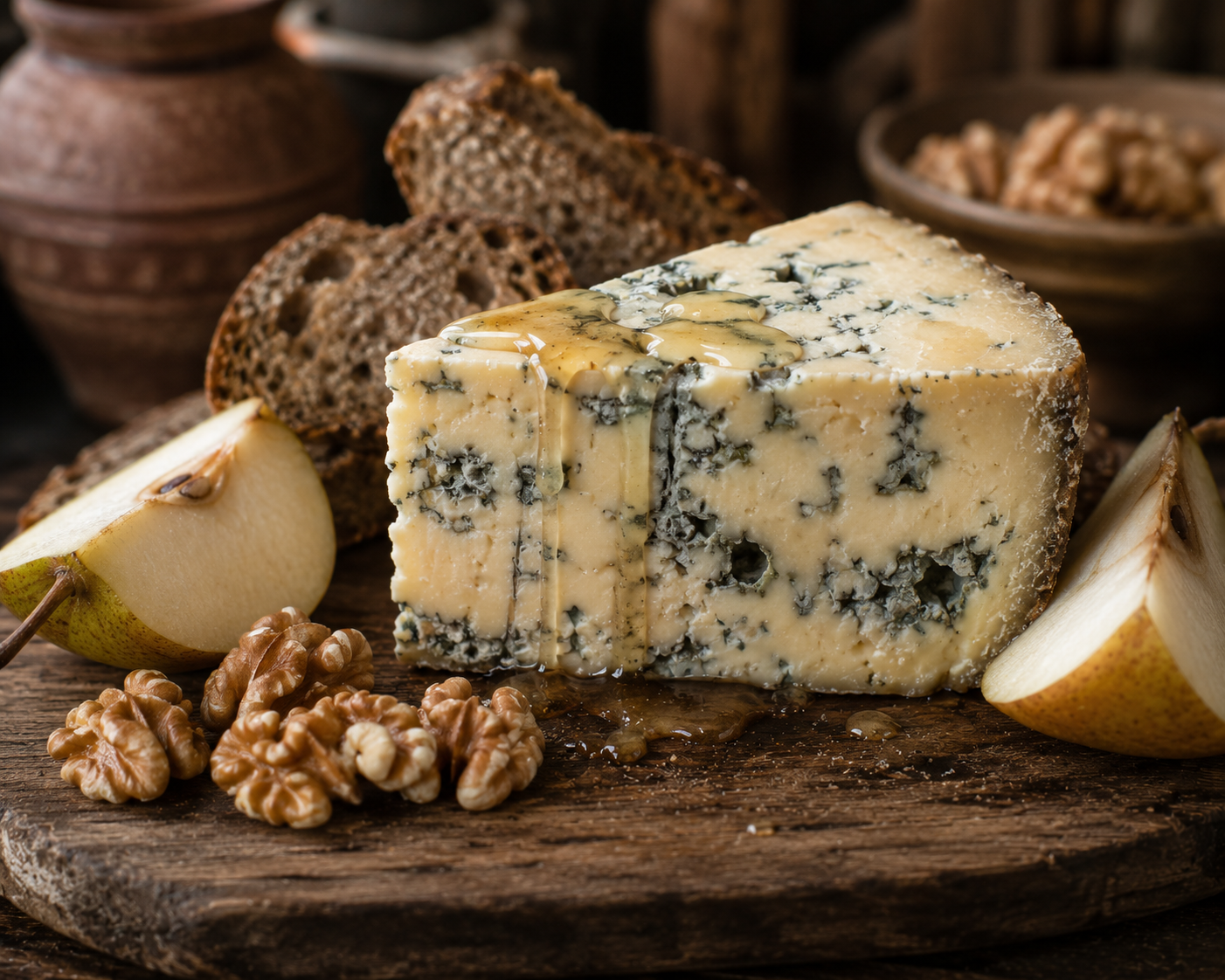
The contemporary twist : Slice it very thin as a “Frankish army” charcuterie board, with nuts, goat cheese, and spelt bread: an aperitif that tells a 1500-year-old military campaign.
Sources : Bruno Laurioux, Manger au Moyen Âge · Massimo Montanari, La faim et l'abondance
Clovis · Charactorium