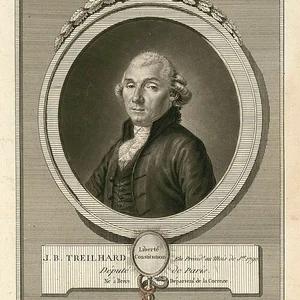

French jurist and statesman (1742–1810), a member of the National Convention during the Revolution, briefly a Director, then a Councillor of State and Count of the Empire under Napoleon. He played a key role in drafting the Civil Code.
Jean-Baptiste Treilhard(1742 — 1810)
Jean-Baptiste Treilhard
France
8 min read
Frequently asked questions
Key Facts
- 1742: Born in Uzerche (Corrèze)
- 1789: Elected to the Estates-General, sits in the National Constituent Assembly
- 1792–1795: Member of the National Convention
- 1798–1799: Member of the Directory
- 1804: Active participation in drafting the Napoleonic Civil Code
Works & Achievements
Treilhard was one of the most active members of the Council of State commission tasked with drafting the Civil Code. He wrote and reported on several foundational titles relating to persons, family, and inheritance, contributing to the unification of French private law.
As the principal drafter of this code governing the conduct of civil proceedings in France, Treilhard presented its explanatory statement before the Legislative Corps. This text governed French judicial procedure for more than a century and a half.
During his term as a member of the Convention, Treilhard produced numerous reports on the reform of justice and the organization of the courts, laying the groundwork for a rational system of justice equally accessible to all citizens.
As an active Councillor of State, Treilhard drafted numerous opinions on questions of civil law, procedure, and judicial organization, helping to build the coherent legal architecture of the Napoleonic Empire.
Anecdotes
A renowned lawyer at the Paris bar before the Revolution, Treilhard had built a solid reputation in the courtrooms of the Palais de Justice. When the Estates-General convened in 1789, he was elected as a representative of the Third Estate of Paris: this pragmatic jurist would go on to become one of the discreet architects of the new French law.
During the trial of Louis XVI in January 1793, Treilhard sat in the National Convention. He voted for the king's death without appeal to the people, taking one of the most radical positions — a vote that would earn him the title of regicide and weigh heavily on his reputation after the Bourbon Restoration.
In May 1798, Treilhard was elected a member of the Directory to replace Jean-François Reubell. But his election was quickly challenged: the Constitution required that he have served a full year in the Legislative Councils, which he had not completed. In June 1799, his election was declared void and he was forced to leave the Directory — a rare humiliation for a man of his standing.
Appointed to the Council of State after the coup of 18 Brumaire, Treilhard became one of the most active members of the commission tasked with drafting the Civil Code. He chaired numerous sessions and personally drafted several foundational titles, notably those relating to persons and the family. Napoleon acknowledged this contribution by making him a Count of the Empire in 1809.
Alongside the Civil Code, Treilhard was the principal drafter of the Code of Civil Procedure, promulgated in 1806. This code, far less celebrated than the Napoleonic Code, governed for decades the way civil trials were conducted in France. Without this methodical work, the rights established by the Civil Code would have lacked a coherent procedural framework through which to be genuinely enforced.
Primary Sources
The law must be clear, precise, and general enough to encompass all cases the legislator could foresee, without entering into details that would make the code impossible to apply uniformly across the entire territory.
Death. I vote for death, without reprieve and without appeal to the people.
The purpose of civil procedure is to guarantee every citizen the peaceful enjoyment of their rights, by establishing the forms through which disputes shall be brought before and adjudicated by the competent courts.
Justice in France must be administered by men who derive their authority from the law alone, and not from hereditary tradition or a particular grant of favor from the sovereign.
Key Places
Birthplace of Jean-Baptiste Treilhard, nicknamed the "pearl of the Limousin" for its medieval ramparts overlooking the Vézère river. Treilhard received his early education here before heading to Paris to study law.
Home of the Parlement de Paris and the royal courts, where Treilhard practiced as a lawyer before the Revolution. It was by arguing cases in these halls that he gained the mastery of civil law and procedure that would make him a leading codifier.
The venue where the National Convention met from 1792 onward. It was in this converted riding hall that Treilhard took part in the great debates of the Revolution, including the trial and death sentence of Louis XVI.
Seat of the executive Directory from 1795 to 1799. Treilhard briefly served as a Director in 1798–1799 before his election was annulled on a procedural technicality — a painful episode in his political career.
The official residence of Napoleon Bonaparte, the Tuileries housed the sessions of the Council of State. It was in this palatial setting that Treilhard, as a Councillor of State, took part in discussions on the Civil Code, sometimes chaired by the Emperor himself.
Typical Objects

An indispensable tool for the jurist and lawmaker, the trimmed goose quill was used to draft articles of law, reports, and speeches. Treilhard wrote thousands of pages with such instruments, laying the foundations of modern French civil law.

The wide-sleeved garment worn by lawyers at the Paris bar, a symbol of their membership in the legal profession. Treilhard wore this robe for years before the Revolution, gaining in those courtrooms the mastery of law that would make him an essential codifier.

The Civil Code promulgated in 1804 was the collective work to which Treilhard devoted his years on the Council of State. Printed in thousands of copies, this volume unified French private law and became a model for many countries around the world.

The insignia worn by members of the National Convention, the tricolor sash (blue, white, red) distinguished the representatives of the people in their official duties. Treilhard wore it during sessions and republican ceremonies from 1792 to 1795.

Volumes recording the debates and deliberations of working sessions on the Civil Code, sometimes chaired by Napoleon himself. These registers made it possible to follow the drafting of articles, amendments, and doctrinal discussions among jurists.

Under the Empire, councillors of state wore an official coat embroidered in green gold on a dark blue background, a mark of their rank within the Napoleonic senior administration. Treilhard wore this coat at official ceremonies and imperial audiences.
School Curriculum
Vocabulary & Tags
Key Vocabulary
Daily Life
Morning
Treilhard rose early to study case files and legal texts before the official sessions. Under the Consulate and the Empire, his mornings often began as early as eight o'clock, reading the memoranda and draft articles submitted by his colleagues. Breakfast — bread, coffee, or hot chocolate — was taken quickly before diving into the legal texts.
Afternoon
Afternoons were devoted to long working sessions in committee at the Council of State, sometimes presided over by Napoleon himself for the important discussions on the Civil Code. Treilhard defended his positions with the rigour of a seasoned courtroom lawyer, arguing before jurists such as Portalis or Bigot de Préameneu. These sessions could last several hours, punctuated by brief breaks.
Evening
Evenings offered a little respite: Treilhard sometimes received colleagues or senior officials in his Parisian apartment, where conversations often revolved around the legal and political affairs of the moment. He also spent time reviewing the articles of law adopted during the day's session, noting corrections to propose the following morning. Reading treatises on Roman law was part of his intellectual routine.
Food
The table of a senior official under the Empire was generally generous: soup, roasted or braised meats, market vegetables, cheeses, and desserts. A man of work rather than of ostentation, Treilhard likely favoured a modest diet during the week, reserving more elaborate meals for the official dinners that his position obliged him to attend.
Clothing
Under the *Ancien Régime* and the Revolution, Treilhard wore the black robe of the barrister in court. Under the Directory, he adopted the official embroidered costume required of the Directors. Under the Empire, the councillor of state's uniform — a coat embroidered in gold-green on a dark blue ground — was the ceremonial dress he wore for imperial ceremonies and audiences.
Housing
Treilhard lived in Paris, in the neighbourhoods frequented by the senior administration. His apartment housed a substantial legal library, indispensable to his work on codification, as well as a study where he received his collaborators and the magistrates who came to consult him on points of law.
Historical Timeline
Period Vocabulary
Liens externes & ressources
Références
Œuvres
Contribution à la rédaction du Code civil (Code Napoléon)
1801–1804
Code de procédure civile
1806
Rapports et discours à la Convention nationale sur l'organisation judiciaire
1792–1795
Avis et rapports au Conseil d'État (1800–1810)
1800–1810
Rechercher
See also
Related Characters
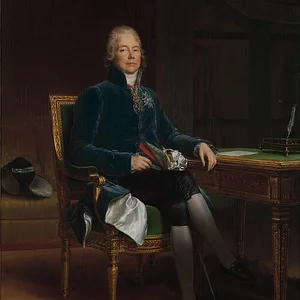
Charles-Maurice de Talleyrand-Périgord
1754 — 1839
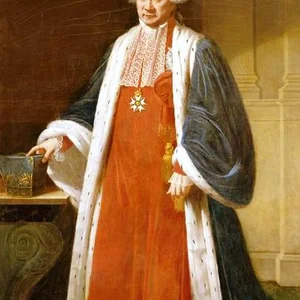
Claude Ambroise Régnier
1746 — 1814
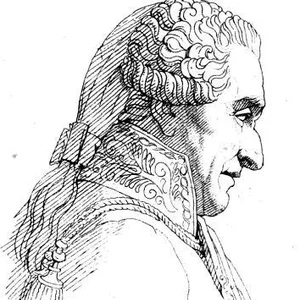
François Denis Tronchet
1726 — 1806
Abbé Henri Grégoire
1750 — 1831
Charlotte Corday
1768 — 1793
Joseph Agricol Viala
1778 — 1793