 flip
flipQuince Paste (Cotignac)
Quince Paste (Cotignac)
Why this dish? Cotignac, made from quinces cooked with sugar, was the sweet treat of the Loire lands — from Orléans to Bourges, territories of the "king of Bourges" before he became king of all France. Its long shelf life made it a stored delicacy and a choice gift.
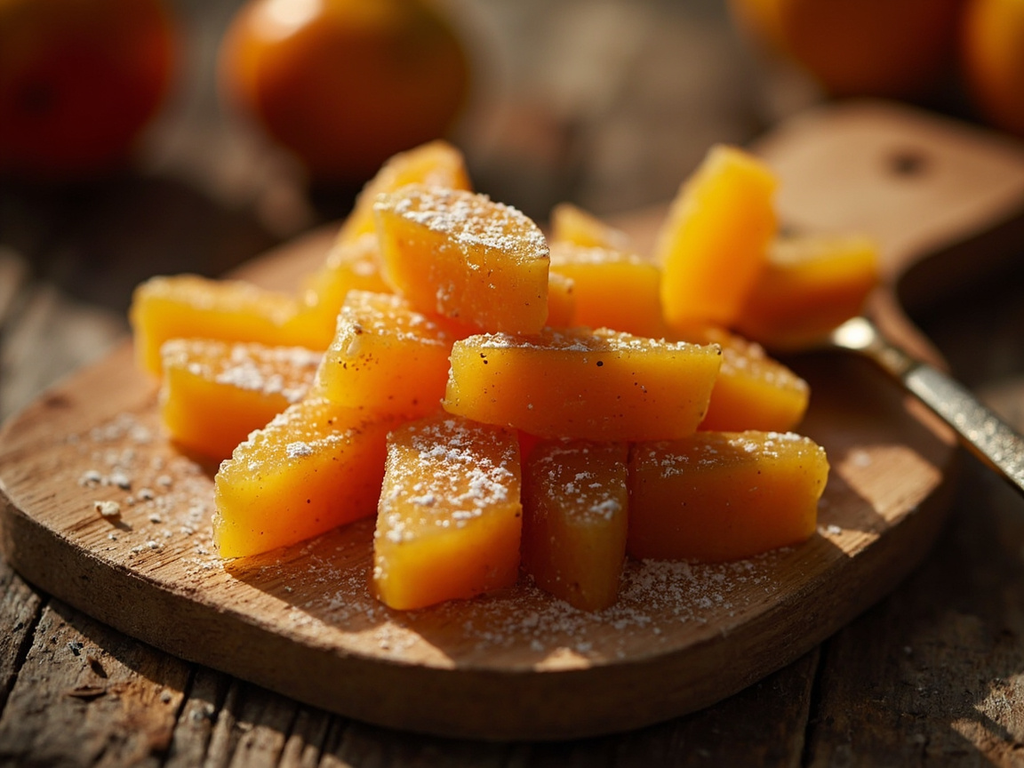
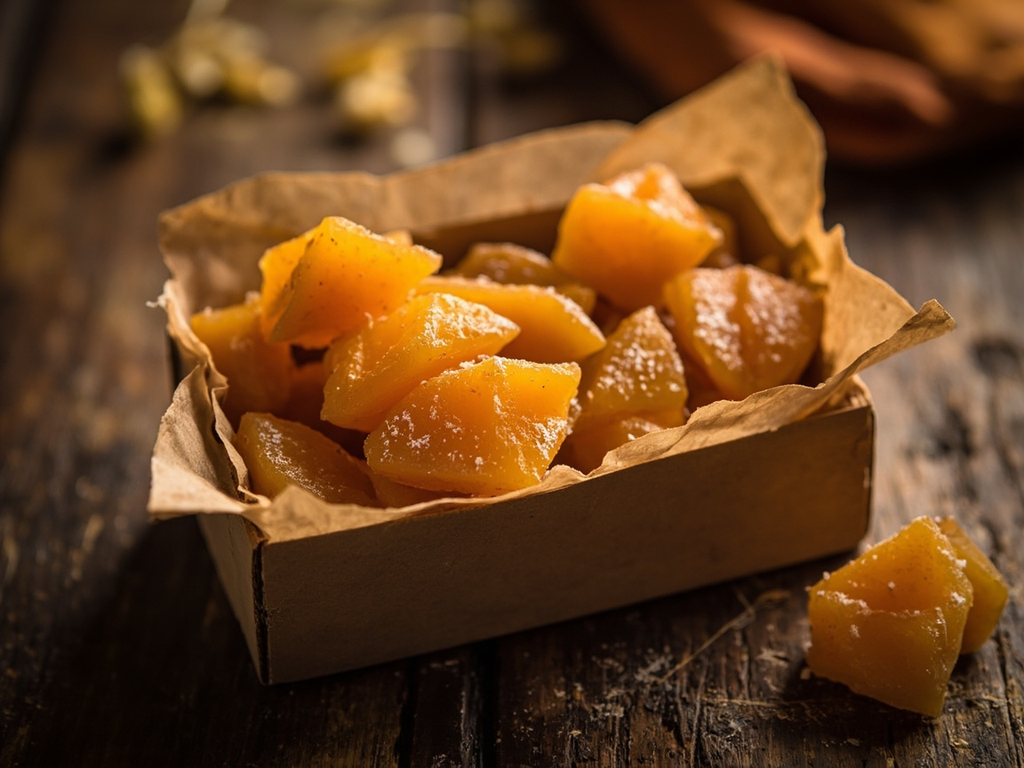
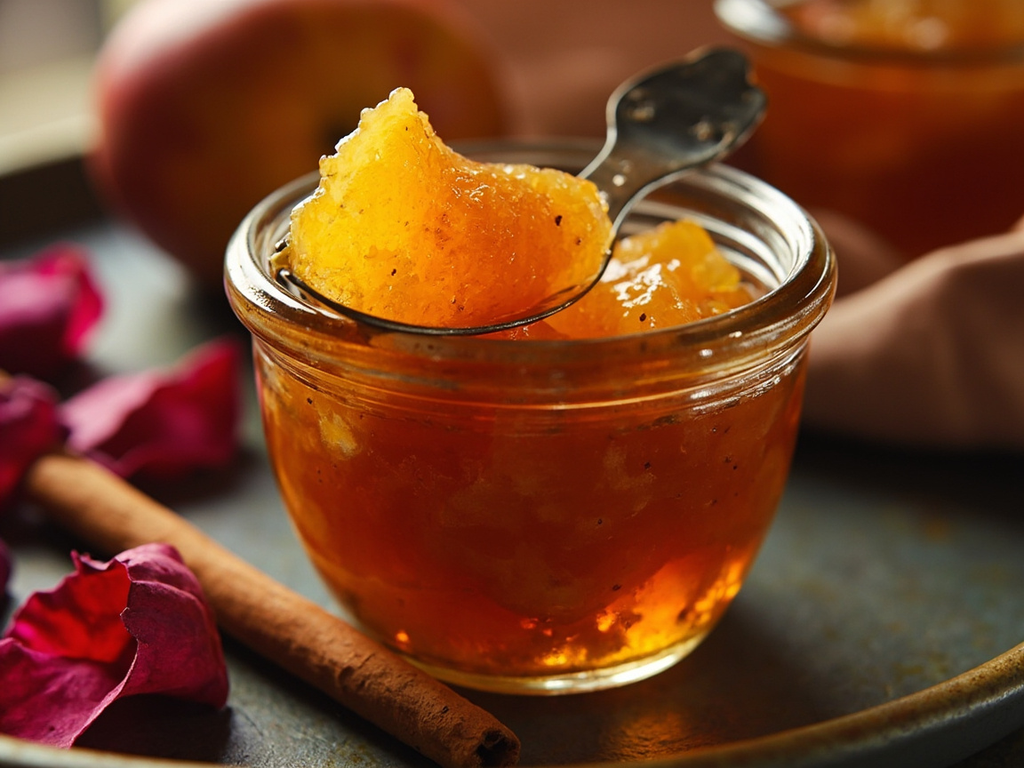
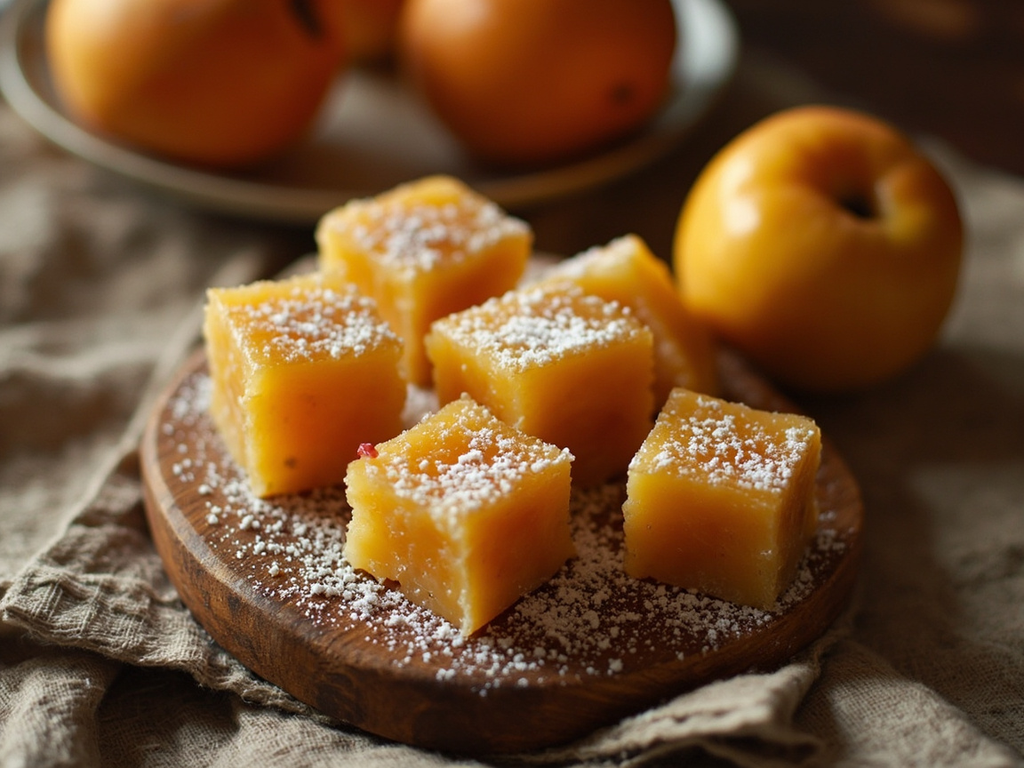
A dense, translucent quince paste, cooked long with sugar and a hint of spices until set. Tart and fragrant, it is cut into squares and keeps for months.
Keep this quince paste carefully, for it will follow you on long journeys without spoiling. In my Loire lands, from Orléans to Bourges, the quince was cooked in sugar until it took on this amber color and a drop, placed on a cold plate, held without running. It was then cut into small squares and stored in wooden boxes. I gladly offered it, for a gift that keeps is a promise of loyalty. Suck it slowly after the meal: it settles the stomach and delights the mouth.
- •Ripe quinces — full basket (base fruit)
- •Sugar (or honey) — as much as pulp (preservation and sweetness)
- •White wine or water — a little (cooking the quinces)
- •Ginger and cinnamon — pinches (spice fragrance)
Quince Paste (Cotignac)
A dense, translucent quince paste, cooked long with sugar and a hint of spices until set. Tart and fragrant, it is cut into squares and keeps for months.
Why this dish? Cotignac, made from quinces cooked with sugar, was the sweet treat of the Loire lands — from Orléans to Bourges, territories of the "king of Bourges" before he became king of all France. Its long shelf life made it a stored delicacy and a choice gift.
Keep this quince paste carefully, for it will follow you on long journeys without spoiling. In my Loire lands, from Orléans to Bourges, the quince was cooked in sugar until it took on this amber color and a drop, placed on a cold plate, held without running. It was then cut into small squares and stored in wooden boxes. I gladly offered it, for a gift that keeps is a promise of loyalty. Suck it slowly after the meal: it settles the stomach and delights the mouth.
Ingredients (period version)
- Ripe quinces — full basket (base fruit)
- Sugar (or honey) — as much as pulp (preservation and sweetness)
- White wine or water — a little (cooking the quinces)
- Ginger and cinnamon — pinches (spice fragrance)
Ingredients
- Quinces — 1 kg (base fruit)
- Sugar — 700 g (about the weight of pulp) (gelling and preservation)
- Lemon juice — 1 tablespoon (brightness and set)
- Ground cinnamon — 1/2 teaspoon (fragrance)
- Ground ginger — 1 pinch (fragrance)
Method
- Wash the quinces, cut into quarters (do not peel), and cook in a little water until tender.
- Pass the flesh through a sieve or food mill to obtain a smooth pulp without skin or seeds.
- Weigh the pulp, add about the same weight of sugar, lemon juice, and spices.
- Cook over low heat, stirring constantly, for 30 to 45 minutes: the paste thickens, darkens, and pulls away from the bottom of the pan.
- Spread to 1.5 cm thick in a parchment-lined dish, let dry for 24 to 48 hours.
- Cut into squares and store in an airtight container, separated with sugar if desired.
How it was made : Cotignac (from Old French "coing" = quince) is a dry confit attested since the Middle Ages in the Loire regions; Orléans later made it a renowned specialty offered to kings. The long cooking with sugar — a precious commodity — allowed autumn fruits to be preserved through winter and made into gifts.
The contemporary twist : Present as small diamond shapes dusted with sugar, served with aged cheese — the quince/cheese pairing, direct heir of the medieval table.
Sources : Le Ménagier de Paris (vers 1393) · Tradition du cotignac d'Orléans
Charles VII · Charactorium