 flip
flipBarley maza with bitter hill herbs
Barley maza with bitter hill herbs
Why this dish? On the heights of Lycia haunted by the Chimera, shepherds lived on little: the barley cake, daily staple, and wild bitter herbs gleaned among the rocks — the very fare of herdsmen who feared its breath around every pasture.
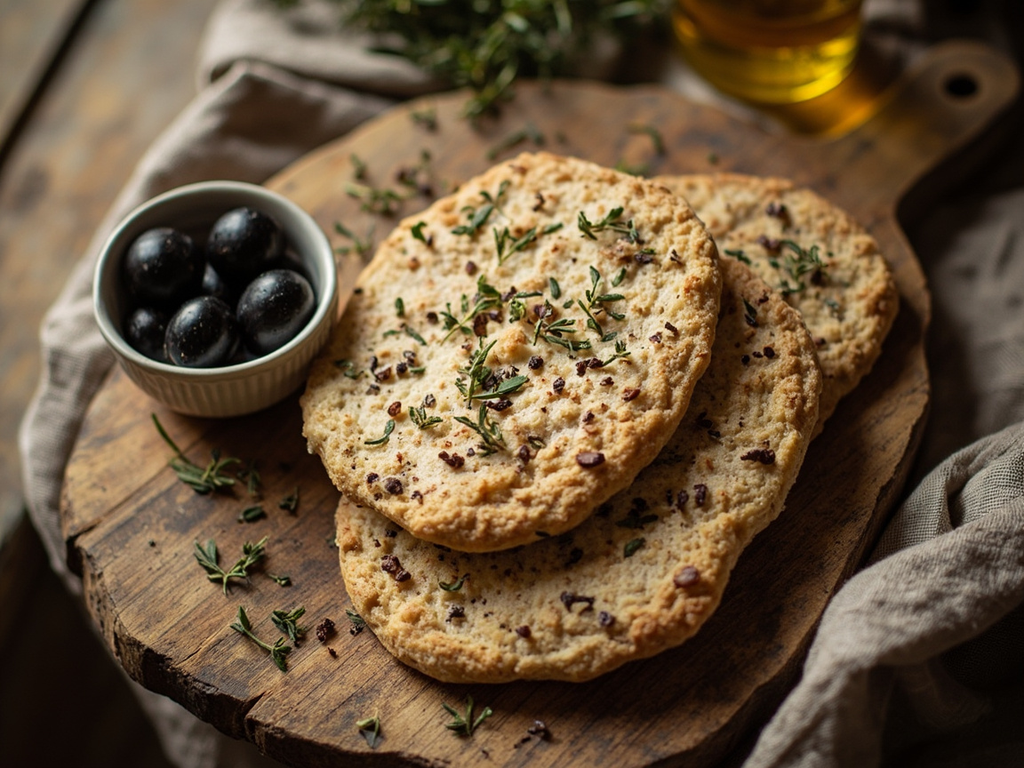
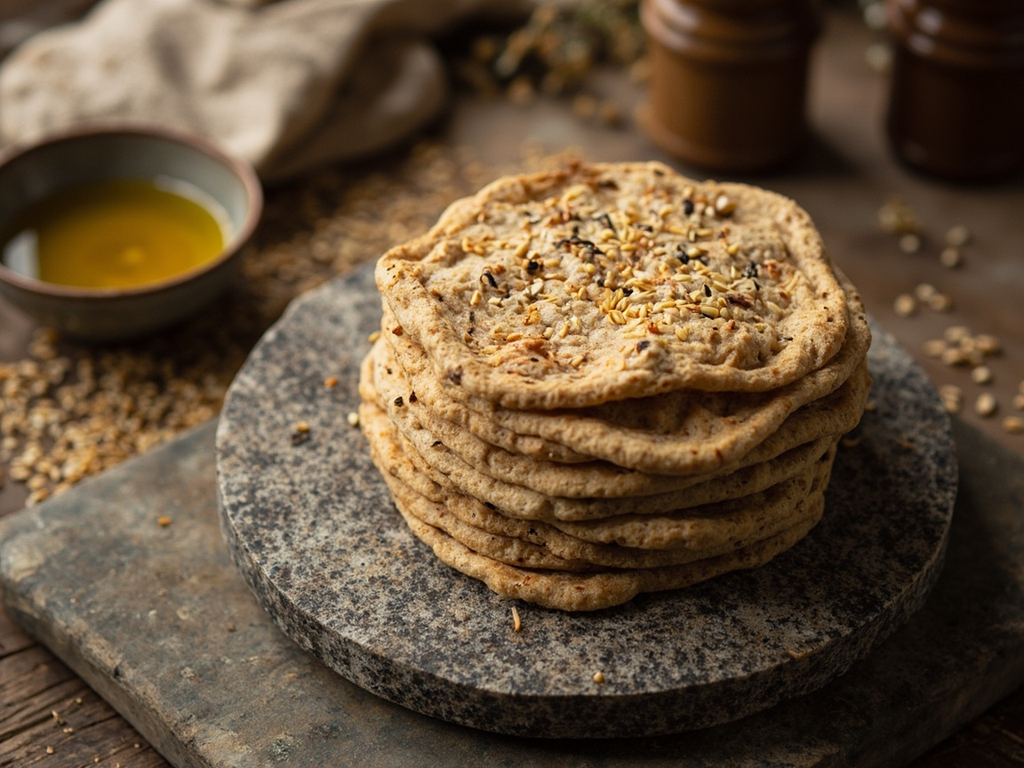
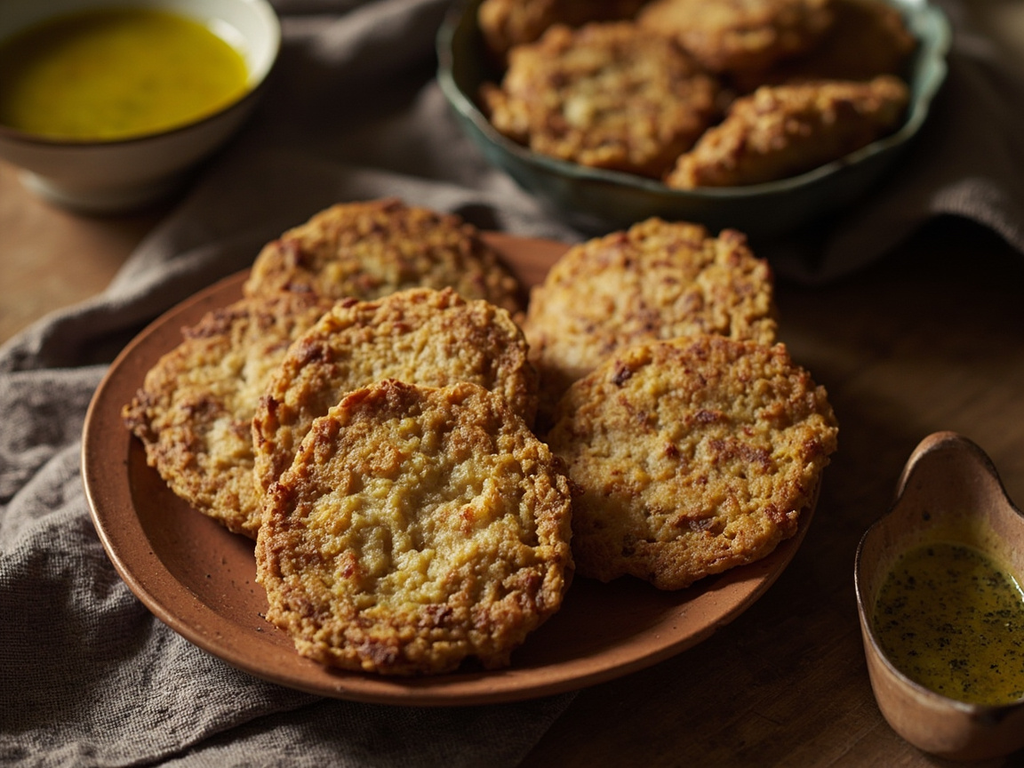
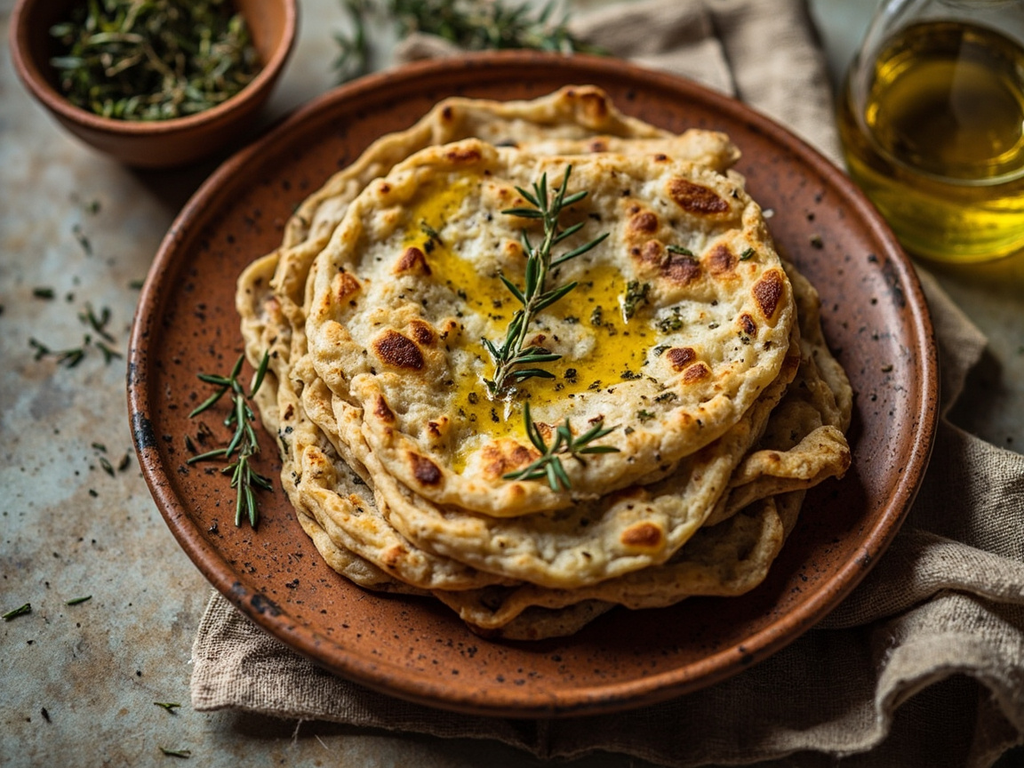
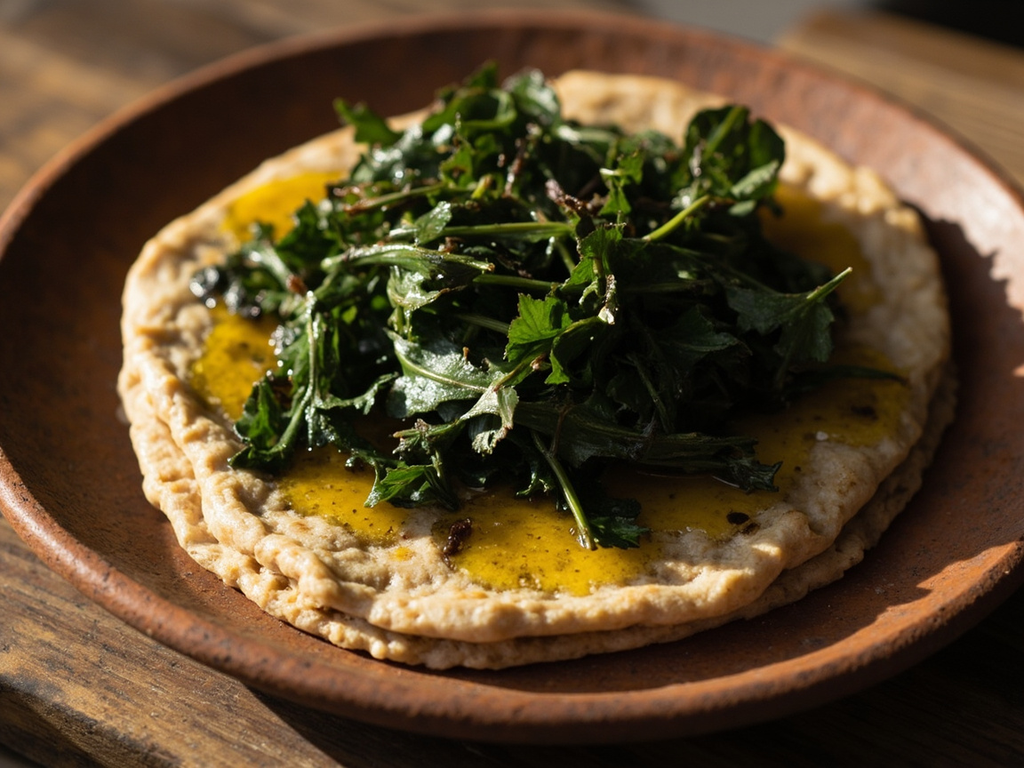
Dense flatbread of toasted barley flour kneaded with water and oil, served with a heap of wild bitter greens wilted in a pan, dressed with olive oil and vinegar.
Poor Lycian shepherds, I watched you nibble your gray barley while your flocks grazed under my gaze. You had no feast nor gold, nothing but this hard flatbread and those bitter herbs torn from the rocks — and yet you held firm, day after day, in the shadow of my wings. Toast your barley well before grinding, or your maza will taste of fear. Pour the oil, bite into the green bitterness: this is the true food of those who survive monsters.
- •Toasted barley flour — by measure (grain base (sitos))
- •Water — as needed for kneading (binder)
- •Olive oil — a drizzle (fat and binder)
- •Wild bitter herbs (chicory, dandelion) — a large handful (green opson)
- •Wine vinegar — a few drops (acidity)
- •Sea salt — a pinch (seasoning)
Barley maza with bitter hill herbs
Dense flatbread of toasted barley flour kneaded with water and oil, served with a heap of wild bitter greens wilted in a pan, dressed with olive oil and vinegar.
Why this dish? On the heights of Lycia haunted by the Chimera, shepherds lived on little: the barley cake, daily staple, and wild bitter herbs gleaned among the rocks — the very fare of herdsmen who feared its breath around every pasture.
Poor Lycian shepherds, I watched you nibble your gray barley while your flocks grazed under my gaze. You had no feast nor gold, nothing but this hard flatbread and those bitter herbs torn from the rocks — and yet you held firm, day after day, in the shadow of my wings. Toast your barley well before grinding, or your maza will taste of fear. Pour the oil, bite into the green bitterness: this is the true food of those who survive monsters.
Ingredients (period version)
- Toasted barley flour — by measure (grain base (sitos))
- Water — as needed for kneading (binder)
- Olive oil — a drizzle (fat and binder)
- Wild bitter herbs (chicory, dandelion) — a large handful (green opson)
- Wine vinegar — a few drops (acidity)
- Sea salt — a pinch (seasoning)
Ingredients
- Barley flour — 200 g (flatbread base)
- Warm water — about 120 ml (binder)
- Olive oil — 4 tbsp (flatbread + greens) (fat)
- Bitter greens (dandelion, chicory, chard) — 400 g (side)
- Wine vinegar — 1 tbsp (acidity)
- Sea salt — to taste (seasoning)
Method
- Toast the barley flour dry in a pan for a few minutes until nutty and fragrant (skip if flour is already toasted).
- Knead the flour with warm water, a pinch of salt, and a drizzle of oil into a dense dough; shape into flat rounds.
- Cook on a hot griddle or dry pan for 3–4 minutes per side.
- Wash the bitter greens, then wilt them in olive oil with a pinch of salt for 5 minutes.
- Deglaze with a splash of vinegar, pile the greens onto the maza, and drizzle with oil.
How it was made : Barley maza was the daily bread of ordinary Greeks — often simply moistened with water, wine, or oil without prolonged cooking. The poor, as well as physicians (Hippocrates), praised wild bitter herbs, gathered for free, as a side and remedy. The French starter/main course grid did not exist: everything revolved around sitos.
The contemporary twist : Serve the maza as an "ancient tartine," bitter greens piled high with a drizzle of bright green oil on top, for a rustic Lycian shepherd's lunch.
Sources : Hippocrates, On Regimen (role of barley and greens) · Andrew Dalby, Food in the Ancient World from A to Z (2003)
Chimera · Charactorium